
Beard Transplant vs Scalp Transplant: A Complete Guide
Compare beard vs scalp transplants: costs, recovery, results, pain, and candidacy to decide which hair restoration procedure fits your goals.
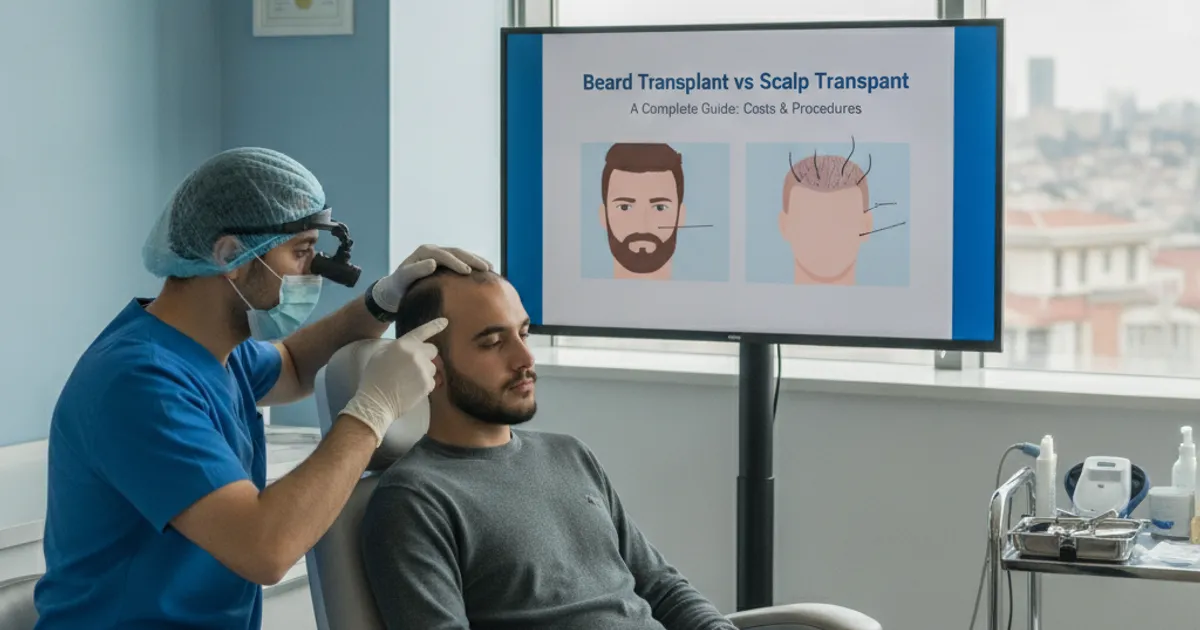
If you're weighing a beard transplant against a scalp transplant, the short answer is this: they use the same underlying hair restoration techniques but target different areas and serve different goals. A scalp transplant is for restoring hair on your head, while a beard transplant focuses on facial hair. Your choice depends on where you want hair growth, your donor hair availability, and your budget.
What Each Procedure Involves
Both procedures are outpatient surgeries that take hair follicles from a donor area (usually the back of the scalp) and implant them where you want growth. The main difference is the recipient site and the number of grafts typically needed. Beard transplants usually require fewer grafts because the treatment area is smaller, while scalp transplants often involve larger sessions to cover baldness or thinning across the scalp.
Key Differences at a Glance
| Factor | Beard Transplant | Scalp Transplant |
|---|---|---|
| Typical graft count | 500–1,500 grafts | 1,000–4,000+ grafts |
| Common goal | Fill patchy beard, define beard line | Restore hairline, cover bald spots |
| Procedure time | 2–4 hours | 4–8 hours |
| Recovery time | 5–7 days for redness to subside | 7–14 days for scabs to heal |
| Pain level | Mild to moderate | Moderate |
| Cost range (USD) | Varies by graft count and clinic | Varies by graft count and clinic |
| Best candidates | Patchy facial hair, good scalp donor hair | Male pattern baldness, sufficient donor hair |
Cost: What to Expect
Beard transplants generally cost less than scalp transplants because fewer grafts are needed. However, pricing varies widely by clinic, location, and the surgeon's experience. Most clinics charge per graft, and beard grafts often cost the same per graft as scalp grafts. The total price depends on how many grafts you need. Because exact prices depend on your specific case, we present average case pricing by stage of hair loss below. These figures are medians from clinic data and are meant to give you a realistic starting point for budgeting.
Results and Recovery
Both procedures follow a similar healing timeline, but the visible recovery differs because the face heals faster than the scalp in some cases. Here's what to expect:
- Days 1–3: Swelling and redness in the recipient area. Beard transplant patients may have visible scabs on the face, which can be harder to hide.
- Days 4–7: Scabs begin to flake off. Most beard transplant patients can return to normal activities with light makeup or a beard cover.
- Weeks 2–4: Transplanted hairs shed (shock loss). This is normal and temporary.
- Months 3–6: New hair growth begins. Beard hair often grows faster than scalp hair.
- Months 6–12: Final results become visible. Beard transplants may show full results slightly sooner (6–9 months) compared to scalp transplants (9–12 months).
Pain and Discomfort
Both procedures are done under local anesthesia, so you won't feel pain during the surgery. Afterward, most people report mild to moderate soreness. Beard transplant patients often describe less discomfort because the facial area has more blood supply and heals quickly. Scalp transplant patients may experience more tightness and soreness in the donor area, especially if a large number of grafts were taken. Over-the-counter pain relievers are usually enough for both.
Suitability: Who Is a Good Candidate?
Good candidates for either procedure have healthy donor hair on the scalp and realistic expectations. But the specific criteria differ:
- Beard transplant candidates: Have patchy or thin facial hair, want a fuller beard, have enough scalp donor hair, and are in good general health.
- Scalp transplant candidates: Have male pattern baldness or thinning that hasn't responded to medication, have sufficient donor hair density, and are not prone to keloid scarring.
- Not recommended: People with active skin infections, uncontrolled diabetes, or unrealistic expectations about density.
Which Should You Choose?
Your decision should come down to your primary goal and your donor hair supply. If you want to fix a balding scalp, a scalp transplant is the clear choice. If your scalp hair is fine but your beard is patchy, a beard transplant makes more sense. Some people with extensive hair loss may need both, but usually in separate procedures spaced months apart.
Frequently Asked Questions
Can I get a beard transplant and a scalp transplant at the same time?
It's possible but not common. Most surgeons prefer to do them in separate sessions to avoid overharvesting donor hair and to let each area heal properly. Spacing them 6–12 months apart is typical.
Is a beard transplant more painful than a scalp transplant?
Most patients report similar or slightly less pain with a beard transplant. The face has a rich blood supply and tends to heal quickly. However, the beard area can be more sensitive during the first few days.
How long do beard transplant results last?
Results are permanent because the transplanted follicles are resistant to DHT (the hormone that causes hair loss). However, natural beard hair can thin with age, so maintenance may be needed.
Which procedure is more expensive?
Scalp transplants generally cost more because they require more grafts. However, exact prices vary by clinic, location, and the number of grafts needed. Your surgeon can provide a personalized quote after assessing your donor hair and goals.
More Guides
- Clascoterone vs Minoxidil: Which Is Better for Hair Loss?
Clascoterone vs minoxidil: compare how they work, costs, results, and side effects to decide which hair loss treatment suits you best.
- Finasteride 5 mg vs 1 mg: Which Dose Works for Hair?
Finasteride 5 mg vs 1 mg for hair loss: compare effectiveness, side effects, cost, and which dose makes sense for you. Get the facts before you decide.
- Hair Transplant vs Medication: Which Is Better for You?
Compare hair transplant vs medication for hair loss. Learn costs, results, recovery, and which option suits early, moderate, or advanced balding.
- Medication vs Hair Transplant: Best Hair Loss Treatment?
Medication vs hair transplant: which is the best hair loss treatment? Compare how they work, results, recovery, and suitability to decide what's right for you.