
Can You Use Finasteride Topically by Crushing Tablets?
Can you crush finasteride tablets for topical use? We cover evidence, dosage, side effects, cost, and how it compares to other hair loss treatments.
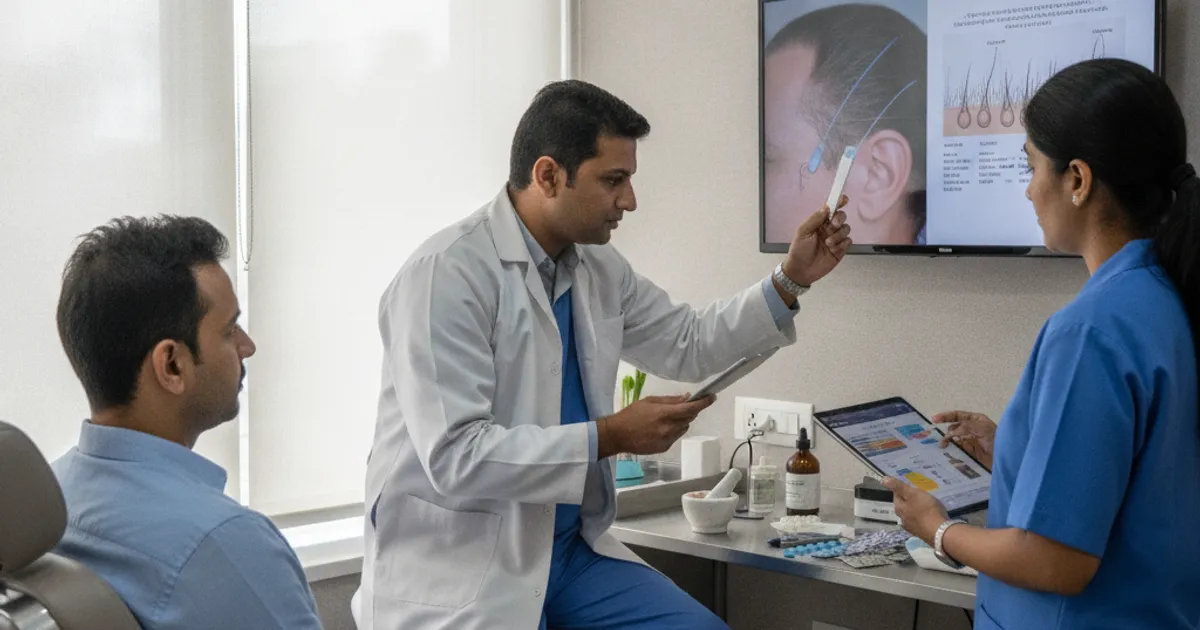
What Is Topical Finasteride and How Does It Work?
Topical finasteride is a liquid or gel formulation of the same active ingredient found in oral finasteride tablets. Instead of swallowing a pill, you apply the medication directly to your scalp. The goal is to block the conversion of testosterone into dihydrotestosterone (DHT) right at the hair follicle, where it matters most. DHT is the hormone responsible for shrinking hair follicles in men with male pattern baldness. By inhibiting the enzyme 5-alpha-reductase, finasteride reduces DHT levels and can slow down or partially reverse hair loss.
- Oral finasteride lowers DHT throughout the entire body, which can cause systemic side effects.
- Topical finasteride aims to work locally on the scalp while minimising the amount that enters the bloodstream.
- It is typically available as a prescription spray, gel, or solution from compounding pharmacies.
- Some commercial topical finasteride products exist, but many people turn to DIY versions using crushed tablets.
Can You Crush Finasteride Tablets for Topical Use?
Yes, people do it. The practice involves crushing finasteride tablets into a fine powder and mixing it with a carrier liquid like minoxidil solution, propylene glycol, ethanol, or a simple moisturising lotion. The idea is to create a homemade topical solution that delivers finasteride to the scalp. But just because it's possible doesn't mean it's ideal. Crushing tablets at home is messy, imprecise, and carries risks of inconsistent dosing and skin irritation.
- You need a pill crusher or mortar and pestle to get a fine, even powder.
- The powder must dissolve or suspend well in the carrier; otherwise, it sits on the scalp and doesn't absorb.
- Common carriers include minoxidil solution, ethanol, propylene glycol, or a mild lotion.
- Sterility is a concern—homemade mixtures can grow bacteria if not stored properly.
- Dosing is guesswork unless you measure carefully with a scale or use a known number of tablets per volume.
The Evidence: Does Crushed Tablet Topical Finasteride Grow Hair?
There is no high-quality clinical trial specifically on crushed finasteride tablets applied topically. However, studies on compounded topical finasteride solutions—which are essentially the same idea but made by a pharmacy—show promise. A few small trials and case reports suggest that topical finasteride can reduce scalp DHT and improve hair counts, sometimes with fewer sexual side effects than the oral version. But the evidence is weaker than for oral finasteride, and the DIY method introduces variables that can affect results.
- Compounded topical finasteride has been shown to lower scalp DHT in several small studies.
- Some trials report improvements in hair count and hair thickness after 3–6 months.
- Head-to-head comparisons with oral finasteride are limited, but topical appears less effective at lowering serum DHT.
- No study has directly tested crushed tablets mixed at home, so we rely on extrapolation from pharmacy-compounded products.
| Study Type | Key Finding | Limitation |
|---|---|---|
| Randomised trial (compounded topical) | Reduced scalp DHT and improved hair growth vs. placebo | Small sample, short duration |
| Observational study | Fewer sexual side effects than oral finasteride | No control group |
| Case reports | Some users report hair regrowth with DIY crushed tablets | Anecdotal, no standardised method |
How to Use Crushed Finasteride Tablets Topically: Dosage and Frequency
There is no official dosage for crushed finasteride tablets applied topically. People who try it typically aim for a low concentration of finasteride in the carrier solution. That means dissolving a small amount of finasteride per millilitre of liquid. A common approach is to crush one 1 mg tablet and mix it with 1–2 mL of minoxidil solution or another carrier, then apply 1 mL to the scalp once or twice daily. But because tablets contain fillers and binders, the actual amount of finasteride that dissolves can vary.
- Typical target concentration: low percentage finasteride (1–2.5 mg per mL).
- Frequency: once daily is common; some use twice daily.
- Application: use a dropper or syringe to apply to the thinning areas on the scalp.
- Do not apply to broken or irritated skin.
- Wash hands thoroughly after handling.
- Store in a cool, dark place; make small batches to avoid contamination.
| Method | Example | Notes |
|---|---|---|
| Crush 1 mg tablet + 1 mL minoxidil | Apply 1 mL once daily | Low concentration |
| Crush 2.5 mg (2.5 tablets) + 1 mL carrier | Apply 0.5 mL twice daily | Higher concentration |
| Crush 5 mg tablet + 10 mL carrier | Apply 1 mL once daily | Very low concentration |
Expected Results and Timeline
With any finasteride treatment, patience is key. Hair growth cycles are slow. You won't see dramatic changes overnight. Most people who respond to topical finasteride notice reduced shedding within 2–3 months, and some new hair growth by 6 months. Full results typically take 12 months. If you stop using it, any benefits will fade within a few months. The same timeline applies whether you use a compounded product or a homemade crushed-tablet version, assuming the dose is adequate and you apply it consistently.
- 1–2 months: reduced hair shedding may begin.
- 3–6 months: early signs of regrowth in some users.
- 6–12 months: maximum benefit for most responders.
- If no improvement after 12 months, the treatment likely isn't working for you.
Side Effects and Risks of Topical Finasteride from Crushed Tablets
Topical finasteride is generally considered to have a lower risk of systemic side effects than the oral version, because less of the drug enters the bloodstream. But it's not risk-free. Some men still experience sexual side effects like reduced libido, erectile dysfunction, or decreased ejaculate volume. Skin irritation, itching, redness, and dryness are common with topical applications, especially if the carrier contains alcohol or propylene glycol. The DIY crushed-tablet method adds extra risks: inconsistent dosing, contamination, and accidental exposure to others.
- Local skin reactions: itching, burning, redness, flaking.
- Systemic effects: rare but possible—libido changes, breast tenderness, mood changes.
- Allergic contact dermatitis to carrier ingredients.
- Risk of transferring the drug to partners or children through skin contact.
- Pregnant women must avoid any contact with finasteride, including crushed tablets.
| Side Effect | Oral Finasteride | Topical Finasteride (compounded or DIY) |
|---|---|---|
| Sexual dysfunction | Reported in clinical trials | Less common, but still reported |
| Scalp irritation | Not applicable | Common, especially with alcohol-based carriers |
| Systemic DHT reduction | Significant | Mild to moderate |
| Risk to pregnant women | High (do not handle) | High (do not handle) |
Who Is a Suitable Candidate?
Topical finasteride—whether compounded or homemade—is most suitable for men with early to moderate male pattern baldness who want to avoid oral finasteride side effects. It may also appeal to those who have tried minoxidil alone without enough success. It is not for women, especially those who are pregnant or may become pregnant, due to the risk of birth defects. Men with severe baldness may find it less effective because hair follicles may already be lost. Anyone considering this should talk to a dermatologist or hair loss specialist first.
- Men with early signs of male pattern baldness (Norwood 2–4).
- Men who experienced side effects on oral finasteride.
- Men looking to combine topical finasteride with minoxidil.
- Not suitable for women of childbearing age.
- Not suitable for those with known sensitivity to finasteride or carrier ingredients.
Cost of Crushed Tablet Topical Finasteride vs. Alternatives
Crushing finasteride tablets is one of the cheapest ways to get topical finasteride. A month's supply of generic finasteride 1 mg tablets can cost as little as a few dollars. Add a carrier like minoxidil solution, and you're still under most commercial topical finasteride products. Compounded topical finasteride from a pharmacy typically costs more. Prescription oral finasteride is also inexpensive. The table below compares typical monthly costs in USD.
| Option | Typical Monthly Cost (USD) | Notes |
|---|---|---|
| Crushed finasteride tablets + minoxidil | Low | DIY, variable dosing |
| Compounded topical finasteride | Moderate | Prescription required, standardised |
| Oral finasteride (generic) | Low | Prescription required |
| Minoxidil (generic topical) | Low | Over-the-counter |
How It Compares to Other Hair Loss Treatments
Topical finasteride is just one option in a crowded field. Oral finasteride is the gold standard for medical treatment, but it carries a higher risk of sexual side effects. Minoxidil is a topical vasodilator that can promote hair growth but doesn't address DHT. Low-level laser therapy and platelet-rich plasma (PRP) are non-drug options with mixed evidence. Hair transplant surgery is the only permanent solution for restoring hair in bald areas. Many people combine treatments for best results.
| Treatment | How It Works | Effectiveness | Main Drawbacks |
|---|---|---|---|
| Oral finasteride | Blocks DHT systemically | High for slowing loss, moderate for regrowth | Sexual side effects, prescription needed |
| Topical finasteride (compounded or DIY) | Blocks DHT locally | Moderate, evidence weaker | Skin irritation, inconsistent dosing if DIY |
| Minoxidil | Increases blood flow, prolongs growth phase | Moderate | Daily use, initial shedding, scalp irritation |
| Low-level laser therapy | Stimulates follicles with light | Low to moderate | Expensive, time-consuming |
| PRP injections | Growth factors from your blood | Moderate | Painful, costly, needs maintenance |
| Hair transplant | Moves DHT-resistant follicles | High for restored areas | Surgery, cost, scarring |
- Topical finasteride is best for those who want to avoid oral side effects.
- Minoxidil is a good add-on but works differently.
- Hair transplant is the only way to regrow hair in completely bald spots.
- Combining treatments often gives better results than any single option.
Frequently Asked Questions
Can I just crush finasteride tablets and mix them with my minoxidil?
You can, but it's not recommended without medical supervision. The dose will be inconsistent, and the fillers in the tablets may not dissolve well. It's safer to ask a doctor about compounded topical finasteride.
Is topical finasteride from crushed tablets as effective as oral finasteride?
Probably not. Oral finasteride lowers DHT throughout the body and has stronger evidence for effectiveness. Topical finasteride works locally and may be less potent, but it can still help some people.
What are the side effects of topical finasteride?
Common side effects include scalp irritation, itching, and redness. Sexual side effects are less common than with oral finasteride but can still occur. Pregnant women should never handle finasteride.
How long until I see results from topical finasteride?
It takes at least 3–6 months to see any change, and up to 12 months for full results. If you stop using it, any benefits will disappear within a few months.
More Guides
- Finasteride for Baldness: What It Can and Can't Do
Finasteride is a proven hair loss treatment, but it's not a cure. Learn how it works, dosage, side effects, and how it compares to other options.
- DHT-Blocking Shampoos: What Works and What's Marketing?
Do DHT-blocking shampoos really grow hair? We break down the science, evidence, usage, side effects, costs, and how they compare to other treatments.
- Clascoterone for Hair Loss: What the Research Shows
Clascoterone is a topical anti-androgen being studied for hair loss. Learn how it works, the evidence, how to use it, side effects, cost, and how it compares.
- Hims Minoxidil Spray: Ingredients, Results, and Cost
Hims Minoxidil Spray review: ingredients, how it works, results timeline, side effects, cost, and how it compares to other hair loss treatments.