
Hairline Shape for Your Face: Transplant Guide
Learn how hairline shape is planned in a hair transplant, which shape suits your face, recovery, results, cost, and how it compares to alternatives.
What Is Hairline Shape and Why It Matters
Hairline shape is the outline where your hair meets your forehead. It is not a straight line. A natural hairline has a slight recession at the temples, a soft transition zone, and individual hairs that vary in thickness and angle. When surgeons plan a hair transplant, they are not just moving hair from one place to another. They are rebuilding a shape that fits your face, your age, and your long-term hair loss pattern. Get the shape wrong and the result can look pluggy, too low, or oddly straight. Get it right and most people will never guess you had a procedure.
How Hairline Shape Is Planned and Created in a Transplant
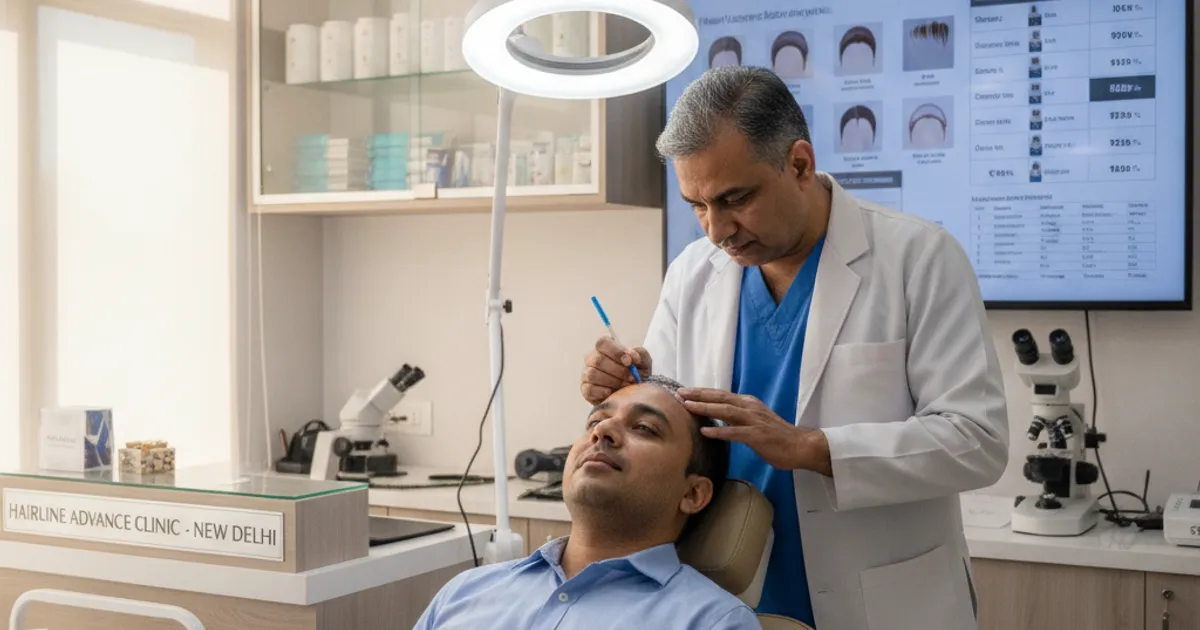
Planning starts before any incisions are made. The surgeon measures your face, studies your existing hair pattern, and considers how your hair loss might progress. They mark a proposed hairline on your forehead with a surgical pen. You will usually review this line in a mirror and discuss adjustments. The goal is to create a shape that looks natural now and still looks natural in ten or twenty years. During the procedure, the surgeon creates tiny recipient sites along that line. Single-hair grafts are placed at the very front to create a soft, irregular edge. Behind that, multi-hair grafts add density. The angle and direction of each graft matter as much as the shape itself.
- Facial measurements: the surgeon assesses forehead height, width, and brow position.
- Existing pattern: your current hairline and any thinning areas guide the design.
- Donor hair characteristics: curl, caliber, and color affect how the line will look.
- Age and future loss: a conservative line is often better for younger patients.
- Graft placement: single hairs in front, denser grafts behind for a natural transition.
Matching Hairline Shape to Face Shape
There is no single correct hairline for every face. The shape should balance your proportions. A round face often benefits from a slightly more angular hairline with a gentle widow's peak, which adds definition. A long face usually looks better with a flatter, lower hairline that shortens the forehead visually. An oval face is the most flexible and can carry several shapes. A square face often suits a soft, rounded hairline that offsets a strong jaw. A heart-shaped face may need a hairline that is not too wide at the temples. These are general guidelines, not rules. Your surgeon will adapt them to your specific features.
| Face Shape | Recommended Hairline Tendency | What to Avoid |
|---|---|---|
| Round | Slightly angular with a soft widow's peak | A perfectly straight or very low line |
| Long | Flatter and a bit lower to shorten the forehead | A high, arched hairline |
| Oval | Most shapes work; a gentle curve is classic | Overly aggressive recession |
| Square | Softly rounded with subtle temple recession | A sharp, boxy line |
| Heart | Moderate width at the temples | A very wide or flat line |
- Bring photos of your younger hairline if you have them.
- Ask the surgeon to show you how the line will look from different angles.
- Consider how you style your hair now and how you might style it later.
- Remember that a slightly conservative line ages better than an aggressive one.
Recovery and Results Timeline
Recovery from a hairline transplant is usually straightforward. The first few days involve some swelling, redness, and tiny scabs. Most people can return to desk work within a few days, though strenuous exercise should wait a week or two. The transplanted hairs often shed in the first month, which can be alarming but is normal. New growth starts around three to four months. By six months you will see a noticeable change. Full results typically take twelve to eighteen months as the hair thickens and matures. These timelines are typical but can vary by individual and clinic protocol.
Who Is a Good Candidate for Hairline Design?
Good candidates have stable or slowly progressing hair loss, enough donor hair on the back and sides of the scalp, and realistic expectations. Age matters. Younger patients often need a more conservative hairline because future loss could leave them with an isolated patch of transplanted hair. Older patients with more stable loss can sometimes be more aggressive. Health also plays a role. Uncontrolled diabetes, bleeding disorders, or active scalp infections may need to be addressed first. A consultation with a qualified surgeon is the only way to know for sure.
- You have a clear understanding of what a transplant can and cannot do.
- Your donor area has enough density to supply the needed grafts.
- Your hair loss pattern is relatively predictable.
- You are willing to follow aftercare instructions and attend follow-ups.
- You are not expecting a completely different face or a perfect teenage hairline.
Cost of Hairline Design and Transplant
The cost of a hairline transplant depends on how many grafts you need, the clinic's location, the surgeon's experience, and whether the price includes things like medication, PRP, or accommodation. Hairline design itself is usually part of the surgical fee, not a separate charge. Below are average case prices by stage of hair loss. These figures are general guidance, not a quote.
| Stage of Hair Loss | Average Case Price (USD) |
|---|---|
| Early | $3,000 |
| Moderate | $5,500 |
| Advanced | $8,500 |
How Hairline Transplant Compares to Alternatives
A hair transplant is not the only option for a receding hairline. Medications like finasteride and minoxidil can slow or partially reverse loss, but they do not restore a hairline that has already receded. Hair fibers and concealers can mask thinning temporarily. A hair system or toupee can create a full look instantly but requires maintenance and does not grow. Scalp micropigmentation tattoos the appearance of short hair and can define a hairline, but it is flat and does not add volume. Each option has trade-offs in cost, permanence, and natural feel.
Hair Transplant
$3,000–$8,500+
- ✓ Permanent, growing hair
- ✓ Natural shape and density possible
- ✓ Requires surgery and recovery
- ✓ Results take 12–18 months
Medication (finasteride/minoxidil)
Ongoing monthly cost
- ✓ Non-surgical
- ✓ Can slow or partially reverse loss
- ✓ Does not restore a receded hairline
- ✓ Must be used continuously
- Medications work best for early thinning, not for rebuilding a hairline.
- Concealers are temporary and can look unnatural in bright light.
- Hair systems require regular maintenance and replacement.
- Scalp micropigmentation can define a hairline but adds no volume.
- A transplant is the only option that creates permanent, growing hair in a new shape.
Choosing a Clinic for Hairline Design
The clinic you choose matters more than the technique name. Look for a surgeon who specializes in hair restoration and can show you a portfolio of natural-looking hairlines. Ask how they plan the shape, how many grafts they recommend, and what happens if you need a second session later. Check whether the price includes follow-up visits, medication, and PRP. Read reviews from patients who are at least a year post-op, since early photos can be misleading. If you are considering travel, factor in flights, accommodation, and aftercare. Clinic Reccy lists clinics by city and country so you can compare options in one place.
- Verify the surgeon's credentials and hair-restoration experience.
- Ask to see before-and-after photos of patients with your face shape and hair type.
- Confirm what the quoted price includes and what it does not.
- Ask about the clinic's policy on revisions or touch-ups.
- Check that you can speak with the surgeon directly before the procedure.
Frequently Asked Questions
Can I choose any hairline shape I want?
You can discuss your preferences, but the surgeon will recommend a shape that fits your face, donor supply, and future hair loss. An overly low or aggressive line may not be in your long-term interest.
How long does it take to see the final hairline shape?
Early growth starts around three to four months. The shape becomes clearer by six to nine months, and final maturation usually takes twelve to eighteen months. These timelines are typical but can vary.
Is hairline design included in the transplant cost?
In most clinics, hairline design is part of the surgical planning and is included in the quoted price. Some clinics may charge a separate consultation fee, so ask upfront.
What if I do not like the hairline shape after surgery?
Wait at least twelve months before judging the result. If you are still unhappy, a touch-up session can often refine the shape, but it is better to get the plan right the first time.
More Guides
- Hair Transplant for Curly Hair: Graft and Technique Tips
A plain-English guide to hair transplants for curly hair: how surgeons adapt graft harvesting and placement, recovery, results, costs, and who it suits.
- How Long Does a Hair Transplant Last? Long-Term Durability
How long does a hair transplant last? We explain the procedure, recovery, durability, costs by stage of hair loss, and how it compares to alternatives.
- Hair Transplant Revision: When a Second Procedure Makes Sense
Considering a hair transplant revision? Learn how a second procedure works, who it suits, recovery, results, and costs. Expert explainer from Clinic Reccy.
- Hair Transplant for Norwood 6 and 7: What's Possible
A clear look at hair transplant options for Norwood 6 and 7 hair loss: graft limits, staging, recovery, costs, and realistic results.