
DHI vs FUE: Which Hair Transplant Technique Is Better?
DHI vs FUE: compare techniques, results, recovery, and costs. Find out which hair transplant method suits your stage of hair loss and budget.
DHI vs FUE: Which Hair Transplant Technique Is Better?
If you're researching hair transplants, you've probably seen DHI and FUE mentioned everywhere. Both are popular, both can produce natural-looking results, and both have loyal fans among surgeons and patients. But they're not the same procedure, and the differences matter when you're choosing a clinic and budgeting for treatment.
The short answer: DHI (Direct Hair Implantation) is a refined version of FUE (Follicular Unit Extraction). Both extract individual hair follicles, but DHI uses a specialised implanter pen to place them directly into the scalp without creating recipient sites first. FUE requires making tiny incisions before grafting. DHI offers more precision and denser packing; FUE is generally faster and more affordable.
What Is the Difference Between DHI and FUE?
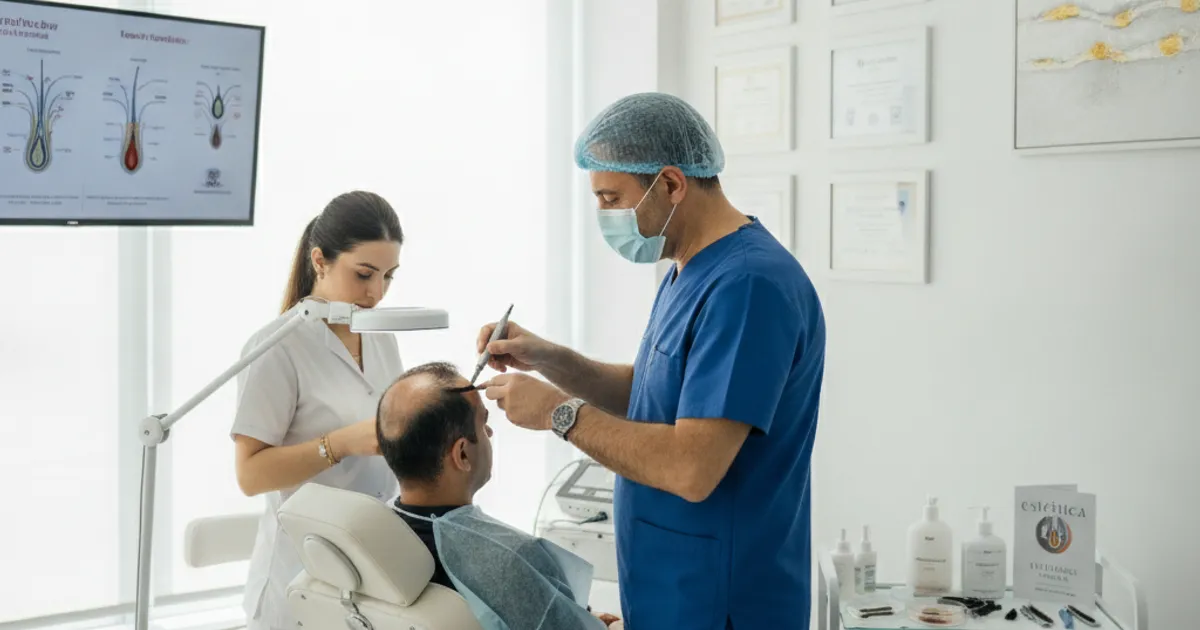
The core difference comes down to how grafts are placed. In FUE, the surgeon extracts follicles one by one, then creates small slits in the recipient area, and finally inserts the grafts. In DHI, the extraction is the same, but the implantation step uses a Choi implanter pen that places the graft directly into the scalp. This eliminates the need for pre-made incisions and gives the surgeon more control over angle, depth, and direction.
| Feature | FUE | DHI |
|---|---|---|
| Extraction method | Micro-punch extraction | Micro-punch extraction |
| Implantation method | Pre-made incisions, then graft insertion | Direct implantation with Choi pen |
| Speed | Faster (more grafts per session) | Slower (more time per graft) |
| Precision | Good | Very high |
| Graft handling | Grafts stored in solution before placement | Grafts placed immediately after extraction |
| Learning curve for surgeon | Moderate | Steeper |
How Do DHI and FUE Compare in Terms of Results and Recovery?
Both techniques can deliver excellent, natural-looking results in the right hands. The main differences show up in how densely hair can be packed, how quickly you heal, and how long the procedure takes.
| Factor | FUE | DHI |
|---|---|---|
| Hair density achieved | High | Very high (especially in small areas) |
| Natural hairline | Very good | Excellent (precise angle control) |
| Scarring | Minimal dot scars | Minimal dot scars |
| Shock loss risk | Moderate | Lower (less trauma to surrounding tissue) |
| Suitable for large areas | Yes | Yes, but may need multiple sessions |
- DHI tends to be better for creating dense, natural hairlines and filling small areas.
- FUE is often preferred for larger sessions where speed and graft volume matter.
- Recovery is slightly faster with DHI because there are no pre-made incisions.
- Both techniques leave minimal scarring when performed by an experienced surgeon.
Is DHI More Expensive Than FUE?
Yes, DHI usually costs more than FUE. The procedure takes longer, requires more surgeon time, and uses specialised equipment. The price difference varies by clinic and country, but DHI typically commands a premium over FUE for the same number of grafts.
- FUE is generally the more budget-friendly option.
- DHI costs more due to longer procedure time and specialised tools.
- Some clinics charge a flat rate per graft; others charge per session.
- Always ask whether the quoted price includes aftercare, medications, and follow-up visits.
Which Technique Is Right for You?
There's no universal winner. The right choice depends on your hair loss pattern, donor hair quality, budget, and the surgeon's expertise. If you want maximum density in a specific area and don't mind a longer procedure, DHI might be worth the extra cost. If you need a large number of grafts and want to keep costs down, FUE is often the smarter pick.
- Choose DHI if you want precise hairline work and dense packing.
- Choose FUE if you need a large session or have a tighter budget.
- Ask your surgeon which technique they specialise in — skill matters more than the label.
- Consider a hybrid approach: some clinics combine both methods for optimal results.
What Should You Look for in a Clinic?
The technique matters, but the clinic and surgeon matter more. A skilled surgeon using FUE can outperform a mediocre DHI provider every time. Look for board certification, experience with your hair type, transparent pricing, and realistic before-and-after photos.
- Check if the surgeon is a member of a recognised hair restoration society.
- Ask how many procedures they perform per week.
- Request to see results on patients with similar hair loss to yours.
- Confirm what's included in the price: consultations, medications, PRP, follow-ups.
- Read independent reviews and avoid clinics that pressure you into booking.
Frequently Asked Questions
Is DHI better than FUE?
Not inherently. DHI offers more precision and denser packing, but FUE is faster and more affordable. The best technique depends on your goals, donor hair, and the surgeon's skill.
Does DHI hurt more than FUE?
Most patients report similar discomfort. Both are performed under local anaesthesia, so pain during the procedure is minimal. Post-op soreness is comparable.
How long do DHI and FUE results last?
Both techniques produce permanent results because the transplanted follicles are resistant to DHT. However, natural aging and ongoing hair loss can affect surrounding hair.
Can I switch from FUE to DHI later?
Yes, many patients have a second procedure using a different technique. Discuss this with your surgeon to ensure your donor area can support another session.
More Guides
- Hair Transplant and Blood Thinners: Safety and Timing
Can you have a hair transplant on blood thinners? Learn why they matter, which ones raise bleeding risk, how long to stop before surgery, and when to restart.
- Finasteride and PSA Testing: What You Need to Know
Finasteride lowers PSA levels, so your test results need careful interpretation. Learn how finasteride affects PSA, the adjustment factor, and what to tell your
- Can You Cure a Receding Hairline? What's Realistic
Can you cure a receding hairline? Learn what's realistic with medications, transplants, and lifestyle changes, plus expected results and costs.
- Minoxidil Hair Thinning Before Growth: Is It Normal?
Is minoxidil hair thinning before growth normal? Yes, it's a common sign the treatment is working. Learn why it happens, how long it lasts, and when to worry.