
Derma Rolling and Minoxidil: Does It Boost Hair Growth?
Derma rolling may boost minoxidil absorption and hair regrowth. Learn the evidence, how to use it, expected results, risks, and costs.
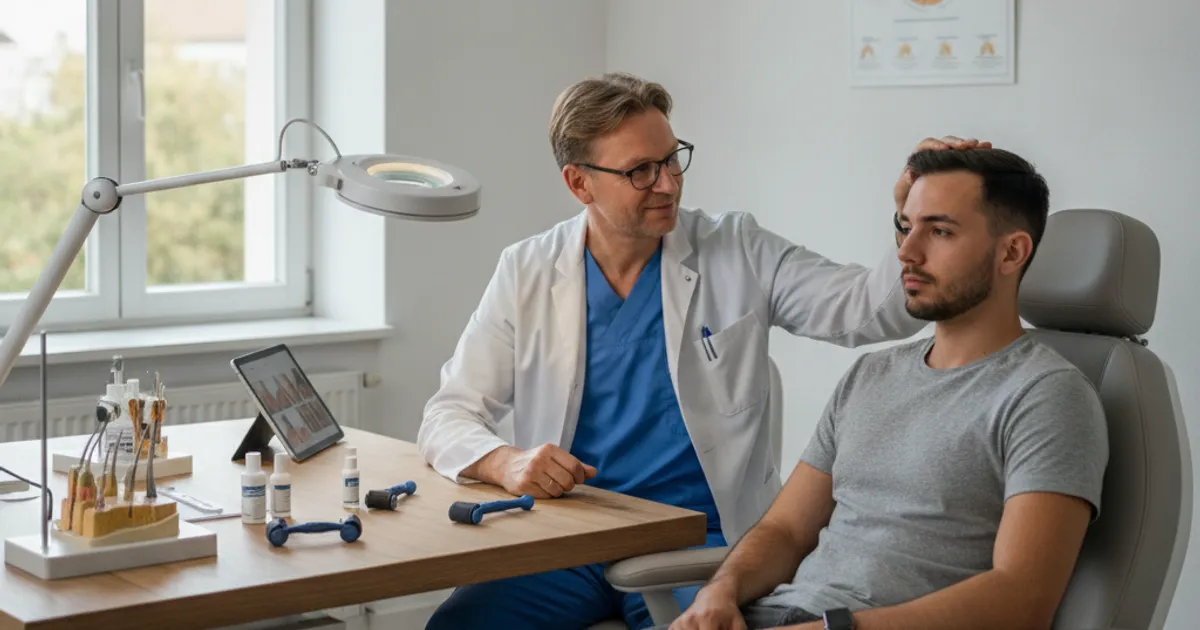
What Is Derma Rolling and How Does It Work?
Derma rolling, also called microneedling, is a technique that uses a small handheld device covered in fine needles to create tiny punctures in the skin. When you roll it over your scalp, it creates micro-injuries in the top layers of the skin. Your body responds by sending growth factors and increasing blood flow to the area, which can stimulate hair follicles and improve the absorption of topical treatments like minoxidil.
- The device is a cylinder with hundreds of tiny needles, usually 0.5mm to 1.5mm in length, mounted on a handle.
- Rolling it across the scalp creates controlled micro-wounds that trigger a healing response.
- This healing response increases collagen production and blood circulation around hair follicles.
- The temporary channels created in the skin allow minoxidil to penetrate deeper than it would on its own.
- Derma rolling is different from derma stamping or professional microneedling, though the principle is similar.
The Evidence: Does Derma Rolling Actually Boost Minoxidil?
There is a reasonable amount of research on microneedling for hair loss, and the results are generally positive. Several studies have compared minoxidil alone versus minoxidil combined with microneedling. Most found that the combination led to better hair growth than minoxidil by itself. However, many of these studies were small, and the quality of evidence varies. It is not a miracle cure, but for many people it appears to make minoxidil more effective.
- A 2013 study by Dhurat et al. found that participants using minoxidil plus weekly microneedling grew more hair than those using minoxidil alone.
- A 2018 trial by Bao et al. showed that microneedling alone can stimulate some hair growth, but the combination with minoxidil was superior.
- Not all studies agree, and some experts say the evidence is still not strong enough to call it a proven booster.
- The frequency and needle depth used in studies vary, making it hard to compare results directly.
- Most research has been done on men with androgenetic alopecia, so results for women or other types of hair loss are less clear.
How to Use Derma Rolling with Minoxidil: Frequency and Technique
If you want to try derma rolling with minoxidil, you need to be consistent and careful. The goal is to create enough micro-injury to stimulate the follicle without causing excessive damage or irritation. Most protocols suggest using a derma roller once a week, but some people do it every other week. The needle length matters: shorter needles (0.5mm) are for mild stimulation and better absorption, while longer needles (1.0mm to 1.5mm) are for deeper stimulation but require more caution and longer recovery between sessions.
- Start with a 0.5mm roller if you are new to derma rolling. It is less likely to cause irritation.
- Sanitize your roller before and after each use with rubbing alcohol. Never share your roller.
- Roll in four directions: horizontally, vertically, and diagonally both ways, applying light pressure.
- Do not roll over active acne, cuts, or irritated skin.
- Wait at least 24 hours after rolling before applying minoxidil. Applying it immediately can cause stinging and may increase systemic absorption.
- Some people apply minoxidil right after rolling, but this is not recommended due to risk of irritation and side effects.
- Replace your roller every 2-3 months, or sooner if needles become dull or bent.
| Needle Length | Frequency | Best For | Notes |
|---|---|---|---|
| 0.5mm | 1-2 times per week | Beginners, mild thinning, absorption boost | Minimal downtime, low risk of irritation |
| 1.0mm | Once per week | Moderate thinning, stronger stimulation | May cause redness for a day |
| 1.5mm | Every 2-3 weeks | Advanced thinning, stubborn areas | Higher risk of side effects, use with caution |
Expected Results and Timeline
You will not see results overnight. Hair growth cycles are slow, and it takes time for follicles to respond. Most people who use minoxidil alone start seeing vellus hairs (fine, colorless hairs) within 2-3 months, with more noticeable growth at 6 months. Adding derma rolling may speed up the process slightly, but you should still expect a similar timeline. The key is consistency: if you stop, you lose the benefits.
- Weeks 1-4: Possible mild redness and flaking after rolling. No visible hair changes yet.
- Months 2-3: Some users notice less shedding and maybe tiny new hairs.
- Months 4-6: More noticeable thickening and growth in areas where the combination is used.
- Months 6-12: Best results typically seen. Hair may look denser and healthier.
- If you see no improvement after 6 months of consistent use, talk to a doctor about other options.
Side Effects and Risks of Combining Derma Rolling with Minoxidil
Derma rolling is generally safe when done correctly, but it is not without risks. The most common side effects are temporary redness, mild swelling, and tenderness at the treatment site. More serious risks include infection if the roller is not sterile, and scarring if you roll too aggressively or too often. When combined with minoxidil, there is a chance of increased irritation because minoxidil contains propylene glycol, which can sting on broken skin. There is also a theoretical risk of more minoxidil entering the bloodstream, which could lead to systemic side effects like dizziness or rapid heartbeat, though this is rare.
- Redness and mild swelling: usually resolves within a few hours to a day.
- Dryness and flaking: can happen as the skin heals.
- Infection: risk if roller is not cleaned properly or if you roll over broken skin.
- Scarring: can occur if needles are too long or pressure is too heavy.
- Increased minoxidil side effects: possible if you apply minoxidil immediately after rolling.
- Hyperpigmentation: some people may develop dark spots, especially those with darker skin tones.
Who Is a Good Candidate for Derma Rolling + Minoxidil?
Derma rolling with minoxidil is most suitable for people with early to moderate androgenetic alopecia (male or female pattern hair loss). It may also help those with mild thinning due to stress or nutritional deficiencies, but the evidence is weaker. It is not a replacement for hair transplant surgery, and it will not regrow hair on completely bald, scarred areas where follicles are dead. If you have a healthy scalp and are willing to commit to a regular routine, it is worth trying.
- Men and women with early signs of pattern hair loss.
- People who are already using minoxidil but want to enhance results.
- Those who have not seen satisfactory results from minoxidil alone after 6 months.
- Individuals without active scalp infections or skin conditions.
- People who are patient and can stick to a weekly routine.
- Not recommended for those with bleeding disorders or who take blood thinners without medical advice.
Cost of Derma Rolling vs. Other Minoxidil Boosters
Derma rolling is one of the cheapest ways to potentially boost minoxidil. A basic derma roller costs between $10 and $30, and it lasts a few months. Other minoxidil boosters, like prescription tretinoin or low-level laser therapy, are more expensive. For example, a prescription for tretinoin can cost $30-$100 per tube, and laser caps can run from $200 to $600. If you are considering a hair transplant, costs are much higher and depend on the stage of hair loss.
| Method | Typical Cost (USD) | Frequency | Notes |
|---|---|---|---|
| Derma roller | $10 - $30 | Replace every 2-3 months | Lowest upfront cost |
| Tretinoin (prescription) | $30 - $100 per tube | Daily | Requires prescription, can irritate skin |
| Low-level laser therapy (cap) | $200 - $600 | Every other day | More expensive, mixed evidence |
| Platelet-rich plasma (PRP) | $500 - $1,500 per session | Every 1-3 months | In-office procedure, higher cost |
| Hair transplant | $3,000 - $8,000+ | One-time (plus possible touch-ups) | Surgical, permanent results in transplanted areas |
How Derma Rolling Compares to Other Minoxidil Enhancers
Derma rolling is not the only way to make minoxidil work better. Other options include tretinoin, which increases skin turnover and can enhance absorption; ketoconazole shampoo, which may reduce inflammation; and low-level laser therapy, which may stimulate follicles. Each has its own pros and cons. Derma rolling is appealing because it is cheap, easy to do at home, and has a decent amount of research behind it. But it requires consistency and carries some risk if not done properly.
| Method | How It Works | Evidence Strength | Cost | Convenience |
|---|---|---|---|---|
| Derma rolling | Creates micro-channels, boosts absorption and growth factors | Moderate | Low | At-home, weekly |
| Tretinoin | Increases cell turnover, enhances penetration | Moderate | Low to moderate | Daily, prescription needed |
| Ketoconazole shampoo | Anti-inflammatory, may reduce DHT | Moderate | Low | 2-3 times per week |
| Low-level laser therapy | Stimulates follicles with light energy | Weak to moderate | Moderate to high | At-home or in-clinic |
| PRP injections | Delivers growth factors directly to scalp | Moderate | High | In-clinic, every few months |
- Derma rolling is the cheapest and most accessible option for most people.
- Tretinoin can be effective but often causes irritation and peeling.
- Ketoconazole shampoo is easy to add to your routine and may have additional benefits.
- Low-level laser therapy requires more investment and time, and evidence is mixed.
- PRP is the most expensive but can be effective for some, especially when combined with minoxidil.
Derma Rolling and Hair Transplant Recovery
If you have had a hair transplant, you might wonder if derma rolling can help. The short answer is: not immediately. After a transplant, the scalp needs time to heal, and the newly transplanted follicles are fragile. Most surgeons advise waiting at least 6 to 12 months before considering any microneedling on the transplanted areas. Once healed, some people use derma rolling to improve the absorption of minoxidil on the surrounding scalp, but it should be done with caution and only after clearing it with your surgeon. Derma rolling is not a substitute for a transplant, and it will not revive follicles that have already died. If you are considering a transplant, costs vary by stage of hair loss, as shown above.
Frequently Asked Questions
Can I apply minoxidil immediately after derma rolling?
It is not recommended. Applying minoxidil right after rolling can cause stinging, irritation, and may increase systemic absorption, leading to side effects. Wait at least 24 hours before applying minoxidil to the treated area.
How often should I replace my derma roller?
Replace your derma roller every 2-3 months, or sooner if the needles become dull, bent, or discolored. Dull needles can cause more damage than benefit.
Is derma rolling safe for women with hair loss?
Yes, many women use derma rolling with minoxidil for female pattern hair loss. However, women who are pregnant or breastfeeding should avoid minoxidil and consult a doctor before using derma rolling.
Will derma rolling work if I am not using minoxidil?
Some studies suggest that derma rolling alone can stimulate mild hair growth, but the effects are generally weaker than when combined with minoxidil. For best results, use them together.
More Guides
- Finasteride for Baldness: What It Can and Can't Do
Finasteride is a proven hair loss treatment, but it's not a cure. Learn how it works, dosage, side effects, and how it compares to other options.
- DHT-Blocking Shampoos: What Works and What's Marketing?
Do DHT-blocking shampoos really grow hair? We break down the science, evidence, usage, side effects, costs, and how they compare to other treatments.
- Clascoterone for Hair Loss: What the Research Shows
Clascoterone is a topical anti-androgen being studied for hair loss. Learn how it works, the evidence, how to use it, side effects, cost, and how it compares.
- Hims Minoxidil Spray: Ingredients, Results, and Cost
Hims Minoxidil Spray review: ingredients, how it works, results timeline, side effects, cost, and how it compares to other hair loss treatments.