
Does Finasteride Grow Hair on the Hairline and Crown?
Finasteride can regrow hair on the crown and sometimes thicken the hairline, but results vary. Learn how it works, timelines, side effects, and what to expect.
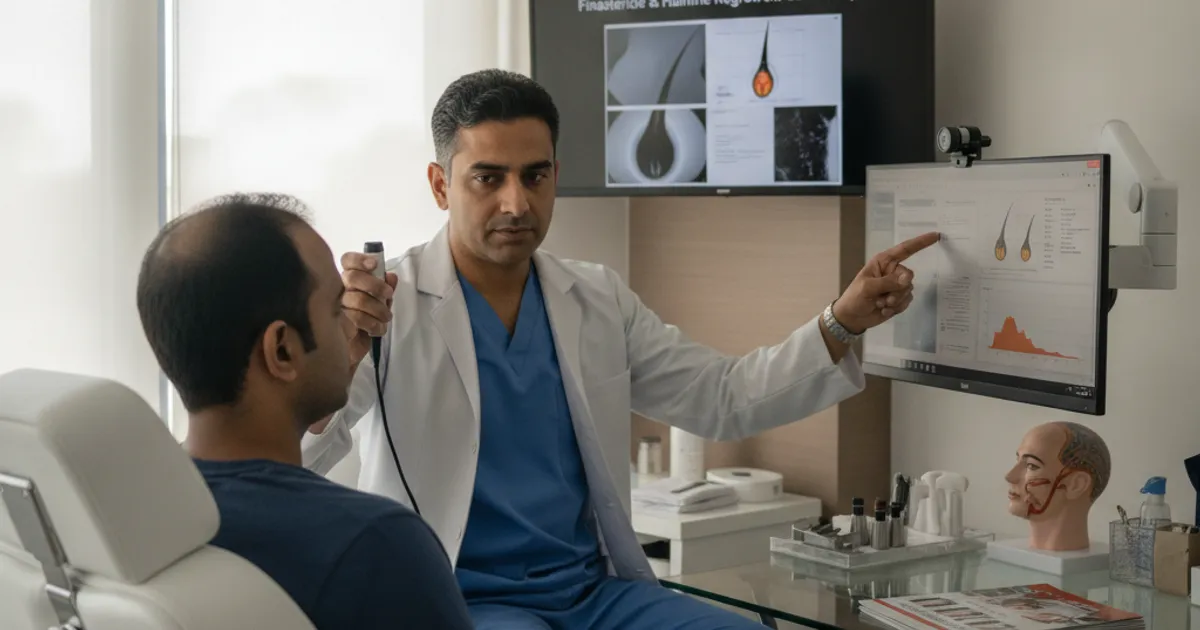
Yes, finasteride can grow hair on both the hairline and crown, but it works better on the crown. Large clinical trials like the Propecia Long-Term Efficacy and Safety Study show it reliably regrows hair on the vertex (crown) and can slow or stop hairline recession, though visible regrowth at the hairline is less predictable. It's most effective for early to moderate hair loss.
How Does Finasteride Work?
Finasteride blocks the enzyme 5-alpha-reductase, which converts testosterone into dihydrotestosterone (DHT). DHT shrinks hair follicles in genetically predisposed people, leading to male pattern baldness. By lowering DHT levels, finasteride helps follicles recover and produce thicker hair. According to the American Hair Loss Association, finasteride can reduce scalp DHT by roughly 60–70%, but individual results vary.
- Reduces DHT in the scalp, protecting hair follicles from miniaturization.
- Works systemically (taken as a daily pill), so it affects the whole scalp.
- Takes months to show visible results because hair grows slowly.
- Is most effective for crown hair loss; hairline regrowth is possible but less consistent.
Does Finasteride Regrow Hair on the Crown?
Yes, the crown is where finasteride shines. In the Propecia Long-Term Efficacy and Safety Study, a significant proportion of men with crown thinning experienced visible regrowth or stopped losing hair after two years. The vertex is highly responsive because follicles there are often still alive and can recover when DHT is suppressed.
- Most men see noticeable thickening on the crown within 6–12 months.
- Regrowth is usually denser and more reliable than at the hairline.
- If the crown is completely bald (slick), regrowth is unlikely—finasteride works best on thinning areas.
- Combining with minoxidil can boost crown results further.
Does Finasteride Regrow Hair on the Hairline?
Finasteride can help the hairline, but it's less predictable. It often slows recession and may thicken existing miniaturized hairs, but regrowing a receded hairline (especially a mature hairline) is harder. Many men maintain their hairline rather than see significant new growth.
- Best for early hairline thinning—when hairs are miniaturized but not gone.
- Can halt further recession in many cases.
- Visible regrowth at the front is less common than at the crown.
- Combining with minoxidil or procedures like hair transplant may be needed for significant hairline restoration.
How Long Does Finasteride Take to Work?
Finasteride requires patience. Hair grows slowly, and it takes several months to see changes. Most men notice reduced shedding within 3–6 months, and visible regrowth typically appears by 12 months. Full results take up to 2 years.
| Timeframe | What to Expect |
|---|---|
| 1–3 months | Shedding may decrease; no visible regrowth yet. |
| 3–6 months | Early thickening; some men notice less hair fall. |
| 6–12 months | Visible improvement, especially on the crown. |
| 12–24 months | Full results; hair density stabilizes. |
What Results Can You Expect?
Results vary by individual, but clinical trials give a clear picture. Finasteride is most effective for crown thinning and early hairline recession. Here's a realistic breakdown based on published studies:
| Hair Loss Area | Likelihood of Regrowth | Typical Outcome |
|---|---|---|
| Crown (vertex) | High (many men see improvement) | Noticeable thickening and regrowth |
| Hairline (frontal) | Moderate (some men see improvement) | Slowed recession, some thickening |
| Completely bald areas | Low | Little to no regrowth |
What Are the Side Effects of Finasteride?
Finasteride is generally well tolerated, but some men experience side effects. Most are reversible upon stopping the medication. In clinical trials, sexual side effects such as decreased libido and erectile dysfunction were reported in a small percentage of users—typically under 5%—though real-world rates may vary. Common side effects include:
- Decreased libido (reported in a small percentage of users).
- Erectile dysfunction (reported in a small percentage of users).
- Reduced semen volume.
- Depression or mood changes (rare).
- Breast tenderness or enlargement (rare).
Is Finasteride Better Than Minoxidil for the Hairline and Crown?
Finasteride and minoxidil work differently and are often used together. Finasteride addresses the root cause (DHT), while minoxidil stimulates blood flow and prolongs the growth phase. For the crown, finasteride is generally more effective; for the hairline, minoxidil may provide better visible regrowth, though results vary.
| Feature | Finasteride | Minoxidil |
|---|---|---|
| Mechanism | Blocks DHT production | Stimulates blood flow to follicles |
| Best for | Crown thinning | Hairline and crown (topical) |
| Form | Oral pill (daily) | Topical liquid/foam (twice daily) |
| Regrowth at hairline | Moderate | Moderate to good |
| Regrowth at crown | High | Moderate |
| Side effects | Sexual, mood (uncommon) | Scalp irritation, itching |
Frequently Asked Questions
Can finasteride regrow a receding hairline?
It can slow recession and thicken existing hairs, but significant regrowth of a receded hairline is less common. It works best for early thinning.
How long until I see results on my crown?
Most men notice visible improvement on the crown within 6–12 months, with full results at 2 years.
Do I have to take finasteride forever?
Yes, to maintain benefits you need to keep taking it. Stopping will lead to loss of regrown hair within 6–12 months.
Is finasteride safe?
It is FDA-approved and generally safe, but a small percentage of men experience sexual side effects. Talk to your doctor about risks.
How to Use Finasteride with Other Treatments for Better Hairline and Crown Results
Finasteride is often part of a broader treatment plan. Combining it with other therapies can improve outcomes, especially for areas where finasteride alone may be less effective.
- Minoxidil: Using both finasteride and minoxidil is common. Finasteride reduces DHT, while minoxidil stimulates blood flow and prolongs the growth phase. Some studies suggest the combination may be more effective than either alone, particularly for the crown.
- Ketoconazole shampoo: This antifungal shampoo has mild anti-androgen properties and may complement finasteride, though evidence is limited.
- Hair transplant: For areas of complete baldness, especially at the hairline, a transplant may be necessary. Finasteride can help maintain native hair and prevent further loss after surgery.
- Laser therapy: Low-level laser therapy is sometimes used as an adjunct, but evidence for its effectiveness is not as strong as for medication.
What to Expect When Starting Finasteride: A Timeline
Understanding the typical timeline can help you set realistic expectations and stay consistent with treatment.
- First few weeks: You may notice increased shedding as older hairs enter the resting phase and fall out to be replaced by thicker hairs. This is temporary and normal.
- 3–6 months: Reduced shedding and early signs of thickening may appear, but visible regrowth is usually not yet noticeable.
- 6–12 months: Many men begin to see visible improvement, especially on the crown. Hairline changes may be subtler.
- 12–24 months: Full benefits are typically seen by two years. Continued use is necessary to maintain results, as hair loss resumes if treatment stops.
Common Questions About Finasteride and Hairline/Crown Regrowth
Can finasteride regrow hair on a completely bald crown?
No. Finasteride works best on thinning areas where hair follicles are still alive. If the scalp is completely smooth and shiny, regrowth is unlikely. In such cases, a hair transplant may be the only option.
Is finasteride effective for a receding hairline?
Finasteride can slow or stop hairline recession and may thicken existing miniaturized hairs, but significant regrowth of a receded hairline is less common. It is most effective for early thinning.
How long do I need to take finasteride to see results?
Most men see some benefit within 6–12 months, but full results can take up to two years. Continued use is required to maintain benefits.
What happens if I stop taking finasteride?
Hair loss will resume within months, and any regrown hair will gradually be lost. Finasteride is a long-term treatment.
Can I use finasteride if I'm planning to have a hair transplant?
Yes, many surgeons recommend finasteride before and after a transplant to stabilize hair loss and protect the transplanted grafts. Discuss with your surgeon.
More Guides
- Does Wegovy Cause Hair Loss? What Users Should Know
Wegovy can cause hair loss in some users, usually due to rapid weight loss or nutrient gaps. Learn why it happens, if it's permanent, and how to manage it.
- Hair Loss on Pillow vs in Shower: What's Normal?
Is hair loss on the pillow or in the shower normal? Learn typical daily shedding, causes, and when to worry. Expert answers for men and women.
- Does Hair Loss Run in Families? Genetics and Your Risk
Does hair loss run in families? Learn how genetics influence your risk, which genes are involved, and what you can do if you have a family history.
- Does Nicotine Cause Hair Loss? Vapes, Pouches, Patches
Does nicotine cause hair loss? We examine the evidence for vapes, pouches, and patches, how nicotine may affect hair growth, and whether quitting can help.