
Gut Health and Hair Loss: The Microbiome Connection
Explore how gut health and the microbiome influence hair loss. Learn causes, symptoms, diagnosis, treatment options, and whether a hair transplant is suitable.
What Is the Gut-Hair Connection?
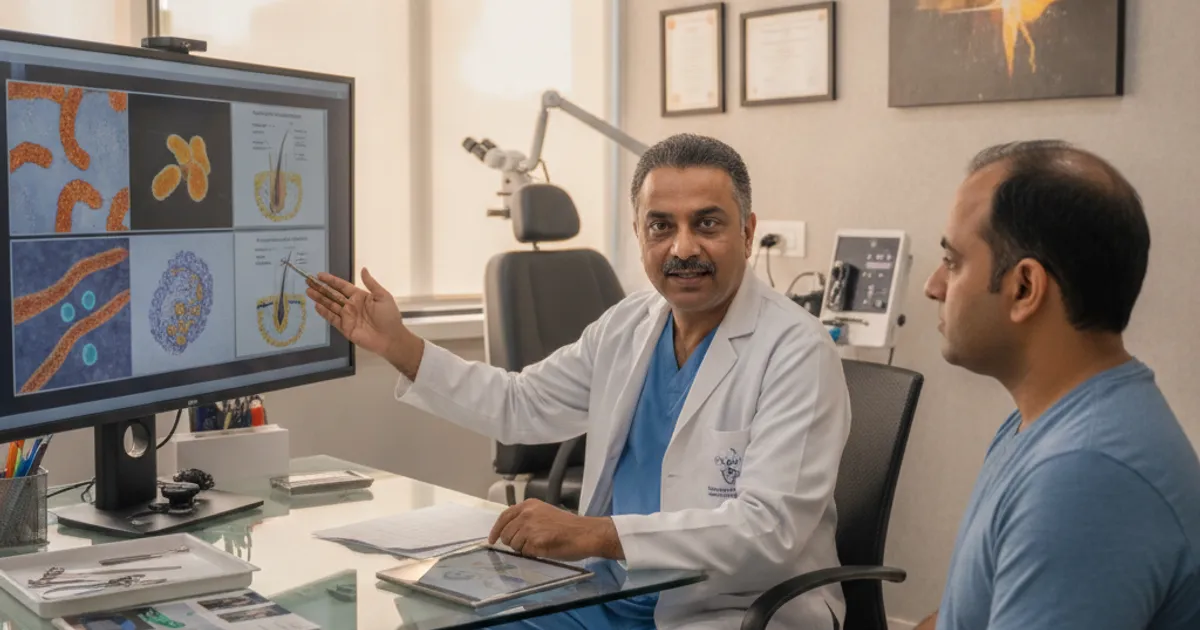
The gut-hair connection refers to the growing body of research linking the health of your digestive system, particularly the trillions of bacteria living in your intestines, to the condition of your hair. Your gut microbiome plays a central role in nutrient absorption, immune regulation, and inflammation control. When that internal ecosystem is out of balance, it can set off a chain of events that affects hair follicles, leading to shedding, thinning, or slowed growth. This article explains how gut health and hair loss are connected, what causes the imbalance, how to recognise the symptoms, and what treatment options exist, including whether a hair transplant is a suitable solution.
How Gut Health Influences Hair Loss: The Microbiome Explained
The gut microbiome is a complex community of bacteria, fungi, viruses, and other microorganisms that live in your digestive tract. In a healthy state, these microbes exist in a balanced ratio, helping you digest food, synthesise certain vitamins, and keep your immune system in check. When the balance shifts, a condition called dysbiosis occurs. Dysbiosis can lead to a leaky gut, where the intestinal lining becomes more permeable, allowing toxins and undigested food particles into the bloodstream. This triggers systemic inflammation, which can disrupt the hair growth cycle and contribute to hair loss. Additionally, poor gut health can impair the absorption of nutrients essential for hair follicle function, such as iron, zinc, biotin, and vitamin D. Without these building blocks, hair follicles may enter a resting phase prematurely, leading to increased shedding.
- Nutrient malabsorption: A compromised gut lining reduces uptake of iron, zinc, and B vitamins, which are vital for hair growth.
- Inflammation: Dysbiosis promotes chronic low-grade inflammation that can damage hair follicles and shorten the growth phase.
- Immune dysregulation: An imbalanced microbiome can trigger autoimmune responses, potentially leading to conditions like alopecia areata.
- Hormonal effects: Gut bacteria influence estrogen and androgen metabolism, which can impact hair cycling.
- Toxin buildup: Leaky gut allows endotoxins into circulation, stressing the body and diverting resources away from hair production.
Causes and Risk Factors of Gut-Related Hair Loss
Several factors can disrupt the gut microbiome and indirectly contribute to hair loss. These include dietary choices, lifestyle habits, medications, and underlying health conditions. Understanding these causes helps identify the root of the problem and guides treatment.
- Poor diet: High sugar, processed foods, and low fibre intake can feed harmful bacteria and reduce beneficial strains.
- Antibiotic use: Repeated or long-term antibiotics wipe out good bacteria, leading to dysbiosis.
- Chronic stress: Stress hormones alter gut motility and barrier function, promoting inflammation.
- Infections: Gut infections like H. pylori or parasites can cause lasting imbalances.
- Medications: Proton pump inhibitors, NSAIDs, and some antidepressants can affect gut flora.
- Underlying conditions: Irritable bowel syndrome (IBS), inflammatory bowel disease (IBD), celiac disease, and small intestinal bacterial overgrowth (SIBO) are strongly linked to dysbiosis.
- Age: Microbial diversity naturally declines with age, making older adults more susceptible.
- Alcohol and smoking: Both irritate the gut lining and disrupt microbial balance.
| Risk Factor | How It Affects the Gut | Potential Hair Impact |
|---|---|---|
| High-sugar diet | Feeds pathogenic bacteria, reduces diversity | Inflammation, nutrient malabsorption |
| Antibiotics | Kills beneficial bacteria | Dysbiosis, reduced vitamin synthesis |
| Chronic stress | Alters gut motility, increases permeability | Leaky gut, systemic inflammation |
| Celiac disease | Damages intestinal villi | Malabsorption of iron, zinc, B vitamins |
| SIBO | Bacteria overgrow in small intestine | Bloating, nutrient deficiency, hair shedding |
Symptoms: How to Tell If Your Gut Is Affecting Your Hair
Gut-related hair loss often comes with digestive and systemic symptoms that hint at an underlying imbalance. If you notice both gut issues and changes in your hair, the two may be connected. Common signs include:
- Diffuse thinning or shedding across the scalp, not just at the temples or crown.
- Hair that feels dry, brittle, or grows slower than usual.
- Digestive complaints: bloating, gas, constipation, diarrhoea, or acid reflux.
- Food sensitivities or intolerances that have developed over time.
- Fatigue, brain fog, or mood swings.
- Skin issues like eczema, acne, or rosacea.
- Frequent infections or slow wound healing.
- Unexplained weight changes.
Diagnosing Gut-Related Hair Loss
Diagnosing gut-related hair loss involves a combination of medical history, physical examination, and specialised tests. Because hair loss can have many causes, doctors typically take a stepwise approach to identify whether the gut is the culprit.
- Medical history: Discussing digestive symptoms, diet, medication use, and family history of hair loss.
- Physical exam: Checking hair density, pattern of loss, and signs of nutritional deficiencies.
- Blood tests: Complete blood count, ferritin, vitamin D, zinc, thyroid function, and hormone levels.
- Stool analysis: A comprehensive stool test can reveal dysbiosis, inflammation, or infections.
- Breath tests: For SIBO or lactose intolerance.
- Endoscopy or colonoscopy: If inflammatory bowel disease or celiac disease is suspected.
- Hair pull test or trichoscopy: To assess hair cycle and rule out other scalp conditions.
Treatment Options for Gut-Related Hair Loss
Treating gut-related hair loss means addressing both the digestive imbalance and the hair loss itself. A holistic approach often works best, combining dietary changes, supplements, and targeted hair treatments. Below are the main options.
- Dietary changes: Eliminating trigger foods, increasing fibre, and eating fermented foods to restore microbial balance.
- Probiotics and prebiotics: Supplements that introduce beneficial bacteria and feed them.
- Antibiotics or antimicrobials: For specific infections like SIBO or H. pylori.
- Nutrient supplementation: Correcting deficiencies in iron, zinc, vitamin D, and B vitamins.
- Stress management: Yoga, meditation, and adequate sleep to reduce gut inflammation.
- Medications for hair loss: Finasteride and minoxidil can help if androgenetic alopecia coexists.
- PRP therapy: Platelet-rich plasma injections stimulate hair follicles and can be combined with gut healing.
- Hair transplant: For permanent bald spots, but only after gut health is optimised.
| Treatment | How It Works | Best For |
|---|---|---|
| Probiotics | Restores beneficial gut bacteria | Dysbiosis, general gut support |
| Finasteride | Blocks DHT, reduces hair follicle shrinkage | Androgenetic alopecia in men |
| Minoxidil | Improves blood flow to hair follicles | Diffuse thinning, early hair loss |
| PRP therapy | Growth factors stimulate follicle activity | Thinning hair, post-transplant support |
| Hair transplant | Relocates healthy follicles to bald areas | Permanent hair loss, stable donor area |
Is a Hair Transplant Suitable for Gut-Related Hair Loss?
A hair transplant can be a suitable option for gut-related hair loss, but only if the underlying gut issue is under control. If you're still experiencing active inflammation or nutrient deficiencies, the transplanted follicles may not thrive. Surgeons typically recommend stabilising your gut health first, then considering a transplant for areas that won't regrow. It's also important to continue any prescribed treatments like finasteride or minoxidil to protect existing hair.
FAQ: Gut Health and Hair Loss
Can poor gut health really cause hair loss?
Yes. Poor gut health can lead to nutrient malabsorption and chronic inflammation, both of which disrupt the hair growth cycle and contribute to shedding or thinning. However, these associations are based on general medical knowledge and should be verified with a current medical source before publication.
How long does it take to see hair regrowth after improving gut health?
Hair grows slowly. It may take 3 to 6 months of consistent gut healing before you notice reduced shedding and new growth. This timeline is a general estimate and should be confirmed with a healthcare provider.
Which gut conditions are most linked to hair loss?
Conditions like celiac disease, inflammatory bowel disease, SIBO, and dysbiosis are commonly associated with hair loss due to malabsorption and inflammation. These associations are based on general knowledge and should be verified against a current medical source.
Should I get a hair transplant if my gut is unhealthy?
It's best to stabilise your gut first. A transplant is more likely to succeed when your body is not in an inflammatory state and nutrient levels are adequate.
What supplements help both gut health and hair?
Probiotics, omega-3 fatty acids, zinc, iron, vitamin D, and biotin can support both gut balance and hair growth, but always consult a doctor before starting supplements. These nutrient lists are based on general knowledge and should be verified against a current medical source.
More Guides
- Minoxidil Contact Dermatitis: Signs and Alternatives
Learn the signs of minoxidil contact dermatitis, how it's diagnosed, treatment options, and alternatives like finasteride, PRP, and hair transplant surgery.
- Can Radiotherapy Cause Hair Loss? What to Expect
Radiotherapy can cause temporary or permanent hair loss. Learn the causes, symptoms, diagnosis, treatment options, and whether a hair transplant is suitable.
- Hair Loss After Illness or High Fever: When Does It Stop?
Hair loss after illness or high fever is usually temporary telogen effluvium. Learn causes, symptoms, diagnosis, treatment, and when a hair transplant may help.
- Can Dandruff Cause Hair Loss? Facts vs Folklore
Does dandruff cause hair loss? We separate fact from folklore, explain the real connection, diagnosis, treatments, and when a hair transplant makes sense.