
Does Minoxidil Work on the Hairline? What Studies Show
Does minoxidil work on the hairline? Studies show it can slow loss and regrow some hair, but results vary. Learn what to expect, how to apply it, and limits.
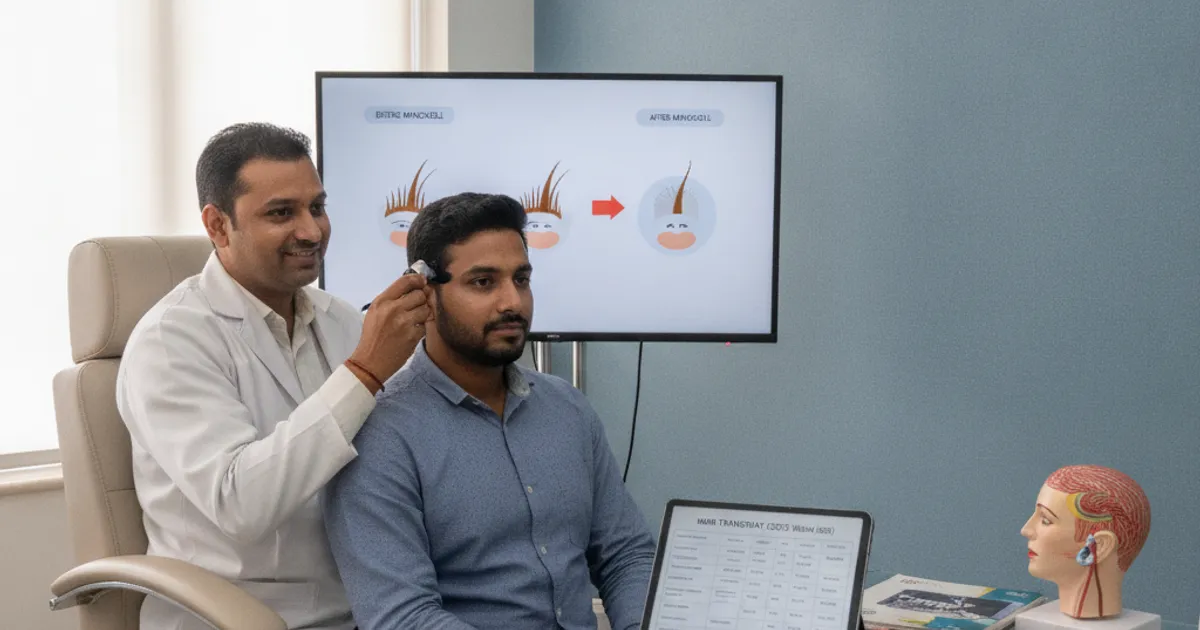
Does Minoxidil Work on the Hairline?
Yes, minoxidil can work on the hairline, but the results are usually modest and highly variable. Studies show it can slow hair loss and regrow some hair in the frontal hairline, especially in the early stages, but it is not a reliable cure for a receding hairline. Many people see improvement, while others see little to no change.
What Do Studies Say About Minoxidil and the Hairline?
Clinical trials on minoxidil have historically focused on the vertex (crown) of the scalp, where it has proven effective. However, several studies have specifically examined the frontal hairline. One study of men using minoxidil foam found that while vertex hair counts improved significantly, frontal hairline results were less pronounced but still showed some benefit in slowing progression. Another study comparing minoxidil foam to placebo in men with frontal hair loss found a statistically significant increase in hair count in the frontal area, though the visual difference was often subtle. Overall, the evidence suggests minoxidil can help maintain and slightly improve hairline density, but it is not as effective as it is on the crown.
- Minoxidil is FDA-approved for androgenetic alopecia (pattern hair loss) on the vertex, but off-label for the hairline.
- Studies show modest but measurable improvements in frontal hair count with topical minoxidil.
- Response rates vary: some users see noticeable regrowth, others only slowing of loss, and some see no change.
- Consistency of use is critical; skipping doses reduces effectiveness.
How Does Minoxidil Work on Hairline Hair?
Minoxidil is a vasodilator that widens blood vessels and improves blood flow to hair follicles. It also prolongs the anagen (growth) phase of the hair cycle and may stimulate follicle stem cells. On the hairline, the follicles are often more sensitive to DHT (dihydrotestosterone), the hormone that drives pattern baldness. Minoxidil does not block DHT, so it cannot stop the root cause of hairline recession. It can, however, support follicle health and delay miniaturization, which is why some regrowth is possible.
- Increases blood flow to the follicle, delivering more oxygen and nutrients.
- Extends the growth phase, allowing hair to grow longer and thicker.
- Does not address DHT, so it works best alongside DHT-blocking treatments like finasteride.
- Effects are temporary; stopping minoxidil leads to loss of gained hair within months.
What Results Can You Expect for the Hairline?
Results depend on your stage of hair loss, genetics, and how consistently you use minoxidil. The table below summarizes typical outcomes based on clinical experience and studies.
| Stage of Hairline Loss | Likely Minoxidil Outcome | Time to See Results |
|---|---|---|
| Early (thinning, slight recession) | Moderate regrowth or thickening; slowed progression | Several months |
| Moderate (visible recession, M-shape) | Slight regrowth or maintenance; some improvement in density | Up to a year |
| Advanced (deep recession, bald frontal area) | Minimal to no regrowth; mainly maintenance of existing hair | Long-term use may be needed |
How Long Does Minoxidil Take to Work on the Hairline?
Minoxidil requires patience. Most users see initial shedding in the first few weeks as old hairs fall out to make way for new growth. Visible results typically appear after several months of twice-daily use, with full benefits taking up to a year. If you stop using it, gains are lost within a few months.
What Are the Best Ways to Apply Minoxidil to the Hairline?
Proper application ensures the medication reaches the hair follicles without waste or irritation. Follow these steps for best results.
- Start with a clean, dry scalp. Wash your hair and pat it dry before applying.
- Part your hair along the hairline to expose the thinning areas.
- Shake the minoxidil bottle well and dispense the recommended dose (usually 1 mL) onto your fingertips or the applicator.
- Gently massage the solution into the scalp along the hairline, avoiding the forehead and eyes.
- Wash your hands thoroughly after application to prevent unwanted hair growth on other body parts.
- Let the solution dry completely before styling or lying down (usually takes 2–4 hours).
- Apply twice daily (morning and night) for best results, and avoid washing your hair for at least 4 hours after application.
What Are the Limitations of Minoxidil for Hairline Regrowth?
Minoxidil is not a magic bullet for a receding hairline. It has several limitations you should understand before starting.
- It does not block DHT, the primary cause of male pattern baldness, so it cannot halt hairline recession long-term.
- Results are often modest and may not be cosmetically significant for everyone.
- It requires indefinite use; stopping leads to rapid loss of gains.
- It is less effective on completely bald areas where follicles are dead.
- Side effects like scalp irritation, itching, or unwanted facial hair can occur.
- Consistency is crucial; missed doses reduce effectiveness.
Minoxidil vs. Other Hairline Treatments: How Does It Compare?
Minoxidil is just one option for hairline restoration. Here’s how it stacks up against other common treatments.
| Treatment | How It Works | Effectiveness on Hairline | Pros | Cons |
|---|---|---|---|---|
| Minoxidil (topical) | Vasodilator; improves blood flow, prolongs growth phase | Modest; slows loss, some regrowth | FDA-approved, OTC, non-invasive | Requires daily use, temporary results, not DHT blocker |
| Finasteride (oral) | 5-alpha reductase inhibitor; lowers DHT | Good; can halt recession and regrow some hair | Addresses root cause, once-daily pill | Prescription needed, sexual side effects possible |
| Hair transplant | Surgical relocation of DHT-resistant follicles | Excellent; permanent hairline restoration | Permanent results, natural look | Expensive, invasive, requires recovery |
| Laser therapy (LLLT) | Low-level laser stimulates follicles | Mild; may improve density | Non-invasive, no drugs | Expensive, time-consuming, modest results |
| Derma rolling + minoxidil | Microneedling enhances minoxidil absorption | Better than minoxidil alone | Low cost, easy to do at home | Risk of irritation, requires sterilization |
Frequently Asked Questions
Can minoxidil regrow a receding hairline?
Minoxidil can regrow some hair on a receding hairline, but results are usually modest and vary by person. It is more effective at slowing loss than fully restoring a hairline.
Should I use minoxidil for my hairline?
Minoxidil is generally effective for pattern hair loss, including the hairline. However, consult a doctor for personalized advice, especially if you have sensitive skin or other health conditions.
What happens if I stop using minoxidil on my hairline?
If you stop using minoxidil, any hair gained will likely fall out within a few months, and your hairline will return to its previous state. Minoxidil must be used continuously to maintain results.
Is minoxidil safe for long-term use on the hairline?
Yes, minoxidil is generally safe for long-term use. Side effects are usually limited to scalp irritation. Oral minoxidil carries more systemic risks and requires a prescription. Always consult a healthcare provider before starting.
How to Tell If Minoxidil Is Working on Your Hairline
Because hairline changes are gradual, it is easy to miss real progress or mistake normal shedding for failure. A structured approach helps you judge the treatment fairly.
- Take clear photos of your hairline in the same lighting, angle, and hair length every four to six weeks. Use a consistent part and avoid styling products that obscure the scalp.
- Track shedding rather than daily appearance. A temporary increase in shedding in the first weeks is common and usually settles.
- Notice changes in hair texture and density: new growth often appears as finer, shorter hairs before thickening.
- Avoid judging results before three to four months; early changes are often too subtle to see without comparison photos.
- If you see no change after six months of consistent twice-daily use, reassess with a clinician rather than simply adding more product.
Combining Minoxidil With Other Hairline Treatments
Minoxidil supports follicle health but does not address the hormonal driver of pattern hair loss. For that reason, it is often used alongside treatments that reduce DHT activity, such as finasteride or dutasteride (prescription only), or with low-level laser therapy and ketoconazole shampoo. Combining approaches can target both the cause and the symptoms, but each option has its own side-effect profile and evidence base. A clinician can help you decide which combination is appropriate for your stage of hair loss and health history.
If you are considering a hair transplant, minoxidil is sometimes used before and after surgery to support graft survival and native hair, but it is not a substitute for surgical restoration in areas where follicles are no longer active. Discuss timing with your surgeon, as some clinics advise pausing certain topical products around the procedure.
Common Questions About Minoxidil and the Hairline
Can I use minoxidil only on my hairline?
Yes. Many people apply it specifically to the frontal hairline and temples. However, if you have thinning elsewhere, treating only the hairline may leave other areas untreated. Follow the product instructions and avoid applying more than the recommended dose.
Will minoxidil make my hairline worse before it gets better?
A temporary increase in shedding can occur in the first weeks as hair cycles reset. This is usually not permanent hair loss, but if shedding is severe or prolonged, speak with a clinician.
Does minoxidil work on a completely bald hairline?
Minoxidil is generally less effective on areas that have been bald for a long time, where follicles may be inactive or scarred. It works best on thinning but still-active follicles. A transplant may be more appropriate for completely bald areas.
Can I stop minoxidil once my hairline improves?
Gains from minoxidil are dependent on continued use. Stopping typically leads to loss of the gained hair within months, and your hairline may return to its previous state. Plan for long-term use if you start.
Is foam or liquid better for the hairline?
Both forms contain minoxidil and have shown benefit. Foam may be easier to apply to the hairline and is often less irritating for sensitive scalps, while liquid can be easier to target precisely with a dropper. Choose based on tolerability and consistency of use.
More Guides
- Hair Loss on Pillow vs in Shower: What's Normal?
Is hair loss on the pillow or in the shower normal? Learn typical daily shedding, causes, and when to worry. Expert answers for men and women.
- Does Hair Loss Run in Families? Genetics and Your Risk
Does hair loss run in families? Learn how genetics influence your risk, which genes are involved, and what you can do if you have a family history.
- Does Nicotine Cause Hair Loss? Vapes, Pouches, Patches
Does nicotine cause hair loss? We examine the evidence for vapes, pouches, and patches, how nicotine may affect hair growth, and whether quitting can help.
- Does Creatine Cause Hair Loss? What the Studies Say
Does creatine cause hair loss? We look at the research, the DHT link, and what to do if you notice shedding while taking creatine.