
Does Zinc Deficiency Cause Hair Loss? Supplement Evidence
Can low zinc cause hair loss? We break down the biology, symptoms, diagnosis, treatment options, and whether a transplant is right for you.
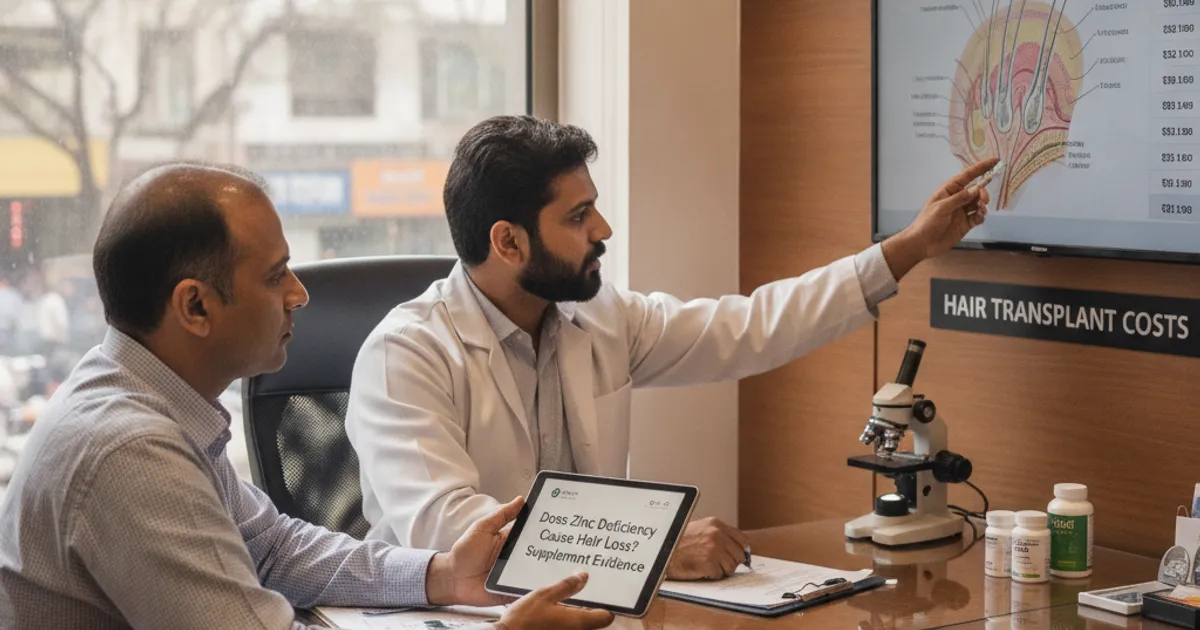
What Is Zinc Deficiency Hair Loss?
Zinc deficiency hair loss is exactly what it sounds like: thinning or shedding that happens because your body doesn't have enough zinc. Zinc is a trace mineral you get from food, and it plays a role in hundreds of enzyme reactions, including the ones that build and repair hair follicles. When levels drop, the hair growth cycle can get disrupted, and you may notice more shedding than usual or slower regrowth. It's not the most common cause of hair loss, but it's one of the more fixable ones if you catch it early. Unlike genetic pattern baldness, which is permanent without treatment, zinc-related shedding often improves once levels are corrected.
How Zinc Deficiency Causes Hair Loss: The Biological Mechanisms
Hair follicles are among the most rapidly dividing tissues in the body, which makes them sensitive to nutrient shortages. Zinc is involved in DNA synthesis, cell division, and hormone regulation, all of which matter for healthy hair. When zinc is low, several things can go wrong at once.
- Disrupted hair cycle: Zinc helps regulate the transition from the growth phase (anagen) to the resting phase (telogen). Low zinc can push more follicles into telogen too early, leading to diffuse shedding.
- Weakened follicle structure: Zinc is needed for keratin production and follicle anchoring. Without enough, hair strands may be thinner and shed more easily.
- Hormonal knock-on effects: Zinc interacts with testosterone and thyroid hormones. Deficiencies can indirectly worsen androgenetic alopecia or thyroid-related hair loss.
- Impaired wound healing and inflammation: Zinc supports tissue repair. Low levels may slow follicle recovery after damage or infection.
Common Causes and Risk Factors for Zinc Deficiency
You don't have to be malnourished to run low on zinc. Several everyday factors can chip away at your levels over time. Some are dietary, some are medical, and some are just part of life stages.
- Plant-heavy diets: Phytates in grains and legumes bind zinc and reduce absorption.
- Gastrointestinal conditions: Crohn's disease, celiac disease, and ulcerative colitis impair nutrient uptake.
- Bariatric surgery: Bypass procedures can limit zinc absorption.
- Chronic alcohol use: Alcohol increases zinc excretion through urine.
- Pregnancy and breastfeeding: Demand for zinc rises significantly.
- Certain medications: Diuretics, proton pump inhibitors, and some antibiotics can deplete zinc.
- Aging: Older adults often absorb zinc less efficiently and eat less zinc-rich food.
| Risk Factor | Why It Matters |
|---|---|
| Vegetarian or vegan diet | Plant sources of zinc are less bioavailable due to phytates. |
| Digestive disorders | Conditions like Crohn's or celiac reduce intestinal absorption. |
| Heavy alcohol intake | Increases urinary loss of zinc. |
| Pregnancy/lactation | Higher demand can outpace intake. |
| Long-term diuretic use | Some diuretics increase zinc excretion. |
Symptoms: How to Tell If Your Hair Loss Is Linked to Low Zinc
Zinc deficiency doesn't just affect hair. It tends to show up across several body systems, which can help you tell it apart from ordinary pattern baldness. If you have several of the symptoms below alongside hair shedding, low zinc is worth investigating.
- Diffuse thinning across the whole scalp, not just the temples or crown.
- Increased shedding on pillows, in the shower, or on brushes.
- Slow-growing hair that seems to stall.
- Brittle nails with white spots.
- Frequent infections or slow wound healing.
- Loss of appetite or changes in taste and smell.
- Dry, flaky skin or acne-like rashes.
- Unexplained fatigue or mood changes.
Diagnosing Zinc Deficiency and Related Hair Loss
Diagnosis usually starts with a blood test. Serum zinc is the most common, though it's not perfect—levels can be affected by recent meals, inflammation, and other factors. A doctor may also check for underlying conditions that cause deficiency. If hair loss is the main concern, a dermatologist or trichologist can assess the pattern and rule out other causes.
- Serum zinc test: A simple blood draw, ideally fasting.
- Plasma zinc: Sometimes used instead of serum.
- Hair zinc analysis: Less reliable but occasionally used.
- Complete blood count (CBC): To check for anemia, which can also cause shedding.
- Thyroid panel: Thyroid issues mimic zinc deficiency symptoms.
- Ferritin and vitamin D: Common co-deficiencies in hair loss patients.
- Scalp biopsy: Rarely needed, but can rule out scarring alopecia.
| Test | What It Checks | Notes |
|---|---|---|
| Serum zinc | Zinc level in blood | Most common; fasting recommended. |
| CBC | Anemia, infection | Anemia can cause similar shedding. |
| Thyroid panel | TSH, T3, T4 | Thyroid imbalance is a common hair loss cause. |
| Ferritin | Iron stores | Low iron is a frequent contributor. |
| Vitamin D | Vitamin D level | Deficiency linked to shedding. |
Treatment Options for Zinc Deficiency Hair Loss
Treatment depends on how low your zinc is and what's causing the deficiency. For mild cases, dietary changes may be enough. For moderate to severe deficiency, supplements are usually needed. It's important not to overdo zinc—too much can cause nausea, interfere with copper absorption, and even trigger more hair loss. Always work with a doctor to get the dose right.
- Dietary zinc: Oysters, beef, poultry, pumpkin seeds, lentils, and fortified cereals.
- Oral supplements: Zinc sulfate, zinc gluconate, or zinc picolinate—typically 15–30 mg elemental zinc daily for adults, but only under medical guidance.
- Treat underlying cause: If a digestive condition or medication is the culprit, addressing that is key.
- Minoxidil: If hair loss is also driven by pattern baldness, topical minoxidil can help stimulate growth.
- Finasteride: For men with androgenetic alopecia, finasteride blocks DHT and can slow loss.
| Treatment | Best For | Typical Duration |
|---|---|---|
| Zinc supplements | Confirmed deficiency | 3–6 months to see hair changes |
| Dietary changes | Mild deficiency | Ongoing |
| Minoxidil | Pattern hair loss | 6–12 months |
| Finasteride | Male pattern baldness | 6–12 months |
Is a Hair Transplant Suitable for Zinc Deficiency Hair Loss?
A hair transplant is generally not the first line of treatment for zinc deficiency hair loss. That's because the shedding is often diffuse and reversible once zinc levels are corrected. Transplanting hair into an area that's still shedding due to a nutritional issue can lead to poor results and wasted grafts. The better approach is to fix the deficiency first, wait several months to see how much hair regrows, and then consider a transplant only if permanent thinning remains.
- Correct zinc levels first: Give your body at least 6 months to recover.
- Assess remaining density: If you still have significant bald patches after correction, a transplant may help.
- Rule out other causes: Androgenetic alopecia, thyroid issues, and iron deficiency often coexist.
- Choose a surgeon who understands nutritional hair loss: They should be willing to coordinate with your doctor.
- Be realistic: A transplant won't stop ongoing shedding from a deficiency you haven't fixed.
Frequently Asked Questions
Can zinc supplements regrow hair on their own?
If your hair loss is truly caused by zinc deficiency, correcting the deficiency can lead to regrowth over several months. But if you also have genetic hair loss, supplements alone won't be enough—you may need treatments like minoxidil or finasteride.
How long does it take to see hair regrowth after fixing zinc deficiency?
Hair grows slowly. Most people notice reduced shedding within 2–3 months and visible regrowth by 6 months. Full improvement can take up to a year.
Can too much zinc cause hair loss?
Yes. Excessive zinc can interfere with copper absorption and actually trigger hair shedding. Never take high-dose zinc without medical supervision.
Is zinc deficiency hair loss permanent?
Usually not. If the deficiency is corrected and no other permanent hair loss condition is present, hair often regrows. However, long-standing deficiency can sometimes lead to permanent follicle miniaturization.
Should I get a hair transplant if I have low zinc?
Not until your zinc levels are normal and stable. Transplanting while you're still deficient risks poor graft survival and continued shedding.
What foods are highest in zinc?
Oysters, red meat, poultry, beans, nuts, and whole grains. Vegetarians may need fortified foods or supplements because plant zinc is harder to absorb.
More Guides
- Minoxidil Contact Dermatitis: Signs and Alternatives
Learn the signs of minoxidil contact dermatitis, how it's diagnosed, treatment options, and alternatives like finasteride, PRP, and hair transplant surgery.
- Can Radiotherapy Cause Hair Loss? What to Expect
Radiotherapy can cause temporary or permanent hair loss. Learn the causes, symptoms, diagnosis, treatment options, and whether a hair transplant is suitable.
- Hair Loss After Illness or High Fever: When Does It Stop?
Hair loss after illness or high fever is usually temporary telogen effluvium. Learn causes, symptoms, diagnosis, treatment, and when a hair transplant may help.
- Can Dandruff Cause Hair Loss? Facts vs Folklore
Does dandruff cause hair loss? We separate fact from folklore, explain the real connection, diagnosis, treatments, and when a hair transplant makes sense.