
Finasteride for Beard Growth: Does It Help or Hurt?
Finasteride for beard growth: how it works, evidence, dosage, results timeline, side effects, cost, and how it compares to minoxidil and other options.
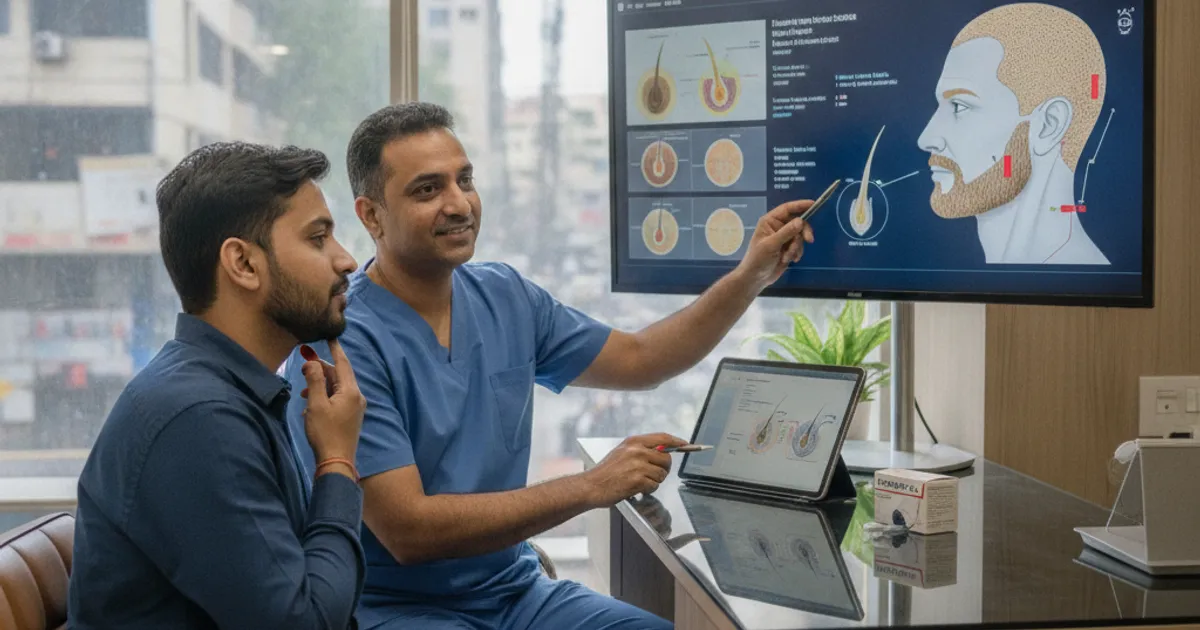
What Is Finasteride and How Does It Work?
Finasteride is an oral prescription medication that belongs to a class of drugs called 5-alpha-reductase inhibitors. It was originally developed to treat an enlarged prostate, but it became widely known for its ability to slow down male pattern hair loss on the scalp. The drug works by blocking the enzyme 5-alpha-reductase, which converts testosterone into dihydrotestosterone (DHT). DHT is the primary androgen responsible for miniaturizing hair follicles on the scalp in genetically predisposed men. By lowering DHT levels, finasteride helps preserve scalp hair.
But here is where things get interesting for beard growth. DHT is not just a villain. It also plays a role in stimulating facial hair growth during puberty and beyond. In fact, men with a genetic sensitivity to DHT tend to grow thicker beards, while those with lower DHT activity often have patchier facial hair. So when you take finasteride to save your scalp hair, you might inadvertently affect your beard.
- Finasteride is available as a generic and under brand names like Propecia (for scalp hair) and Proscar (for prostate).
- It is taken orally, usually as a 1 mg daily dose for hair loss.
- The drug reduces scalp DHT levels at the 1 mg dose.
- It does not directly stimulate new hair follicles; it mainly prevents further miniaturization.
- Its effect on facial hair is less studied and more variable than its effect on scalp hair.
Does Finasteride Actually Help Beard Growth? The Evidence
The short answer is: it is complicated. Most of the research on finasteride focuses on scalp hair, not beard hair. The few studies that look at facial hair suggest that finasteride may actually slow down or reduce beard growth in some men, because it lowers DHT. However, some men report that their beard looks fuller after starting finasteride, possibly because the drug improves hair quality or because they are paying more attention to their grooming. There is no solid evidence that finasteride promotes new beard growth.
Research on men with male pattern baldness has found that finasteride increased hair count on the scalp but had no significant effect on facial hair. Research on transgender women (who take finasteride or similar drugs) has shown reduced facial hair growth over time. This suggests that if anything, finasteride may work against beard growth rather than for it.
- No large-scale clinical trials support finasteride as a beard growth treatment.
- DHT is known to promote facial hair growth, so lowering it could theoretically reduce beard thickness.
- Some men anecdotally report thicker beards on finasteride, but this is not backed by strong evidence.
- Finasteride is much more effective for scalp hair preservation than for facial hair enhancement.
| Study Focus | Effect on Beard Hair | Effect on Scalp Hair |
|---|---|---|
| Finasteride for male pattern baldness | No significant increase; possible slight reduction | Significant increase in hair count and thickness |
| Finasteride in transgender women | Reduced facial hair growth over time | Not the primary focus |
| Anecdotal reports from men | Mixed: some see thicker beard, others see thinning | Generally positive for scalp |
How to Use Finasteride for Beard Growth: Dosage and Frequency
If you and your doctor decide to try finasteride for beard growth (or more likely, for scalp hair while you monitor beard changes), the standard dose is 1 mg taken orally once daily. Some doctors prescribe 5 mg tablets split into quarters, but the 1 mg dose is the standard for hair-related use. It can be taken with or without food. Consistency is key: you need to take it every day for it to work.
- Typical dose: 1 mg once daily.
- Take it at the same time each day to build a habit.
- Do not double up if you miss a dose; just continue with your normal schedule.
- It may take several months to see any effect on scalp hair, and longer for any noticeable change in beard hair.
- Do not stop suddenly without talking to your doctor, as shedding can occur.
Expected Results and Timeline for Beard Growth
If you are taking finasteride primarily for scalp hair, you might notice changes in your beard within a few months. But do not expect a miracle. Most men see little to no improvement in beard density, and some may even notice a slight thinning. The timeline below is a general guide based on how the drug affects hair cycles.
| Timeframe | What You Might Notice |
|---|---|
| 1–3 months | Possible initial shedding on scalp; beard changes unlikely |
| 3–6 months | Scalp hair may start to thicken; beard may remain unchanged or slightly thinner |
| 6–12 months | Full effects on scalp hair visible; beard changes, if any, become apparent |
| 12+ months | Stabilization; any beard improvement would be subtle at best |
- Beard growth is slow; even with effective treatments, visible changes take months.
- Finasteride is not a fast-acting beard booster.
- If your main goal is a thicker beard, other options may be more effective.
- Take photos every few months to track changes objectively.
Side Effects and Risks of Finasteride
Finasteride is generally well-tolerated, but it does come with a risk of side effects. The most common ones are sexual in nature: decreased libido, erectile dysfunction, and reduced ejaculate volume. These effects are usually reversible when you stop the drug, but in a small percentage of men, they can persist. There are also reports of depression, brain fog, and breast tenderness. Because finasteride lowers DHT, it can affect mood and energy in some people.
- Sexual side effects: decreased libido, erectile dysfunction, reduced ejaculation.
- Mood changes: depression, anxiety, brain fog (less common but reported).
- Breast changes: tenderness or enlargement (rare).
- Post-finasteride syndrome: a controversial condition with persistent sexual, neurological, and physical symptoms after stopping the drug.
- Allergic reactions: rash, itching, swelling (rare).
Who Is Finasteride Suitable For? (And Who Should Avoid It)
Finasteride is suitable for adult men who are experiencing male pattern baldness and want to slow or stop hair loss. It is not intended for beard growth specifically, but some men take it for scalp hair and accept whatever happens to their beard. It is not suitable for women of childbearing age because it can cause birth defects in a male fetus. Pregnant women should not even handle crushed tablets. Men with liver disease or prostate cancer should talk to their doctor before using it.
| Suitable For | Avoid If |
|---|---|
| Adult men with male pattern baldness | Women who are pregnant or may become pregnant |
| Men who want to preserve scalp hair | Men with known liver disease |
| Men who understand the risks and are monitored by a doctor | Men with a history of prostate cancer (unless cleared by a doctor) |
| Men not trying to conceive soon (finasteride may affect semen quality) | Men with a history of depression or mood disorders (use with caution) |
- Finasteride is not a beard growth drug; it is a scalp hair loss drug.
- If you want a thicker beard, other treatments like minoxidil may be more appropriate.
- Always consult a doctor before starting finasteride, especially if you have other health conditions.
- Do not share finasteride with others, especially women.
Cost of Finasteride for Beard Growth
Finasteride is relatively inexpensive, especially as a generic. The cost varies depending on where you live, whether you have insurance, and the pharmacy you use. In the United States, a month's supply of generic finasteride 1 mg can cost anywhere from $10 to $50 without insurance. Brand-name Propecia can be much more expensive, often over $100 per month. In other countries, prices may be lower. Since finasteride is not approved for beard growth, insurance is unlikely to cover it for that purpose.
- Generic finasteride is much cheaper than brand-name Propecia.
- Insurance may cover finasteride for prostate issues but not for hair loss or beard growth.
- Online pharmacies may offer lower prices, but verify they are legitimate.
- Cost should not be the only factor; consider side effects and effectiveness.
Finasteride vs. Other Beard Growth Alternatives
If your goal is a thicker beard, finasteride is probably not your best bet. There are other options that are more directly targeted at facial hair. Minoxidil, for example, is a topical treatment that can be applied to the beard area and has some evidence for promoting facial hair growth. Other options include derma rollers, biotin supplements, and even beard transplants. Each has its own pros and cons.
| Treatment | How It Works | Effectiveness for Beard | Side Effects | Cost |
|---|---|---|---|---|
| Finasteride (oral) | Lowers DHT | Poor; may reduce beard growth | Sexual, mood, breast | $10–$50/month |
| Minoxidil (topical) | Increases blood flow, prolongs growth phase | Moderate; some evidence | Skin irritation, dryness | $10–$30/month |
| Derma roller | Microneedling stimulates collagen | Mild; may enhance minoxidil | Redness, discomfort | $10–$30 one-time |
| Biotin supplements | Supports keratin production | Weak; only if deficient | Rare | $5–$20/month |
| Beard transplant | Surgical hair relocation | High; permanent | Scarring, infection | $3,000–$10,000+ |
- Minoxidil is the most commonly used topical treatment for beard growth.
- Derma rolling can be combined with minoxidil for better results.
- Beard transplants are the most permanent option but also the most expensive and invasive.
- Finasteride is not recommended as a primary beard growth treatment.
Frequently Asked Questions About Finasteride for Beard Growth
Does finasteride help grow a beard?
No, the evidence suggests it does not help and may even slow beard growth because it lowers DHT, which is important for facial hair. It is much more effective for scalp hair.
Can I take finasteride just for my beard?
It is not approved for that purpose, and it is unlikely to work. If you want a thicker beard, talk to a doctor about other options like minoxidil or a beard transplant.
What are the side effects of finasteride?
Common side effects include decreased libido, erectile dysfunction, and reduced ejaculate volume. Less common but serious risks include depression, breast tenderness, and persistent sexual dysfunction after stopping.
How long does finasteride take to work for beard growth?
There is no established timeline because it is not a beard growth treatment. For scalp hair, it takes several months to see effects. Any beard changes would be unpredictable and likely negative.
Bottom line: finasteride is a powerful tool for preserving scalp hair, but it is not a beard growth solution. If you are considering it for hair loss, talk to a doctor about the risks and benefits. If your main concern is a patchy beard, explore other options first. And remember, any medication decision should be made with professional guidance.
More Guides
- Finasteride for Baldness: What It Can and Can't Do
Finasteride is a proven hair loss treatment, but it's not a cure. Learn how it works, dosage, side effects, and how it compares to other options.
- DHT-Blocking Shampoos: What Works and What's Marketing?
Do DHT-blocking shampoos really grow hair? We break down the science, evidence, usage, side effects, costs, and how they compare to other treatments.
- Clascoterone for Hair Loss: What the Research Shows
Clascoterone is a topical anti-androgen being studied for hair loss. Learn how it works, the evidence, how to use it, side effects, cost, and how it compares.
- Hims Minoxidil Spray: Ingredients, Results, and Cost
Hims Minoxidil Spray review: ingredients, how it works, results timeline, side effects, cost, and how it compares to other hair loss treatments.