
Finasteride in Your 20s: What Young Men Should Know
Finasteride in your 20s can slow hair loss and regrow hair. Learn how it works, what to expect, side effects, and how to get it safely.
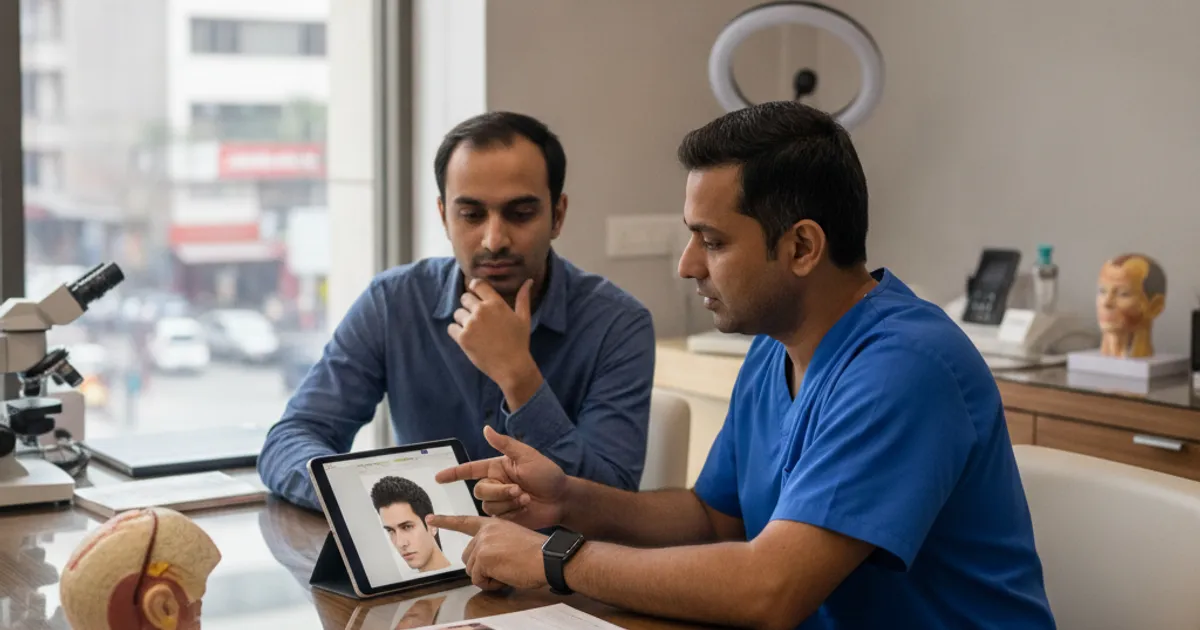
Is Finasteride Safe and Effective in Your 20s?
Finasteride is a prescription medication commonly used to treat male pattern baldness. For most men in their 20s, it is considered safe and effective when taken under a doctor's supervision. It works by targeting the underlying cause of hair loss, and many young men see meaningful results. That said, it is not for everyone, and it is worth understanding exactly what it does before you start.
How Does Finasteride Work for Young Men?
Finasteride blocks the enzyme 5-alpha-reductase, which converts testosterone into dihydrotestosterone (DHT). DHT is the hormone that shrinks hair follicles in genetically predisposed men, causing male pattern baldness. By lowering DHT levels in the scalp, finasteride slows or stops that shrinkage and gives follicles a chance to recover. The standard dose for hair loss is 1mg daily. A higher 5mg dose is approved for benign prostatic hyperplasia (BPH) in older men, but for hair loss the 1mg dose is what you would typically be prescribed.
- It targets the root cause of male pattern baldness, not just the symptoms.
- It works best on the crown and mid-scalp. It is less effective at the temples and hairline.
- It takes several months before you notice any change, and longer for full results.
- You have to keep taking it. If you stop, any hair you kept or regrew will likely shed over time.
- It does not work for everyone. Some men do not respond, but many see noticeable improvement.
What Results Can You Expect in Your 20s?
Results vary, but the pattern is fairly predictable. Younger men often respond better because they have less cumulative follicle damage. The earlier you start, the more hair you are likely to keep. Here is a rough breakdown of what clinical experience and real-world use show.
| Timeframe | What Most Men See | What It Means |
|---|---|---|
| First 3 months | No visible change, possibly a slight shed | The drug is working at the hormonal level. The shed is temporary. |
| 3 to 6 months | Early slowing of hair loss | Fewer hairs in the shower and on the pillow. |
| 6 to 12 months | Noticeable thickening or regrowth on crown and mid-scalp | This is when most men see the real difference. |
| 12 to 24 months | Peak results | Hair count stabilises. Some men maintain, some regrow. |
| Beyond 24 months | Maintenance | You keep what you have as long as you keep taking it. |
In clinical trials, roughly 80 to 90 percent of men taking finasteride for hair loss either maintained their hair count or regrew hair over a two-year period. About 60 to 70 percent saw visible regrowth, while the rest mainly stopped further loss. These numbers are not guarantees, but they give you a realistic sense of what to expect.
What Are the Side Effects and Risks?
Most men tolerate finasteride well. In clinical trials, about 2 percent of men experienced sexual side effects like decreased libido, erectile dysfunction, or reduced ejaculate volume. That is slightly higher than the placebo group, where about 1 percent reported similar issues. These side effects typically go away if you stop the medication. There is also a much rarer risk of persistent sexual side effects after stopping, which is debated in the medical literature but worth knowing about.
- Sexual side effects: reported in about 2 percent of men in trials, compared to about 1 percent on placebo.
- Mood changes: some men report low mood or brain fog. This is not fully understood and is rare.
- Breast tenderness or enlargement: very rare but possible.
- Persistent side effects after stopping: rare, controversial, and not well understood.
- Finasteride is not safe for women who are pregnant or may become pregnant. Do not share tablets.
| Side Effect | How Common | What to Do |
|---|---|---|
| Decreased libido | About 2% of users | Usually resolves on its own or after stopping. |
| Erectile dysfunction | About 2% of users | Talk to your doctor. Often reversible. |
| Reduced ejaculate volume | About 2% of users | Harmless but noticeable. Reversible. |
| Mood changes | Rare (less than 1%) | Stop and speak to a doctor if it affects daily life. |
| Breast tenderness | Very rare (less than 0.1%) | Get it checked. May need to stop. |
How Does Finasteride Compare to Other Treatments?
Finasteride is one of several options for young men with hair loss. The right choice depends on how aggressive your loss is, where it is, and how you feel about taking a daily pill versus using a topical product. Here is how the main options stack up.
Finasteride (oral)
Prescription only
- ✓ Targets DHT, the root cause of male pattern baldness
- ✓ Once-daily 1mg pill
- ✓ Best for crown and mid-scalp
- ✓ Takes 6 to 12 months for full results
- ✓ About 2% risk of sexual side effects
Minoxidil (topical)
Over the counter
- ✓ Increases blood flow to follicles
- ✓ Twice-daily liquid or foam
- ✓ Works on crown and vertex
- ✓ Results in 3 to 6 months
- ✓ Can cause scalp irritation
Many men use both. Finasteride slows the loss, minoxidil encourages growth. If you are considering a hair transplant later, finasteride is often recommended first to stabilise your loss. You can read more about surgical options in our guide to hair transplant clinics.
How to Get Finasteride and What to Discuss with Your Doctor
Finasteride is prescription-only in most countries. You cannot legally buy it over the counter. The process is straightforward, but you should go in prepared. Your doctor will want to confirm that your hair loss is actually male pattern baldness and not something else.
Frequently Asked Questions
Can I take finasteride at 20?
Yes, the 1mg dose of finasteride is approved for men 18 and older with male pattern baldness. Many dermatologists prescribe it to men in their early 20s. The key is getting a proper diagnosis first, because not all hair loss in your 20s is male pattern baldness. Note that the 5mg dose is approved for a different condition (enlarged prostate) and is not typically used for hair loss.
Will finasteride affect my fertility?
Finasteride can lower sperm count slightly in some men, but a 2016 review in the journal Andrology found that it does not usually affect fertility. If you are trying to conceive, talk to your doctor. The effect is generally reversible after stopping.
How long do I need to take finasteride?
As long as you want to keep the hair you have. Finasteride is a maintenance treatment. If you stop, you will likely lose any hair you kept or regrew over time.
Is finasteride better than minoxidil?
They work differently. Finasteride targets the hormone that causes hair loss. Minoxidil increases blood flow and extends the growth phase. Many men use both. For male pattern baldness, a 2019 meta-analysis in the Journal of the American Academy of Dermatology found that finasteride is generally more effective than minoxidil as a single treatment.
Related Guides
More Guides
- Does Finasteride Regrow Hair? What the Evidence Shows
Finasteride can slow hair loss and regrow some hair in many men. Learn how it works, what results to expect, side effects, cost, and how it compares to minoxidi
- How Long Does Finasteride Take to Work?
Finasteride takes 3-6 months to slow hair loss and 6-12 months for visible regrowth. Learn the month-by-month timeline and when to consider a transplant.
- Hair Transplant Cost: What You'll Actually Pay
Hair transplant costs vary by graft count, technique, and location. Learn how pricing works by hair loss stage and what factors affect your final bill.
- Does Finasteride Work for a Receding Hairline?
Finasteride can slow or stop a receding hairline in many men. Learn how it works, what to expect, and when a hair transplant makes more sense.