
Hair Loss After Illness or High Fever: When Does It Stop?
Hair loss after illness or high fever is usually temporary telogen effluvium. Learn causes, symptoms, diagnosis, treatment, and when a hair transplant may help.
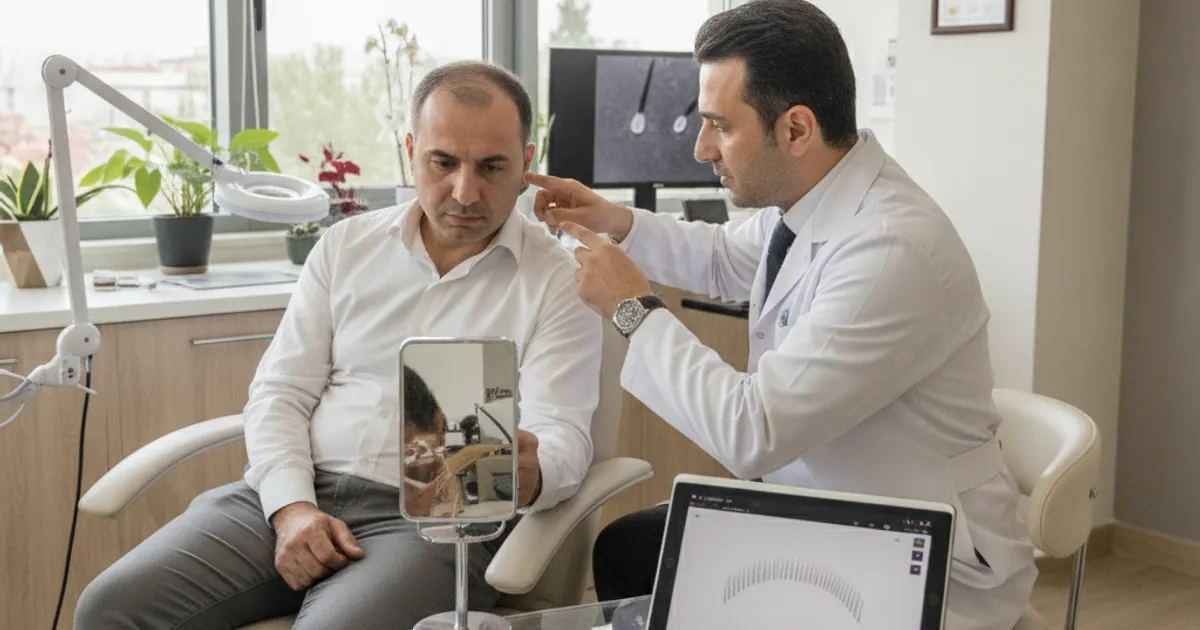
What Is Hair Loss After Illness or High Fever?
Hair loss after illness or high fever is a common type of temporary shedding medically known as telogen effluvium. It happens when a physical stressor — like a severe infection, a high fever, surgery, or a significant illness — pushes a large number of hair follicles into the resting (telogen) phase of the hair growth cycle at the same time. Weeks later, those hairs fall out together, which can be alarming but is usually reversible. Unlike pattern baldness, this shedding is diffuse, meaning it spreads across the whole scalp rather than concentrating at the temples or crown. Most people recover fully without treatment, though the timeline can feel frustratingly slow. Understanding what triggers it and how long it lasts helps you decide whether to wait it out or seek medical advice.
Common Causes: Why Illness and Fever Trigger Shedding
The hair growth cycle has three main phases: anagen (growth), catagen (transition), and telogen (rest). Normally, a certain proportion of hair follicles are in telogen at any given time, and shedding a modest number of hairs daily is normal. A high fever or serious illness can disrupt this balance, sending a large share of follicles into telogen prematurely. When the resting phase ends a few months later, all those hairs shed together. Common triggers include:
- High fever from infections such as influenza, COVID-19, or strep throat
- Major surgery or trauma
- Severe emotional stress
- Rapid weight loss or nutritional deficiencies
- Certain medications (e.g., some antibiotics, antifungals, or retinoids)
- Thyroid disorders or other endocrine imbalances
- Childbirth (a specific form of telogen effluvium)
Symptoms and Timeline: When Does Shedding Start and Stop?
The hallmark of post-illness hair loss is a sudden increase in shedding, typically noticed 2–3 months after the triggering event. You may see more hair on your pillow, in the shower drain, or when brushing. The shedding is diffuse — not patchy — and may be accompanied by a tingling sensation on the scalp. Importantly, there is no visible inflammation or scarring. The timeline below gives a general idea of what to expect, though individual cases vary.
| Phase | Typical Timing | What Happens |
|---|---|---|
| Trigger event | Day 0 | Illness, fever, or stress occurs |
| Latency period | 2–3 months after trigger | Hairs enter telogen and remain in resting phase |
| Active shedding | 3–6 months after trigger | Noticeable diffuse hair loss, often peaking around month 4 |
| Recovery begins | 6–9 months after trigger | Shedding slows, new growth starts |
| Full recovery | 9–12 months after trigger | Hair density returns to baseline for most people |
How Is Post-Illness Hair Loss Diagnosed?
Diagnosis is usually straightforward and relies on history and clinical examination. A dermatologist or trichologist will ask about recent illnesses, fevers, medications, and stress levels. They may perform a pull test (gently tugging a small section of hair to see how many hairs come loose) and examine the scalp for signs of inflammation or scarring. Blood tests can help rule out underlying causes such as thyroid dysfunction, iron deficiency, or vitamin D deficiency. In some cases, a scalp biopsy may be done to confirm telogen effluvium or exclude other disorders. Key diagnostic steps include:
- Detailed medical history (illness, fever, medications, diet, stress)
- Hair pull test to assess shedding activity
- Scalp examination with a dermatoscope
- Blood tests: ferritin, thyroid-stimulating hormone (TSH), vitamin D, complete blood count
- Assessment of hair density and pattern (diffuse vs. patterned)
- Review of family history to rule out androgenetic alopecia
Treatment Options: From Watchful Waiting to Medical Therapy
Because post-illness hair loss is self-limiting, the first-line approach is often watchful waiting — giving the hair cycle time to reset. However, if shedding is prolonged or severe, or if you have an underlying condition like pattern baldness, medical therapy can help. Treatments aim to reduce shedding, support regrowth, and address any deficiencies. Options include:
- Correcting nutritional deficiencies (iron, vitamin D, zinc, protein) under medical guidance
- Topical minoxidil (available in different strengths for men and women) to stimulate follicles and prolong the growth phase
- Oral finasteride (for men) if there is coexisting androgenetic alopecia — not for women of childbearing age
- Platelet-rich plasma (PRP) injections to promote follicle health and reduce shedding
- Low-level laser therapy (LLLT) as an adjunct to stimulate circulation
- Stress management and adequate sleep to support recovery
- Gentle hair care to avoid additional breakage
| Treatment | Best For | Typical Duration | Notes |
|---|---|---|---|
| Watchful waiting | Mild, recent shedding | 3–6 months | No intervention; monitor progress |
| Minoxidil | Prolonged shedding or coexisting pattern loss | 6–12 months | Requires consistent use; may cause initial shedding |
| Finasteride | Men with androgenetic alopecia | 6–12 months | Prescription only; not for women of childbearing age |
| PRP | Reducing shedding and improving density | 3–6 sessions | Evidence is promising but not definitive |
| LLLT | Adjunct therapy | 3–6 months | At-home devices available; modest benefit |
Is a Hair Transplant Suitable for Post-Illness Hair Loss?
In most cases, a hair transplant is not the right solution for post-illness hair loss because the condition is temporary and hair regrows on its own. Transplanting during active shedding is risky — you could lose grafts if the underlying cause isn't resolved. However, a transplant may be considered if you have coexisting androgenetic alopecia (pattern baldness) that has stabilized, or if shedding has persisted for over a year and medical therapy has failed to restore density. A surgeon will typically wait until shedding has stopped for at least 6–12 months before considering surgery. If you're exploring options, a directory like Clinic Reccy can help you find reputable clinics in your area.
- Transplant is generally not recommended for pure telogen effluvium
- Consider surgery only if pattern baldness coexists and is stable
- Wait at least 6–12 months after shedding stops
- Ensure any underlying illness or deficiency is treated first
- Consult a board-certified hair restoration surgeon for personalized advice
What to Expect: Recovery Timeline and Prognosis
The prognosis for post-illness hair loss is excellent. Most people see complete regrowth within 6–12 months without any treatment. The key is patience — hair grows slowly, so visible improvement takes time. During recovery, you may notice fine, shorter hairs emerging, which eventually thicken. If shedding persists beyond a year, or if you have an underlying condition like pattern baldness, the outlook may be different and medical therapy or a transplant may be needed. The table below summarizes the typical recovery course.
| Timeframe | What to Expect |
|---|---|
| 0–3 months after trigger | No visible change; hairs enter telogen |
| 3–6 months | Active shedding peaks; noticeable hair loss |
| 6–9 months | Shedding slows; new growth begins |
| 9–12 months | Hair density improves; most people recover fully |
| Beyond 12 months | If shedding continues, seek medical evaluation |
FAQ: Hair Loss After Illness and Fever
How long does hair loss after a fever last?
Shedding typically starts 2–3 months after the fever and lasts for 3–6 months. Most people see significant improvement by 6–9 months and full recovery within a year.
Can COVID-19 cause hair loss?
Yes, COVID-19 is a known trigger for telogen effluvium. Many people experience temporary shedding 2–3 months after infection, which usually resolves on its own.
Is post-illness hair loss permanent?
No, it is usually temporary. The hair follicles are not destroyed; they are just in a resting phase. Once the cycle resets, hair regrows.
Should I take supplements for hair loss after illness?
Only if you have a confirmed deficiency. Iron, vitamin D, and zinc deficiencies can worsen shedding, but taking supplements without testing can be harmful. Consult a doctor first.
When should I see a doctor for hair loss after illness?
See a dermatologist if shedding lasts longer than 12 months, is accompanied by scalp symptoms (itching, redness, pain), or if you notice patchy loss.
Can I use minoxidil for post-illness hair loss?
Minoxidil can help prolong the growth phase and may reduce shedding, but it is not a cure. It is most useful if shedding is prolonged or if you have coexisting pattern baldness. Talk to your doctor before starting.
Is a hair transplant a good idea for hair loss after fever?
Generally no, because the hair loss is temporary. A transplant is only considered if you have stable pattern baldness or if shedding persists beyond a year despite treatment.
More Guides
- Minoxidil Contact Dermatitis: Signs and Alternatives
Learn the signs of minoxidil contact dermatitis, how it's diagnosed, treatment options, and alternatives like finasteride, PRP, and hair transplant surgery.
- Can Radiotherapy Cause Hair Loss? What to Expect
Radiotherapy can cause temporary or permanent hair loss. Learn the causes, symptoms, diagnosis, treatment options, and whether a hair transplant is suitable.
- Can Dandruff Cause Hair Loss? Facts vs Folklore
Does dandruff cause hair loss? We separate fact from folklore, explain the real connection, diagnosis, treatments, and when a hair transplant makes sense.
- Autoimmune Alopecia vs Genetic Hair Loss: Key Differences
Autoimmune alopecia vs genetic hair loss: causes, symptoms, diagnosis, treatment options, and whether a hair transplant is suitable. A clear, practical guide.