
Hair Transplant Finance Options: Loans, Payment Plans & Costs
Compare hair transplant finance options: medical loans, payment plans, and credit cards. Learn costs by stage of hair loss and how to choose the right option.
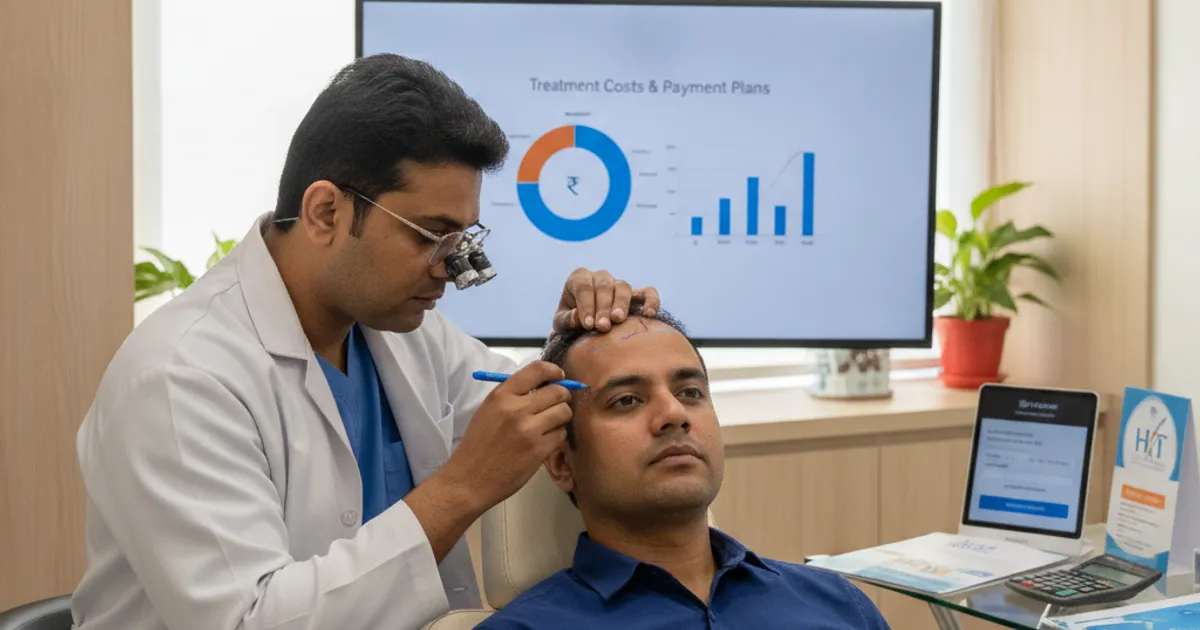
Hair Transplant Finance Options: Loans, Payment Plans & Costs
The main finance options for a hair transplant are medical loans, credit cards, clinic payment plans, and third-party financing companies. Many patients pay in full upfront, but a growing number of clinics now offer instalments or partner with finance providers.
A hair transplant is rarely cheap, and few people have thousands sitting in a savings account ready to spend on their scalp. That's why finance options matter. This guide breaks down what's available, how each option works, and what to watch out for. We'll also cover typical costs by stage of hair loss so you can budget realistically.
How Much Does a Hair Transplant Cost?
Costs vary widely depending on the number of grafts, the clinic's location, and the surgeon's reputation. As a general rule, the more advanced your hair loss, the more grafts you'll need, and the higher the price. Below are average case prices by stage of hair loss, based on typical clinic pricing.
| Stage of Hair Loss | Typical Grafts Needed | Average Cost (USD) |
|---|---|---|
| Early (Norwood 2-3) | 1,000 - 1,500 | $4,000 |
| Moderate (Norwood 4-5) | 2,000 - 3,000 | $7,500 |
| Advanced (Norwood 6-7) | 3,500 - 5,000 | $12,000 |
These are averages. Some clinics charge less, some charge significantly more. Location plays a big role: prices in Turkey, for example, are often lower than in the UK or US, even for the same number of grafts. If you're comparing clinics abroad, factor in travel and accommodation costs too.
What Payment Methods Are Available for Hair Transplants?
Most clinics accept a few standard payment methods. The exact options depend on the clinic, but here's what you'll typically find:
- Bank transfer — common for larger payments, especially with overseas clinics.
- Credit or debit card — widely accepted, but some clinics charge a processing fee.
- Cash — less common now, but still accepted by some smaller clinics.
- Medical loan — a personal loan specifically for medical procedures, often with lower interest rates.
- Clinic payment plans — some clinics let you pay in instalments directly, sometimes interest-free.
- Third-party financing — companies like medical finance providers that pay the clinic upfront and you repay them monthly.
How Does Medical Financing Work for Hair Transplants?
Medical financing works like any other loan: a lender pays the clinic, and you repay the lender in monthly instalments with interest. The application process is usually straightforward and can often be done online. Here's the typical step-by-step:
- Step 1: Get a quote from your chosen clinic — you'll need the exact treatment cost.
- Step 2: Apply online or in person with a medical finance provider or your bank.
- Step 3: Provide proof of identity, income, and sometimes a treatment plan.
- Step 4: Receive a decision, often within minutes to a few days.
- Step 5: If approved, the lender pays the clinic directly (or reimburses you).
- Step 6: Repay the loan in fixed monthly instalments over the agreed term.
What Are the Pros and Cons of Different Finance Options?
Each finance option has trade-offs. Here's a quick comparison to help you weigh them up.
| Finance Option | Pros | Cons |
|---|---|---|
| Paying upfront | No interest, no debt, often cheaper overall | Requires large lump sum; may delay treatment |
| 0% credit card | No interest if paid within promo period | High penalty rates after promo; credit limit may be too low |
| Clinic payment plan | Convenient, sometimes interest-free | Not all clinics offer it; may require deposit |
| Medical loan | Spread cost over years; predictable payments | Interest charges; affects credit score; approval not guaranteed |
| Third-party financing | Fast approval; dedicated medical loans | Rates vary; may have hidden fees |
Can You Get a Hair Transplant on the NHS or with Insurance?
In the UK, hair transplants are not routinely available on the NHS because they're considered cosmetic. Private health insurance also rarely covers them unless there's a medical reason, such as hair loss from cancer treatment or a diagnosed medical condition. Here's the breakdown:
- NHS: Generally not funded for male pattern baldness or cosmetic reasons.
- Private insurance: Usually excludes cosmetic procedures; may cover reconstructive cases.
- Exceptions: Some cases of alopecia areata or hair loss due to medical treatment may qualify, but it's rare.
- Alternative: Some patients explore grants or charitable funding for medical hair loss, but this is uncommon.
How to Choose the Right Finance Option for You
The best option depends on your credit score, how much you can afford monthly, and how soon you want the procedure. Use this checklist to narrow it down:
- Check your credit score — a good score opens up lower-interest loans and credit cards.
- Calculate your monthly budget — don't stretch yourself; aim for payments under 10% of your take-home pay.
- Compare total cost, not just monthly payments — a longer term means more interest overall.
- Ask the clinic about in-house plans — they may offer interest-free instalments.
- Consider a 0% credit card only if you can clear the balance before the promo ends.
- Read the fine print — watch for arrangement fees, early repayment penalties, and variable rates.
- Get quotes from at least two lenders — rates and terms vary significantly.
Where to Find Reputable Clinics and Compare Prices
Before you commit to any finance option, make sure you're comparing reputable clinics. Clinic Reccy lists verified clinics with details on pricing, finance availability, and patient services. You can filter by location, treatment type, and whether the clinic offers financing.
Frequently Asked Questions
Can I get a hair transplant with bad credit?
It's harder, but not impossible. Some clinics offer in-house payment plans that don't require a credit check. Alternatively, you could use a guarantor loan or save up and pay upfront. Avoid high-interest lenders.
Is 0% finance really interest-free?
Usually, yes, if you repay within the promotional period. But if you miss a payment or don't clear the balance in time, you'll be charged interest, often at a high rate. Always read the terms.
Do hair transplant clinics offer payment plans?
Some do, especially larger clinics or those in competitive markets. It's less common with smaller clinics. Always ask directly — it's not always advertised.
Can I use a personal loan for a hair transplant?
Yes. A personal loan is one of the most common ways to finance a hair transplant. You'll need a good credit score to get a competitive rate, but it's straightforward.
More Guides
- Hair Transplant and Blood Thinners: Safety and Timing
Can you have a hair transplant on blood thinners? Learn why they matter, which ones raise bleeding risk, how long to stop before surgery, and when to restart.
- Finasteride and PSA Testing: What You Need to Know
Finasteride lowers PSA levels, so your test results need careful interpretation. Learn how finasteride affects PSA, the adjustment factor, and what to tell your
- Can You Cure a Receding Hairline? What's Realistic
Can you cure a receding hairline? Learn what's realistic with medications, transplants, and lifestyle changes, plus expected results and costs.
- Minoxidil Hair Thinning Before Growth: Is It Normal?
Is minoxidil hair thinning before growth normal? Yes, it's a common sign the treatment is working. Learn why it happens, how long it lasts, and when to worry.