
Hair Transplant Healing Stages: What to Expect Week by Week
A week-by-week guide to hair transplant healing stages, from scabbing and shock loss to final results, with practical aftercare tips for each phase.
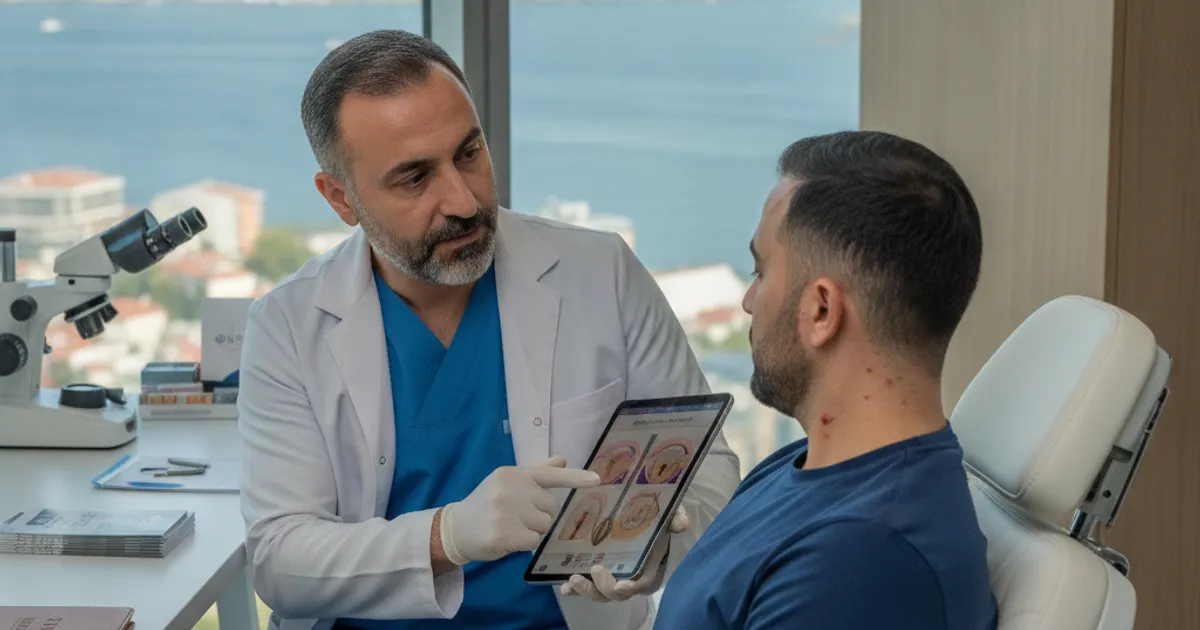
If you're planning a hair transplant or you've just had one, the biggest question is usually simple: what should my scalp look like right now, and when will I see results? Hair transplant healing stages follow a fairly predictable pattern, but the timeline can feel confusing when you're in the middle of it. This guide walks you through what's normal at each stage, from the first few days to the one-year mark, and gives you practical aftercare advice for every phase.
The First Few Days: Scabbing and Swelling
The first three days are the most delicate. Your scalp will be tender, and small scabs will start forming around each graft site. Swelling is common, especially around the forehead and eyes, and it usually peaks around day three before settling down. You'll likely be given pain relief and antibiotics by your clinic, and you should follow their instructions closely. Sleep with your head elevated to reduce swelling, and avoid touching or scratching the recipient area.
- Expect redness, tightness, and small crusts around each graft.
- Swelling may move down your forehead; this is normal and temporary.
- Use a travel pillow or extra pillows to keep your head elevated at night.
- Don't wash your hair until your clinic gives you the go-ahead — this is often within the first few days, but follow their specific instructions.
- Avoid alcohol, smoking, and strenuous exercise for at least the first week.
Week 1: Scabs and Sensitivity
By the end of the first week, the scabs are starting to dry and flake, and your scalp may feel itchy. This is a good sign — it means healing is underway. Most clinics provide a gentle washing routine, often with a mild shampoo and a cup of lukewarm water rather than direct shower pressure. Don't pick at the scabs; let them fall off naturally. Sensitivity is still high, so avoid hats that rub and keep sun exposure to a minimum.
- Wash gently with a mild shampoo, pat dry with a clean towel.
- Itching is normal; resist scratching to protect the grafts.
- Avoid direct sunlight on the recipient area.
- Keep sleeping with your head elevated if swelling persists.
- Contact your clinic if you notice excessive bleeding or signs of infection.
Weeks 2–3: The 'Ugly Duckling' Phase and Shock Loss
Around week two, the scabs should be mostly gone, and the transplanted hairs may start to shed. This is known as shock loss, and it's one of the most misunderstood parts of the process. It happens because the hair follicles go into a resting phase after the trauma of surgery. Seeing hairs fall out can be alarming, but it's completely normal and temporary. Your scalp may look patchy, and the donor area might still feel a bit tight.
Weeks 4–6: Shedding and Early Regrowth
By week four, most of the transplanted hairs will have shed, and the scalp may look relatively bare in the treated areas. This is the point where patience matters most. Some people notice tiny new hairs starting to emerge, but it's still early. The donor area should be healing well, and any numbness or tightness is gradually fading. You can usually return to normal washing and gentle exercise by now, but check with your clinic first.
- Shedding typically tapers off by around week six.
- You may see fine, thin hairs beginning to sprout.
- Avoid harsh hair products and dyes for now.
- Keep up gentle scalp care and a healthy diet.
- Don't panic if the area looks uneven — regrowth is just starting.
Months 2–4: The Transition Period
Months two to four are often called the transition period. You'll start to see more consistent regrowth, but it can be patchy and slow. Some hairs may grow faster than others, and the overall density is still low. This is a normal part of the hair transplant healing stages. Your scalp should feel much more comfortable, and any redness should be fading. Most people can return to their normal hair care routine, including dyeing and using styling products, but it's best to confirm with your surgeon.
Months 5–8: Visible Growth and Thickening
By month five, you should notice a real difference. The new hairs are growing longer and thicker, and the overall coverage is improving. This is when most people start feeling more confident about their results. The hair may still be finer than your natural hair, but it will continue to mature. By month eight, the density is usually quite noticeable, and you can start experimenting with different hairstyles.
- New hair grows at roughly the same rate as normal hair — about half an inch per month, according to general dermatology sources.
- Texture may be slightly different at first but softens over time.
- You can usually resume all normal hair treatments and styling.
- Keep protecting your scalp from sunburn, especially in the first year.
- Continue a healthy diet and gentle scalp care to support growth.
Months 9–12: Maturation and Final Results
The final stage of hair transplant healing is maturation. Between months nine and twelve, the hair thickens, the texture becomes more natural, and the overall result looks settled. Some people see continued improvement beyond the one-year mark, but by then you should have a clear picture of your outcome. The donor area should be fully healed, and any residual numbness should be gone. This is also the time to assess whether you're happy with the result or want to discuss a touch-up with your clinic.
Aftercare Tips for Each Stage
Aftercare isn't just about the first week — it's a year-long commitment. Here's a stage-by-stage summary to keep you on track.
- First few days: sleep elevated, avoid touching grafts, follow medication schedule.
- Week 1: gentle washing, no scratching, protect from sun.
- Weeks 2–3: expect shock loss, don't panic, keep scalp clean.
- Weeks 4–6: resume gentle exercise, avoid harsh products, start taking progress photos.
- Months 2–4: be patient with patchy growth, maintain a healthy diet.
- Months 5–8: enjoy visible growth, protect from sunburn, use gentle styling products.
- Months 9–12: assess final results, discuss any concerns with your clinic.
Frequently Asked Questions
Is it normal to lose transplanted hair in the first month?
Yes, shock loss is very common and usually starts a couple of weeks after surgery. The hair falls out because the follicles enter a resting phase after surgery. It's temporary, and new growth typically begins within a few months.
When can I go back to work after a hair transplant?
Most people can return to desk work after a few days to a week, once swelling and tenderness have subsided. If your job involves physical labor or heavy sweating, you may need to wait longer. Always follow your clinic's advice.
How long until I see final results?
Final results are usually visible around 12 months after surgery, though some people see continued thickening beyond that. The first noticeable growth typically appears around months three to five.
Can I wear a hat after my transplant?
Loose-fitting hats are generally okay after the first week or two, but avoid anything that rubs against the grafts. Ask your clinic when it's safe to wear a hat regularly.
More Guides
- How to Tell If You're a Good Candidate for a Hair Transplant
A practical guide to hair transplant candidacy: hair loss stage, donor density, age, health, aftercare, and when a transplant may not be right for you.
- Dermatologist-Recommended Shampoos for Hair Loss
Learn which shampoos dermatologists recommend for hair loss, key ingredients, how to match products to your hair loss type, and aftercare tips for better result
- Hair Transplant Graft Count: How Many Do You Need?
How many grafts for a hair transplant? Learn how graft counts are estimated, typical ranges by Norwood stage, and what to confirm before surgery.
- How to Choose a Hair Transplant Surgeon: Credentials to Check
Learn how to choose a hair transplant surgeon by checking credentials, board certification, training, and real patient results. A practical guide.