
Hair Transplant Redness: How Long Does It Last?
Hair transplant redness is normal after surgery. Learn how long it lasts, what affects healing time, and how FUE, FUT, and DHI compare in recovery.
What Is Hair Transplant Redness?
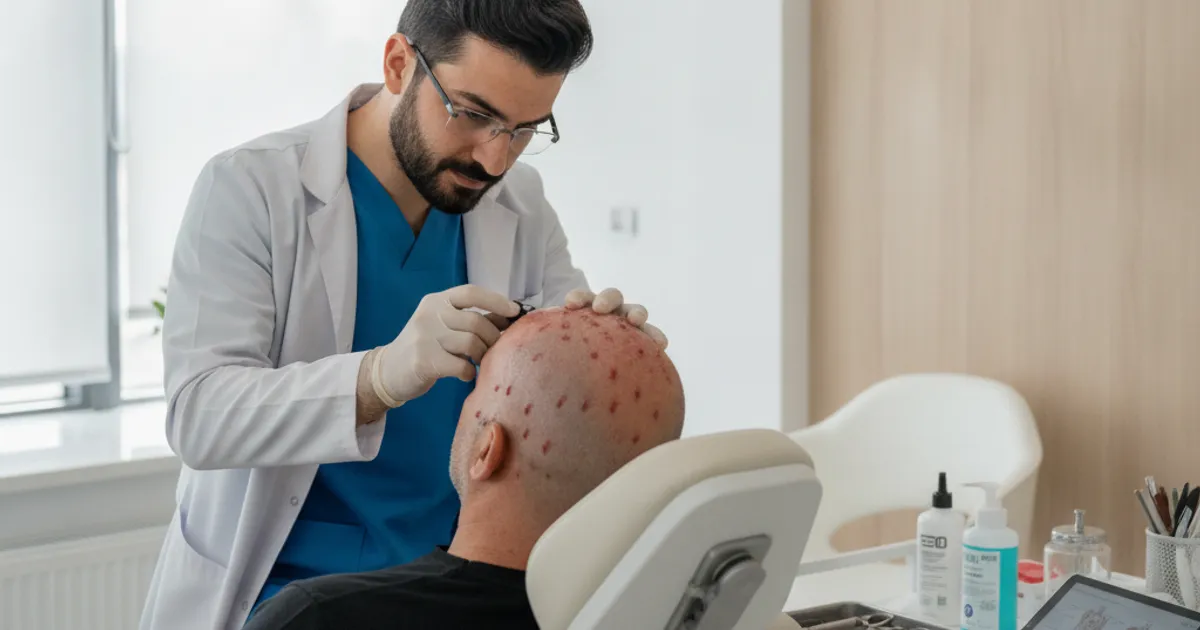
Hair transplant redness is the pink or reddish tint that appears on the scalp after donor and recipient areas are worked on during surgery. It is not a complication or a sign that something went wrong. It is simply part of the healing process. When grafts are placed into tiny incisions, the skin responds with inflammation, increased blood flow, and new tissue formation. That combination shows up as redness. For most people, it fades gradually over days to weeks, though the exact timeline depends on skin type, technique, and aftercare.
Why Redness Happens After a Hair Transplant
The scalp has a dense blood supply, which is one reason hair transplants heal well. But that same blood supply makes redness more visible. During surgery, hundreds or thousands of micro-incisions are made. The body sends blood, immune cells, and repair signals to those sites. The result is a red or pink appearance that can last longer than the scabbing or crusting. Several factors influence how intense and how long the redness stays.
- Inflammation from the incisions themselves
- Increased blood flow to the healing follicles
- Skin tone and how easily your skin flushes
- The size and depth of the incisions
- Number of grafts placed in one session
- Sun exposure during the first few weeks
- Smoking or poor circulation, which slows healing
- Certain medications or medical conditions
How Long Does Redness Last? A Timeline
There is no single answer because everyone heals differently. But most surgeons describe a general pattern. In the first few days, redness is at its peak and may look like a sunburn. By the end of the first week, it usually calms down but is still visible. Over the next two to four weeks, it fades to a light pink. For some people, a faint pink tone can linger for a few months, especially in the donor area or along the hairline. The table below shows a typical timeline, not a guarantee.
| Time After Surgery | Typical Redness Appearance |
|---|---|
| Days 1–3 | Bright red or pink, often with swelling |
| Days 4–7 | Redness softens, scabs begin to form |
| Weeks 2–3 | Light pink, less noticeable |
| Weeks 4–6 | Faint pink or normal skin tone for many |
| Months 2–3 | Most redness gone; occasional pink patches |
| Months 4–6 | Rarely visible unless skin is very fair |
Redness by Technique: FUE vs. FUT vs. DHI
The technique used can affect how much redness you see and how long it lasts. FUE (follicular unit extraction) creates many small punctures, so redness is spread across the donor area and recipient sites. FUT (follicular unit transplantation) removes a strip of skin from the donor area, leaving a linear scar that may be red for longer. DHI (direct hair implantation) uses an implanter pen to place grafts, which can mean smaller incisions and potentially less trauma. The table below compares general redness patterns, but individual results vary.
| Technique | Redness Pattern | Typical Duration |
|---|---|---|
| FUE | Scattered pink dots in donor and recipient areas | 1–3 weeks for most, up to 2 months for some |
| FUT | Redness along the strip scar and recipient sites | 2–4 weeks, scar may stay pink for months |
| DHI | Smaller, more localized redness at implant sites | 1–2 weeks for many, similar to FUE |
Recovery: What You Can Do to Reduce Redness
You cannot rush biology, but you can avoid making redness worse. Most surgeons give specific aftercare instructions. Following them closely is the best way to keep redness mild and short-lived. Here are the general steps that help.
- Keep the scalp clean and moisturized as directed
- Avoid direct sun exposure for at least two weeks; wear a loose hat after that
- Do not scratch, pick, or rub the grafts
- Sleep with your head elevated for the first few nights
- Avoid strenuous exercise and sweating for the first week
- Skip alcohol and smoking, which slow healing
- Use gentle, fragrance-free products once cleared by your doctor
- Ask your surgeon about camouflage options like tinted sunscreen or mineral makeup
When Redness Fades: What Results to Expect
Redness fading is one milestone, but it is not the same as seeing final results. The transplanted hair usually sheds in the first few weeks, then regrows over several months. By the time redness is mostly gone, you may still be waiting for new growth. Here is what the timeline generally looks like.
- Weeks 2–4: transplanted hair sheds; redness fades
- Months 3–4: new hair starts to grow; scalp may still look slightly pink
- Months 5–6: noticeable growth; redness usually gone
- Months 9–12: hair thickens and matures; final results visible
- Months 12–18: full density for some; redness is a distant memory
Who Is Most Affected by Prolonged Redness?
Anyone can have redness after a hair transplant, but some people tend to stay pink longer. If you fall into one of these groups, plan for a slightly longer healing window and talk to your surgeon about ways to manage it.
- People with fair or sensitive skin
- Those who had a large number of grafts in one session
- Patients with a history of rosacea or skin inflammation
- Smokers or people with poor circulation
- Anyone who spends a lot of time in the sun without protection
- People who pick at scabs or scratch the healing area
Cost Considerations: Does Redness Affect Price?
Redness itself does not change the cost of a hair transplant. The price is based on the number of grafts, the technique, the clinic's location, and the surgeon's experience. However, if you need additional treatments to manage redness or speed healing, those may add to your overall spending. For example, some clinics offer post-op PRP or light therapy for an extra fee. Always ask what is included in your quote. Below are average case prices by stage of hair loss, based on general industry data. These figures are medians and will vary by clinic and country.
How Redness Compares to Other Post-Op Side Effects
Redness is just one of several temporary side effects after a hair transplant. Most are mild and resolve on their own. Understanding what to expect can help you plan your recovery and know when to call your surgeon. The table below compares common side effects.
| Side Effect | Typical Duration | When to Worry |
|---|---|---|
| Redness | 1–4 weeks, sometimes longer | If it worsens after two weeks or comes with pain |
| Swelling | 2–5 days | If it spreads to the neck or eyes and does not improve |
| Scabbing | 7–14 days | If scabs are thick, oozing, or smell bad |
| Itching | 1–3 weeks | If it is severe or comes with a rash |
| Numbness | A few weeks to a few months | If it persists beyond six months |
| Shock loss | 2–8 weeks after surgery | It is temporary; new growth follows |
FAQ: Hair Transplant Redness
How long does redness last after a hair transplant?
Most people see redness fade within two to four weeks. A faint pink tone can linger for a few months, especially in fair-skinned patients or those who had many grafts. Following aftercare instructions helps shorten it.
Is redness a sign of infection?
No. Redness alone is normal. Infection usually brings additional signs like increasing pain, swelling, pus, or fever. If you have those, contact your surgeon right away.
Can I cover up redness with makeup?
Once your surgeon says it is safe, usually after the scabs have healed, you can use gentle mineral makeup or tinted sunscreen. Avoid heavy products on open wounds.
Does FUE cause less redness than FUT?
FUE tends to cause scattered redness that fades relatively quickly. FUT leaves a linear scar that may stay pink longer. DHI is similar to FUE in redness duration. Your individual healing matters more than the technique.
More Guides
- Hair Transplant for Curly Hair: Graft and Technique Tips
A plain-English guide to hair transplants for curly hair: how surgeons adapt graft harvesting and placement, recovery, results, costs, and who it suits.
- How Long Does a Hair Transplant Last? Long-Term Durability
How long does a hair transplant last? We explain the procedure, recovery, durability, costs by stage of hair loss, and how it compares to alternatives.
- Hair Transplant Revision: When a Second Procedure Makes Sense
Considering a hair transplant revision? Learn how a second procedure works, who it suits, recovery, results, and costs. Expert explainer from Clinic Reccy.
- Hair Transplant for Norwood 6 and 7: What's Possible
A clear look at hair transplant options for Norwood 6 and 7 hair loss: graft limits, staging, recovery, costs, and realistic results.