
How to Assess Graft Quality After a Hair Transplant
Learn how to assess graft quality after a hair transplant, from clinic checks to at-home signs, recovery timelines, and what affects survival rates.
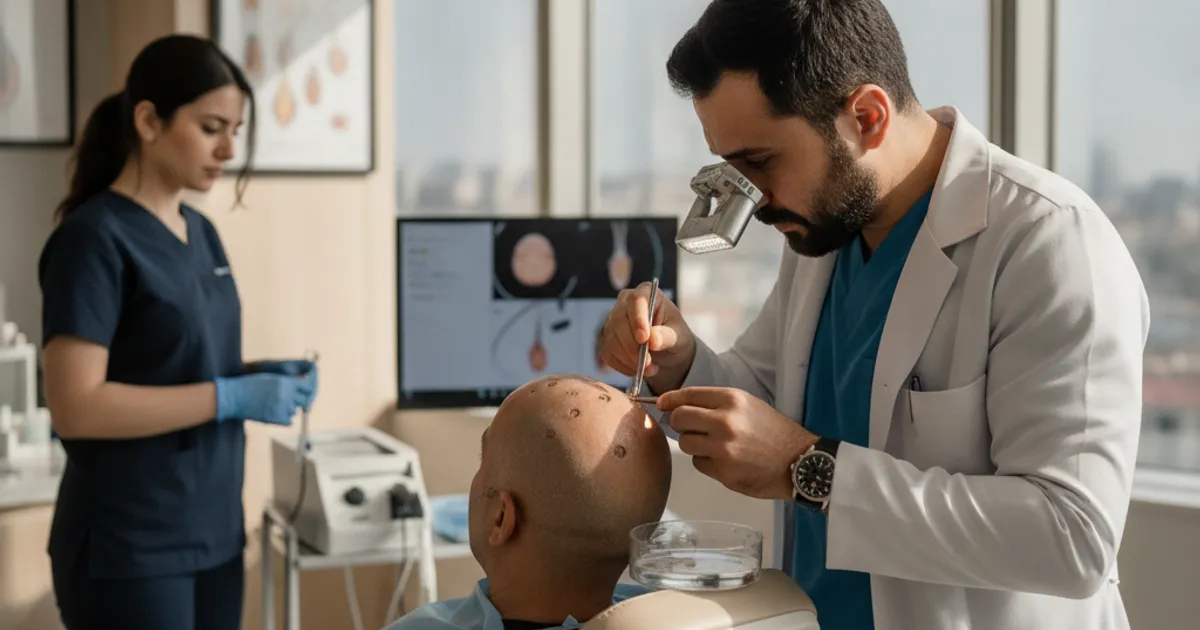
What Is Graft Quality and Why It Matters After a Hair Transplant
Graft quality refers to the health, integrity, and viability of the individual hair follicles that are moved during a hair transplant. Each graft contains one or more hair follicles, and how well those follicles survive the extraction, handling, and implantation process determines how much hair actually grows in the recipient area. When graft quality is high, you see dense, natural-looking growth. When it is poor, you get patchy results, thin spots, or grafts that never produce hair at all.
After the procedure, the focus shifts from surgical technique to how well the grafts are settling in. The first few days are critical. Grafts are fragile, and how they are treated during the initial recovery window can make or break the final outcome. Understanding how to assess graft quality helps you know whether your transplant is on track or whether you need to raise concerns with your clinic.
How Graft Quality Is Assessed: The Core Methods
Assessing graft quality happens in two phases: during the procedure itself and in the days and weeks after. Surgeons and their teams use several methods to evaluate how well grafts are holding up.
- Visual inspection under magnification: The surgical team checks grafts for intact outer layers, proper bulb structure, and signs of dehydration or damage.
- Holding solution checks: Grafts are kept in a chilled, nutrient-rich solution. The team monitors temperature and time in solution to prevent deterioration.
- Implantation timing: The shorter the time between extraction and implantation, the better the graft quality. Delays increase the risk of drying out.
- Post-op density mapping: In the weeks after the procedure, the clinic may use digital imaging to track how many grafts are producing hair.
- Patient-reported shedding patterns: How and when grafts shed in the first month gives clues about survival.
| Assessment Method | When It Happens | What It Tells You |
|---|---|---|
| Magnified visual check | During surgery | Whether grafts are intact and hydrated |
| Solution and timing logs | During surgery | Risk of dehydration or trauma |
| Digital density mapping | 3–12 months after | Actual growth from implanted grafts |
| Shedding observation | First 4–6 weeks | Normal vs. abnormal graft loss |
| Scalp health check | First 2 weeks | Infection or inflammation that could harm grafts |
What You Can Evaluate at Home vs. What Requires a Clinic
You do not need a medical degree to spot some signs of graft quality, but there are limits to what you can assess on your own. Knowing the difference helps you avoid unnecessary panic and helps you ask the right questions at follow-up appointments.
- At home: You can check for redness, swelling, crusting, and whether grafts are falling out in the expected timeframe. You can also take clear photos to track changes over time.
- At home: You can note whether the recipient area feels smooth or bumpy, and whether you see any signs of infection like pus or unusual pain.
- At the clinic: A doctor can use magnification and digital imaging to count surviving grafts and measure density.
- At the clinic: A professional can assess whether poor growth is due to graft failure, scalp condition, or other factors.
- At the clinic: Only a clinician can determine if a revision procedure is needed and plan it safely.
The Recovery Timeline: When Graft Quality Becomes Visible
Graft quality is not immediately obvious. The first few weeks are misleading because most grafts shed their hair shafts, which is normal. The real test comes months later when new hair starts to grow. Here is a general timeline of what to expect.
| Time After Procedure | What Happens | What You Can Assess |
|---|---|---|
| Days 1–3 | Grafts are settling; scabs form | Graft placement and initial healing |
| Days 4–10 | Scabs fall off; shedding begins | Whether grafts stay in place |
| Weeks 2–4 | Most transplanted hairs shed | Normal shedding vs. abnormal loss |
| Months 2–3 | Dormant phase; little visible change | Scalp health and any inflammation |
| Months 4–6 | New hair starts to grow | Early density and growth direction |
| Months 9–12 | Full results become visible | Overall graft survival and density |
| Months 12–18 | Final maturation | Long-term quality and coverage |
- Shedding in the first month is normal and does not mean grafts failed.
- By month 4, you should see fine hairs emerging in the recipient area.
- By month 6, density should be noticeable but not final.
- By month 12, you can fairly judge how many grafts survived.
- Some clinics recommend waiting 18 months before considering a touch-up.
How Graft Quality Affects Results and Survival Rates
Graft survival rate is the percentage of transplanted follicles that grow hair in the recipient area. High survival rates lead to denser, more natural results. Low survival rates mean wasted grafts, wasted money, and the need for another procedure. Graft quality directly influences survival.
- Healthy grafts handled gently have a better chance of surviving the transfer.
- Grafts kept hydrated and cool during surgery are less likely to dry out.
- Grafts implanted at the right depth and angle grow in the correct direction.
- Poor graft quality can lead to cobblestoning, pitting, or unnatural tufting.
- Even with perfect technique, some grafts may not survive due to patient biology.
92% of Istanbul clinics on Clinic Reccy offer Transfers Included
Who Should Be Most Concerned About Graft Quality?
Not everyone needs to obsess over graft quality, but some patients have more at stake. If you fall into one of these groups, it is worth paying extra attention to how your grafts are handled and how they heal.
- Patients with advanced hair loss: They have fewer donor grafts to spare, so each one matters more.
- Patients with fine or fragile hair: These grafts are more prone to damage during handling.
- Patients who have had previous transplants: Scar tissue can affect graft survival.
- Patients with certain medical conditions: Diabetes, autoimmune disorders, or scalp conditions can impact healing.
- Patients choosing a large session: More grafts mean more opportunities for quality issues.
Cost Considerations: Does Higher Price Guarantee Better Grafts?
Hair transplant pricing varies widely depending on location, clinic reputation, and the number of grafts. A higher price does not automatically mean better graft quality. Some expensive clinics deliver excellent results, but so do some mid-range ones. The key is to look at what is included and how the clinic handles grafts, not just the sticker price.
When comparing costs, always check whether the price includes follow-up visits, post-op medication, and any touch-up procedures. Some clinics charge less upfront but add fees later. Others bundle everything into one price. Neither approach is inherently better, but you should know what you are paying for.
How Graft Quality Assessment Compares to Other Aftercare Checks
Graft quality assessment is just one part of post-transplant care. It overlaps with other checks but has a different focus. Here is how it compares to common aftercare priorities.
| Aftercare Check | Primary Focus | How It Relates to Graft Quality |
|---|---|---|
| Scalp health check | Infection, inflammation, healing | Poor scalp health can reduce graft survival |
| Shedding tracking | Normal vs. abnormal hair loss | Abnormal shedding may signal graft damage |
| Density mapping | Number of surviving grafts | Direct measure of graft quality |
| Donor area healing | Scarring and shock loss | Healthy donor area supports future grafts |
| Medication adherence | Finasteride, minoxidil, etc. | Can improve graft survival and growth |
Choosing a Clinic That Prioritizes Graft Quality
The clinic you choose plays the biggest role in graft quality. A skilled surgeon and a well-trained team can make the difference between a dense, natural result and a patchy one. When evaluating clinics, look for transparency about their process and a willingness to answer detailed questions.
- Ask how many grafts they typically handle per session and how they manage fatigue.
- Request details on their graft holding solution and timing protocols.
- Look for before-and-after photos that show close-up density, not just wide shots.
- Check whether they offer follow-up assessments at 6 and 12 months.
- Read patient reviews that mention graft survival and density, not just bedside manner.
FAQ: Assessing Graft Quality After a Hair Transplant
How soon after a hair transplant can I tell if my grafts are healthy?
You cannot judge final graft quality until at least 6 months after the procedure. The first month involves shedding, which is normal. New growth typically starts around month 4, and by month 12 you can fairly assess how many grafts survived.
Is it normal for grafts to fall out in the first two weeks?
Yes. Most transplanted hairs shed within 2 to 4 weeks after surgery. This is called shock loss and does not mean the grafts failed. The follicles remain in the scalp and should produce new hair in a few months.
Can I improve graft quality after the procedure?
You cannot change how the grafts were handled during surgery, but you can support survival by following aftercare instructions. Avoid touching the recipient area, keep it clean, take prescribed medications, and attend follow-up appointments.
What percentage of grafts typically survive a hair transplant?
Survival rates vary by clinic and patient. Many experienced clinics report high survival rates, but there is no universal guarantee. Factors include graft handling, scalp condition, and individual healing. Ask your clinic about their typical outcomes.
More Guides
- Hair Transplant for Curly Hair: Graft and Technique Tips
A plain-English guide to hair transplants for curly hair: how surgeons adapt graft harvesting and placement, recovery, results, costs, and who it suits.
- How Long Does a Hair Transplant Last? Long-Term Durability
How long does a hair transplant last? We explain the procedure, recovery, durability, costs by stage of hair loss, and how it compares to alternatives.
- Hair Transplant Revision: When a Second Procedure Makes Sense
Considering a hair transplant revision? Learn how a second procedure works, who it suits, recovery, results, and costs. Expert explainer from Clinic Reccy.
- Hair Transplant for Norwood 6 and 7: What's Possible
A clear look at hair transplant options for Norwood 6 and 7 hair loss: graft limits, staging, recovery, costs, and realistic results.