
How to Document Hair Loss Progression for a Clinic Visit
Learn how to track hair loss progression with consistent photos, notes, and other methods so your clinic consultation is accurate and productive.
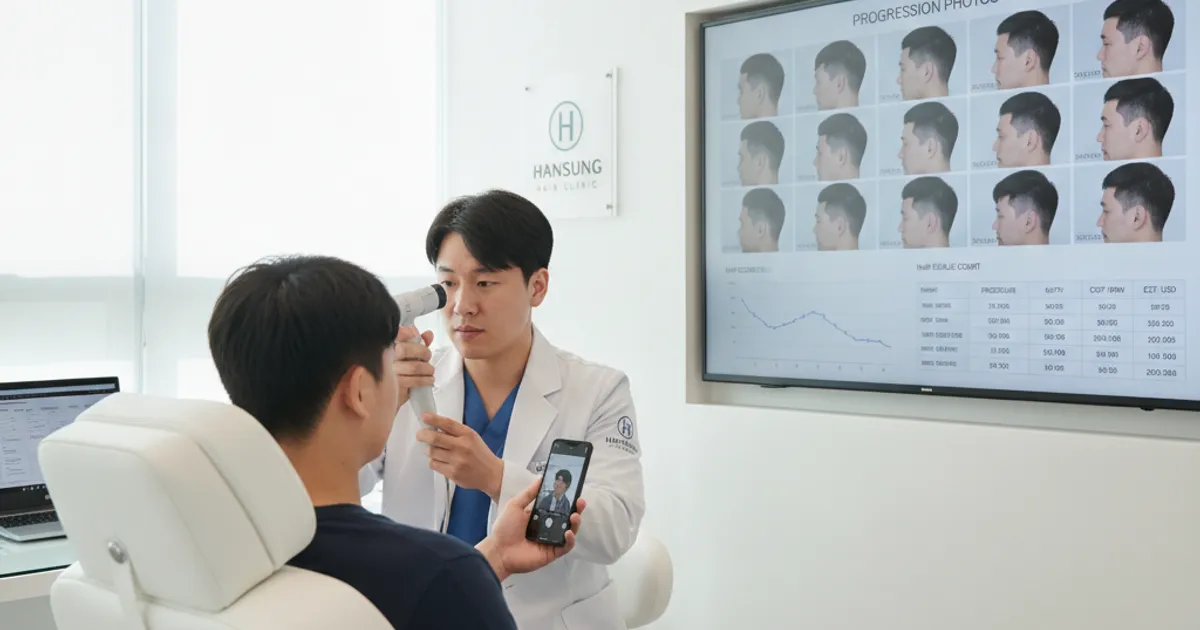
If you're considering a hair transplant, your consultation is the starting point for everything that follows. The surgeon needs to understand not just how much hair you've lost, but how quickly it's happening and what pattern it's taking. That's where documentation comes in. By tracking your hair loss progression before you sit down with a clinic, you give the surgeon a clearer picture and yourself a better basis for planning. This guide walks you through what to record, how to do it consistently, and how to use that information to make smarter decisions about your treatment and aftercare.
Why Documenting Hair Loss Matters for Your Consultation
Hair loss is gradual, and memory is unreliable. Most people can't accurately say whether their hairline has receded half an inch or a full inch over the past year. Without records, you and your surgeon are working from impressions rather than facts. Good documentation changes that. It shows the rate of loss, helps identify whether you're in an active shedding phase, and gives the clinic a baseline to compare against during follow-up visits. It also protects you: if you decide to proceed with a transplant, having before-and-after records makes it easier to evaluate the results objectively. And if you're not ready for surgery, tracking helps you monitor whether non-surgical treatments are holding the line.
What to Track: The Key Signs of Hair Loss Progression
You don't need to measure every strand. Focus on the visible markers that clinics actually use when assessing candidates. Pay attention to changes in these areas:
- Hairline position and shape — note any recession at the temples or forehead.
- Crown density — check for thinning or a visible scalp at the vertex.
- Part width — a widening part can indicate diffuse thinning.
- Overall density — compare thickness across the top, sides, and back.
- Shedding volume — roughly count hairs lost during washing or styling.
- Scalp visibility — look for increased show-through under bright light.
- Eyebrow and body hair changes — sometimes relevant for certain types of loss.
How to Take Consistent Photos for Your Clinic
Photos are the most useful documentation tool, but only if they're consistent. A random selfie taken in different lighting won't tell a clinic much. Follow these steps to create a reliable photo record:
- Use the same camera and settings each time — your phone's rear camera on a fixed setting works well.
- Set up in the same spot with the same background and lighting (natural daylight from a window is ideal).
- Take photos from five standard angles: front, top-down, left temple, right temple, and crown.
- Keep your hair dry and styled the same way (or unstyled) for each session.
- Use a tripod or ask someone to help so the distance and angle stay consistent.
- Label each photo with the date and angle immediately after taking it.
- Take photos every four to six weeks — more frequent shots add anxiety without extra insight.
Beyond Photos: Other Documentation Methods
Photos are essential, but they're not the only way to build a useful record. Clinics appreciate a few extra details that add context:
- A simple hair loss diary — jot down noticeable changes, shedding episodes, or treatments started.
- A pill bottle or product log — list any medications, supplements, or topical treatments and when you began them.
- Family history notes — note relatives with hair loss and their approximate age of onset.
- Scalp health observations — record flaking, itching, or redness that might affect treatment.
- A measurement record — use a soft tape to measure hairline recession from a fixed point like the brow.
Organizing Your Documentation for the Consultation
A disorganized folder of photos won't help anyone. Before your appointment, spend ten minutes putting everything in order so the surgeon can review it quickly:
- Create a digital folder named with your name and consultation date.
- Sort photos chronologically and rename files with dates (e.g., 2025-01-15_front.jpg).
- Group photos by angle if you have many sets.
- Print a one-page summary of your hair loss diary and medication list.
- Bring your phone or a tablet with the photos ready to view, plus a backup on a USB drive.
- Note any specific questions you have for the surgeon alongside your records.
What Clinics Look for in Your Documentation
When a clinic reviews your documentation, they're not just counting hairs. They're looking for patterns. A steady, slow recession suggests stable loss, while rapid thinning over a few months may indicate active shedding that needs medical attention first. They also check for signs of diffuse thinning versus patterned loss, because that affects surgical planning. Your records help them assess donor area quality, predict future loss, and decide whether you're a good candidate now or should wait. They may also compare your photos to standard scales like the Norwood or Ludwig classifications, so clear images make that mapping more accurate.
Using Your Documentation to Plan Aftercare
Your documentation doesn't stop being useful after the consultation. It becomes a baseline for aftercare and long-term planning. Here's how to put it to work:
- Set a schedule for follow-up photos — every three to six months is typical after a transplant.
- Compare new photos to your baseline to track graft growth and shock loss.
- Use your diary to note any side effects from medications or changes in shedding.
- Share updates with your clinic if you notice unexpected loss or scalp issues.
- Keep documenting even if you decide against surgery — it helps you monitor non-surgical treatments.
Common Mistakes to Avoid
Even well-intentioned documentation can go wrong. Watch out for these pitfalls:
| Mistake | Why It Hurts | Fix |
|---|---|---|
| Inconsistent lighting or angles | Makes photos useless for comparison | Use the same spot, lighting, and camera settings every time |
| Skipping dates | Undated photos lose their value quickly | Label each file with the date and angle immediately |
| Relying on memory | You'll forget details within weeks | Write things down when they happen |
| Over-documenting | Daily photos create anxiety without adding insight | Stick to every four to six weeks |
| Ignoring non-visual signs | Shedding counts and scalp health matter too | Keep a simple diary alongside your photos |
| Forgetting to bring records | The best documentation is useless if it stays at home | Pack everything the night before your appointment |
FAQ: Documenting Hair Loss for a Clinic Consultation
How often should I take photos to track hair loss?
Every four to six weeks is usually enough to see meaningful changes without creating unnecessary stress. Your clinic may suggest a different interval based on your situation.
Can I just use my phone's front camera for documentation?
Yes, but be consistent. Use the same camera and settings each time, and avoid switching between front and rear cameras if possible. A tripod or a helper can keep angles steady.
What if I don't have photos from before my hair loss started?
That's common. Start documenting now and bring whatever older photos you have — even casual ones can help establish a timeline. Your clinic can work with what's available.
Should I document shedding even if I'm not sure it's related to hair loss?
Yes. Note anything unusual, including periods of heavy shedding. It can help your clinic distinguish between normal fluctuations and patterns that need attention.
More Guides
- How Many Hair Transplants Can You Have? Donor Limits
How many hair transplants can you have? Learn about donor limits, graft counts, safe spacing between sessions, and aftercare planning in this practical guide.
- Finasteride Coupons & Discount Cards: How to Pay Less
Learn how finasteride coupons and discount cards work, where to find legitimate ones, and how to use them at the pharmacy to lower your prescription costs.
- Donor Hair for Transplant: Graft Math Explained
How much donor hair do you need for a transplant? Learn the graft math, safe extraction limits, and planning tips to protect your donor area.
- Hair Transplant Cancelled Last Minute: What to Do Next
Clinic cancelled your hair transplant last minute? Learn how to confirm the cancellation, protect your deposit, find a replacement clinic, and plan aftercare.