
How to Evaluate Hair Transplant Before and After Photos
Learn how to evaluate hair transplant before and after photos. Spot red flags, compare clinics fairly, and document your own results with confidence.
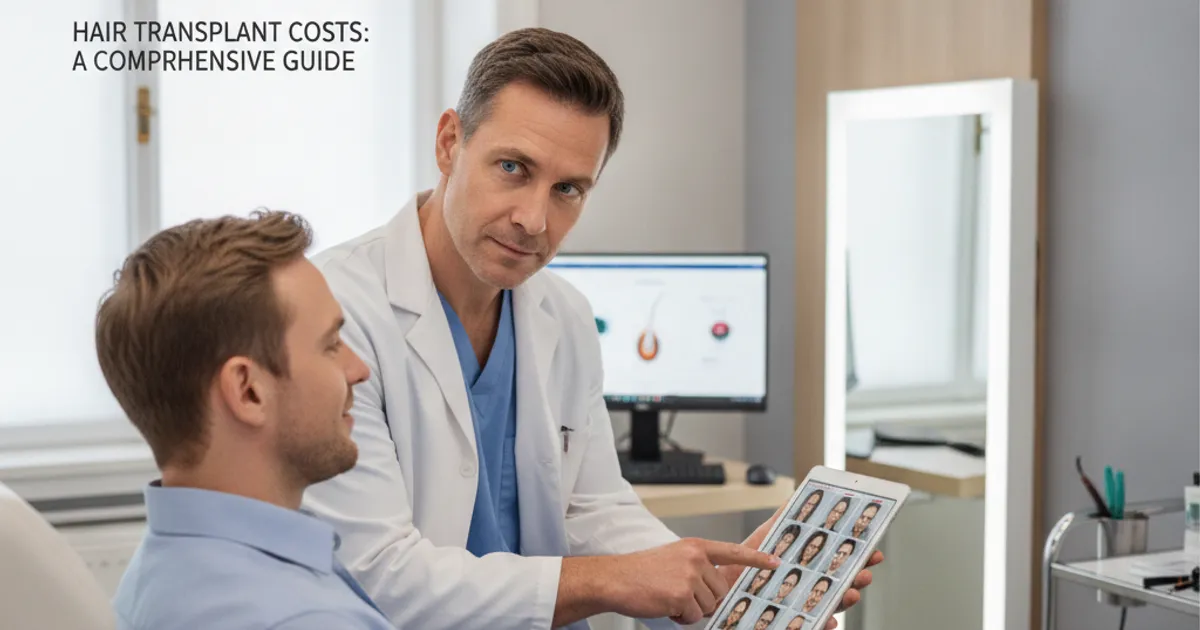
If you are researching hair transplant clinics, before and after photos are often the first thing you look at. They are also the easiest thing to fake, stage, or cherry-pick. Learning how to evaluate hair transplant before and after photos properly will save you from choosing a clinic based on a great camera angle instead of great surgery.
Why Before and After Photos Matter in Hair Transplant Research
Photos are the closest thing to proof you can get without talking to former patients. A clinic's gallery shows you how they handle different hair types, loss patterns, and densities. It also reveals whether they are honest about what a transplant can and cannot achieve. When you look at photos critically, you are not just checking results. You are checking the clinic's transparency.
What Makes a Credible Before and After Photo?
A credible photo is one you could recreate yourself if you were standing in the same room. That means consistent lighting, the same angle, the same hair length, and no obvious retouching. The best clinics treat their photos like clinical records, not advertisements.
- Same lighting in both photos — no switching from harsh overhead light to soft window light.
- Same angle and distance — close-up before shots paired with distant after shots are a warning sign.
- Same hair length and styling — a buzz cut before and a styled after makes comparison impossible.
- Visible scalp and hairline — the areas that matter most should not be hidden by shadows or comb-overs.
- No obvious filters, blurring, or skin smoothing — these can hide poor graft placement or scarring.
Lighting, Angles, and Consistency: The Technical Checklist
You do not need to be a photographer to spot technical tricks. You just need to ask whether the two photos were taken under the same conditions. If they were not, the comparison is not valid.
- Check the background — a different room or wall color suggests a different session and possibly different lighting.
- Look at shadows — shadows should fall in the same direction and have the same intensity.
- Compare skin tone — if the after photo looks warmer or more saturated, it may have been edited.
- Check for wet vs. dry hair — wet hair looks thinner, so a wet before and dry after exaggerates results.
- Look at the part line — if it changed, the density comparison is meaningless.
Red Flags: When Photos Are Too Good to Be True
Some galleries look impressive until you look closely. The red flags are usually about what is missing, not what is shown.
- Only one or two photos per patient — real results usually come with multiple angles and time points.
- No photos of the crown or donor area — these are the hardest areas to treat and the most revealing.
- After photos taken immediately post-op — swelling and scabbing can mask poor graft placement.
- Results that look identical across every patient — hair transplants are not one-size-fits-all.
- No information about the number of grafts, the technique used, or the time since surgery.
- Photos that are heavily cropped — cropping can hide thinning edges or unnatural hairlines.
How to Compare Results Across Clinics Fairly
Comparing clinics is not about finding the most dramatic transformation. It is about finding the clinic that consistently produces natural-looking results for patients with your type of hair loss. That means comparing like with like.
- Match by Norwood scale — compare your loss pattern to patients with a similar starting point.
- Match by hair type — fine hair, coarse hair, curly hair, and straight hair all behave differently.
- Match by graft count — a clinic that uses 4,000 grafts for a small area may be overharvesting.
- Match by time frame — results at 6 months are not the same as results at 18 months.
- Look for consistency — one great result means less than ten good ones.
Questions to Ask a Clinic About Their Photo Gallery
A clinic's willingness to answer questions about their photos tells you a lot about their confidence and honesty. Ask these before you book a consultation.
- Can you show me photos of patients with my hair type and loss pattern?
- How many grafts were used in these photos, and what technique was used?
- How long after surgery were the after photos taken?
- Are these photos unedited and taken under the same lighting conditions?
- Can you connect me with a former patient who has a similar case?
- Do you have photos of the donor area before and after?
Planning Your Own Before and After Documentation
If you decide to go ahead with a transplant, documenting your own results properly will help you track progress and hold the clinic accountable. It also gives you a realistic record to compare against your expectations.
- Take photos in the same room with the same lighting every time.
- Use the same camera or phone and the same distance from your head.
- Photograph your hairline, crown, and donor area from multiple angles.
- Keep your hair at the same length and style for each photo session.
- Take photos at consistent intervals — before surgery, then monthly for the first year.
- Store your photos in a dedicated folder so you can compare them side by side.
Aftercare and Recovery: What Photos Do Not Show
Photos show the final result, but they do not show the weeks of healing, the shedding phase, or the patience required. Understanding the recovery timeline will help you interpret photos more realistically.
- Shock loss — transplanted hair often sheds in the first few weeks before new growth begins.
- The ugly duckling phase — months 1 to 3 are usually the most awkward visually.
- Growth timeline — visible results typically start around month 4 and continue to month 12 or beyond.
- Donor area healing — the back of the head may look red or thin for several weeks.
- Scalp care — following your clinic's washing and medication instructions affects the final outcome.
FAQ: Evaluating Hair Transplant Photos
How soon after a hair transplant can I take meaningful before and after photos?
You can start taking consistent photos immediately after surgery, but meaningful comparison photos are usually taken at 6 and 12 months. The first three months are dominated by shedding and healing, so they are not a good indicator of final results.
Should I trust a clinic that only shows one or two photos per patient?
Be cautious. A small gallery can be a sign of limited experience or selective presentation. Ask for more examples, especially of patients with your hair type and loss pattern. A clinic with a strong track record should have a broad gallery.
What is the biggest red flag in hair transplant before and after photos?
Inconsistent lighting and angles. If the before photo is taken in harsh light and the after photo in soft light, the comparison is not valid. The same goes for different hair lengths, different backgrounds, or obvious editing.
Can I ask a clinic for unedited photos?
Yes. A reputable clinic should be willing to share raw, unedited images from the same session. If they refuse or hesitate, that is a sign to look elsewhere.
More Guides
- Hair Transplant Graft Count: How Many Do You Need?
How many grafts for a hair transplant? Learn how graft counts are estimated, typical ranges by Norwood stage, and what to confirm before surgery.
- How to Choose a Hair Transplant Surgeon: Credentials to Check
Learn how to choose a hair transplant surgeon by checking credentials, board certification, training, and real patient results. A practical guide.
- Costco Finasteride: Price, Membership & Prescription Steps
A practical guide to getting finasteride at Costco: membership rules, prescription steps, generic vs. brand costs, and aftercare planning.
- Smoking and Hair Transplant Healing: What to Know
Smoking slows hair transplant healing and threatens graft survival. Learn why to stop before surgery, how long to avoid nicotine after, and recovery tips.