
How to Find Miniaturized Hairs on Your Scalp: A Guide
Learn how to find miniaturized hairs on your scalp at home, track changes over time, and plan your next steps for hair loss treatment.
Why Miniaturized Hairs Matter
If you are worried about hair loss, the first physical sign is not a receding hairline or a bald spot. It is the shrinking of individual hairs. These are called miniaturized hairs. They are thinner, shorter, and less pigmented than the healthy hairs around them. Finding them early gives you the widest range of options. This guide explains how to find miniaturized hairs on your scalp, what tools actually help, and how to plan your next steps.
What Are Miniaturized Hairs?
Miniaturization is the process where a hair follicle gradually produces thinner and thinner hairs until it stops producing visible hair altogether. It is the hallmark of androgenetic alopecia (male and female pattern hair loss). But it can also happen from other causes like traction, nutritional deficiencies, or thyroid issues. A miniaturized hair is not just a short hair. It is a hair with a reduced diameter. Under a microscope, it looks like a fine, wispy version of a normal hair.
- Diameter: Miniaturized hairs are significantly thinner than terminal hairs.
- Length: They often stop growing before reaching full length.
- Pigment: They may be lighter in color or lack pigment entirely.
- Location: They appear in areas prone to pattern loss, like the temples, crown, and part line.
Why Finding Them Early Changes Your Options
Once a follicle is completely miniaturized, it may not recover. But follicles that are still producing miniaturized hairs are often salvageable. That is why early detection matters. If you catch miniaturization when only a small percentage of hairs are affected, you have more treatment options and better chances of keeping your hair.
- Medical treatments like minoxidil and finasteride work best on follicles that are still active.
- Low-level laser therapy and PRP can stimulate miniaturized follicles.
- You may avoid or delay the need for a hair transplant.
- You can track whether a treatment is working by monitoring hair diameter over time.
Tools You Need (and Don’t Need)
You do not need a dermatologist’s office to start checking for miniaturized hairs. A few simple tools can help you get a baseline. But some gadgets are not worth your money.
- A smartphone with a good camera and a macro lens attachment (or a clip-on macro lens).
- A handheld mirror and a second mirror for the back of your head.
- A bright, direct light source (a desk lamp or ring light).
- A comb or hair clip to part your hair in sections.
- A notebook or phone app to log photos and observations.
- Skip expensive “hair analysis” kits that promise a diagnosis. They are not a substitute for a doctor.
Step-by-Step: How to Check Your Scalp at Home
Do this check every 3 to 6 months. Hair grows slowly, so changes will not be visible week to week. But over months, you will see if miniaturization is progressing. Here is a simple routine you can follow.
- Step 1: Wash and dry your hair. Clean hair makes it easier to see the scalp and part lines clearly.
- Step 2: Find a well-lit area. Use a bright lamp or natural daylight. Avoid dim bathrooms.
- Step 3: Part your hair in sections. Use a comb to create clean parts in the areas you want to check: temples, crown, and part line.
- Step 4: Take close-up photos. Use your phone’s macro lens or clip-on lens. Hold the camera steady and get as close as you can without blurring.
- Step 5: Compare hairs in the same area. Look for hairs that are noticeably thinner, shorter, or lighter than the surrounding hairs.
- Step 6: Note the density. Count or estimate how many miniaturized hairs you see in a small area (e.g., a 1 cm square).
- Step 7: Repeat in the same spots every time. Consistency is key for tracking changes.
How to Track Changes Over Time
Tracking is about consistency. Take photos from the same angles, under the same lighting, at the same hair length. This gives you a reliable record. If you are using a treatment, tracking helps you and your doctor decide if it is working.
- Use the same camera and settings each time.
- Mark the areas you photograph with a small dot or part line so you can find them again.
- Store photos in a dedicated album on your phone or cloud drive.
- Note any changes in shedding, itching, or scalp health.
- Bring your photo log to your dermatologist appointment.
When to See a Professional (and What They’ll Do)
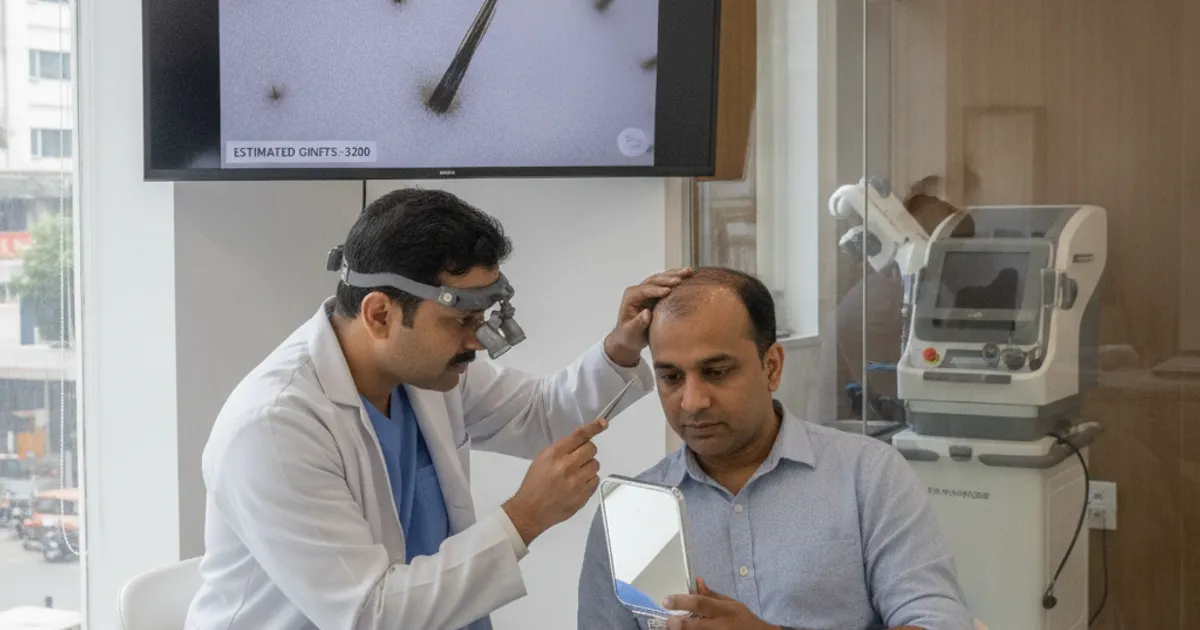
If you see clear miniaturization, or if you are unsure, see a dermatologist or a hair restoration specialist. They can confirm the diagnosis and rule out other causes. A professional evaluation typically includes a detailed history, a scalp exam, and sometimes a trichoscopy (dermoscopy) to measure hair diameter and density.
- Trichoscopy: a magnified view of the scalp to identify miniaturized hairs and other signs.
- Pull test: gently pulling a small group of hairs to see how many come out.
- Blood tests: to check for thyroid issues, iron deficiency, or hormonal imbalances.
- Scalp biopsy: rarely needed, but can confirm scarring alopecia.
- Treatment plan: prescription medications, in-office procedures, or a referral for hair transplant evaluation.
Planning Your Next Steps: Aftercare and Treatment Timing
Once you have identified miniaturized hairs, the next step is to plan. If you are considering a hair transplant, timing matters. Transplanting into areas with active miniaturization can damage existing follicles. Most surgeons recommend stabilizing hair loss with medication first. After a transplant, you will need to continue medical therapy to protect your remaining hair.
Costs for hair transplant vary widely depending on the stage of hair loss and the number of grafts needed. Below are average case prices for early, moderate, and advanced hair loss. These figures are based on typical clinic pricing and are meant to give you a rough idea. Your actual cost will depend on your specific situation and clinic.
- Start with a diagnosis. Do not guess. A doctor can tell you if you have pattern loss or another condition.
- Consider medical therapy first. Minoxidil and finasteride are common first-line treatments. They can thicken miniaturized hairs and slow loss.
- If you opt for a transplant, follow aftercare instructions carefully. This includes avoiding strenuous activity, protecting the graft sites, and taking prescribed medications.
- Plan for long-term maintenance. Hair transplants do not stop future loss. You will likely need ongoing treatment.
- Re-evaluate every 6 to 12 months. Your plan may change as your hair loss progresses.
FAQ: Miniaturized Hairs and Hair Loss
Can miniaturized hairs grow back to normal?
Yes, if the follicle is still alive and the cause is treatable. Medical treatments like minoxidil and finasteride can reverse miniaturization in some cases. But once a follicle is completely dormant, it may not recover.
How can I tell the difference between miniaturized hairs and normal fine hairs?
Normal fine hairs are usually uniform in diameter and grow at the same rate as other hairs. Miniaturized hairs are noticeably thinner, shorter, and often lighter in color. They also tend to be in specific areas of the scalp.
Is it normal to have some miniaturized hairs?
Yes. Everyone has a small percentage of miniaturized hairs. It becomes a concern when the percentage increases in a specific area, which suggests active hair loss.
Should I see a doctor if I find miniaturized hairs?
Yes. A dermatologist can confirm the cause and recommend treatment. Early intervention gives you the best chance of keeping your hair.
More Guides
- Hair Transplant Graft Count: How Many Do You Need?
How many grafts for a hair transplant? Learn how graft counts are estimated, typical ranges by Norwood stage, and what to confirm before surgery.
- How to Choose a Hair Transplant Surgeon: Credentials to Check
Learn how to choose a hair transplant surgeon by checking credentials, board certification, training, and real patient results. A practical guide.
- Costco Finasteride: Price, Membership & Prescription Steps
A practical guide to getting finasteride at Costco: membership rules, prescription steps, generic vs. brand costs, and aftercare planning.
- Smoking and Hair Transplant Healing: What to Know
Smoking slows hair transplant healing and threatens graft survival. Learn why to stop before surgery, how long to avoid nicotine after, and recovery tips.