
How to Spot Placebo Gains in Hair Loss Treatment
Learn how to tell if hair loss treatments are giving you placebo gains. Spot real regrowth vs. wishful thinking with clear signs, timelines, and next steps.
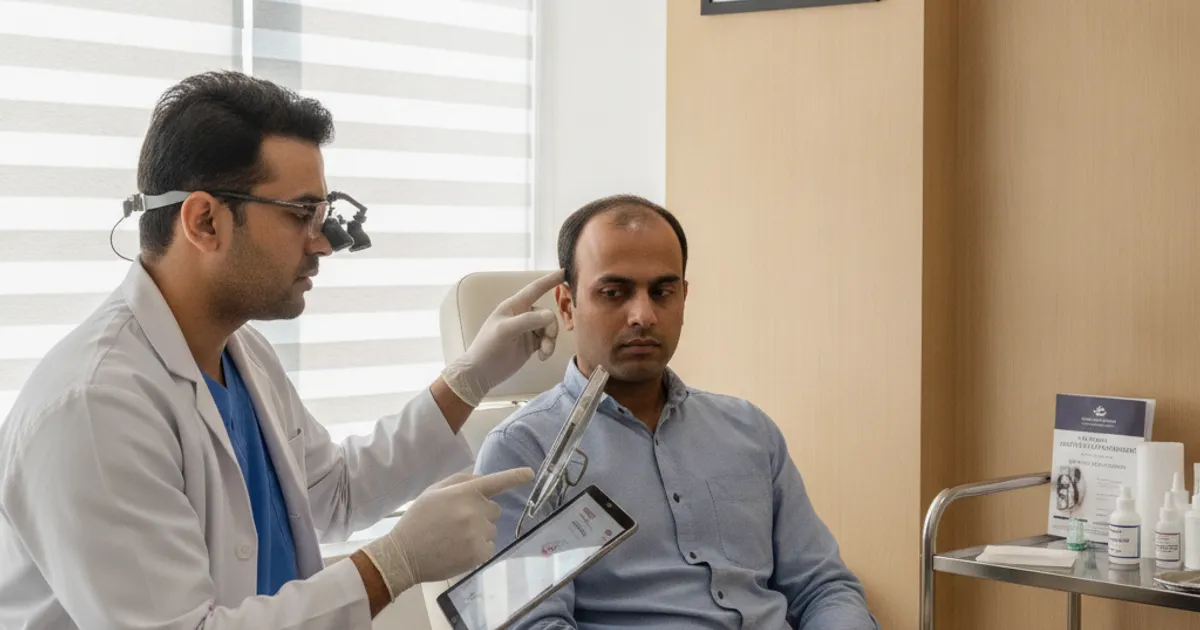
Placebo gains in hair loss treatment are improvements you perceive or measure that aren't caused by the treatment itself. They usually come from natural hair cycle fluctuations, better lighting or styling, or your own bias toward seeing progress. If you're wondering how to tell if hair loss treatments are giving you placebo gains, the short answer is: track objective markers like standardized photos, hair counts, and density measurements over at least 6 to 12 months. If those don't move, the change you're seeing is probably not from the drug or device.
What are placebo gains in hair loss treatment?
Placebo gains are perceived or measured improvements that happen without the active treatment doing the work. In clinical trials, people taking a sugar pill often report better hair quality, less shedding, and even visible regrowth. That's the placebo effect in action. In real life, the same thing happens when you start any hair loss treatment: you pay more attention to your hair, you change your routine, and you start interpreting normal fluctuations as progress.
- Perceived improvement: you feel like your hair looks thicker or sheds less, but there's no objective change in density or caliber.
- Measured improvement without a plausible mechanism: your photos look better, but the lighting, angle, or hair length changed.
- Temporary improvement that fades: you see a boost in the first few months, then it disappears without any change in treatment.
- Improvement in one area only: your hairline looks better but your crown doesn't, which can happen with natural hair cycle shifts.
Why do placebo gains happen with hair loss treatments?
Hair loss treatments are slow, and hair growth is cyclical. That combination creates perfect conditions for placebo gains. You start treatment, you're motivated, and you start watching your hair closely. Meanwhile, your hair is doing what it always does: shedding, regrowing, and changing density in waves. Add in better lighting, a new haircut, or a different styling product, and it's easy to mistake normal variation for a treatment effect.
- Natural hair cycles: hair grows, rests, and sheds in phases. A good phase can look like regrowth even if nothing changed.
- Increased attention: you notice your hair more, so you spot improvements you would have missed before.
- Regression to the mean: if you start treatment during a shedding phase, any improvement afterward looks like a win.
- Photographic bias: different angles, lighting, and hair length can make the same head of hair look dramatically different.
- Hope and expectation: you want the treatment to work, so your brain fills in the gaps.
How can you tell if your hair loss treatment is giving you placebo gains?
You need objective data, not vibes. The table below shows the difference between what placebo gains look like and what real treatment response looks like. Use it as a checklist. If most of your evidence falls in the left column, you're probably looking at placebo gains.
| Signal | Placebo gain | Real treatment response |
|---|---|---|
| Standardized photos | Looks better in some photos, worse in others | Consistent improvement across angles and lighting |
| Hair count in a marked area | No change or small fluctuation | Measurable increase in terminal hairs |
| Hair caliber | Feels thicker but no measured change | Measured increase in hair diameter |
| Shedding | Comes and goes with no pattern | Shedding decreases and stays lower |
| Timeline | Improvement in weeks, then fades | Improvement after 3–6 months, then holds or builds |
| Scalp coverage | Same area looks different depending on styling | Same area shows denser coverage over time |
- Take photos every 3 months with the same camera, distance, lighting, and hair length.
- Use a scalp microscope or trichoscope to count hairs in the same 1 cm² area.
- Track shedding counts (pillow, shower, brush) for a week each month.
- Ask a dermatologist or hair specialist to assess you blindly — don't tell them what treatment you're on.
- Compare your results to clinical trial data for your specific treatment, not to internet anecdotes.
What are the signs of real vs. placebo hair regrowth?
Real regrowth follows a predictable pattern: it takes months, it shows up in objective measurements, and it holds steady or improves over time. Placebo gains are inconsistent, fade without treatment changes, and often show up in how you feel rather than what you can measure. The comparison below breaks it down.
Placebo gains
No cost — but no real benefit
- ✓ Improvement noticed within weeks
- ✓ Changes with lighting, styling, or hair length
- ✓ No measurable change in hair count or caliber
- ✓ Fades without any change in treatment
- ✓ You feel hopeful but can't prove progress
Real treatment response
Cost of your treatment — but measurable benefit
- ✓ Improvement after 3–6 months, peaks at 12–18 months
- ✓ Consistent across photos, angles, and lighting
- ✓ Measurable increase in hair count and caliber
- ✓ Holds steady or improves with continued use
- ✓ You can show objective evidence to a specialist
How long should you wait before judging hair loss treatment results?
Most hair loss treatments need at least 6 months before you can judge anything, and 12 months is a better benchmark. Minoxidil and finasteride typically show measurable results at 3–6 months, with peak effects at 12 months. Laser devices and PRP can take similar or longer. If you're judging at 4 weeks, you're judging placebo.
- 0–3 months: shedding may increase with minoxidil. This is normal and not a sign of failure.
- 3–6 months: early responders may see fine regrowth. Most people see nothing yet.
- 6–12 months: measurable changes in hair count and caliber become visible.
- 12–18 months: peak results for most treatments. This is when you can fairly judge.
- 18+ months: if nothing has changed, the treatment isn't working for you.
What should you do if you suspect placebo gains?
Don't panic and don't quit yet. Instead, run a simple audit of your evidence. If you can't find objective proof of improvement, you're probably looking at placebo gains. That doesn't mean the treatment is useless — it means you need better data before you decide.
- Step 1: Gather all your photos and measurements from the start of treatment to now.
- Step 2: Compare them side by side using the same lighting, angle, and hair length.
- Step 3: Ask a dermatologist or hair specialist to assess you without knowing your treatment.
- Step 4: Check whether your treatment has clinical evidence for your type of hair loss.
- Step 5: If there's no objective change after 12 months, talk to your doctor about switching or adding treatments.
- Step 6: If there is objective change, keep going — you're a responder.
FAQ: Common questions about placebo gains in hair loss treatments
Can placebo gains happen with minoxidil or finasteride?
Yes. Even in clinical trials where these drugs beat placebo, some people in the placebo group report improved hair. In real life, the same effect happens because you're paying attention to your hair and interpreting normal fluctuations as progress.
How do I know if my hair loss treatment is actually working?
You need objective evidence: standardized photos, hair counts in a marked area, and measured hair caliber. If those improve consistently over 6–12 months, the treatment is working. If they don't, you're likely seeing placebo gains.
Should I stop treatment if I think it's just placebo?
Not without data. Get a proper assessment first. If there's no objective improvement after 12 months, talk to your doctor about switching or combining treatments. Stopping too early can cost you real progress.
Do placebo gains ever turn into real gains?
No. Placebo gains are not caused by the treatment, so they don't become real gains. Real gains come from the treatment's mechanism — increased blood flow, reduced DHT, or improved follicle health — and they show up in measurements.
How to Set Up a Personal Tracking System That Separates Signal from Noise
Most people who suspect placebo gains have no reliable data to check. The fix is to build a simple, repeatable tracking system before you start treatment or as soon as possible after. The goal is to capture the same information the same way at regular intervals so that changes are meaningful. Without this, you are relying on memory and impression, which are exactly what placebo gains exploit.
A good system has three components: standardized photos, a simple shedding log, and a periodic objective measurement. Keep it low-effort so you actually stick with it. The key is consistency, not complexity.
- Photos: Use the same camera, distance, angle, and lighting each time. A tripod or a friend helps. Take photos of the same areas (hairline, crown, part) with hair dry and styled the same way. Do this every 3 months.
- Shedding log: For one week each month, count hairs on your pillow, in the shower, and in your brush. Record the daily average. This gives you a rough baseline and helps you spot real changes in shedding.
- Objective measurement: If you have access to a scalp microscope or trichoscope, take close-up images of a small marked area (e.g., 1 cm²) and count hairs. Alternatively, a dermatologist can perform hair density and caliber measurements.
- Treatment log: Note the date you started, any dose changes, and any other products you use. This helps you correlate changes with treatment adjustments.
Common Mistakes That Create False Progress
Even with good intentions, certain habits can make it harder to tell real from placebo. Avoiding these mistakes will make your tracking more reliable and your decisions better informed.
- Changing multiple variables at once: If you start a new drug, add a laser device, and switch shampoos in the same month, you cannot tell what is working. Introduce one change at a time and give it at least 6 months.
- Judging by feel rather than measurements: Hair feels thicker after washing or styling, but that does not mean density increased. Rely on photos and counts.
- Comparing to others: Your friend's results or internet photos are not a valid benchmark. Hair loss type, genetics, and adherence vary widely.
- Stopping too early: Many treatments cause temporary shedding or have no visible effect in the first 3 months. Quitting at 8 weeks guarantees you will not see real results.
- Ignoring non-treatment factors: Seasonal shedding, stress, diet, and hormonal changes can all affect hair. Note these events in your log so you do not misattribute them to treatment.
When to Seek Professional Help and What to Ask
If your tracking shows no objective change after 12 months of consistent use, or if you are unsure whether your measurements are reliable, it is time to involve a professional. A dermatologist or hair specialist can provide an independent assessment and help you decide next steps.
Come prepared with your photos, logs, and a list of treatments. Ask specific questions to get actionable answers.
- Can you assess my hair density and caliber objectively, and compare it to my baseline?
- Based on my type of hair loss, is this treatment supported by clinical evidence?
- Are there any signs that my hair loss is progressing despite treatment?
- What would you recommend if I have not responded after 12 months?
- Should I consider combination therapy, and what are the risks and benefits?
A professional can also help you rule out other causes of hair loss, such as thyroid issues, nutritional deficiencies, or scarring alopecia, which may require different treatment. Do not rely solely on self-tracking for medical decisions.
Can placebo gains happen even with treatments that have proven clinical evidence?
Yes. Even effective treatments can be accompanied by placebo gains. The placebo effect is about your perception and measurement conditions, not the treatment's mechanism. That is why objective tracking is essential for everyone.
How do I know if my photos are standardized enough?
Use the same camera, distance, angle, lighting, and hair styling each time. A simple trick is to mark the floor with tape for your feet and use a tripod. If you change phones or rooms, retake a baseline set and note the change.
Is it possible to have real improvement that does not show up in photos?
Yes, especially early on. Hair count and caliber can change before visible density changes. That is why combining photos with hair counts or professional measurements gives a more complete picture.
What if I suspect placebo gains but I am afraid to stop treatment?
Do not stop without talking to your doctor. Instead, improve your tracking and get a professional assessment. If there is no objective change after 12 months, discuss switching or adding treatments. Stopping abruptly can cause shedding with some treatments.
More Guides
- Does Wegovy Cause Hair Loss? What Users Should Know
Wegovy can cause hair loss in some users, usually due to rapid weight loss or nutrient gaps. Learn why it happens, if it's permanent, and how to manage it.
- Hair Loss on Pillow vs in Shower: What's Normal?
Is hair loss on the pillow or in the shower normal? Learn typical daily shedding, causes, and when to worry. Expert answers for men and women.
- Does Hair Loss Run in Families? Genetics and Your Risk
Does hair loss run in families? Learn how genetics influence your risk, which genes are involved, and what you can do if you have a family history.
- Does Nicotine Cause Hair Loss? Vapes, Pouches, Patches
Does nicotine cause hair loss? We examine the evidence for vapes, pouches, and patches, how nicotine may affect hair growth, and whether quitting can help.