
Is Your Hairline Normal for Your Age? Male Guide
Is your hairline normal for your age? Learn how male hairlines change by decade, Norwood stages, and when a receding hairline needs attention.
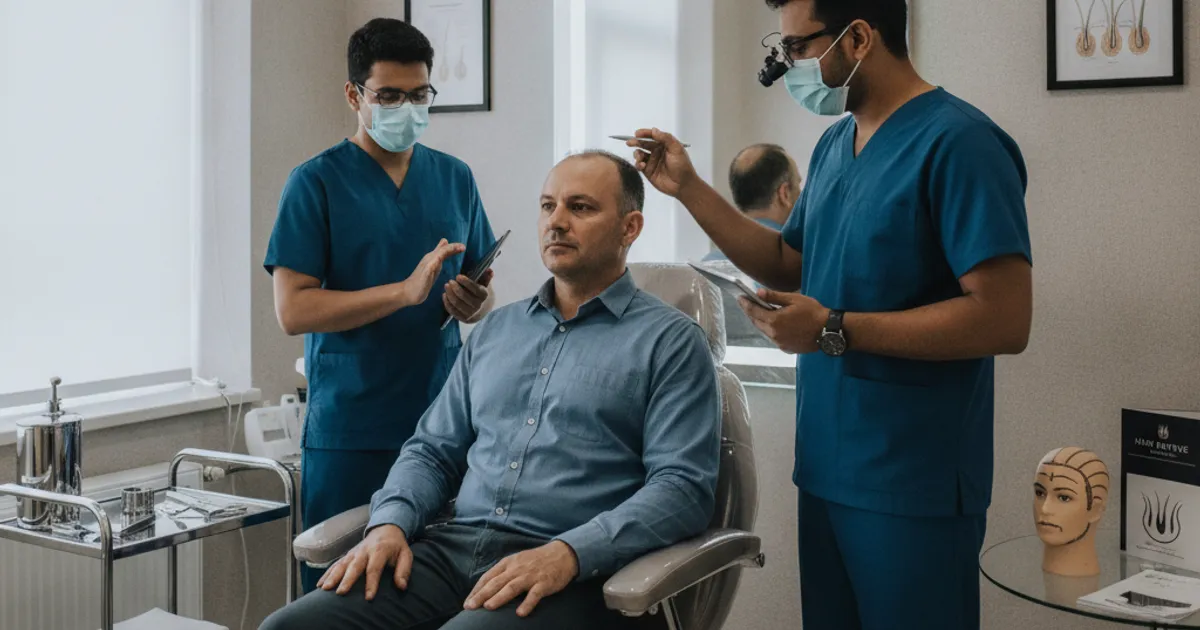
Is your hairline normal for your age? For most men, a slight receding hairline or a more mature shape by the late 20s to early 30s is completely normal and does not mean you are going bald. The key is the pattern and speed of change, not the fact that your hairline has moved at all. This guide walks through what is typical by decade, how doctors classify hair loss, and when you should pay closer attention.
What Is a Normal Hairline for a Man?
There is no single measurement that defines a normal male hairline. Hairline position varies widely based on genetics, face shape, and ethnicity. What doctors look at is the shape and the direction of change over time. A normal adult male hairline often has a slight recession at the temples, creating a subtle M or V shape. This is commonly called a mature hairline, and it is different from the straight, low hairline most boys have before puberty. Instead of relying on a specific number of centimeters, compare your hairline to photos from a few years ago and look for whether the change is stable or progressive.
- Juvenile hairline: low, straight, and close to the brow. Common in children and early teens.
- Mature hairline: slightly higher with mild temple recession. Normal for most adult men.
- Receding hairline: progressive thinning at the temples that moves backward over time.
- Balding hairline: significant recession that connects with thinning at the crown.
How Does the Male Hairline Change With Age?
Hairline changes are gradual and vary widely between men. Genetics, hormones, and age all play a role. Below is a general guide to what is typical by decade, but remember that normal ranges are broad. Some men see almost no change through their 40s, while others notice a mature hairline forming in their 20s.
| Age Range | Typical Hairline Change | What Is Normal |
|---|---|---|
| Teens to early 20s | Juvenile hairline, minimal recession | Straight or very slight temple recession |
| Mid 20s to early 30s | Mature hairline develops | Mild M-shape, temples may recede slightly |
| Mid 30s to 40s | Slow recession may continue | Temple recession stabilizes or progresses slowly |
| 50s and beyond | Thinning and recession more common | Widening part, crown thinning, higher hairline |
What Are the Norwood Stages of Hair Loss?
The Norwood scale is a system doctors use to classify male pattern baldness. It ranges from Stage 1 (no noticeable hair loss) to Stage 7 (extensive baldness). Knowing your stage helps you understand whether your hairline is within the normal range or showing signs of androgenetic alopecia. The descriptions below are general and should be confirmed by a doctor or specialist.
| Norwood Stage | Hairline Description | What It Means |
|---|---|---|
| Stage 1 | No recession, full hairline | Normal, no hair loss |
| Stage 2 | Slight temple recession | Mature hairline, often normal |
| Stage 3 | Deep M-shaped recession | Early male pattern baldness |
| Stage 4 | Recession plus crown thinning | Moderate hair loss |
| Stage 5 | Thin band of hair across top | Advanced hair loss |
| Stage 6–7 | Horseshoe pattern remains | Extensive baldness |
When Is a Receding Hairline a Concern?
A receding hairline becomes a concern when it changes quickly, follows a clear pattern, or is accompanied by other symptoms. If you are unsure, compare your hairline to photos from one to two years ago. Rapid change is the biggest red flag. Other signs include uneven recession, sudden shedding, or scalp symptoms.
- Recession moves back noticeably in a short period, such as a year.
- Temple recession is uneven or one-sided.
- You notice thinning at the crown or widening part.
- Hair loss comes with itching, scaling, or patchy bald spots.
- You are losing hair in clumps or on other body areas.
How Can You Track Hairline Changes at Home?
Tracking your hairline is simple and takes only a few minutes each month. Consistent photos and measurements give you objective data instead of guesswork. This is especially useful if you are considering treatment or just want peace of mind.
- Take a photo of your hairline in the same lighting and angle every month.
- Use a ruler to measure from your brow to your hairline at the center and temples.
- Note any changes in hair thickness, shedding, or scalp visibility.
- Keep a simple log or folder on your phone with dates and notes.
- Compare photos side by side every three to six months.
When Should You See a Doctor or Hair Specialist?
See a doctor or hair specialist if you are worried about the speed or pattern of your hairline changes. Early evaluation gives you more options, whether the cause is genetics, a medical condition, or stress-related shedding. A specialist can also help you understand whether your hairline falls within a normal range for your age.
- Your hairline is receding rapidly or unevenly.
- You have a family history of early baldness.
- You notice sudden shedding or patchy loss.
- You have scalp pain, redness, or flaking.
- You want to explore treatment options like medication or transplant.
Frequently Asked Questions
Is a receding hairline at 25 normal?
Yes, many men develop a mature hairline in their mid-20s. A slight recession at the temples is common and often stabilizes. Rapid or deep recession may indicate early male pattern baldness.
Can a receding hairline grow back?
If the cause is temporary (like stress or nutritional deficiency), hair may regrow with treatment. For genetic hair loss, regrowth is possible with medication but the hairline rarely returns to its original position without a transplant.
What is the difference between a mature hairline and balding?
A mature hairline is a slight, stable recession that many adult men have. Balding is progressive thinning and recession that continues over time, often following a pattern like the Norwood scale.
Should I see a doctor for a receding hairline?
If you are concerned about the speed of change, have sudden shedding, or want to discuss treatment, see a doctor or hair specialist. Early intervention can help preserve hair.
Mature Hairline vs. Male Pattern Baldness: How Doctors Tell Them Apart
The distinction matters because one is a normal cosmetic change and the other is a progressive condition that can be slowed with early treatment. The clearest difference is behavior over time. A mature hairline stabilizes: the temples move back a little, the shape settles, and then it holds roughly steady for years. Male pattern baldness keeps advancing, usually in a recognizable pattern, with the recession gradually deepening and often spreading to the crown.
Doctors also look at more than the hairline itself. They examine miniaturization, meaning whether hairs along the front and temples are becoming finer and shorter than hairs elsewhere on the scalp. Widespread miniaturization in a patterned distribution points toward androgenetic alopecia, while a stable hairline with normal hair caliber is more consistent with a mature hairline. Scalp density behind the hairline, family history, and the shape of the recession all feed into the assessment.
- Stable for years with normal hair thickness: more consistent with a mature hairline.
- Progressive recession with thinning hairs at the edge: more consistent with pattern hair loss.
- Recession plus crown thinning: a pattern that usually warrants evaluation.
- Diffuse thinning across the whole top rather than the hairline alone: worth a closer look, as it can have other causes.
What to Expect at a Hair Loss Consultation
If you decide to see a specialist, knowing what the visit involves removes a lot of the uncertainty. A first consultation is mostly information gathering, and it usually does not commit you to any treatment. Expect questions about when you first noticed changes, whether loss runs in your family, your general health, medications, diet, and stress levels, since several of these can affect hair.
The physical exam typically includes a close look at your scalp under magnification to assess hair caliber and density, a check of the hairline shape and any thinning at the crown, and sometimes standardized photos so future comparisons are reliable. Some clinicians use a simple pull test, where a small bundle of hair is gently tugged to see how many hairs come away, which can hint at active shedding. Blood tests are not routine for every patient but may be ordered if the pattern or history suggests an underlying issue such as thyroid problems, low iron, or other conditions.
- Bring dated photos from several years back if you have them; they are often more useful than memory.
- List any medications, supplements, and recent illnesses or major stressors.
- Note whether shedding is diffuse or concentrated, and whether the scalp itches, flakes, or hurts.
- Ask what the clinician thinks your pattern is and how they would monitor it over the next year.
- Ask about the realistic goals and limits of any option discussed, including non-surgical ones.
Everyday Habits, Styling, and What Actually Affects Your Hairline
A lot of worry about hairlines comes from habits that are blamed for recession but rarely cause it. Tight hairstyles, harsh brushing, and constant tension can damage hair and, in extreme and prolonged cases, contribute to traction-related loss, but ordinary styling does not recede a hairline. Washing frequency, wearing hats, and using most shampoos do not drive pattern baldness either. Genetics and hormones are the dominant factors in typical male hairline change.
What you can control is how well you care for the scalp and how clearly you track change. Gentle handling, avoiding unnecessarily tight styles, and treating scalp irritation or flaking are reasonable steps. If you color or use strong styling products, keep an eye on whether the hairline area looks thinner, since product buildup and breakage can mimic thinning. None of these habits will reverse genetic loss, but they keep your baseline clearer and your scalp healthier.
- Ordinary washing, hats, and most styling products are not causes of pattern hair loss.
- Persistent tight pulling on the hairline is worth avoiding, especially if you notice thinning where tension is greatest.
- Scalp itching, redness, or flaking deserves attention because it can have treatable causes.
- Sun protection for a receding hairline matters, since exposed scalp burns more easily.
- Smoking and poor sleep are generally linked to worse overall hair and skin health, though they are not direct causes of balding.
Can a receding hairline grow back on its own?
A mature hairline does not move forward again on its own, and genetic hair loss generally progresses without treatment. Some temporary shedding from stress, illness, or nutritional issues can recover once the cause resolves, which is one reason an evaluation is useful before assuming the worst.
Does a higher hairline always mean I am going bald?
No. Many men develop a higher, more squared-off hairline in their twenties and then remain stable for decades. The concern is progressive change and thinning hair caliber, not a single measurement.
Is it normal for one temple to recede more than the other?
Slight asymmetry is common and often harmless. Noticeable one-sided or uneven recession is worth mentioning to a clinician, since it can be a reason to look more closely.
At what age should I start paying attention to my hairline?
There is no fixed age. Paying attention in your twenties and thirties is reasonable because early evaluation gives you more options if change is progressive. Consistent photos are the simplest way to know whether something is actually changing.
Can stress cause my hairline to recede?
Significant stress can trigger temporary shedding, but it does not typically cause the patterned temple recession of genetic hair loss. If shedding is sudden and widespread, that pattern is worth discussing with a doctor.
Do hair transplants work on a normal mature hairline?
Transplants are generally used to restore density or reshape a hairline, but they are a decision made with a specialist after assessing your pattern and stability. A stable hairline is often a better candidate than one that is actively and rapidly changing.
More Guides
- Does Wegovy Cause Hair Loss? What Users Should Know
Wegovy can cause hair loss in some users, usually due to rapid weight loss or nutrient gaps. Learn why it happens, if it's permanent, and how to manage it.
- Hair Loss on Pillow vs in Shower: What's Normal?
Is hair loss on the pillow or in the shower normal? Learn typical daily shedding, causes, and when to worry. Expert answers for men and women.
- Does Hair Loss Run in Families? Genetics and Your Risk
Does hair loss run in families? Learn how genetics influence your risk, which genes are involved, and what you can do if you have a family history.
- Does Nicotine Cause Hair Loss? Vapes, Pouches, Patches
Does nicotine cause hair loss? We examine the evidence for vapes, pouches, and patches, how nicotine may affect hair growth, and whether quitting can help.