
Low-Level Laser Therapy for Hair Loss: Does It Work?
A comprehensive guide to low-level laser therapy for hair loss: how it works, evidence, usage, results, side effects, cost, and how it compares to other treatme
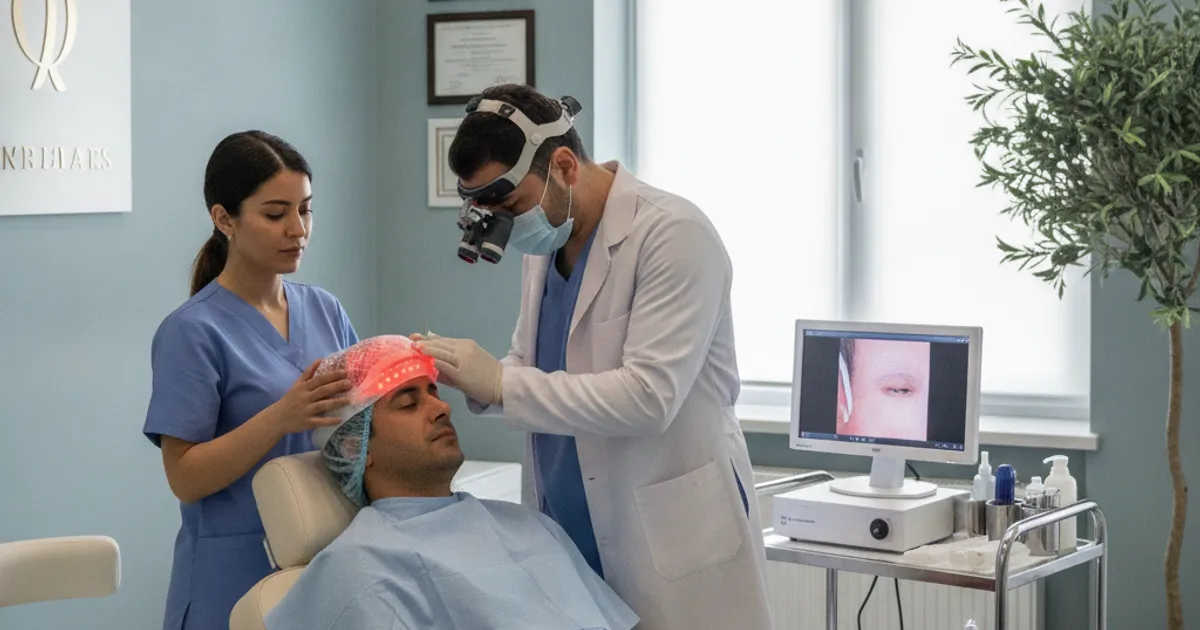
What Is Low-Level Laser Therapy for Hair Loss?
Low-level laser therapy (LLLT) — also called red light therapy, photobiomodulation, or laser biostimulation — is a non-invasive treatment that uses low-power lasers or light-emitting diodes (LEDs) to stimulate hair follicles. Unlike surgical lasers that cut or burn, LLLT devices emit red or near-infrared light at low energy levels that are absorbed by cells without generating heat. The goal is to energize follicle cells, improve blood flow, and extend the growth phase of the hair cycle. LLLT is available as at-home devices (laser caps, combs, bands) and as in-clinic treatments.
- At-home devices: laser caps, helmets, combs, and bands — typically worn for 15–30 minutes several times a week.
- In-clinic treatments: often use higher-power lasers or LED panels, administered by a technician, usually 2–3 times per week.
- FDA-cleared for androgenetic alopecia (male and female pattern hair loss) — but clearance means the device is safe, not that it is proven effective.
- Works best as a long-term, consistent therapy — not a one-off fix.
How LLLT Works: Mechanism of Action
The exact mechanism is not fully understood, but research suggests several pathways. Photons from red/near-infrared light penetrate the scalp and are absorbed by cytochrome c oxidase in the mitochondria, which boosts ATP production. This cellular energy increase may:
- Prolong the anagen (growth) phase of the hair cycle.
- Increase blood flow to the hair follicle.
- Reduce inflammation around the follicle.
- Stimulate keratinocyte and fibroblast activity.
- Decrease dihydrotestosterone (DHT) sensitivity in some studies — though this is debated.
In short, LLLT aims to create a healthier environment for hair follicles to grow thicker, stronger hairs. It does not create new follicles; it tries to make existing ones work better.
The Evidence: Does LLLT Actually Grow Hair?
The evidence is mixed but leans positive for certain devices and certain types of hair loss. Many studies are small, industry-funded, or use different devices and dosages, making comparisons difficult. However, several randomized controlled trials and meta-analyses have found statistically significant improvements in hair density and hair count compared to sham devices.
- Some meta-analyses have found LLLT significantly increased hair growth in both men and women with androgenetic alopecia.
- Some FDA-cleared devices have shown modest improvements in hair count in company-sponsored trials.
- Results are generally modest — think a few more hairs per square centimeter, not a full head of hair.
- LLLT appears more effective for early to moderate hair loss than for advanced baldness.
- It may work better when combined with other treatments like minoxidil or finasteride.
How to Use LLLT: Devices, Dosage, and Frequency
LLLT is not a one-size-fits-all treatment. The right device and schedule depend on your hair loss pattern, budget, and lifestyle. Most at-home devices come with instructions, but here are general guidelines.
- Laser caps/helmets: typically worn for 15–30 minutes every other day or 3–4 times per week.
- Laser combs: often used for 10–15 minutes daily, moving slowly through the hair.
- In-clinic treatments: usually 2–3 sessions per week, each lasting 15–30 minutes, for several months.
- Consistency is critical — missing sessions reduces effectiveness.
- Do not use on broken skin, over moles, or if you are taking photosensitizing medications.
| Device Type | Typical Session Length | Frequency | Best For |
|---|---|---|---|
| Laser cap/helmet | 15–30 min | 3–4 times per week | Overall coverage, hands-free use |
| Laser comb | 10–15 min | Daily | Targeted areas, travel-friendly |
| Laser band | 15–20 min | 3–4 times per week | Hairline and front scalp |
| In-clinic panel | 15–30 min | 2–3 times per week | Those who want supervised treatment |
Expected Results and Timeline
LLLT is not an overnight fix. Most studies show noticeable changes after several months of consistent use, with continued improvement over time. Results vary widely. Some people see thicker, denser hair; others see little to no change. It is impossible to predict who will respond.
- First few weeks: Little visible change; some may experience a temporary shedding phase as follicles cycle.
- After a few months: Early responders may notice reduced shedding and some new fine hairs.
- Longer term: Maximum benefits typically seen — increased density and hair caliber.
- Maintenance: Stopping leads to loss of gains within a few months.
| Timeframe | What to Expect |
|---|---|
| 0–2 months | No visible change; possible temporary shedding |
| 3–6 months | Reduced shedding, possible new vellus hairs |
| 6–12 months | Increased density and hair thickness in responders |
| 12+ months | Maintenance; gains reverse if treatment stops |
Side Effects and Risks
LLLT is generally considered safe and well-tolerated. Most side effects are mild and temporary. Serious adverse events are rare. However, it is not risk-free.
- Scalp irritation, redness, or dryness.
- Temporary shedding in the first few weeks.
- Headache or dizziness (uncommon).
- Skin burns or blisters (very rare, usually from improper use or high-power devices).
- Not recommended for people with photosensitivity disorders or those taking certain medications (e.g., isotretinoin, some antibiotics).
- Long-term safety data beyond a year is limited.
Who Is LLLT Suitable For?
LLLT is most suitable for people with early to moderate androgenetic alopecia (pattern hair loss) who still have active hair follicles. It is less effective for advanced baldness where follicles may be dormant or scarred. It can be used by both men and women, though research has historically focused more on men.
- Good candidates: early thinning, receding hairline, crown thinning, those wanting a non-drug option.
- Less suitable: advanced baldness, scarring alopecia, alopecia areata (unless under medical supervision).
- Can be combined with minoxidil, finasteride, or hair transplant surgery.
- Not recommended for pregnant or breastfeeding women due to lack of safety data.
- Best used under the guidance of a dermatologist or hair loss specialist.
Cost of LLLT Devices and Treatments
Costs vary widely depending on the device type, brand, and whether you choose at-home or in-clinic treatment. At-home devices are a one-time purchase (plus occasional replacement), while in-clinic treatments are pay-per-session or package deals. Below are typical price ranges in USD.
| Option | Typical Cost (USD) | Notes |
|---|---|---|
| Basic laser comb | $200–$400 | Lower power, smaller coverage |
| Mid-range laser cap | $400–$700 | Better coverage, FDA-cleared |
| High-end laser helmet | $700–$1,000+ | More diodes, faster sessions |
| In-clinic LLLT (per session) | $50–$150 | Often sold in packages |
| In-clinic package (monthly) | $300–$1,200 | Depends on frequency and location |
How LLLT Compares to Other Hair Loss Treatments
LLLT is one of several non-surgical options. It is less effective than hair transplant surgery for advanced baldness, but it is non-invasive and can be used alongside other treatments. Here is how it stacks up.
| Treatment | How It Works | Effectiveness | Cost (USD) | Side Effects |
|---|---|---|---|---|
| LLLT | Stimulates follicles with light | Modest; best for early/moderate | $200–$1,200 (device or monthly) | Mild irritation, temporary shedding |
| Minoxidil | Vasodilator; prolongs growth phase | Moderate; FDA-approved | $10–$30 per month | Scalp irritation, unwanted facial hair |
| Finasteride | DHT blocker (oral) | High; FDA-approved for men | $20–$50 per month | Sexual side effects, depression (rare) |
| Hair transplant | Moves hair follicles surgically | High for suitable candidates | $4,000–$15,000+ | Scarring, infection, shock loss |
| PRP | Platelet-rich plasma injections | Moderate; evidence mixed | $500–$1,500 per session | Pain, swelling, infection |
- LLLT vs minoxidil: LLLT has fewer systemic side effects but is less proven and more expensive upfront.
- LLLT vs finasteride: Finasteride is more effective for male pattern baldness but carries sexual side effect risks.
- LLLT vs hair transplant: Transplant is the only option for advanced baldness, but it is surgical and costly.
- LLLT vs PRP: Both are non-surgical; PRP may be more effective but requires injections and clinic visits.
Frequently Asked Questions
Is LLLT FDA-approved for hair loss?
The FDA does not 'approve' devices; it clears them for marketing. Several LLLT devices have been cleared for androgenetic alopecia in men and women. Clearance means the device is safe and substantially equivalent to others, not that it is proven effective.
How long until I see results from LLLT?
Most people who respond see changes after several months of consistent use. Maximum benefits may take up to a year. If you see no change after six months, it is unlikely to work for you.
Can I use LLLT with minoxidil or finasteride?
Yes. Many people combine LLLT with other treatments. In fact, some studies suggest combination therapy may be more effective than LLLT alone. Always consult a doctor before starting multiple treatments.
Is LLLT safe for women?
Yes, LLLT is generally safe for women, though research has historically focused more on men. It is not recommended during pregnancy or breastfeeding due to lack of safety data.
Related Guides
More Guides
- Finasteride for Baldness: What It Can and Can't Do
Finasteride is a proven hair loss treatment, but it's not a cure. Learn how it works, dosage, side effects, and how it compares to other options.
- DHT-Blocking Shampoos: What Works and What's Marketing?
Do DHT-blocking shampoos really grow hair? We break down the science, evidence, usage, side effects, costs, and how they compare to other treatments.
- Clascoterone for Hair Loss: What the Research Shows
Clascoterone is a topical anti-androgen being studied for hair loss. Learn how it works, the evidence, how to use it, side effects, cost, and how it compares.
- Hims Minoxidil Spray: Ingredients, Results, and Cost
Hims Minoxidil Spray review: ingredients, how it works, results timeline, side effects, cost, and how it compares to other hair loss treatments.