
Norwood 1 Treatment: What Are Your Options?
Norwood 1 is an early hairline. Learn if you need treatment, what works, and when to see a doctor. Compare options and find a clinic.
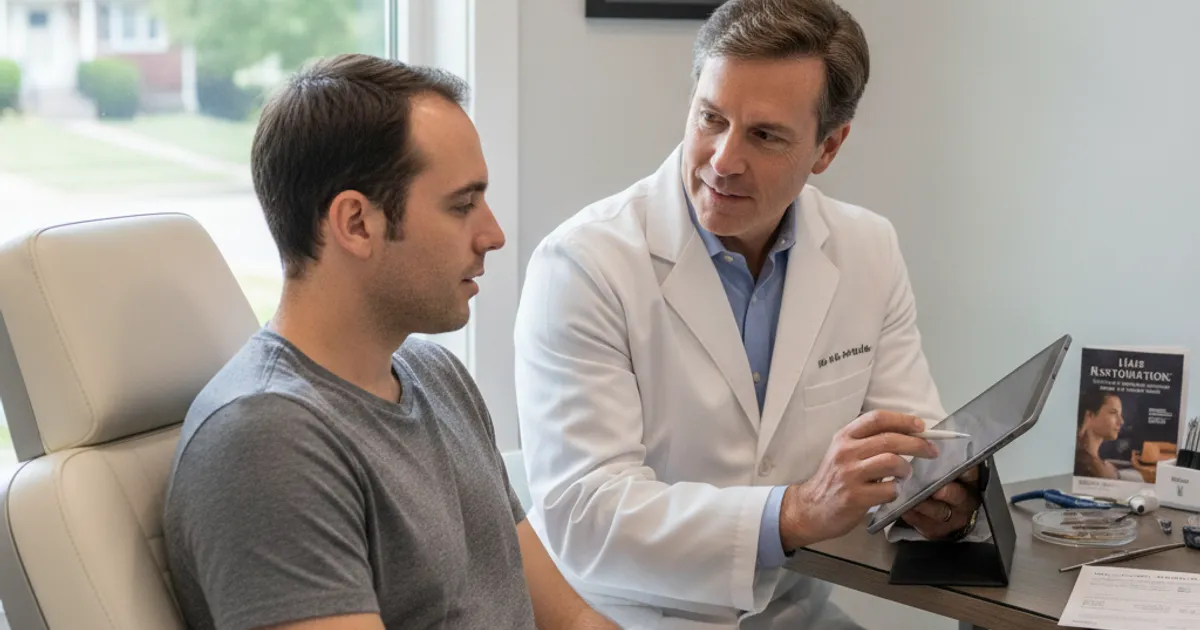
What is Norwood 1 hair loss and do you need treatment?
Norwood 1 is the earliest stage on the Norwood scale, which classifies male pattern baldness. At Norwood 1, your hairline is essentially intact with no significant recession. In most cases, Norwood 1 does not require medical treatment because it is not considered true hair loss. However, if you notice early thinning or have a strong family history of baldness, you may want to monitor it and consider preventive options.
- Norwood 1 = minimal to no visible hairline recession.
- Often just a mature hairline, not active balding.
- Treatment is usually unnecessary unless you have other risk factors.
- Monitoring and lifestyle changes are often enough at this stage.
Is Norwood 1 actually hair loss or just a mature hairline?
Norwood 1 is typically a mature hairline, not hair loss. A mature hairline sits slightly higher than a juvenile hairline but does not indicate active balding. Noticeable hair loss usually starts at later stages, where recession becomes visible at the temples. That said, some men with a Norwood 1 may be in the very early stages of male pattern baldness, especially if there is a family history.
| Feature | Norwood 1 (Mature Hairline) | Early Hair Loss (Norwood 2–3) |
|---|---|---|
| Hairline position | Slightly higher than juvenile, but stable | Noticeable recession at temples |
| Hair density | Normal | May thin at crown or hairline |
| Progression | Usually stable for years | Often progresses without treatment |
| Treatment need | Rarely needed | Often considered |
What Norwood 1 treatment options are available?
Because Norwood 1 is not typically hair loss, treatment options are limited and often preventive. If you decide to act, you can choose from lifestyle changes, topical treatments, oral medications, or in rare cases, a small hair transplant to lower the hairline. Many doctors suggest starting with non-invasive options first, but the choice depends on your individual risk factors and preferences.
- Lifestyle: reduce stress, improve diet, avoid tight hairstyles.
- Topical: minoxidil (Rogaine) to maintain hair density.
- Oral: finasteride (Propecia) to block DHT, but side effects possible.
- Low-level laser therapy: may stimulate follicles.
- Hair transplant: only for cosmetic hairline lowering, not medical need.
| Treatment | Purpose | Effectiveness for Norwood 1 | Prescription? |
|---|---|---|---|
| Minoxidil | Maintain density | Low (no loss to treat) | No |
| Finasteride | Prevent future loss | Moderate if risk is high | Yes |
| Laser therapy | Stimulate follicles | Limited evidence | No |
| Hair transplant | Lower hairline | Cosmetic only | No |
Do you need a hair transplant for Norwood 1?
No, you almost never need a hair transplant for Norwood 1. A transplant is a surgical procedure that moves hair follicles from the back of the scalp to thinning areas. At Norwood 1, there is no significant thinning, so a transplant would be purely cosmetic to lower the hairline. Many surgeons are hesitant to operate on Norwood 1 patients because the risks may outweigh the benefits.
- Transplants are for restoring lost hair, not for a naturally high hairline.
- Surgery carries risks: scarring, infection, unnatural results.
- Future hair loss may make the transplanted hairline look odd.
- Better to wait until you reach Norwood 2 or 3 if loss progresses.
What non-surgical Norwood 1 treatments work best?
If you want to be proactive, non-surgical options are the safest and most effective for Norwood 1. They focus on maintaining the hair you have rather than regrowing lost hair. Here is a step-by-step approach to consider.
- Minoxidil is available over the counter and has few side effects.
- Finasteride requires a prescription and can cause sexual side effects in some men.
- Laser combs and helmets have weak evidence but are low-risk.
- Supplements like biotin are not proven for male pattern baldness.
How much does Norwood 1 treatment cost?
Costs vary widely depending on the treatment and your location. Since Norwood 1 rarely requires a transplant, most expenses are for medications or consultations. If your hair loss progresses, a hair transplant may become an option. The cost of a transplant depends on the number of grafts needed, which increases with the stage of hair loss.
When should you see a doctor about a Norwood 1 hairline?
You should see a doctor if you notice any of the following signs, as they may indicate early hair loss rather than just a mature hairline. A dermatologist or hair restoration specialist can assess your scalp and recommend a plan.
- Sudden or rapid hairline recession.
- Thinning at the crown or temples.
- Excessive shedding (more than usual).
- Family history of early baldness (father, grandfather).
- Scalp itching, redness, or flaking.
How do you choose a clinic or provider for Norwood 1 treatment?
Choosing a provider for Norwood 1 is different from choosing a transplant surgeon. You need someone who can accurately diagnose whether you have true hair loss and discuss preventive options. Look for a dermatologist or a hair restoration clinic with experience in early-stage hair loss. Avoid pushy sales tactics or clinics that recommend surgery immediately.
- Check credentials: board-certified dermatologist or hair restoration specialist.
- Read reviews: look for honest feedback on consultations.
- Ask about diagnostic tools: trichoscopy or scalp biopsy if needed.
- Discuss all options: medication, lifestyle, and monitoring.
- Get a second opinion if a transplant is recommended for Norwood 1.
Frequently asked questions about Norwood 1 treatment
Can Norwood 1 reverse itself?
Norwood 1 is not hair loss, so there is nothing to reverse. If you have a mature hairline, it will stay stable. If you are in very early stages of male pattern baldness, treatment may slow progression but not reverse it.
Is it worth taking finasteride for Norwood 1?
Only if you have a strong family history of baldness and want to prevent future loss. Finasteride can cause side effects, so discuss with a doctor first.
How fast does Norwood 1 progress to Norwood 2?
It varies. Some men stay at Norwood 1 for many years, while others may progress sooner. Genetics and lifestyle play a role.
Can I get a hair transplant at Norwood 1?
Many surgeons will not perform a transplant at Norwood 1 because it is not medically necessary. It is considered cosmetic and risky.
More Guides
- Hair Transplant and Blood Thinners: Safety and Timing
Can you have a hair transplant on blood thinners? Learn why they matter, which ones raise bleeding risk, how long to stop before surgery, and when to restart.
- Finasteride and PSA Testing: What You Need to Know
Finasteride lowers PSA levels, so your test results need careful interpretation. Learn how finasteride affects PSA, the adjustment factor, and what to tell your
- Can You Cure a Receding Hairline? What's Realistic
Can you cure a receding hairline? Learn what's realistic with medications, transplants, and lifestyle changes, plus expected results and costs.
- Minoxidil Hair Thinning Before Growth: Is It Normal?
Is minoxidil hair thinning before growth normal? Yes, it's a common sign the treatment is working. Learn why it happens, how long it lasts, and when to worry.