
Norwood 3 Hair Transplant Results: What to Expect
Norwood 3 hair transplant results explained: what the procedure can achieve, how it compares to Norwood 4, and how to choose a clinic.
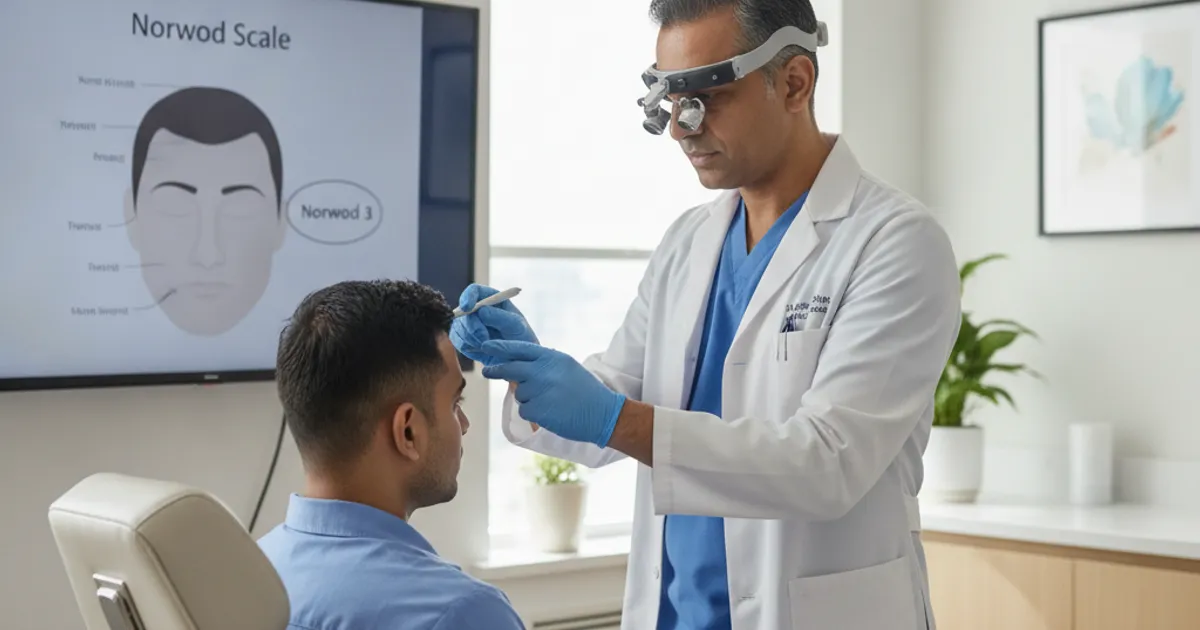
Norwood 3 Hair Transplant Results: What Can You Realistically Expect?
If you're a Norwood 3 on the hair loss scale, you're in a good spot. You've got visible recession at the temples, but you still have plenty of native hair. That matters because a Norwood 3 hair transplant is usually about restoring the hairline and reinforcing the temples, not covering a bald scalp. The results tend to look natural and hold up well over time, provided you choose a good clinic and have realistic expectations.
The goal at Norwood 3 is to blend new grafts with existing hair seamlessly. Because you're treating an early stage of loss, the procedure is generally straightforward and the outcome is predictable. But it's not magic — you won't get back the density you had at 18. What you can expect is a more defined hairline and closed-off temples that frame your face better.
What Is a Norwood 3 Hair Transplant?
The Norwood scale measures male pattern baldness from 1 (minimal loss) to 7 (extensive loss). Norwood 3 is characterised by deep temporal recession — the classic M-shaped hairline. The crown is typically not involved at this stage; crown loss usually begins at Norwood 3 vertex or Norwood 4. At Norwood 3, you still have solid density across the mid-scalp and crown, which gives surgeons flexibility.
- Temple recession: both sides have receded significantly, forming an M shape.
- Hairline position: the frontal hairline is still relatively low but thinning at the corners.
- Crown: usually intact at Norwood 3; crown loss typically starts later.
- Donor area: typically dense and healthy, making you a good candidate for surgery.
- Goal: rebuild the hairline and temples without over-harvesting grafts.
What Results Can You Expect at Norwood 3?
Norwood 3 transplants are among the most predictable in terms of outcome. Because you still have a lot of native hair, the surgeon can create a natural-looking hairline that frames your face. You won't get back teenage density, but you can expect a noticeable improvement in how your hairline looks and how your face is framed. The key is that the result should look natural — not pluggy, not too low, and not obviously surgical.
- A defined, natural hairline that matches your facial structure.
- Filled-in temples that reduce the M-shaped recession.
- Better density across the frontal third of the scalp.
- Minimal scarring if FUE is used; a thin line if FUT is chosen.
- Results that last decades, though native hair may continue to thin over time.
| Result | What It Means |
|---|---|
| Hairline restoration | New grafts create a soft, irregular hairline that looks natural. |
| Temple closure | Receded corners are filled, restoring a more balanced frame. |
| Density improvement | Frontal density increases, but not to original teenage levels. |
| Longevity | Transplanted hair is permanent, but you may need future sessions if loss progresses. |
How Many Grafts Are Needed for Norwood 3?
Graft counts vary based on hair calibre, colour contrast, and the exact shape of your recession. There is no single number that fits everyone. A surgeon will assess your donor density, the size of the area to be treated, and your goals before recommending a graft count. Some men need more grafts to achieve the same visual result because of fine hair or high contrast between hair and scalp.
The table below shows typical graft ranges by Norwood stage, but these are general guides — your surgeon will give you a personalised estimate.
| Stage | Typical Graft Range | What It Covers |
|---|---|---|
| Norwood 2 | 800 – 1,200 | Minor temple recession |
| Norwood 3 | 1,500 – 2,500 | Temples and hairline |
| Norwood 4 | 2,500 – 3,500 | Hairline, temples, and mid-scalp |
| Norwood 5 | 3,500 – 4,500 | Frontal and mid-scalp, some crown |
| Norwood 6 | 4,500 – 6,000 | Extensive coverage, often two sessions |
How Long Until You See Norwood 3 Transplant Results?
The timeline is similar for any hair transplant, but Norwood 3 patients often see results a bit faster because the treated area is smaller. Here's a general month-by-month guide.
- First 2 weeks: scabs form and fall off; grafts are secure but fragile.
- 1 to 3 months: shock loss may occur; transplanted hair sheds before new growth begins.
- 3 to 4 months: early growth starts; fine hairs begin to emerge.
- 6 to 8 months: noticeable improvement; density increases and hairline takes shape.
- 12 to 18 months: final results; hair matures and thickens.
What Factors Affect Norwood 3 Hair Transplant Results?
Not all Norwood 3 transplants look the same. Several variables influence how good your result will be.
- Surgeon skill: Hairline design and graft placement make or break the result.
- Hair characteristics: Thick, wavy hair covers more area than fine, straight hair.
- Colour contrast: Dark hair on light skin shows more scalp; light hair on light skin blends better.
- Donor density: More donor hair means more grafts available for a fuller result.
- Age and stability: If your loss is still progressing, you may need a second procedure later.
- Aftercare: Following post-op instructions protects grafts and improves healing.
Norwood 3 vs Norwood 4: How Do Results Compare?
Norwood 3 and Norwood 4 are different beasts. At Norwood 3, you're mostly restoring the hairline. At Norwood 4, you're also dealing with mid-scalp thinning and possibly early crown loss. That means more grafts, a larger treatment area, and a slightly higher risk of looking thin if the surgeon isn't careful.
| Factor | Norwood 3 | Norwood 4 |
|---|---|---|
| Grafts needed | 1,500 – 2,500 | 2,500 – 3,500 |
| Treatment area | Hairline and temples | Hairline, temples, mid-scalp |
| Result predictability | Very high | High, but depends on donor supply |
| Risk of over-harvesting | Low | Moderate |
| Need for second session | Uncommon | More likely |
How to Choose a Clinic for Norwood 3 Hair Transplant
Choosing the right clinic is the single most important decision you'll make. A bad hairline design can't be easily fixed. Look for surgeons who specialise in hair restoration, not general plastic surgeons who do a bit of everything. Ask to see before-and-after photos of Norwood 3 patients specifically — not just their best cases.
- Check the surgeon's credentials and whether they're a member of a recognised hair restoration society.
- Ask how many Norwood 3 procedures they perform per month.
- Request to see results at 12+ months, not just immediate post-op photos.
- Discuss graft counts and whether they recommend FUE or FUT for your case.
- Make sure the clinic offers long-term follow-up and a clear aftercare plan.
Frequently Asked Questions
Will a Norwood 3 transplant look natural?
Yes, if done by a skilled surgeon. The key is designing a hairline that matches your age and facial features. A good surgeon won't give you a teenage hairline; they'll create a mature, natural-looking frame.
How much does a Norwood 3 hair transplant cost?
Costs vary widely by clinic and location. There is no single price — it depends on the number of grafts, the clinic's location, and what's included in the quote. Always check what's included, as some clinics quote a low price but charge extra for PRP, medications, or follow-up visits.
Can I get a Norwood 3 transplant if I'm still losing hair?
Yes, but you need a long-term plan. If your loss is progressing, you may need a second procedure later. Many surgeons recommend starting medication like finasteride or minoxidil to stabilise loss before surgery.
How soon can I go back to work after a Norwood 3 transplant?
Most people take a few days off. If you work from home, you could return sooner. If you have a client-facing job, you might want to wait until the scabs heal and any redness subsides.
More Guides
- Hair Transplant and Blood Thinners: Safety and Timing
Can you have a hair transplant on blood thinners? Learn why they matter, which ones raise bleeding risk, how long to stop before surgery, and when to restart.
- Finasteride and PSA Testing: What You Need to Know
Finasteride lowers PSA levels, so your test results need careful interpretation. Learn how finasteride affects PSA, the adjustment factor, and what to tell your
- Can You Cure a Receding Hairline? What's Realistic
Can you cure a receding hairline? Learn what's realistic with medications, transplants, and lifestyle changes, plus expected results and costs.
- Minoxidil Hair Thinning Before Growth: Is It Normal?
Is minoxidil hair thinning before growth normal? Yes, it's a common sign the treatment is working. Learn why it happens, how long it lasts, and when to worry.