
Norwood 3 Vertex Treatment: What Are Your Options?
Norwood 3 Vertex treatment options explained: medications, PRP, and hair transplant surgery, plus what to expect at each stage of crown loss.
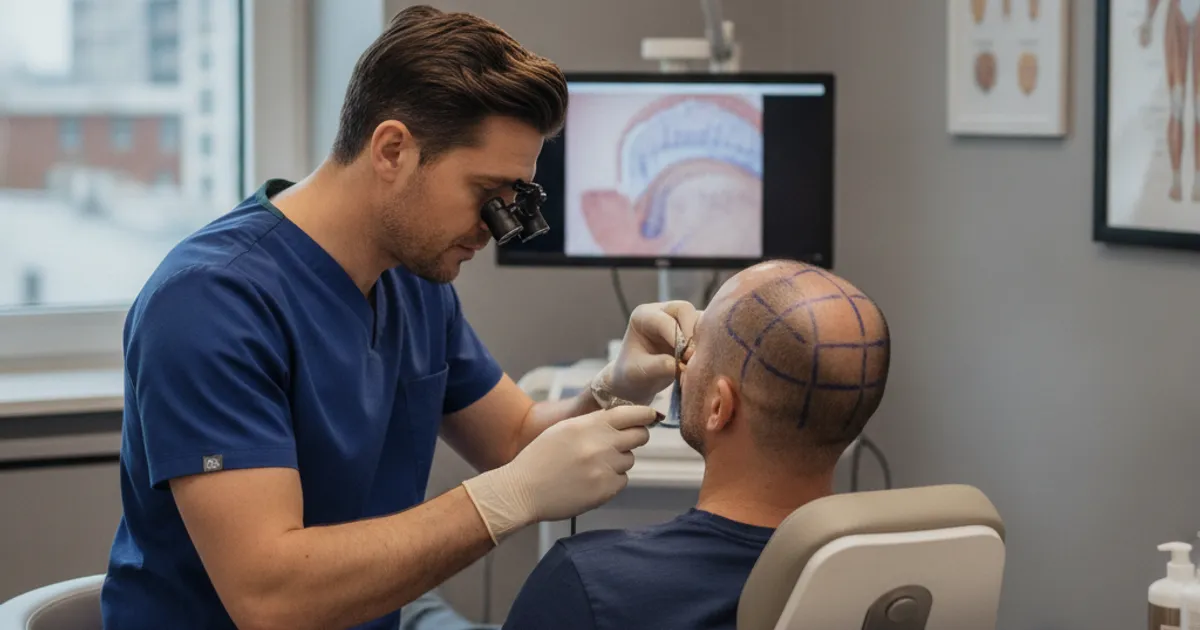
Norwood 3 Vertex treatment works best when it combines medication to stabilise the crown thinning and a hair transplant to restore density where follicles have already gone. In most cases, starting with finasteride or minoxidil slows progression, and surgery fills in the vertex once loss has stabilised.
What is Norwood 3 Vertex hair loss?
Norwood 3 Vertex is a specific pattern on the Norwood scale. It describes noticeable thinning or balding at the crown (the vertex) of the scalp, while the hairline stays largely intact or shows only mild recession. It sits between Norwood 2 and Norwood 4, and it is one of the earliest stages where crown loss becomes clearly visible.
- Hair loss is concentrated at the crown or vertex, not the temples.
- The frontal hairline is mostly preserved, which separates it from classic Norwood 3.
- It can progress to Norwood 4, 5, or higher if left untreated.
- It affects men more often, but similar patterns occur in some women.
- Early intervention tends to preserve more native hair long term.
Is Norwood 3 Vertex treatable?
Yes. Norwood 3 Vertex is very treatable, and it is often considered an ideal stage to start because you still have a lot of native hair to protect. Treatment aims to do two things: slow or stop further loss, and restore density in the crown area.
- Medication can slow progression and, in some men, regrow thinning crown hair.
- PRP and similar therapies may support hair quality but are not a cure.
- Hair transplant surgery can rebuild the vertex when follicles are gone.
- Combining treatments usually gives better long-term results than any single option.
- The earlier you start, the more options you keep open.
What are the treatment options for Norwood 3 Vertex?
There are three main routes: medication, non-surgical therapies, and surgery. Most clinics recommend starting with medication to stabilise loss, then deciding on surgery once the pattern is stable.
| Treatment | What it does | Best for | Typical commitment |
|---|---|---|---|
| Finasteride | Blocks DHT, slows loss, may regrow crown hair | Early to moderate crown thinning | Daily pill, ongoing |
| Minoxidil | Improves blood flow, supports hair growth | Mild to moderate thinning | Twice daily topical or daily oral |
| PRP injections | Stimulates follicles with platelet-rich plasma | Thinning hair, post-op support | Series of sessions, then maintenance |
| Hair transplant (FUE) | Moves healthy follicles to the crown | Visible bald patches, stable loss | One procedure, long-term result |
| Hair transplant (FUT) | Strip harvest, moves follicles to the crown | Larger sessions, tighter budgets | One procedure, linear scar |
- Medication is usually the first step and often the cheapest.
- PRP is sometimes added to medication or after a transplant.
- Surgery is the only option that restores hair in areas that are already bald.
- Many patients combine medication and surgery for the best coverage.
How effective are treatments for Norwood 3 Vertex?
Effectiveness depends on how much native hair you still have and how stable your loss is. Medication tends to work best on thinning hair, while surgery is needed where the crown is already smooth and bald.
| Treatment | Effectiveness at Norwood 3 Vertex | Notes |
|---|---|---|
| Finasteride | High for slowing loss, moderate for regrowth | Results take 6–12 months |
| Minoxidil | Moderate for density, low for bald patches | Works best with finasteride |
| PRP | Moderate, variable between patients | Often used as support, not standalone |
| FUE transplant | High for restoring bald crown areas | Needs stable loss for best result |
| FUT transplant | High, similar to FUE | Scar trade-off, often lower cost per graft |
How much does Norwood 3 Vertex treatment cost?
Costs vary widely by country, clinic, and how many grafts you need. Medication is the cheapest ongoing option, while surgery is a one-off cost that depends on the size of the session. The figures below are averaged case pricing by stage of hair loss, based on listed clinics. They are a starting point for budgeting, not a quote.
- Medication: monthly cost, ongoing for as long as you want to keep results.
- PRP: priced per session, usually sold in packages of three or more.
- Surgery: priced per graft or per session, with early cases at the lower end.
- Travel, accommodation, and aftercare can add to the total if you go abroad.
What should you look for in a clinic for Norwood 3 Vertex treatment?
The right clinic will assess your crown loss properly, explain whether you are a candidate for surgery now or should stabilise with medication first, and show you realistic before-and-after cases. Avoid any clinic that promises a full head of hair or pushes surgery without discussing medication.
- Surgeon-led consultations, not sales-led ones.
- Clear graft estimates and a plan for the crown and mid-scalp.
- Honest advice on whether you need medication first.
- Documented aftercare and follow-up appointments.
- Transparent pricing with no hidden extras.
What is the best treatment for Norwood 3 Vertex?
For most people, the best approach is medication first to stabilise the crown, followed by a hair transplant if bald patches remain. This combination protects your native hair and gives the transplant the best chance of lasting.
- Start with finasteride or minoxidil to slow loss.
- Add PRP if you want extra support for thinning hair.
- Consider FUE or FUT once your loss has been stable for 12 months.
- Keep using medication after surgery to protect the result.
- Review your plan with your surgeon every year.
Frequently asked questions about Norwood 3 Vertex treatment
Can Norwood 3 Vertex reverse on its own?
No. Crown loss at Norwood 3 Vertex does not reverse without treatment. Medication can slow it and sometimes regrow thinning hair, but bald areas need surgery to restore.
How many grafts do I need for Norwood 3 Vertex?
It depends on the size of the crown area and how dense you want the result. Early cases often need fewer grafts, while larger crown loss can require a bigger session. Your surgeon will estimate this at consultation.
Is it too early to get a hair transplant at Norwood 3 Vertex?
Not necessarily, but many surgeons prefer to stabilise loss with medication first. If your crown loss is stable and you have good donor hair, surgery can be a good option.
Does Norwood 3 Vertex always progress?
Not always, but it often does without treatment. Starting medication early gives you the best chance of keeping the hair you still have.
More Guides
- Hair Transplant and Blood Thinners: Safety and Timing
Can you have a hair transplant on blood thinners? Learn why they matter, which ones raise bleeding risk, how long to stop before surgery, and when to restart.
- Finasteride and PSA Testing: What You Need to Know
Finasteride lowers PSA levels, so your test results need careful interpretation. Learn how finasteride affects PSA, the adjustment factor, and what to tell your
- Can You Cure a Receding Hairline? What's Realistic
Can you cure a receding hairline? Learn what's realistic with medications, transplants, and lifestyle changes, plus expected results and costs.
- Minoxidil Hair Thinning Before Growth: Is It Normal?
Is minoxidil hair thinning before growth normal? Yes, it's a common sign the treatment is working. Learn why it happens, how long it lasts, and when to worry.