
Sapphire FUE vs DHI vs FUE: Which Hair Transplant Is Best?
Sapphire FUE vs DHI vs FUE compared: how each technique works, who it suits, and what to weigh up before choosing a hair transplant method.
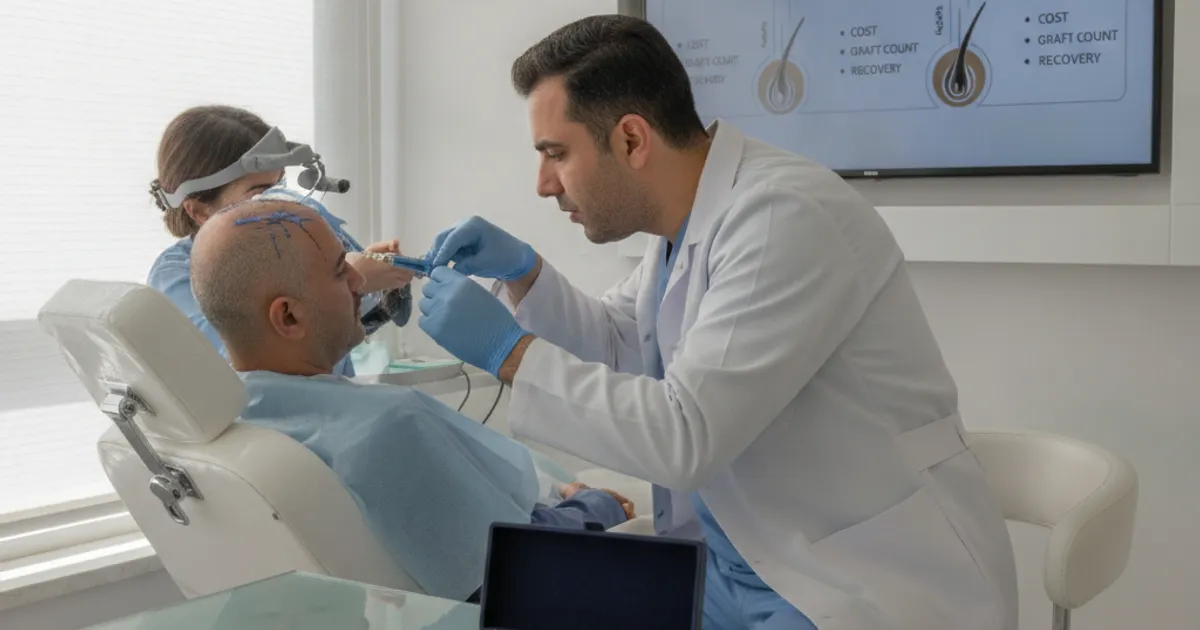
If you are weighing up Sapphire FUE vs DHI vs FUE, the short answer is this: standard FUE is the most widely available and typically the least expensive, Sapphire FUE adds precision and potentially faster healing for a modest premium, and DHI gives the surgeon the most control over angle and density but usually costs the most and takes longer. None of them is universally best — the right pick depends on your hair loss stage, budget and how much density you need.
For many people with early to moderate hair loss, Sapphire FUE offers a reasonable balance of cost, healing time and natural results. DHI may suit you if you need high-density work in a small area or want maximum control over hair angle. Standard FUE can be a sensible choice if budget is the deciding factor and you have a straightforward case.
What Each Technique Is
All three techniques are forms of follicular unit extraction, meaning individual grafts are removed from the donor area at the back of the scalp rather than stripping a strip of skin. The difference comes down to how the recipient sites are made and how the grafts are placed.
Standard FUE uses manual punches to extract grafts and manual blades to create recipient sites. Sapphire FUE uses sapphire blades, which are sharper and can create finer incisions. DHI (Direct Hair Implantation) uses an implanter pen to place grafts directly into the scalp without pre-making sites with a separate blade.
Key Differences at a Glance
| Factor | Standard FUE | Sapphire FUE | DHI |
|---|---|---|---|
| Cost | Lowest | Mid-range | Highest |
| Scarring | Small dot scars | Finer dot scars | Minimal dot scars |
| Graft handling | Manual | Manual | Implanter pen |
| Best for | Large sessions, tight budgets | Most cases, faster healing | Dense packing, precise hairlines |
| Surgeon control | Good | Good | Highest |
Cost Comparison
Prices vary hugely by country, clinic reputation and graft count, so treat any figure as a rough guide only. As a general rule, DHI tends to cost more than Sapphire FUE, and Sapphire FUE tends to cost more than standard FUE. The bigger driver of cost is how many grafts you need, which is tied to your stage of hair loss.
For a like-for-like graft count, expect to pay at the lower end of those ranges for standard FUE and the upper end for DHI. If you are comparing clinics across borders, our guide to hair transplant costs by country breaks down how different destinations compare.
Results and Recovery
All three techniques can produce permanent, natural-looking results when performed by a competent surgeon. The differences show up in the first few weeks and in how dense the final result looks.
- Standard FUE: reliable results, but slightly more scabbing and a longer visible healing window. Fine for large sessions where graft count matters more than finesse.
- Sapphire FUE: finer incisions mean less crusting and redness, so many people are presentable within a week. Good for dense packing without over-traumatising the scalp.
- DHI: the implanter pen lets the surgeon place each graft at the exact angle and depth, which can give a very natural hairline and high density per square centimetre. The trade-off is a longer procedure and higher cost.
- Shock loss: all three can trigger temporary shedding of existing hair in the weeks after surgery. This is normal and usually recovers over time.
- Final results: expect to see meaningful growth over several months and the full result after a year or more, regardless of technique.
Which Technique Should You Choose?
There is no single winner — the right choice depends on your hair loss pattern, donor supply and what you can spend. Here is a simple way to think about it.
- Early hair loss, small area, tight budget: standard FUE is often enough and keeps costs down.
- Early to moderate hair loss, want faster healing and a natural hairline: Sapphire FUE is a reasonable option for many people.
- Moderate to advanced hair loss needing dense packing, or a very precise hairline: DHI gives the surgeon the most control.
- Previous transplant needing repair work: DHI is often preferred because it lets the surgeon work around existing grafts.
- Long travel involved: factor in that DHI sessions are longer, so you may need an extra day or two in the destination city.
If you are still narrowing down where to have the procedure done, our directory of hair transplant clinics lets you filter by country, technique and price range so you can compare real options side by side.
Related Guides
Frequently Asked Questions
Is Sapphire FUE better than standard FUE?
Not automatically. Sapphire FUE uses sharper blades that can mean finer scars and faster healing, but the final result still depends mostly on the surgeon's skill and your graft count. If the price difference is small, Sapphire FUE may be worth considering; if it is large, standard FUE can still deliver excellent results.
Is DHI more painful than FUE?
Most patients report similar discomfort during the procedure since both are done under local anaesthetic. DHI takes longer, so you may feel more tired afterwards, but post-op pain is generally comparable. Any soreness usually settles within a few days.
Which technique gives the most natural hairline?
DHI tends to give the most natural hairline because the implanter pen lets the surgeon control angle and direction graft by graft. That said, a skilled surgeon using Sapphire FUE can also produce very natural hairlines — technique matters less than who is doing the work.
How many grafts will I need?
That depends on your stage of hair loss. Early hair loss often needs fewer grafts, moderate cases more, and advanced cases the most. A clinic will assess your donor area and give you a specific number after a consultation.
More Guides
- Clascoterone vs Minoxidil: Which Is Better for Hair Loss?
Clascoterone vs minoxidil: compare how they work, costs, results, and side effects to decide which hair loss treatment suits you best.
- Finasteride 5 mg vs 1 mg: Which Dose Works for Hair?
Finasteride 5 mg vs 1 mg for hair loss: compare effectiveness, side effects, cost, and which dose makes sense for you. Get the facts before you decide.
- Beard Transplant vs Scalp Transplant: A Complete Guide
Compare beard vs scalp transplants: costs, recovery, results, pain, and candidacy to decide which hair restoration procedure fits your goals.
- Hair Transplant vs Medication: Which Is Better for You?
Compare hair transplant vs medication for hair loss. Learn costs, results, recovery, and which option suits early, moderate, or advanced balding.