
Second Hair Transplant After Unsuccessful First: What to Know
A second hair transplant after an unsuccessful first is possible. Learn why first transplants fail, how revision surgery works, recovery, results, cost and cand
What Is a Second Hair Transplant After an Unsuccessful First?
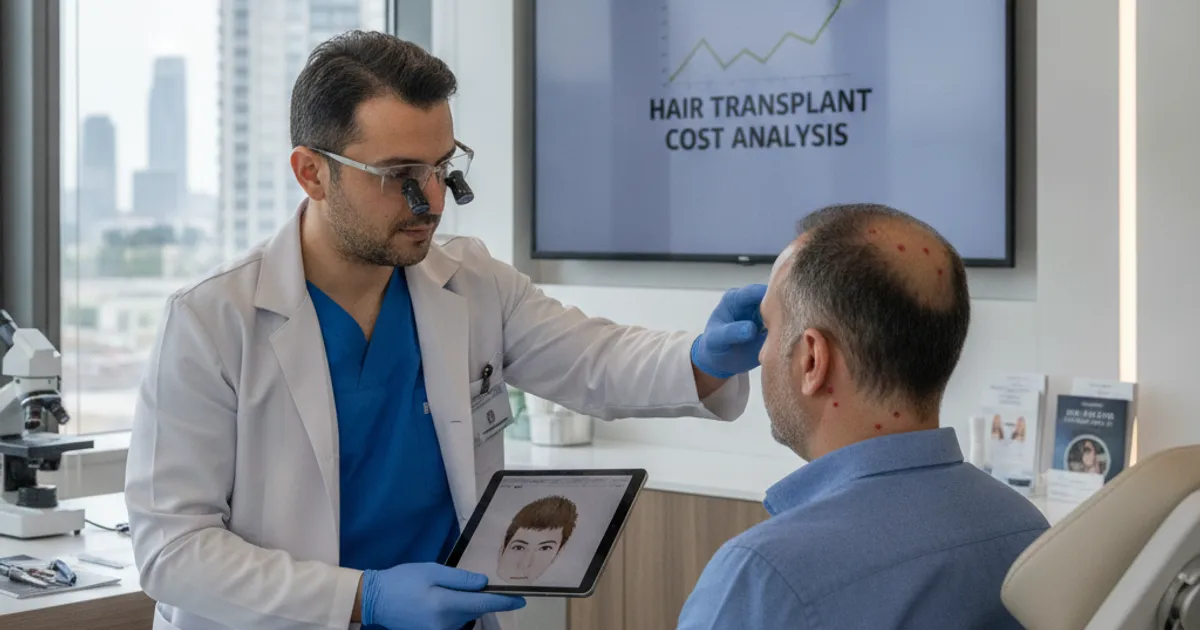
A second hair transplant after an unsuccessful first is a revision procedure. It is performed when the original surgery did not deliver the density, coverage or natural look that was expected, or when the transplanted grafts did not survive in sufficient numbers. The goal is not simply to add more grafts. It is to diagnose what went wrong the first time, correct any visible problems such as scarring, poor angles or an unnatural hairline, and then add density where it is still needed. In some cases the second procedure is a repair job. In others it is a carefully planned top-up that works with whatever the first surgery left behind.
Why the First Transplant May Have Failed
Failure is a broad term. Sometimes the surgery was technically poor. Sometimes the result was fine but the patient's expectations were unrealistic. Sometimes the hair loss simply progressed faster than anyone predicted. Before planning a second transplant, it helps to understand which category you fall into, because the fix is different in each case.
- Poor graft survival: grafts were damaged during extraction, handling or placement, so fewer hairs grew than were implanted.
- Unnatural hairline design: the hairline was placed too low, too straight or with wrong angles, creating a pluggy or doll-like look.
- Over-harvesting of the donor area: too many grafts were taken from a limited donor zone, leaving thinning or visible scarring at the back and sides.
- Progression of native hair loss: the transplanted hair grew, but the surrounding natural hair continued to fall out, making the result look sparse.
- Underestimated graft numbers: the surgeon planned too few grafts for the area of baldness, so coverage was always going to be thin.
- Poor aftercare or patient factors: smoking, uncontrolled medical conditions or not following post-op instructions reduced graft take.
- Unrealistic expectations: the surgery worked as planned, but the patient expected full density that a transplant cannot provide.
How a Second Hair Transplant Is Performed
A revision transplant is usually more complex than a first procedure. The surgeon has to work around existing scars, altered blood supply and a donor area that has already been partially depleted. The exact technique depends on what needs fixing, but the general sequence is similar across most cases.
Recovery After a Second Transplant
Recovery after a second transplant is broadly similar to a first, but there are a few differences. If the surgeon worked into scar tissue or removed old grafts, the healing phase can be a little more uncomfortable. Swelling, scabbing and redness are normal. The main difference is psychological: patients who have already had one disappointing result tend to watch every stage more closely, which can make the waiting period feel longer.
- Days 1 to 3: rest, sleep propped up, avoid touching the grafts. Swelling around the forehead and eyes is common.
- Days 4 to 10: gentle washing begins as instructed. Scabs loosen and fall away. Most people can return to desk work within a week.
- Weeks 2 to 4: shock loss of native hair can occur. This is temporary and usually grows back.
- Months 2 to 4: transplanted hairs shed, then the new growth cycle begins. This is the frustrating phase.
- Months 5 to 8: visible growth starts. Density improves month by month.
- Months 12 to 18: final result. Some patients see continued thickening up to 18 months, especially in revision cases.
| Phase | Typical Timing | What to Expect |
|---|---|---|
| Initial healing | Days 1–10 | Scabbing, redness, mild swelling, return to work |
| Shock loss | Weeks 2–6 | Temporary shedding of native and transplanted hair |
| Early growth | Months 3–5 | Fine new hairs emerge, density still low |
| Visible result | Months 6–9 | Noticeable improvement in coverage and blend |
| Final result | Months 12–18 | Mature density, scar maturation, settled hairline |
Results: What You Can Realistically Expect
A second transplant can improve a poor first result, but it rarely produces a perfect outcome. The best revision cases are those where the first surgery was technically sound but under-dense, or where the hairline needs softening. The hardest cases are those with extensive donor scarring, depleted donor supply or advanced native hair loss. Realistic expectations matter more here than in any first transplant.
- Improved density: a second pass can thicken thin areas, but it will not create the density of a full head of hair.
- Better hairline: misangled or pluggy grafts can be camouflaged or redistributed, softening the front.
- Scar camouflage: grafts placed into strip or FUE scars can make them less visible, though rarely invisible.
- Limits: if the donor area is already over-harvested, there may not be enough grafts for a meaningful second procedure.
- Progression: ongoing hair loss can still undermine the result, so medical therapy is often recommended alongside surgery.
Who Is a Good Candidate for a Second Transplant?
Not everyone who is unhappy with a first transplant is a candidate for a second. The deciding factors are donor supply, scalp condition, the nature of the problem and whether the underlying hair loss is stable. A good revision surgeon will sometimes advise against surgery and suggest medical treatment, scar revision or simply leaving things alone.
- Adequate donor density remaining at the back and sides of the scalp.
- A clear, correctable problem such as low density, a harsh hairline or visible scarring.
- Stable or medically managed hair loss, so the result is not undermined by ongoing shedding.
- Good general health and realistic expectations about what a second procedure can achieve.
- Willingness to wait at least 12 months after the first transplant before assessing the result.
- No active scalp infection, uncontrolled skin condition or recent keloid scarring.
Cost of a Second Hair Transplant
A second transplant usually costs more than a first for the same number of grafts, because revision work is more complex and takes longer. Pricing depends on graft numbers, technique, the amount of repair work needed and the clinic's location. The figures below are averaged case pricing by stage of hair loss, based on typical graft ranges. They are indicative only and should not be treated as quotes.
| Stage of Hair Loss | Typical Graft Range | Indicative Cost (USD) |
|---|---|---|
| Early | Fewer grafts | $3,000–$5,000 |
| Moderate | Mid-range grafts | $5,000–$9,000 |
| Advanced | Highest number of grafts | $9,000–$15,000+ |
How a Second Transplant Compares to Alternatives
Surgery is not the only option after a disappointing first transplant. Depending on the problem, medical therapy, scalp micropigmentation or simply waiting can be more appropriate. The table below compares the main routes.
| Option | What It Does | Best For | Limitations |
|---|---|---|---|
| Second transplant | Adds or redistributes grafts to improve density and shape | Correctable density or hairline issues with donor supply left | Limited by donor area, scarring and cost |
| Medical therapy | Slows or stabilises hair loss with medication | Ongoing native hair loss, early stages | Does not restore lost hair, side effects possible |
| Scalp micropigmentation | Tattooed dots mimic stubble and add visual density | Camouflaging scars or thinning on shaved or short hair | Cosmetic only, fades over time, not real hair |
| Scar revision | Surgically improves or excises problem scars | Wide or raised donor scars | Does not add hair, may need grafting after |
| No further treatment | Accept the result and manage hair loss medically | Patients with limited donor supply or high risk | No cosmetic improvement |
- If the problem is density, a second transplant is often the most direct fix.
- If the problem is ongoing hair loss, medical therapy should come first.
- If the problem is scarring, a combination of scar revision and grafting may work best.
- If the donor area is depleted, surgery may not be possible and alternatives should be considered.
Choosing a Clinic for Your Second Transplant
Revision surgery is a specialist skill. Not every clinic that performs first transplants is experienced in repair work. When choosing a clinic for a second transplant, look for evidence of revision cases in their portfolio, a clear diagnostic process and honest advice about what is achievable. Avoid any clinic that promises a full head of hair or pressures you into booking immediately.
- Ask to see before-and-after photos of revision cases, not just first transplants.
- Check whether the surgeon explains why the first transplant failed and how they will avoid repeating it.
- Confirm who performs the surgery: the named surgeon or technicians.
- Ask about graft survival rates in scar tissue and how they manage reduced blood supply.
- Look for a clinic that offers a clear plan for medical therapy alongside surgery.
- Be wary of unusually low prices for revision work. Complexity costs time and skill.
FAQ: Second Hair Transplant After an Unsuccessful First
How soon after a failed transplant can I have a second one?
Most surgeons recommend waiting at least 12 months after the first procedure, and sometimes 18 months. Hair growth continues to mature during this period, and what looks like failure at six months may improve significantly by 12 to 18 months. Waiting also gives the donor area time to heal and the scalp to recover.
Can a second transplant fix a bad hairline?
Often yes, but it depends on the problem. Misangled or pluggy grafts can sometimes be removed or redistributed, and new grafts can be placed to soften the line. If the hairline was placed too low, correction is harder because raising a hairline usually requires removing grafts and leaving scarring. A skilled revision surgeon will assess whether the improvement is worth the risk.
Will I have enough donor hair for a second transplant?
That is the key question. If the first transplant over-harvested the donor area, there may not be enough grafts left for a meaningful second procedure. A surgeon will measure donor density and check for scarring before deciding. In some cases, body hair can be used as a supplementary source, but it behaves differently from scalp hair.
Is a second transplant more painful or risky than the first?
It can be. Working into scar tissue or a previously harvested donor area is technically more demanding, and blood supply may be reduced, which can affect graft survival. Pain levels vary, but most patients report similar discomfort to the first procedure. The main added risk is a lower graft yield rather than more pain.
More Guides
- Hair Transplant for Curly Hair: Graft and Technique Tips
A plain-English guide to hair transplants for curly hair: how surgeons adapt graft harvesting and placement, recovery, results, costs, and who it suits.
- How Long Does a Hair Transplant Last? Long-Term Durability
How long does a hair transplant last? We explain the procedure, recovery, durability, costs by stage of hair loss, and how it compares to alternatives.
- Hair Transplant Revision: When a Second Procedure Makes Sense
Considering a hair transplant revision? Learn how a second procedure works, who it suits, recovery, results, and costs. Expert explainer from Clinic Reccy.
- Hair Transplant for Norwood 6 and 7: What's Possible
A clear look at hair transplant options for Norwood 6 and 7 hair loss: graft limits, staging, recovery, costs, and realistic results.