
Tight Scalp After FUT: What's Normal?
Tight scalp after FUT is common during recovery. Learn what's normal, when tightness fades, and how FUT compares to FUE for tension and healing.
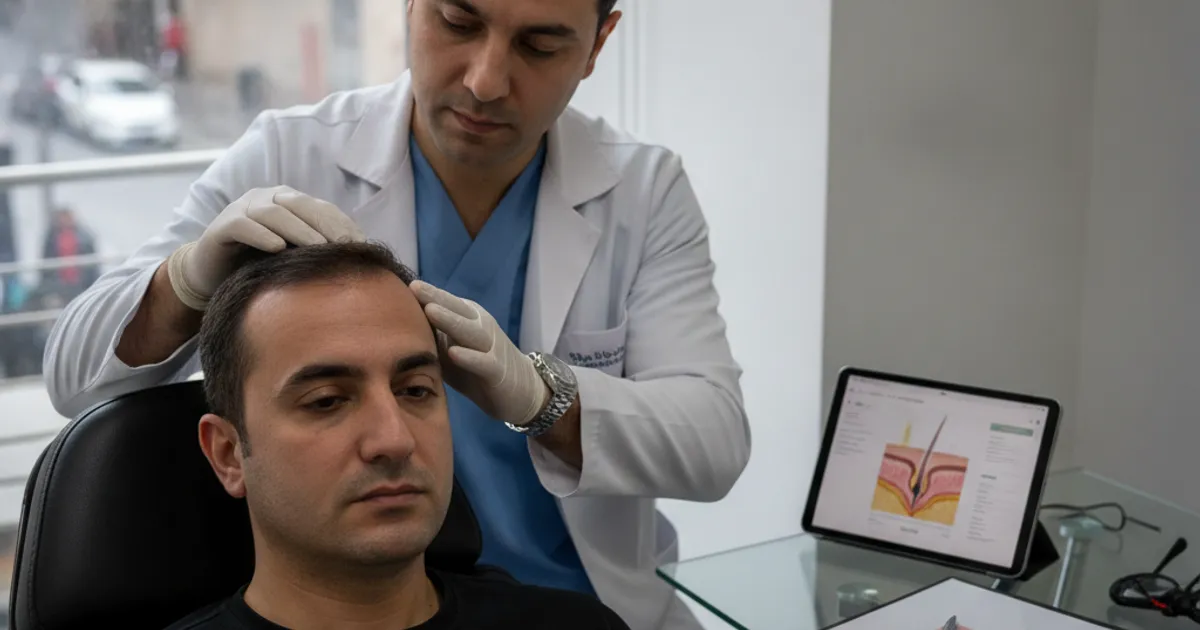
What Is Tight Scalp After FUT?
Follicular unit transplantation (FUT) — often called the strip method — involves removing a strip of skin from the back of the scalp, closing the wound, and dissecting the strip into individual grafts. Because the surgeon removes a section of tissue and pulls the remaining edges together to close, the scalp becomes temporarily tighter than it was before. That tightness is a normal part of the healing process, not a sign that something went wrong. Most people feel a pulling, stretching, or taut sensation across the back and sides of the head for days to weeks after surgery. It usually eases as swelling goes down and the tissue relaxes.
How FUT Is Performed and Why Tightness Happens
During FUT, the surgeon trims a narrow band of hair in the donor zone (usually at the back of the head), injects local anesthetic, and removes a strip of scalp. The exact width and length depend on the patient's needs and the surgeon's plan. The wound is closed in layers with sutures or staples. The strip is then sliced into hundreds or thousands of tiny grafts under a microscope, and those grafts are implanted into thinning or bald areas on top of the scalp. The tightness you feel comes from two things: the physical removal of tissue and the tension created when the edges are pulled together to close the gap.
- Strip removal: a section of donor scalp is cut away, reducing the surface area of skin.
- Closure tension: the remaining edges are pulled together, which stretches the surrounding scalp.
- Swelling and inflammation: post-op fluid buildup adds pressure and makes the scalp feel tighter.
- Healing contraction: as collagen remodels, the scar tissue can feel firm or tight for a while.
- Nerve sensitivity: cut nerves regenerate slowly, and that process can feel like pulling or tingling.
Normal vs. Concerning Tightness: A Timeline
Some tightness is normal. Severe, worsening, or one-sided tightness is not. Use the timeline below as a rough guide, but always trust your surgeon's instructions over any general article — including this one.
| Timeframe | What's Normal | What's Concerning |
|---|---|---|
| Days 1–3 | Mild to moderate tightness, swelling, soreness at the donor site | Severe pain, bleeding that won't stop, fever |
| Week 1 | Tightness peaks, staples or sutures still in place, scalp feels stiff | Wound opening, pus, spreading redness |
| Weeks 2–4 | Tightness gradually decreases, sutures/staples removed, numbness fading | Increasing tightness, hard lump, fluid collection |
| Months 2–3 | Mild tightness or firmness around the scar, occasional pulling | Persistent severe tightness, restricted head movement |
| Months 4–6 | Tightness largely resolved, scar softens and fades | New pain, new swelling, scar widening significantly |
| 6–12 months | Scalp feels normal, scar matures to a thin line | Ongoing tightness that limits daily activity |
Recovery: What to Expect Week by Week
FUT recovery is a gradual process. The donor area heals first, the tightness eases over the first month or two, and the transplanted hair starts growing around month three to four. Here's a realistic week-by-week picture.
- Week 1: Rest, sleep propped up, avoid bending or straining. Tightness is at its peak. Sutures or staples stay in.
- Week 2: Sutures or staples typically removed. Tightness starts to ease. Scabbing in the recipient area begins to flake.
- Weeks 3–4: Most swelling gone. Tightness noticeably reduced. You can usually return to light exercise with your surgeon's OK.
- Months 2–3: Shock loss may occur (temporary shedding of transplanted hair). Tightness is mild. Scar may feel firm.
- Months 4–6: New hair growth becomes visible. Tightness mostly gone. Scar softens and fades.
- Months 6–12: Final results take shape. Scalp feels normal. Scar matures into a thin line.
Results: When Tightness Fades and Hair Grows
For most FUT patients, tightness fades within four to eight weeks, though mild firmness around the scar can linger for a few months. The hair results take longer. Transplanted follicles rest for a few months, shed, then start producing new hair around month three or four. By month six you'll see meaningful growth, and by month twelve you'll see the final result. The donor scar typically matures into a thin, pale line that's hidden by surrounding hair.
- Tightness: peaks in week one, eases by week four to eight, mostly gone by month three.
- Scar: firm and pink for a few months, softens and fades over six to twelve months.
- Hair growth: shedding around weeks two to eight (verify with your surgeon), new growth from month three, full results at twelve months.
- Sensation: numbness or tingling in the donor area can take several months to fully resolve.
- Scalp laxity: returns to near-normal over time, though some permanent change is possible with large strips.
Who Is a Good Candidate for FUT?
FUT isn't for everyone. It tends to suit people with good scalp laxity, thick donor hair, and larger bald areas that need a high graft count in one session. It can also be a good option for people who want to avoid shaving the donor area, since FUT leaves hair above the strip intact to cover the scar.
- Good scalp laxity: looser scalp means less closure tension and less tightness.
- Advanced hair loss: FUT can harvest more grafts in a single session than FUE in many cases.
- Thick donor hair: denser donor zones yield more usable grafts from a strip.
- Preference for no shaving: FUT doesn't require shaving the donor area, unlike most FUE methods.
- Willingness to accept a linear scar: FUT leaves a thin line at the back of the scalp.
- Realistic expectations: understanding that tightness and a scar are part of the trade-off.
Cost of FUT and What It Includes
FUT is often priced lower per graft than FUE because it's less labor-intensive to harvest. Pricing varies widely by country, clinic, and graft count. Most clinics quote by the session or by the graft. Below are averaged case prices by stage of hair loss. These are averages — your actual quote will depend on your specific needs.
- Surgical fee: surgeon's time, strip removal, graft dissection, and implantation.
- Anesthesia: local anesthesia is standard; sedation may cost extra.
- Facility fees: operating room and equipment use.
- Follow-up visits: suture removal, wound checks, and progress reviews.
- Medications: pain relief, antibiotics, and sometimes minoxidil or finasteride.
- Some clinics bundle PRP, post-op medication, or accommodation — ask what's included.
FUT vs. FUE: How They Compare for Tightness and Recovery
The biggest difference between FUT and FUE for tightness is simple: FUT removes a strip and closes the wound under tension, while FUE extracts individual follicles with tiny punches and leaves the donor area to heal without a linear closure. That means FUE generally causes less tightness, but FUT can yield more grafts in a single session and often costs less per graft.
| Factor | FUT | FUE |
|---|---|---|
| Tightness | Common, peaks in week 1, eases over 4–8 weeks | Minimal, mostly from swelling |
| Scar | Linear scar at donor site | Small dot scars scattered across donor area |
| Graft yield per session | Often higher in one session | Lower per session, may need multiple sessions |
| Recovery time | Sutures/staples for 10–14 days (verify with your surgeon) | No sutures, faster surface healing |
| Shaving required | No (donor hair covers scar) | Often yes, depending on technique |
| Cost per graft | Generally lower | Generally higher |
| Best for | Advanced loss, good laxity, budget-conscious | Smaller sessions, short hair, no linear scar |
Choosing a Clinic and Managing Expectations
The clinic you choose matters more than the technique. A skilled surgeon will assess your scalp laxity, plan a strip size that minimizes tension, and give you honest expectations about tightness and recovery. Look for board-certified surgeons with verifiable results and clear aftercare protocols.
- Check credentials: board certification and years of dedicated hair restoration experience.
- Ask about laxity testing: a good surgeon measures scalp laxity before planning the strip.
- Review before-and-after photos: look for cases similar to your hair loss pattern.
- Ask what's included: follow-ups, medication, PRP, and scar management.
- Read the fine print: refund policies, revision policies, and what happens if grafts don't take.
- Trust your gut: if a clinic promises zero tightness or guarantees results, walk away.
FAQ: Tight Scalp After FUT
How long does tightness last after FUT?
For most people, tightness peaks in the first week and eases significantly by week four to eight. Mild firmness around the scar can linger for a few months, but the scalp usually feels normal by month three to six. Everyone heals differently, so your timeline may vary.
Is tightness after FUT a sign of a problem?
Not usually. Some tightness is expected because the donor wound is closed under tension. However, if tightness gets worse instead of better, if you can't move your head comfortably, or if you notice signs of infection like fever, pus, or spreading redness, contact your surgeon right away.
Does FUT cause permanent scalp tightness?
In most cases, no. The scalp relaxes as swelling goes down and tissue heals. Large strips or multiple FUT sessions can cause some permanent change in scalp laxity, which is one reason surgeons assess laxity before planning a procedure. FUE generally causes less tightness because there's no linear closure.
Can I do anything to reduce tightness after FUT?
Follow your surgeon's aftercare instructions closely. Sleep propped up to reduce swelling, avoid strenuous activity for the first week or two, don't bend over or strain, and keep the donor area clean. Some surgeons recommend gentle scalp massage once the wound has healed. Always check with your surgeon before starting any massage or stretching routine.
More Guides
- Hair Transplant for Curly Hair: Graft and Technique Tips
A plain-English guide to hair transplants for curly hair: how surgeons adapt graft harvesting and placement, recovery, results, costs, and who it suits.
- How Long Does a Hair Transplant Last? Long-Term Durability
How long does a hair transplant last? We explain the procedure, recovery, durability, costs by stage of hair loss, and how it compares to alternatives.
- Hair Transplant Revision: When a Second Procedure Makes Sense
Considering a hair transplant revision? Learn how a second procedure works, who it suits, recovery, results, and costs. Expert explainer from Clinic Reccy.
- Hair Transplant for Norwood 6 and 7: What's Possible
A clear look at hair transplant options for Norwood 6 and 7 hair loss: graft limits, staging, recovery, costs, and realistic results.