
Ugly Duckling Phase Hair Transplant: How Long Does It Last?
The ugly duckling phase after a hair transplant usually lasts 3 to 4 months. Learn the week-by-week timeline, why shock loss happens, and how to cope.
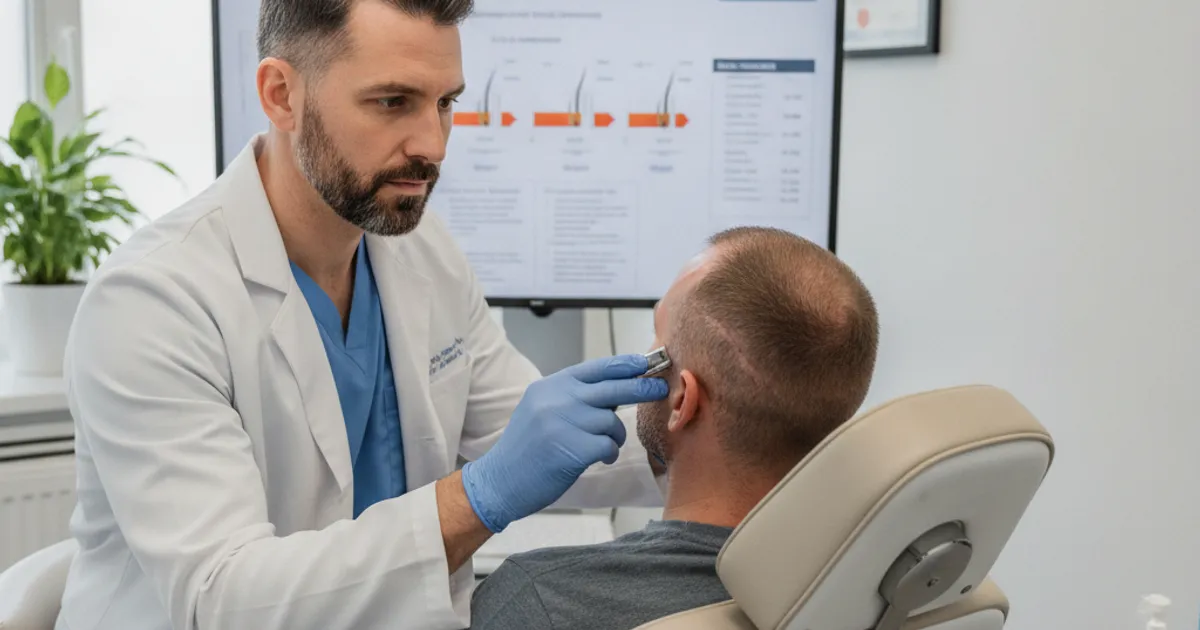
The ugly duckling phase hair transplant patients talk about is the stretch after surgery when your transplanted hair sheds and you look worse before you look better. It usually starts around week 2 to 3 and runs until roughly month 3 or 4, when new growth finally kicks in.
What is the ugly duckling phase after a hair transplant?
It is the period when the transplanted follicles go dormant, shed their hair shafts, and leave you with patchy, thin-looking areas. The grafts are alive under the skin, but the visible hair falls out. Most people look their worst somewhere between weeks 3 and 8.
Ugly duckling phase: the temporary post-transplant stage (roughly weeks 2 to 12) when transplanted hair sheds, the scalp looks sparse or uneven, and new growth has not yet started. It is a normal part of the hair growth cycle, not a sign the transplant failed.
How long does the ugly duckling phase last?
For most patients it lasts about 3 to 4 months from surgery. The shedding starts early, the worst appearance hits around week 6 to 8, and the first new hairs usually appear around month 3 to 4. By month 5 to 6 you are past it.
- Shedding typically starts 2 to 3 weeks after surgery
- Worst appearance is usually weeks 6 to 8
- New growth usually begins around month 3 to 4
- Most people feel back to normal by month 5 to 6
What happens week by week during the ugly duckling phase?
| Timeframe | What you see | What is happening |
|---|---|---|
| Week 1–2 | Scabs, redness, transplanted hair visible | Grafts settling into the scalp |
| Week 2–4 | Hair starts shedding, scalp looks thinner | Follicles enter resting phase |
| Week 4–8 | Patchy, uneven, worst appearance | Peak shedding, no new growth yet |
| Month 3–4 | Fine new hairs appear | Follicles re-enter growth phase |
| Month 5–6 | Noticeable thickening | New hair matures and darkens |
| Month 12–18 | Typically final result | Full density and texture usually achieved |
The exact timing varies from person to person. Some patients shed later, some earlier. What matters is the pattern: shed, wait, then grow. If you are still completely bald in the transplanted area at month 6, that is worth a conversation with your surgeon.
Why does shock loss happen and is it normal?
Shock loss is the temporary shedding of transplanted hair, and sometimes nearby native hair, caused by the trauma of surgery. It is completely normal and expected. The follicles are not damaged, they are just resetting their growth cycle.
- Surgery disrupts the blood supply and growth cycle of the follicles
- Transplanted hairs shed because they enter a resting phase
- Native hair near the transplant site can also shed temporarily
- Shock loss is temporary, the follicles remain alive
- It does not mean the transplant has failed
How can you cope with the ugly duckling phase?
- Plan ahead: take time off work if your job involves being on camera or meeting clients
- Use hats, caps, or scarves if you feel self-conscious
- Avoid mirrors for the first few weeks, checking daily makes it worse
- Stick to your surgeon's aftercare instructions exactly
- Take progress photos every 2 weeks so you can see slow changes
- Remember that shedding is a sign the process is working, not failing
- Talk to other patients online who have been through it
The mental side is often harder than the physical side. Many patients say they underestimated how much the temporary thinning affected them. Knowing the timeline in advance helps a lot. If you are struggling, your clinic can usually reassure you and show you comparable patient timelines.
When will you see final hair transplant results?
You will see the first real improvement around month 4 to 5. Noticeable density arrives between month 6 and 9. Final results, where the hair has fully matured in thickness and texture, usually show at 12 to 18 months after surgery.
Does the ugly duckling phase affect everyone the same way?
No. The phase varies in length and severity depending on the procedure, the number of grafts, your hair characteristics, and how your body heals. Some people barely notice it, others find it very obvious.
Mild ugly duckling phase
- ✓ Less shedding than expected
- ✓ Scalp looks thin but not patchy
- ✓ New growth starts by month 3
- ✓ Easier to cover with styling
Pronounced ugly duckling phase
- ✓ Heavy shedding of transplanted and native hair
- ✓ Obvious patchiness for several weeks
- ✓ New growth delayed until month 4 or 5
- ✓ Harder to hide without a hat
Factors that tend to make it more noticeable include a large number of grafts, a second procedure, fine or light-coloured hair, and fair skin that shows redness easily. None of these change the final outcome, they just change how the middle months feel.
FAQ: Ugly Duckling Phase Hair Transplant
How long does the ugly duckling phase last after a hair transplant?
Usually 3 to 4 months. Shedding starts around week 2 to 3, the worst appearance is around week 6 to 8, and new growth typically begins around month 3 to 4.
Is shock loss during the ugly duckling phase permanent?
No. Shock loss is temporary. The follicles remain alive and usually start producing new hair within a few months.
Can I speed up the ugly duckling phase?
Not really. The timeline is driven by your hair growth cycle. Following aftercare, avoiding smoking, and eating well are often recommended for general health, but they will not shorten the phase dramatically. These are general health suggestions, not proven ways to accelerate hair regrowth.
What if I see no growth by month 6?
Contact your surgeon. Most patients see clear growth by month 5 to 6. If there is nothing by month 6, it is worth a review to rule out any issues.
Where to learn more about hair transplant recovery
If you are still choosing a clinic, browse the Clinic Reccy directory to compare surgeons, read verified reviews, and check what aftercare and follow-up support each clinic offers. Recovery is easier when you know what to expect and who to call if something worries you.
More Guides
- Hair Transplant and Blood Thinners: Safety and Timing
Can you have a hair transplant on blood thinners? Learn why they matter, which ones raise bleeding risk, how long to stop before surgery, and when to restart.
- Finasteride and PSA Testing: What You Need to Know
Finasteride lowers PSA levels, so your test results need careful interpretation. Learn how finasteride affects PSA, the adjustment factor, and what to tell your
- Can You Cure a Receding Hairline? What's Realistic
Can you cure a receding hairline? Learn what's realistic with medications, transplants, and lifestyle changes, plus expected results and costs.
- Minoxidil Hair Thinning Before Growth: Is It Normal?
Is minoxidil hair thinning before growth normal? Yes, it's a common sign the treatment is working. Learn why it happens, how long it lasts, and when to worry.