
Medication vs Hair Transplant: Best Hair Loss Treatment?
Medication vs hair transplant: which is the best hair loss treatment? Compare how they work, results, recovery, and suitability to decide what's right for you.
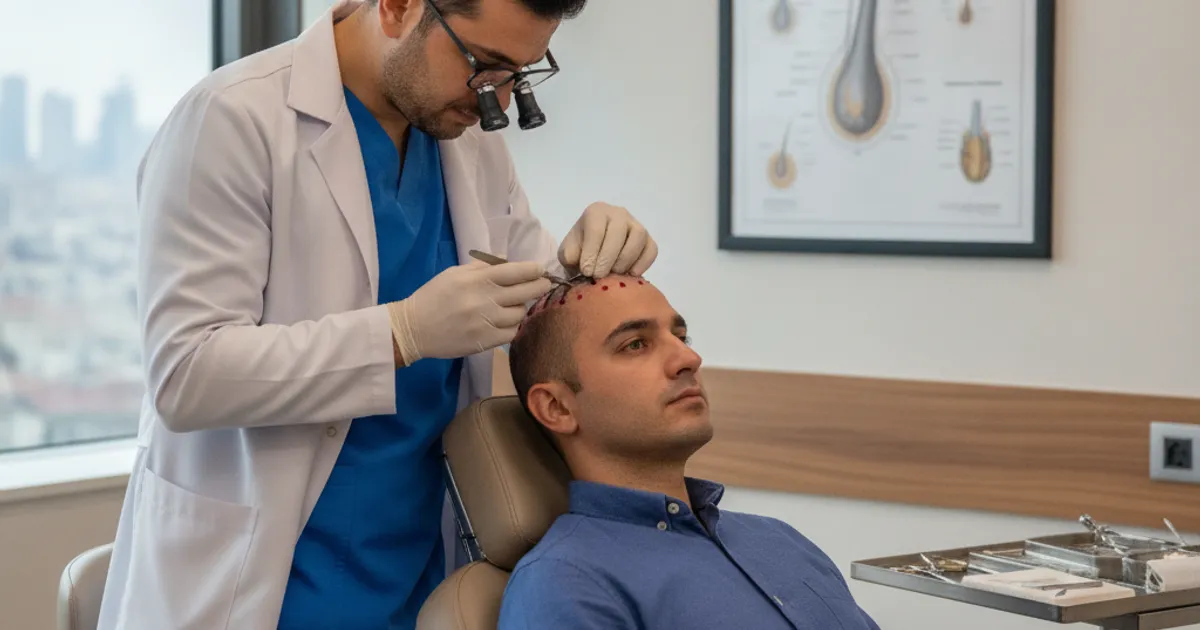
If you want the short answer: medication is the best first step for early hair loss, while a hair transplant is the best option for restoring hair in areas that are already bald. Many people get the best results by combining both. Here's how they actually compare.
What Each Treatment Is
These two approaches work in completely different ways. Medication tries to slow down or partially reverse the balding process. A hair transplant physically moves hair follicles from one part of your scalp to another.
- Medication: Typically minoxidil (a topical solution or foam) and finasteride (an oral pill). These are taken daily and work by improving blood flow to the scalp or blocking the hormone (DHT) that shrinks hair follicles. They're best at preserving existing hair and thickening thinning areas.
- Hair transplant: A surgical procedure where healthy hair follicles are taken from the back or sides of your head (the donor area) and implanted into thinning or bald spots. The most common techniques are FUE (follicular unit extraction) and FUT (follicular unit transplantation). Results are permanent because the transplanted follicles are resistant to DHT.
Key Differences at a Glance
| Factor | Medication | Hair Transplant |
|---|---|---|
| How it works | Slows hair loss, thickens existing hair | Moves permanent hair follicles to bald areas |
| Best for | Early to moderate thinning | Moderate to advanced baldness |
| Results timeline | Several months for visible change | Up to a year for full results |
| Duration of results | Only while you keep using it | Permanent (transplanted hair) |
| Recovery | None | About a week of visible healing |
| Pain | Minimal (possible scalp irritation) | Local anesthesia; mild soreness after |
| Cost | Low monthly cost | One-time procedure, higher upfront |
| Suitability | Almost anyone with active hair loss | Needs healthy donor hair; not for diffuse loss |
Cost: Medication vs Hair Transplant
Medication is far cheaper month to month, but you pay for it indefinitely. A hair transplant is a larger one-time expense, though the results are permanent. The exact cost of a transplant depends heavily on how much hair you've lost and how many grafts are needed.
Results and Recovery
Medication requires patience and consistency. You won't see anything for at least a few months, and if you stop, you lose the benefits over time. Hair transplants give you permanent hair in the transplanted areas, but the procedure itself has a recovery period.
- Medication results: Gradual thickening, reduced shedding. Works best on the crown and mid-scalp. Less effective on the hairline.
- Transplant results: New hair typically starts growing after several months and matures over the course of a year. The transplanted hair is permanent, but you can still lose non-transplanted hair without medication.
- Medication recovery: None. Possible side effects like scalp dryness or, rarely, sexual side effects from finasteride.
- Transplant recovery: Scabbing heals within about a week. Redness can last a few weeks. Most people return to work within a week. Strenuous exercise should wait a couple of weeks.
Which Treatment Is Right for You?
The right choice depends on where you are in the hair loss process and what you want to achieve.
- Choose medication if: You're in the early stages, you want to keep the hair you have, you're not ready for surgery, or you want a low-cost starting point.
- Choose a hair transplant if: You have bald patches that won't grow back, you want permanent results, medication hasn't worked well enough, or you have realistic donor hair.
- Consider both if: You want to maximize results. Medication can protect your existing hair while the transplant fills in bald areas. This combined approach is often recommended by surgeons.
What to Look for in a Clinic or Provider
If you decide to go the transplant route, the clinic you choose matters as much as the procedure itself. Look for board-certified surgeons, transparent pricing, and clear information about what's included.
- Surgeon credentials: Check that the doctor is certified and specializes in hair restoration.
- Consultation: A good clinic offers a free or low-cost consultation and gives you a realistic graft estimate.
- What's included: Ask whether the price covers post-op medications, PRP sessions, airport transfers, and accommodation.
- Before-and-after photos: Look for consistent, well-lit photos of real patients with similar hair loss to yours.
- Reviews and testimonials: Look beyond the clinic's own website. Check independent review platforms.
Frequently Asked Questions
Can I take medication after a hair transplant?
Yes, and many surgeons recommend it. Medication helps preserve the non-transplanted hair, which is still vulnerable to DHT. Without it, you may continue losing native hair around the transplanted areas.
How long do I need to take hair loss medication?
As long as you want to keep the results. If you stop, any hair you've maintained or regrown will likely shed over time, and your hair loss will return to its natural progression.
Is a hair transplant painful?
The procedure itself is done under local anesthesia, so you won't feel pain during it. Afterward, most people describe mild soreness, tightness, or itching in the donor and recipient areas for a few days.
Can I get a hair transplant if I'm still losing hair?
Yes, but you need to be stable enough for the surgeon to plan where to place grafts. Many clinics will recommend medication first to stabilize your loss before considering surgery.
Compare Clinics
Browse and compare verified clinics with real pricing.
More Guides
- Clascoterone vs Minoxidil: Which Is Better for Hair Loss?
Clascoterone vs minoxidil: compare how they work, costs, results, and side effects to decide which hair loss treatment suits you best.
- Finasteride 5 mg vs 1 mg: Which Dose Works for Hair?
Finasteride 5 mg vs 1 mg for hair loss: compare effectiveness, side effects, cost, and which dose makes sense for you. Get the facts before you decide.
- Beard Transplant vs Scalp Transplant: A Complete Guide
Compare beard vs scalp transplants: costs, recovery, results, pain, and candidacy to decide which hair restoration procedure fits your goals.
- Hair Transplant vs Medication: Which Is Better for You?
Compare hair transplant vs medication for hair loss. Learn costs, results, recovery, and which option suits early, moderate, or advanced balding.