
When Your Partner Notices Hair Loss Before You Do
Your partner spotted your hair loss first? Here's how to respond without defensiveness, assess your stage, plan next steps, and handle recovery together.
When Your Partner Notices Hair Loss Before You Do
It usually happens in an ordinary moment. You're getting ready for bed, or someone's taking a photo, and your partner says something like, 'Have you noticed your hair's getting thinner at the crown?' And you haven't. Or you have, but you've been telling yourself it's nothing. This is one of the most common ways people first confront hair loss, and it rarely feels good in the moment. But it can be the start of a genuinely useful conversation. This guide walks through why partners spot it first, how to respond without getting defensive, how to assess where you actually are, and what planning and recovery look like if you decide to do something about it.
Why Partners Often Spot Hair Loss First
There's a simple reason for this. You see your own face and hairline every day, usually from the front, usually in the same mirror, usually in the same lighting. Change that happens slowly over months is almost invisible to you. Your partner, on the other hand, sees you from angles you never see, in different light, at different distances, and often from behind or above. They also have no emotional stake in pretending it isn't happening.
- They see the crown and back of your head, which you rarely look at directly.
- They notice changes across months, not day to day, so gradual thinning stands out.
- They see you in varied lighting, including harsh overhead light that exposes thinning.
- They're not running the same mental filter you are, so they register change more objectively.
- They may have noticed it weeks or months before saying anything, waiting for the right moment.
How to Respond Without Defensiveness
The instinct to deflect is normal. Hair is tied to identity, and hearing that you're losing it can feel like a comment on your attractiveness or your age. But shutting the conversation down costs you information. Your partner is often your best early-warning system, and the earlier you act on hair loss, the more options you have. Try to treat the comment as data rather than criticism.
- Ask a neutral follow-up: 'Where exactly are you seeing it?' rather than 'What's that supposed to mean?'
- Take a photo of your crown and hairline from a few angles so you can judge for yourself.
- Don't promise to 'deal with it later' if you don't mean it. That just delays the conversation.
- Thank them for telling you, even if you're not ready to act yet.
- If it stings, say so honestly, then come back to the topic when you've had time to think.
Assessing Your Hair Loss Stage Together
Once you're past the initial reaction, it helps to get a rough sense of where you are. Hair loss is usually described in stages, and the stage affects both what treatments make sense and what they cost. You don't need a clinical diagnosis to start this conversation, but you do need honest observation. Look at the hairline, the crown, and the density in the mid-scalp. Compare photos from a year or two ago if you have them.
| Stage | What It Usually Looks Like | Typical Treatment Focus |
|---|---|---|
| Early | Slight recession at the temples or mild thinning at the crown; hairline mostly intact | Medication, PRP, lifestyle changes, monitoring |
| Moderate | Clear recession or a visible thin patch; density noticeably reduced | Medication plus transplant for targeted areas |
| Advanced | Significant loss across the top or crown; donor area still viable | Larger transplant session, sometimes staged over two procedures |
Planning Your Next Steps: From Observation to Action
The gap between noticing hair loss and doing something about it is where most people stall. A simple sequence keeps you moving without rushing into a decision.
What to Expect at a Hair Restoration Consultation
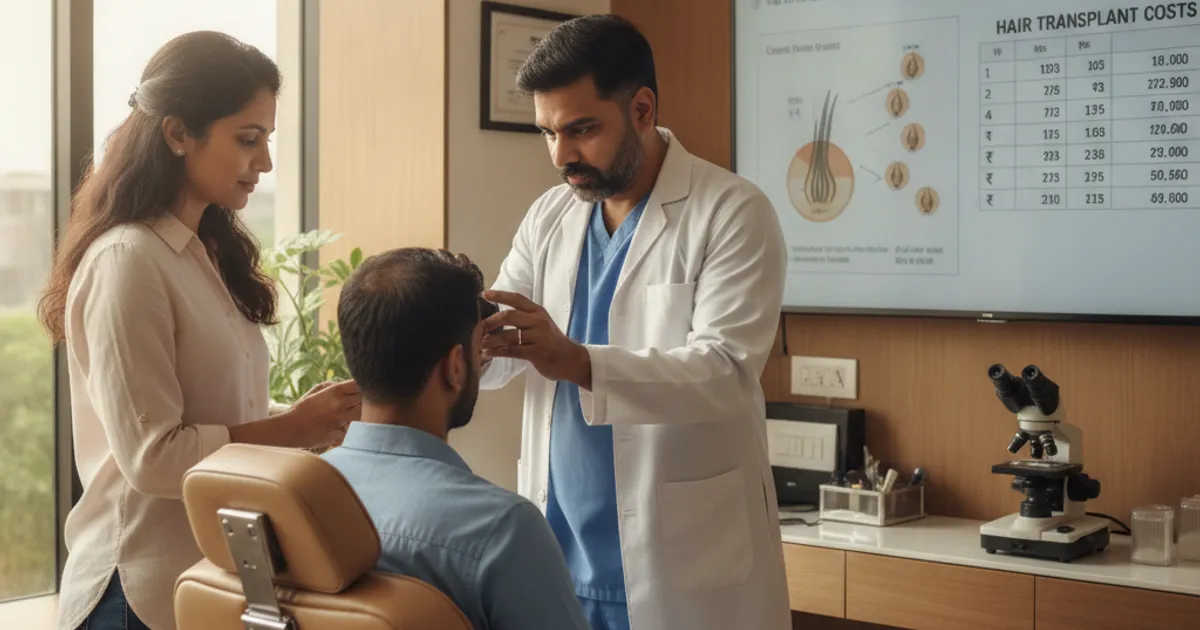
A good consultation is a diagnostic appointment, not a sales pitch. You should leave knowing your stage, your donor density, and what options fit your situation. Bring your partner if you want a second set of ears, especially if they were the one who noticed the change.
- A scalp examination, often with a magnified camera to measure density and miniaturization.
- A discussion of your medical history, medications, and family pattern of hair loss.
- An honest assessment of whether you're a candidate for surgery, medication, or both.
- A clear explanation of what results are realistic for your stage and donor supply.
- Time to ask questions without pressure to book on the spot.
Aftercare and Recovery: What You and Your Partner Should Know
If you go ahead with a transplant, recovery is a shared project. The first week is the most hands-on, and having someone who can help with the awkward parts makes it much easier. Plan the logistics before the procedure, not after.
- Arrange the first two or three days off work and keep travel minimal.
- Stock up on gentle shampoo, a soft pillow, and loose hats before the procedure.
- Expect redness, scabbing, and some swelling in the first week. This is normal.
- Avoid strenuous exercise, swimming, and direct sun for the period your clinic advises.
- Plan for the shedding phase around weeks two to eight. It looks alarming but is part of the cycle.
- Take progress photos at the same intervals so you can see change objectively rather than guessing.
Choosing a Clinic: Key Questions to Ask
The clinic matters more than almost any other variable. Ask the same questions of every clinic you contact and compare the answers side by side. If a clinic dodges a question, that's your answer.
- Who performs the procedure, and does the same person handle the incisions and the graft placement?
- How many procedures of this type does the clinic perform in a typical month?
- What's included in the quoted price, and what's billed separately?
- What does the clinic do if the result doesn't meet expectations?
- Can you speak to past patients or see unedited before-and-after photos?
- What follow-up care is provided in the first year?
FAQ: When Your Partner Notices Hair Loss First
Should I be worried if my partner noticed my hair loss before I did?
Not worried, but it's worth paying attention. Partners often see angles and lighting you don't, so they can spot gradual thinning earlier. Use it as a prompt to document what's happening with photos and, if you want, get a professional assessment.
How do I bring up hair loss with my partner without it turning into an argument?
Keep it specific and non-judgmental. Talk about what you've observed, not what you think they should do. Ask what they've noticed and whether they want to look into options. If they're not ready, drop it and revisit later.
Can hair loss be reversed if it's caught early?
Sometimes it can be slowed or partially regrown with medication, depending on the cause. Early intervention generally gives you more options and better outcomes than waiting. A consultation can tell you what's realistic in your case.
How long should we wait before deciding on a hair transplant?
There's no fixed timeline, but most clinics suggest stabilizing loss with medication first if you're a candidate. That gives you a clearer picture of your donor area and reduces the risk of needing a second procedure soon after.
More Guides
- Hair Transplant Graft Count: How Many Do You Need?
How many grafts for a hair transplant? Learn how graft counts are estimated, typical ranges by Norwood stage, and what to confirm before surgery.
- How to Choose a Hair Transplant Surgeon: Credentials to Check
Learn how to choose a hair transplant surgeon by checking credentials, board certification, training, and real patient results. A practical guide.
- Costco Finasteride: Price, Membership & Prescription Steps
A practical guide to getting finasteride at Costco: membership rules, prescription steps, generic vs. brand costs, and aftercare planning.
- Smoking and Hair Transplant Healing: What to Know
Smoking slows hair transplant healing and threatens graft survival. Learn why to stop before surgery, how long to avoid nicotine after, and recovery tips.