
What Happens 1 Month After a Hair Transplant?
One month after a hair transplant, shock loss peaks and the scalp looks patchy. Here's what's normal, what to avoid, and when real growth starts.
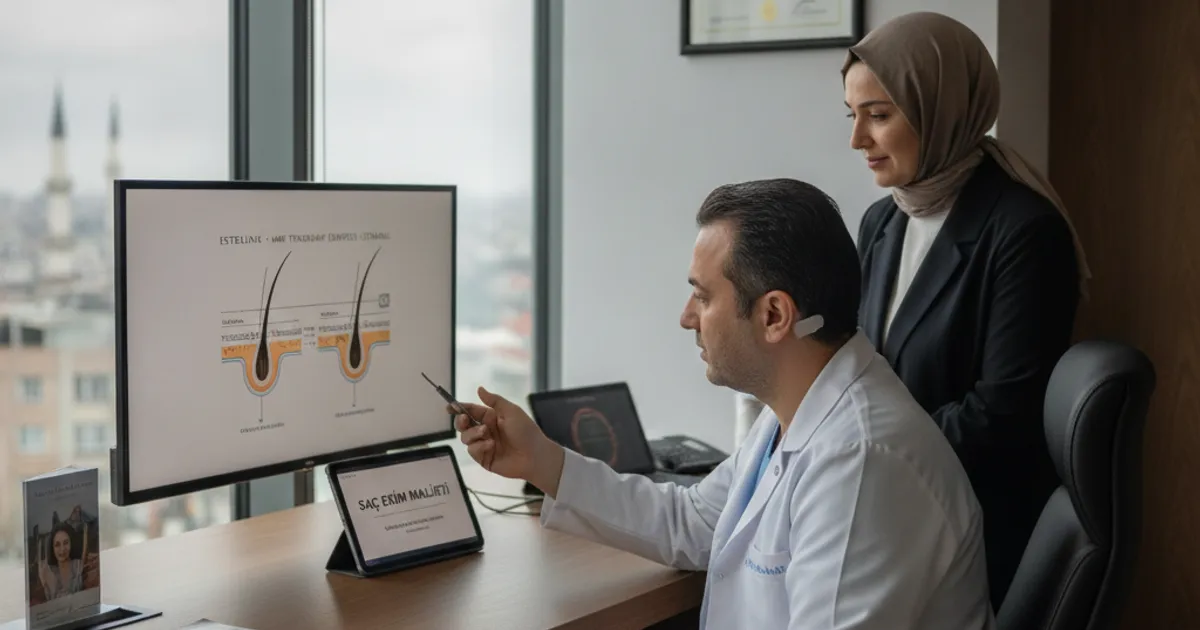
One month after a hair transplant is usually the ugliest part of the whole process. The transplanted hairs have mostly shed, the donor area is still pink or tender, and it looks like nothing was done at all. That is normal, and it is temporary.
What should you expect 1 month after a hair transplant?
At the 4-week mark, most patients are in the shedding phase. The grafts are alive and anchoring under the skin, but the hair shafts themselves fall out. You will likely see fewer hairs than you had right after surgery, and the scalp may look thinner than before the procedure. This is called shock loss, and it happens to almost everyone.
Is it normal to lose hair 1 month after a hair transplant?
Yes. Losing transplanted hair around the one-month mark is the rule, not the exception. The trauma of surgery pushes many follicles into a resting phase, and the old hair shafts fall out over a few weeks. It does not mean the transplant failed.
- Shedding usually starts 2 to 4 weeks after surgery and peaks around week 4 to 6.
- Both transplanted and some surrounding native hairs can shed.
- The follicle stays in the scalp — only the hair shaft comes out.
- New growth from those same follicles usually begins around month 3.
What does the scalp look like at 1 month post-transplant?
The scalp at one month is usually a mix of pinkness, small scabs that have mostly healed, and patchy hair. The donor area at the back may still feel tight or look slightly red. Some people have mild numbness or itching.
- Recipient area: thin, patchy, or nearly bald-looking with pink or reddish skin.
- Donor area: may still be tender, pink, or slightly raised.
- Scabs: usually gone by week 2 to 3, but a few flakes can linger.
- Swelling: should be fully resolved by week 2.
- Sensation: numbness or tingling in the donor or recipient zone is common.
What can you do (and not do) 1 month after a hair transplant?
By one month, most clinics clear you for normal washing and light exercise. But you still need to protect the grafts from heavy trauma, harsh chemicals, and direct sun. Here is a simple do-and-don't list.
| Activity | OK at 1 month? | Notes |
|---|---|---|
| Gentle washing with mild shampoo | Yes | Use fingertips, no scratching. |
| Light cardio (walking, cycling) | Yes | Avoid heavy sweating if possible. |
| Weightlifting / intense gym | Usually no | Wait until 4–6 weeks unless cleared. |
| Swimming in pools or sea | No | Chlorine and bacteria risk. |
| Dyeing or chemical treatments | No | Wait at least 3–6 months. |
| Direct sun exposure | No | Wear a loose hat or use SPF 30+. |
| Sleeping face-down | No | Can irritate grafts. |
| Sauna / steam room | No | Heat and sweat can stress follicles. |
When will you see real hair growth after a hair transplant?
Real growth does not happen at one month. The first visible new hairs usually appear around month 3 to 4, and the density fills in between month 6 and 12. Final results are judged at 12 to 18 months.
| Timeline | What's happening |
|---|---|
| Week 1–2 | Healing, scabs form and fall off. |
| Week 3–6 | Shock loss — transplanted hairs shed. |
| Month 2–3 | Scalp looks mostly bald in recipient area. |
| Month 3–4 | First new hairs push through. |
| Month 6 | Visible improvement in density. |
| Month 12 | Most growth is complete. |
| Month 18 | Final result. |
How should you care for your scalp 1 month after a hair transplant?
Scalp care at one month is about keeping the area clean without irritating it. Your clinic will give you specific instructions, but these general rules apply to most patients.
- Wash gently once a day with a mild, fragrance-free shampoo.
- Pat dry with a soft towel — do not rub.
- Avoid scratching or picking at flakes.
- Use SPF 30+ on exposed scalp if you go outside.
- Keep the scalp moisturised if your clinic recommends it.
- Do not use minoxidil or other topicals unless your doctor says so.
What should you ask your clinic at the 1-month mark?
Your one-month follow-up is a good time to check in and confirm you are on track. Bring a list of questions so you do not forget anything.
- Is my shedding within the normal range?
- When can I restart minoxidil or finasteride?
- When can I exercise heavily or swim?
- Are the pink or red areas on my scalp normal?
- When should I expect to see new growth?
- Do I need another follow-up before month 3?
Frequently asked questions about 1 month after a hair transplant
Can I wear a hat 1 month after a hair transplant?
Yes, a loose-fitting hat is fine as long as it does not rub or pull on the grafts. Avoid tight caps or helmets that press directly on the recipient area.
Why does my scalp look worse at 1 month than before surgery?
Because of shock loss. The transplanted hairs shed, and some native hairs around them also fall out temporarily. The scalp often looks thinner before it starts to recover.
Is it normal to still have redness at 1 month?
Mild pinkness or redness in the recipient area can last several weeks. It usually fades by month 2 to 3. If it is painful, swollen, or oozing, contact your clinic.
When can I go back to the gym after a hair transplant?
Most clinics allow light cardio at 2 weeks and full workouts at 4 to 6 weeks. At one month, you may still need to avoid heavy lifting or activities that cause excessive sweating.
More Guides
- Hair Transplant and Blood Thinners: Safety and Timing
Can you have a hair transplant on blood thinners? Learn why they matter, which ones raise bleeding risk, how long to stop before surgery, and when to restart.
- Finasteride and PSA Testing: What You Need to Know
Finasteride lowers PSA levels, so your test results need careful interpretation. Learn how finasteride affects PSA, the adjustment factor, and what to tell your
- Can You Cure a Receding Hairline? What's Realistic
Can you cure a receding hairline? Learn what's realistic with medications, transplants, and lifestyle changes, plus expected results and costs.
- Minoxidil Hair Thinning Before Growth: Is It Normal?
Is minoxidil hair thinning before growth normal? Yes, it's a common sign the treatment is working. Learn why it happens, how long it lasts, and when to worry.