
Hair Transplant Shedding at 1 Month: Is It Normal?
Hair transplant shedding at 1 month is completely normal. Learn why shock loss happens, how much shedding is expected, and when new growth begins.
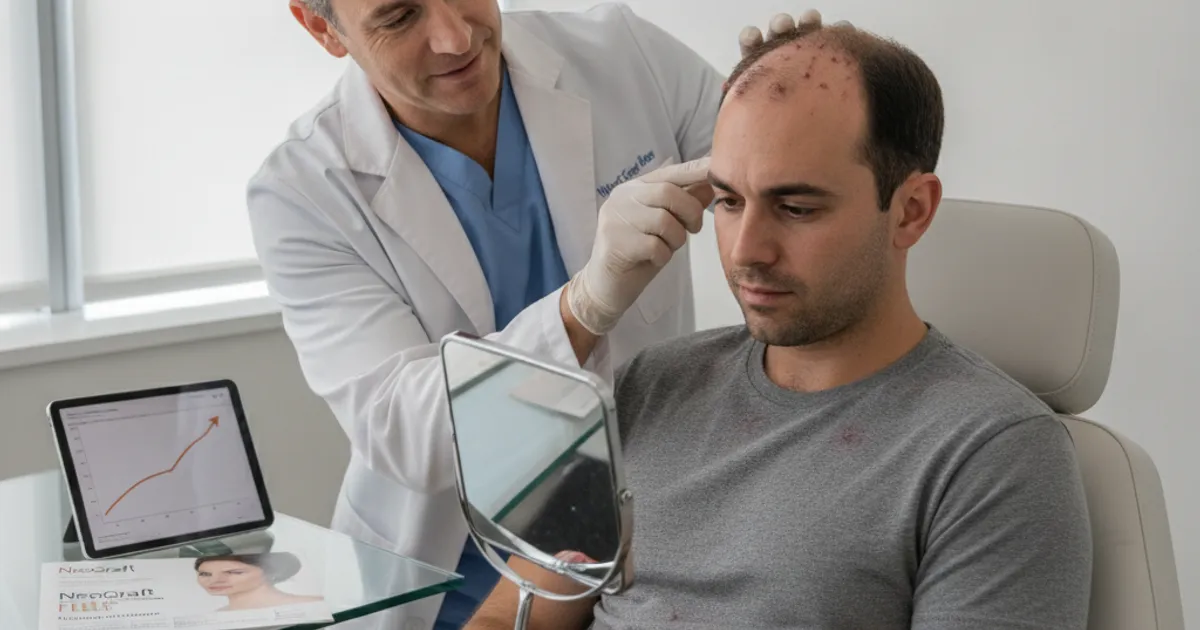
Hair transplant shedding at 1 month is completely normal and expected. The transplanted hairs enter a resting phase and fall out as part of the natural hair growth cycle, making way for new growth that typically begins around month three.
What is hair transplant shedding at 1 month?
At around four weeks after your procedure, you may notice dozens or even hundreds of short hairs falling out in the shower, on your pillow, or while combing. This is called shock loss or shedding, and it happens because the transplanted follicles have been moved from one part of your scalp to another. The trauma of surgery pushes those hairs into a resting phase called telogen. Once that phase ends, the hair shaft falls out. The follicle itself stays alive underneath the skin and will eventually produce a new hair.
- Shedding usually starts 2 to 4 weeks after surgery and peaks around week 4 to 6.
- The hairs that fall out are the transplanted ones, not your original native hair (though some native hair near the recipient area can also shed temporarily).
- The scalp may look patchy or thinner than before, which can be alarming but is temporary.
- By month 3, new growth typically begins, and by month 6 you should see noticeable improvement.
Why does shedding happen after a hair transplant?
Shedding is a biological response to stress on the hair follicles. During a hair transplant, each follicle is extracted, handled, and re-implanted. That process disrupts the hair's normal growth cycle. The follicle goes into a dormant state, and the existing hair shaft is pushed out. This is not a sign of failure. It is a sign that your body is healing and resetting the follicles for new growth.
- Surgical trauma: The physical manipulation of follicles triggers a resting phase.
- Reduced blood supply: Temporary changes in blood flow to the recipient area can affect hair cycling.
- Anesthesia and medication: These can also contribute to temporary shedding.
- Individual healing response: Some people shed more than others, but the timeline is similar.
How much shedding is normal at 1 month?
There is no exact number, but most patients lose a significant portion of the transplanted hairs by week 4 to 6. It is common to see 50 to 100 hairs per day during this phase. The amount varies based on the number of grafts, your natural hair cycle, and how you care for your scalp. The table below shows what to expect at each stage.
| Time After Transplant | What's Happening | Typical Shedding |
|---|---|---|
| Week 1–2 | Scabs form and fall off; transplanted hairs are secure | Minimal shedding |
| Week 3–4 | Shock loss begins; hairs enter resting phase | Moderate to heavy shedding |
| Week 5–6 | Peak shedding; most transplanted hairs fall out | Heavy shedding |
| Month 3–4 | New hair starts growing from follicles | Shedding stops |
| Month 6–12 | Hair thickens and matures | No shedding from transplant |
What does normal vs. concerning shedding look like?
Normal shedding is gradual, affects the transplanted area, and comes with no other symptoms. Concerning shedding is sudden, patchy, or accompanied by pain, redness, or pus. If you are unsure, compare your situation to the table below.
Normal Shedding
- ✓ Happens between weeks 2 and 6
- ✓ Hairs fall out evenly across the recipient area
- ✓ No pain, swelling, or discharge
- ✓ Scalp looks healthy, just thinner
- ✓ Shedding stops by month 3
Concerning Shedding
- ✓ Sudden loss of large patches
- ✓ Shedding continues past month 3
- ✓ Redness, tenderness, or pus at the site
- ✓ Fever or feeling unwell
- ✓ Hair falls out in clumps with scalp skin attached
What can you do to manage shedding at 1 month?
You cannot stop shedding, but you can support your scalp and reduce stress during this phase. Follow your surgeon's aftercare instructions carefully. Be gentle with your hair, avoid harsh chemicals, and give your body time to heal. Most importantly, do not panic. Shedding is a sign that the process is working.
- Wash your scalp gently with a mild shampoo as directed by your clinic.
- Avoid scratching, picking, or rubbing the recipient area.
- Skip harsh styling products, dyes, and heat tools for at least a month.
- Take any prescribed medications or supplements as instructed.
- Stay hydrated and eat a balanced diet to support healing.
- Protect your scalp from sun exposure with a hat or sunscreen (after the first week).
When will hair start growing back after shedding?
New hair typically starts to emerge around month 3 to 4 after the transplant. At first, the hairs are fine and may look thin. By month 6, you should see noticeable density. Full results are usually visible at 12 to 18 months. The timeline below shows the typical progression.
| Month | What to Expect |
|---|---|
| Month 1 | Shedding peaks; scalp may look patchy |
| Month 2 | Shedding slows; follicles are dormant |
| Month 3 | First new hairs appear; growth begins |
| Month 4–6 | Hair thickens and darkens; density improves |
| Month 9–12 | Significant growth; styleable hair |
| Month 12–18 | Final results; hair matures fully |
Frequently asked questions about hair transplant shedding at 1 month
Is it normal to lose transplanted hair at 1 month?
Yes, it is completely normal. Most patients lose the majority of their transplanted hairs between weeks 2 and 6. This is called shock loss and is part of the healing process.
Can I prevent shedding after a hair transplant?
No, you cannot prevent shedding. It is a natural part of the hair growth cycle after surgery. Gentle care and following your surgeon's instructions can help you manage it comfortably.
What if I don't shed at 1 month?
Some people shed less or later than others. If you have no shedding and no other symptoms, it is not necessarily a problem. However, mention it to your clinic at your follow-up appointment.
When should I worry about shedding?
Contact your clinic if shedding is accompanied by severe pain, redness, swelling, pus, or fever. Also, if shedding continues past month 3, get it checked.
For more detailed information on what to expect during recovery, including cost breakdowns and clinic listings, explore our related guides.
More Guides
- Hair Transplant and Blood Thinners: Safety and Timing
Can you have a hair transplant on blood thinners? Learn why they matter, which ones raise bleeding risk, how long to stop before surgery, and when to restart.
- Finasteride and PSA Testing: What You Need to Know
Finasteride lowers PSA levels, so your test results need careful interpretation. Learn how finasteride affects PSA, the adjustment factor, and what to tell your
- Can You Cure a Receding Hairline? What's Realistic
Can you cure a receding hairline? Learn what's realistic with medications, transplants, and lifestyle changes, plus expected results and costs.
- Minoxidil Hair Thinning Before Growth: Is It Normal?
Is minoxidil hair thinning before growth normal? Yes, it's a common sign the treatment is working. Learn why it happens, how long it lasts, and when to worry.