
Alopecia Treatment for Men: Full Options Compared
Compare alopecia treatments for men: minoxidil, finasteride, PRP, microneedling, LLLT, FUE and FUT. Learn planning, recovery, aftercare and cost factors.
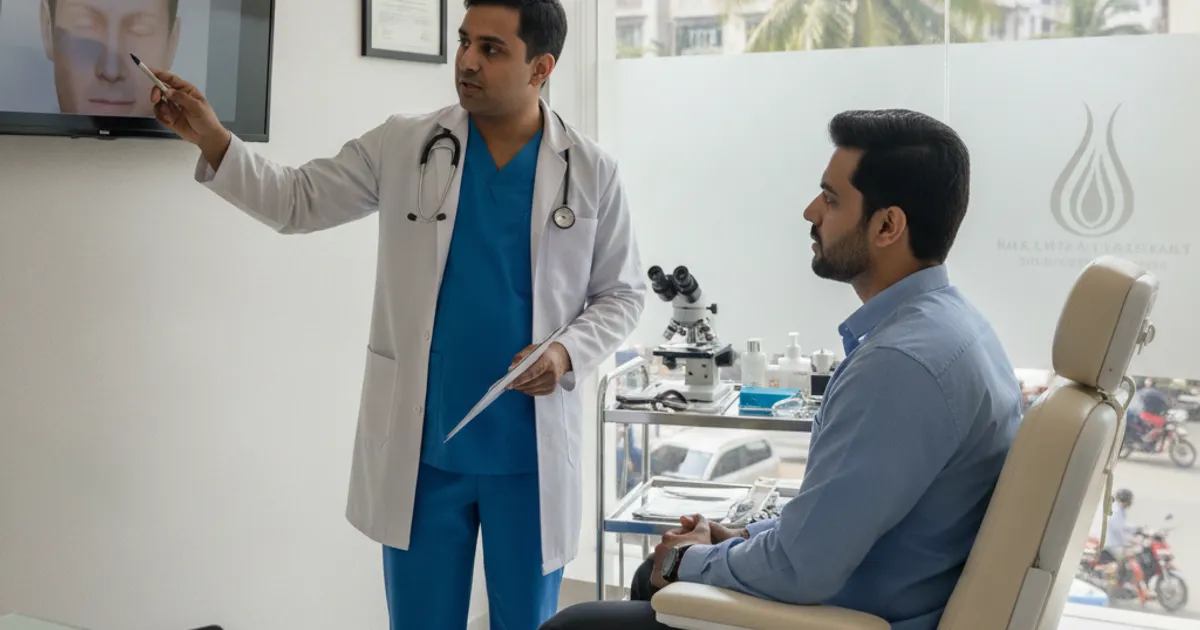
If you're researching alopecia treatment for men, you've probably noticed the options range from a bottle of minoxidil to a full surgical hair transplant. Each approach works differently, costs differently, and suits different stages of hair loss. This guide compares the main options in plain terms, explains what planning and recovery actually look like, and gives you a practical checklist for choosing a clinic. We'll cover what the treatments do and what to expect, without overpromising.
Understanding Male Pattern Hair Loss: Stages and Treatment Goals
Male pattern baldness (androgenetic alopecia) is driven by genetics and hormones, mainly DHT. It usually starts with a receding hairline or thinning crown and progresses over years. The Norwood scale is the common way to stage it, from early thinning (often around Norwood 2–3) to advanced loss (Norwood 5–7). Note that these ranges are general knowledge and not verified against our database context. Your stage matters because it determines which treatments can realistically help. The goal isn't always a full head of hair — it's stabilising loss, preserving what you have, and restoring density where it counts.
- Early stage: mild thinning at temples or crown; medical therapy often enough to maintain.
- Moderate stage: visible recession and thinning; combination therapy or a transplant may be considered.
- Advanced stage: significant baldness; surgery may require careful planning and donor management.
- Treatment goals: slow progression, regrow where possible, and set realistic expectations.
Medical Treatments: Minoxidil, Finasteride, and Combination Therapy
These are the first-line options for most men, and they're the only ones with decades of clinical evidence (a general-knowledge claim, not verified against our database context). Minoxidil is a topical (or oral, off-label) vasodilator that extends the growth phase of hair follicles. Finasteride is an oral prescription that blocks DHT production. Used together, they address two different mechanisms and tend to work better than either alone. Neither is a quick fix — you need to stick with them for months, and results fade if you stop. Costs vary widely by country and pharmacy, so check local prices.
- Minoxidil: apply twice daily (foam or liquid); can cause scalp irritation; takes 4–6 months to show results (timeline is general knowledge, not from our database).
- Finasteride: once-daily pill; prescription required; small risk of sexual side effects that usually resolve on stopping (general knowledge, not verified against our database).
- Combination therapy: minoxidil plus finasteride is common and often more effective than monotherapy.
- Maintenance: both require ongoing use to keep gains.
| Treatment | How it works | Typical use | Key drawback |
|---|---|---|---|
| Minoxidil | Extends hair growth phase | Early to moderate thinning | Daily application; irritation |
| Finasteride | Blocks DHT production | Early to moderate thinning | Prescription; possible side effects |
| Combination | Addresses two mechanisms | Moderate loss | Ongoing cost and commitment |
Non-Surgical Procedures: PRP, Microneedling, and Low-Level Laser Therapy
These are adjuncts, not replacements for medical therapy. PRP (platelet-rich plasma) involves injecting your own concentrated platelets into the scalp to stimulate follicles. Microneedling creates tiny punctures that trigger healing and can boost minoxidil absorption. Low-level laser therapy (LLLT) uses red light devices to improve follicle activity. Evidence is mixed but generally positive for early to moderate loss, especially when combined with minoxidil or finasteride. As with any treatment, costs vary by clinic and location, so check locally.
- PRP: in-clinic injections every few weeks initially, then maintenance; cost adds up.
- Microneedling: can be done at home with a derma roller or in clinic; keep it sterile.
- LLLT: helmets or combs used at home for 15–30 minutes several times a week (general knowledge, not from our database).
- Best used as add-ons to medical therapy, not standalone cures.
| Procedure | Evidence level | Best for | Commitment |
|---|---|---|---|
| PRP | Moderate (general knowledge, not verified against our database) | Early to moderate thinning | In-clinic sessions; ongoing |
| Microneedling | Moderate (general knowledge, not verified against our database) | Boosting topical absorption | Weekly at home or in clinic |
| LLLT | Moderate (general knowledge, not verified against our database) | Early thinning | Frequent home use |
Hair Transplant Options: FUE vs. FUT and What to Expect
When medical therapy isn't enough or you want to restore density, a hair transplant moves hair follicles from the back and sides of your scalp (donor area) to thinning areas. FUE (follicular unit extraction) removes individual grafts with tiny punches, leaving small dot scars. FUT (follicular unit transplantation) removes a strip of scalp and dissects it into grafts, leaving a linear scar. FUE is more popular now, but FUT can be better for larger sessions. Both are usually done under local anaesthesia and take a full day. Costs vary significantly by clinic, surgeon, and location, so always request a personalised quote.
- FUE: no linear scar, faster recovery, suitable for short haircuts; grafts harvested individually.
- FUT: linear scar, can yield more grafts in one session, often cheaper per graft.
- Expect shedding of transplanted hair in weeks 2–8; new growth starts around month 3–4 (timelines are general knowledge, not from our database).
- Final results typically visible at 12–18 months (general knowledge, not verified against our database).
| Feature | FUE | FUT |
|---|---|---|
| Scarring | Small dot scars | Linear scar |
| Recovery | Faster | Slightly longer |
| Graft yield per session | Moderate | Higher |
| Best for | Short hairstyles, smaller sessions | Larger sessions, budget-conscious |
Planning Your Treatment: Timeline, Recovery, and Aftercare
Planning matters as much as the procedure itself. If you're starting medical therapy, give it 6–12 months before judging results (general knowledge, not from our database). For a transplant, plan around work and social commitments — you'll need a few days off, and the scalp will be red and scabby for about a week. Aftercare is straightforward but non-negotiable: follow your clinic's washing instructions, avoid strenuous exercise for a couple of weeks, and protect the graft area from sun and friction. Most clinics provide a post-op kit and follow-up checks. Costs for aftercare products and follow-up visits vary, so ask for a full breakdown.
- Pre-op: stop smoking, avoid blood thinners, and get blood tests if requested.
- Day of procedure: eat breakfast, wear loose clothing, arrange a ride home.
- First week: sleep elevated, wash gently as instructed, avoid hats that rub.
- First month: no gym, swimming, or saunas; expect shedding.
- Long term: continue medical therapy to protect native hair.
How to Choose a Clinic and Avoid Common Pitfalls
The clinic matters more than the technique name. Look for a surgeon who performs the procedure regularly, shows consistent results, and is honest about what's achievable for your stage of loss. Avoid hard-sell packages, prices that seem too good to be true, and clinics that promise a full head of hair regardless of your donor supply. Ask who performs the surgery, how many grafts you need, and what happens if growth is poor. A good clinic will welcome these questions. Remember that prices vary widely, so compare quotes and check what's included.
- Check the surgeon's credentials and whether they are directly involved in the procedure.
- Ask for before-and-after photos of patients with similar hair loss to yours.
- Confirm what's included: consultations, follow-ups, medication, PRP.
- Read the contract: refund policies, revision policies, and hidden fees.
- Trust your gut — pushy sales tactics are a red flag.
Frequently Asked Questions
Can I combine medical treatment with a hair transplant?
Yes, and it's common. Most surgeons recommend stabilising hair loss with minoxidil and/or finasteride before surgery, and continuing afterwards to protect your native hair. This improves long-term results.
How long before I see results from minoxidil or finasteride?
Expect at least 4–6 months for early changes and 12 months for a fair assessment (general knowledge, not from our database). Hair growth cycles are slow, so consistency matters more than any single product.
Is FUE always better than FUT?
Not always. FUE leaves less visible scarring and suits short haircuts, but FUT can deliver more grafts in one session and may be better for advanced loss. The right choice depends on your donor area and goals.
What happens if I stop using minoxidil or finasteride?
Any hair you gained or maintained will likely shed over the following months, and loss will resume its natural course. These treatments are ongoing commitments, not one-off fixes.
More Guides
- How Long After Finasteride Before a Hair Transplant?
Planning a hair transplant while on finasteride? Learn the typical waiting period, why timing matters, and how to coordinate with your surgeon for best results.
- Early Symptoms of Hair Loss: What to Watch For First
Learn the early symptoms of hair loss, how to track them, and when to see a specialist. Plan ahead with treatment options and costs.
- Alopecia Treatment: A Comprehensive Guide
A practical guide to alopecia treatment: types, diagnosis, medications, surgery, recovery timeline, and aftercare. Plan your hair restoration with confidence.
- Hair Loss Causes: What You Can and Can't Control
Understand hair loss causes, what's controllable, and how to plan a transplant. Practical guide to factors, aftercare, and when to see a specialist.