
Capillus Laser Cap Review: Does It Really Regrow Hair?
Capillus Laser Cap review: how it works, evidence, usage, results, side effects, cost, and how it compares to other hair loss treatments.
What Is the Capillus Laser Cap and How Does It Work?
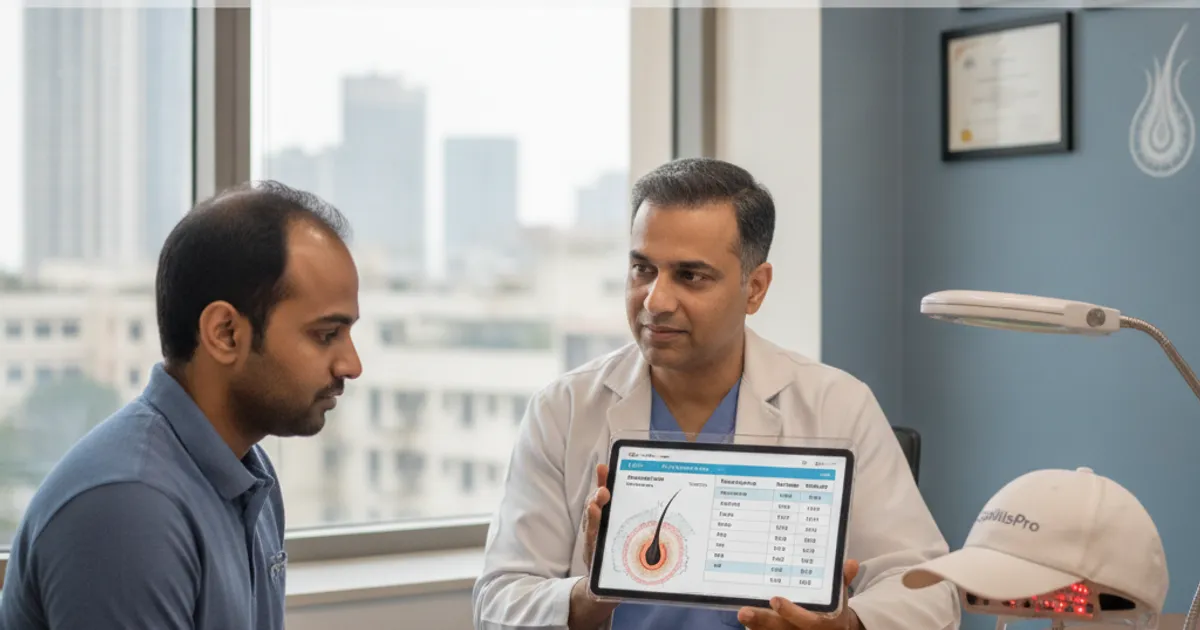
The Capillus Laser Cap is a wearable device that uses low-level laser therapy (LLLT) to stimulate hair follicles. It looks like a baseball cap lined with laser diodes that emit red light. You wear it for a few minutes a day, and the idea is that the light energy penetrates the scalp, boosts blood flow, and re-energizes follicles that have miniaturized due to androgenetic alopecia (male and female pattern hair loss).
Unlike a clinic-based laser treatment, the Capillus is a take-home device. You buy it once and use it on your own schedule. It's not a drug, so it doesn't come with the systemic side effects of finasteride or the topical irritation some people get from minoxidil. But it's also not a quick fix — consistency is everything.
- Uses laser diodes (not LEDs) to deliver light energy to the scalp
- Cordless, rechargeable, and designed to fit under a regular cap
- Typical treatment time varies by model — check the manufacturer's instructions
- Available in several versions (e.g., CapillusUltra, CapillusPlus, CapillusPro) with different diode counts
The Evidence: Does Low-Level Laser Therapy Actually Grow Hair?
Low-level laser therapy for hair loss has been studied for decades. The short answer: yes, there's evidence it can help, but the effect is modest and best for people with early to moderate thinning. It's not going to regrow a full head of hair on a bald scalp.
Most studies use devices with a specific number of diodes and wavelengths. The Capillus devices are cleared based on clinical data showing improvements in hair count and hair density compared to sham devices. But many of these studies are small, industry-funded, or short-term. Independent research is more mixed.
- Several randomized controlled trials show statistically significant increases in hair count with LLLT vs. sham.
- Effects are most consistent in men with mild-to-moderate androgenetic alopecia and in women with pattern thinning.
- Results are typically measured over several months — not overnight.
- LLLT is often studied as an add-on to minoxidil or finasteride, not as a standalone replacement.
- Long-term data beyond 1–2 years is limited.
How to Use the Capillus Laser Cap: Dosage, Frequency, and Best Practices
Using the Capillus is straightforward, but you have to actually do it. Most models require daily use for the first several months. Missing days can slow or stall results. The device has a built-in timer and sometimes a companion app to track sessions.
- Use it every day, ideally at the same time, for the recommended duration.
- Make sure your scalp is clean and dry — oils or product can block light penetration.
- Don't wear it over thick hair if the diodes can't reach the scalp; part your hair or choose a model with more diodes.
- Charge it fully before each session if it's cordless.
- Don't use it more than recommended — more isn't better and could theoretically cause irritation.
| Model | Best For |
|---|---|
| CapillusUltra | Early thinning, maintenance |
| CapillusPlus | Moderate thinning, larger areas |
| CapillusPro | Advanced thinning, full scalp coverage |
Expected Results and Timeline: What to Realistically Expect
If you're expecting a dramatic transformation in a month, you'll be disappointed. Laser caps are slow. Most people who respond see the first signs of change around 3 to 4 months, with more noticeable improvement by 6 months. If you don't see anything by 6 months of consistent use, it's probably not working for you.
- Best results in people with active follicles — not slick bald areas.
- Works better as part of a combo (with minoxidil or finasteride) than alone.
- You must keep using it to keep the hair you gain.
- Individual response varies widely — some people see nothing.
Side Effects and Risks of Laser Caps
Laser caps are generally well-tolerated. The most common complaints are mild: scalp tingling, warmth, or a slight headache during or after use. These usually go away as you adjust. Serious side effects are rare.
- Scalp irritation, redness, or dryness
- Temporary headache or lightheadedness
- Feeling of warmth or tingling on the scalp
- Very rare: allergic reaction to materials
- Not recommended for people taking photosensitizing medications or with certain skin conditions
Who Is a Good Candidate for the Capillus Laser Cap?
The Capillus is not for everyone. It works best for people with androgenetic alopecia who still have visible hair follicles. If an area is completely bald and shiny, there's no follicle to stimulate. It's also not a treatment for scarring alopecia, alopecia areata, or hair loss from medical conditions unless cleared by a doctor.
- Men with Norwood 2–5 pattern hair loss
- Women with Ludwig I–II pattern thinning
- People who want a drug-free option or can't tolerate minoxidil/finasteride
- Those willing to use it daily for at least 6 months
- People with realistic expectations — it's a helper, not a miracle
| Candidate Profile | Likely Benefit | Notes |
|---|---|---|
| Early thinning, still has density | Good | Best chance of visible improvement |
| Moderate thinning, visible scalp | Moderate | May need combination therapy |
| Advanced baldness, smooth scalp | Poor | Follicles likely gone; consider transplant |
| Post-transplant patient | Possible | Some doctors recommend LLLT to support healing |
How Much Does the Capillus Laser Cap Cost?
The Capillus is a premium device, and pricing reflects that. You're paying for regulatory clearance, clinical data, and a brand name. There are cheaper laser caps on the market, but they may not have the same regulatory clearance or diode quality. Prices vary by model and promotions, so check the manufacturer's website for current pricing.
- CapillusUltra: typically the lowest price point
- CapillusPlus: mid-range
- CapillusPro: highest price
- Financing options may be available through the manufacturer
- Insurance rarely covers laser caps for hair loss
How the Capillus Laser Cap Compares to Other Hair Loss Treatments
Laser caps are one option among several. The best treatment depends on your stage of hair loss, budget, and how much effort you're willing to put in. Here's a quick comparison.
| Treatment | How It Works | Pros | Cons |
|---|---|---|---|
| Capillus Laser Cap | Low-level laser therapy | Drug-free, no systemic side effects, convenient | Slow, modest results, daily use required |
| Minoxidil (topical) | Vasodilator, improves blood flow | Cheap, OTC, proven | Daily use, scalp irritation, shedding phase |
| Finasteride (oral) | DHT blocker | Effective for many men | Prescription, sexual side effects possible |
| Hair Transplant | Surgical relocation of follicles | Permanent, dramatic results | Expensive, invasive, recovery time |
| PRP Therapy | Platelet-rich plasma injections | Can boost density, natural | Multiple sessions, variable results |
- Laser cap + minoxidil is a common combo — they work differently and may stack.
- Finasteride is generally more effective for men but comes with more side effect risk.
- Hair transplant is the only option that restores hair in bald areas — but it's surgery.
- PRP can be used alongside laser caps, but evidence for PRP alone is mixed.
Reputation and What the Device Contains
Capillus is one of the better-known brands in the laser cap space. It's marketed as FDA-cleared, which puts it ahead of many no-name devices. But it's not without criticism. Some users report no results, and the price is high compared to generic laser caps. Customer reviews are mixed — some love it, some feel it was a waste of money.
- Marketed as FDA-cleared for androgenetic alopecia
- Uses laser diodes, not LEDs — diodes are more powerful and focused
- Rechargeable battery, cordless design
- Built-in timer and sometimes Bluetooth app tracking
- Comes with a carrying case and charger
- Warranty varies by model — check before buying
Frequently Asked Questions
Is the Capillus Laser Cap FDA-approved?
It's FDA-cleared, not FDA-approved. That means the manufacturer demonstrated to the FDA that the device is substantially equivalent to other legally marketed devices for the same intended use. It's cleared for androgenetic alopecia in men and women.
How long until I see results from the Capillus?
Most people who respond see early changes around 3–4 months, with more noticeable improvement by 6 months. If you see nothing after 6 months of daily use, it's unlikely to work for you.
Can I use the Capillus with minoxidil or finasteride?
Yes. In fact, many doctors recommend combining treatments because they work through different mechanisms. LLLT may enhance the effects of minoxidil or finasteride, though more research is needed.
Does the Capillus work for women?
Yes, it's cleared for both men and women with pattern hair loss. Women with diffuse thinning or early-stage androgenetic alopecia may see benefits, but results vary.
Related Guides and Next Steps
If you're considering a laser cap, it's worth talking to a dermatologist or hair restoration specialist first. They can assess your type of hair loss and tell you whether LLLT is likely to help. If you're also thinking about a transplant or other procedures, browse our directory to find a clinic near you.
More Guides
- Finasteride for Baldness: What It Can and Can't Do
Finasteride is a proven hair loss treatment, but it's not a cure. Learn how it works, dosage, side effects, and how it compares to other options.
- DHT-Blocking Shampoos: What Works and What's Marketing?
Do DHT-blocking shampoos really grow hair? We break down the science, evidence, usage, side effects, costs, and how they compare to other treatments.
- Clascoterone for Hair Loss: What the Research Shows
Clascoterone is a topical anti-androgen being studied for hair loss. Learn how it works, the evidence, how to use it, side effects, cost, and how it compares.
- Hims Minoxidil Spray: Ingredients, Results, and Cost
Hims Minoxidil Spray review: ingredients, how it works, results timeline, side effects, cost, and how it compares to other hair loss treatments.