
Does a Hair Transplant Look Natural?
Yes, a hair transplant can look completely natural when a skilled surgeon designs the hairline and places grafts correctly. Here's what makes results look real.
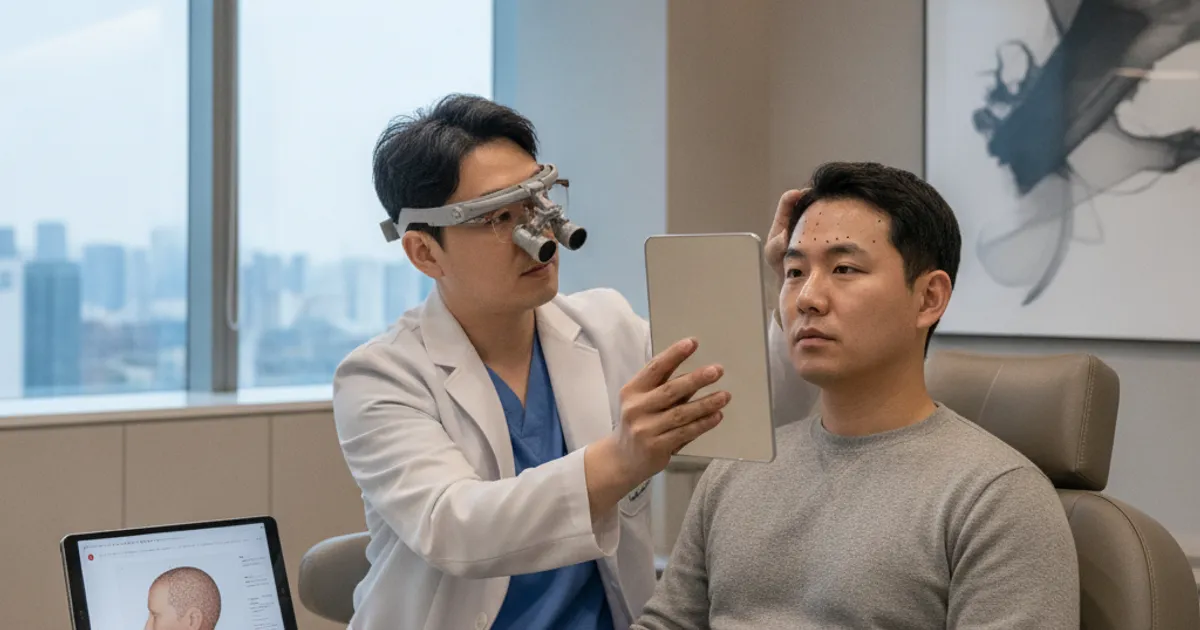
Yes, a hair transplant can look completely natural. Modern techniques place individual follicular units at the correct angle, direction and density, so the new hair blends with your existing hair and grows the same way. The catch is that naturalness depends almost entirely on the surgeon's skill, the hairline design and the technique used, not on the procedure itself.
What makes a hair transplant look natural?
Naturalness comes down to how closely the transplanted hair mimics the hair you already have. Real hair does not grow in straight rows or at identical angles. It grows in irregular groupings of one to four hairs, each with its own direction and tilt. A good transplant copies that pattern.
- Graft placement: single hairs at the front hairline, denser multi-hair grafts further back.
- Angle and direction: grafts tilted to match how your natural hair falls and whorls.
- Irregular hairline: a soft, slightly uneven line rather than a straight ruler edge.
- Density gradient: a gradual transition from sparse at the hairline to dense in the mid-scalp.
- Colour and texture match: donor hair chosen to blend with your existing hair.
- Mature hairline shape: a design that suits your age, not a teenage hairline on a 50-year-old.
How does surgeon skill affect naturalness?
The surgeon's experience is the single biggest factor in whether a transplant looks natural. Two patients with the same hair loss can get completely different results depending on who does the work. Skill shows up in the planning, the graft handling and the placement.
- Hairline design: an experienced surgeon creates a soft, irregular line that ages well.
- Graft survival: careful handling keeps more follicles alive, which means better density.
- Angle control: placing each graft at the right tilt takes practice and a trained eye.
- Donor management: avoiding over-harvesting so the back of the scalp still looks full.
- Realistic planning: telling you what is achievable instead of promising a full head of hair.
Which technique looks more natural: FUE or FUT?
Both FUE and FUT can produce natural-looking results in the right hands. The technique matters less than the surgeon's skill. FUE leaves tiny dot scars that are easy to hide with short hair, while FUT leaves a single linear scar that a longer hairstyle can cover. For most people wanting a natural look with flexibility on hairstyle, FUE is the more popular choice.
| Factor | FUE | FUT |
|---|---|---|
| Scarring | Tiny dot scars, easy to hide | Single linear scar |
| Hairstyle flexibility | Can wear hair very short | Needs some length to cover the strip scar |
| Graft quality | Excellent with skilled surgeon | Excellent with skilled surgeon |
| Natural look | Yes, when placed correctly | Yes, when placed correctly |
| Recovery | Faster, less discomfort | Slightly longer, more discomfort |
| Best for | Most patients, especially short hair | Large sessions, tighter budgets |
How does hairline design impact natural results?
The hairline is the first thing people see, so it makes or breaks naturalness. A hairline that is too low, too straight or too dense looks obviously transplanted. A good hairline follows the natural recession pattern for your age and uses single-hair grafts at the front edge to create a soft transition.
- Position: placed where your natural hairline would be, not lower to look younger.
- Shape: a gentle M or slight widow's peak, not a straight line.
- Density: softer at the front edge, denser behind it.
- Graft type: single hairs at the very front, multi-hair grafts further back.
- Temple points: subtle recession at the temples to frame the face naturally.
Can a hair transplant look unnatural?
Yes, and it happens more often than clinics admit. Unnatural results usually come from poor planning or a surgeon trying to do too much with too few grafts. The good news is that most causes are avoidable.
- Pluggy look: old-fashioned large grafts create a doll-hair appearance.
- Straight hairline: a ruler-straight line that does not match natural growth.
- Too low a hairline: placed on the forehead instead of the natural recession line.
- Wrong angle: hairs pointing the wrong way or growing perpendicular to the scalp.
- Over-harvested donor: thinning or patchy look at the back of the head.
- Too dense at the front: a thick wall of hair that looks fake.
- Mismatched colour or texture: donor hair that does not blend with the rest.
How can you ensure a natural-looking hair transplant?
You cannot control every variable, but you can stack the odds in your favour. The most important step is choosing the right surgeon and being clear about what you want.
- 1. Research surgeons thoroughly: look at real before-and-after photos of patients with similar hair loss.
- 2. Check for natural hairlines in results: look for soft, irregular lines, not straight edges.
- 3. Ask about graft placement: confirm they use single hairs at the front and place at natural angles.
- 4. Discuss your age and future loss: a good surgeon plans for long-term hair loss, not just today.
- 5. Avoid bargain clinics: cheap transplants often mean rushed work and poor results.
- 6. See the clinic in person or via video: ask to speak to the surgeon, not just a salesperson.
- 7. Manage expectations: a natural result restores a mature hairline, not your teenage hair.
What should you look for in a clinic for natural results?
The clinic you choose matters as much as the surgeon. Look for evidence of consistent, natural-looking work and a team that is honest about what is achievable. Clinic Reccy lists verified clinics with details on techniques, pricing and what is included.
- A portfolio of natural-looking results, not just dense hairlines.
- Surgeon involvement in the planning and placement, not just the incisions.
- Clear pricing with no hidden extras.
- Realistic advice about graft numbers and expected density.
- Good aftercare and follow-up.
- Transparent reviews and before-and-after photos.
Frequently asked questions
Will people be able to tell I had a hair transplant?
If the transplant is done well, most people will not notice. The hair grows naturally and blends with your existing hair. In the first few months, there may be redness or scabbing, but this fades. Once the hair grows in, it looks like your own hair.
How long does it take for a hair transplant to look natural?
The transplanted hair sheds in the first few weeks, then starts growing back around 3 to 4 months. By 6 to 9 months, you will see a noticeable difference. Full maturity and the most natural look usually appear at 12 to 18 months.
Can I get a natural-looking hair transplant if I have very fine hair?
Yes, but fine hair requires careful planning. The surgeon needs to place grafts at the right density and angle to avoid a see-through look. Fine hair can actually look very natural because it mimics the softness of a natural hairline.
Is FUE or FUT better for a natural look?
Both can look natural. The technique matters less than the surgeon's skill. FUE is often preferred because it leaves no linear scar and allows shorter hairstyles, but FUT can also produce excellent natural results in the right hands.
More Guides
- Hair Transplant and Blood Thinners: Safety and Timing
Can you have a hair transplant on blood thinners? Learn why they matter, which ones raise bleeding risk, how long to stop before surgery, and when to restart.
- Finasteride and PSA Testing: What You Need to Know
Finasteride lowers PSA levels, so your test results need careful interpretation. Learn how finasteride affects PSA, the adjustment factor, and what to tell your
- Can You Cure a Receding Hairline? What's Realistic
Can you cure a receding hairline? Learn what's realistic with medications, transplants, and lifestyle changes, plus expected results and costs.
- Minoxidil Hair Thinning Before Growth: Is It Normal?
Is minoxidil hair thinning before growth normal? Yes, it's a common sign the treatment is working. Learn why it happens, how long it lasts, and when to worry.