
Hair Loss After Menopause: Hormones, Timing, Treatment
Hair loss after menopause is common. Learn how hormones, timing, and treatments like minoxidil, PRP, and hair transplant can help you regrow hair.
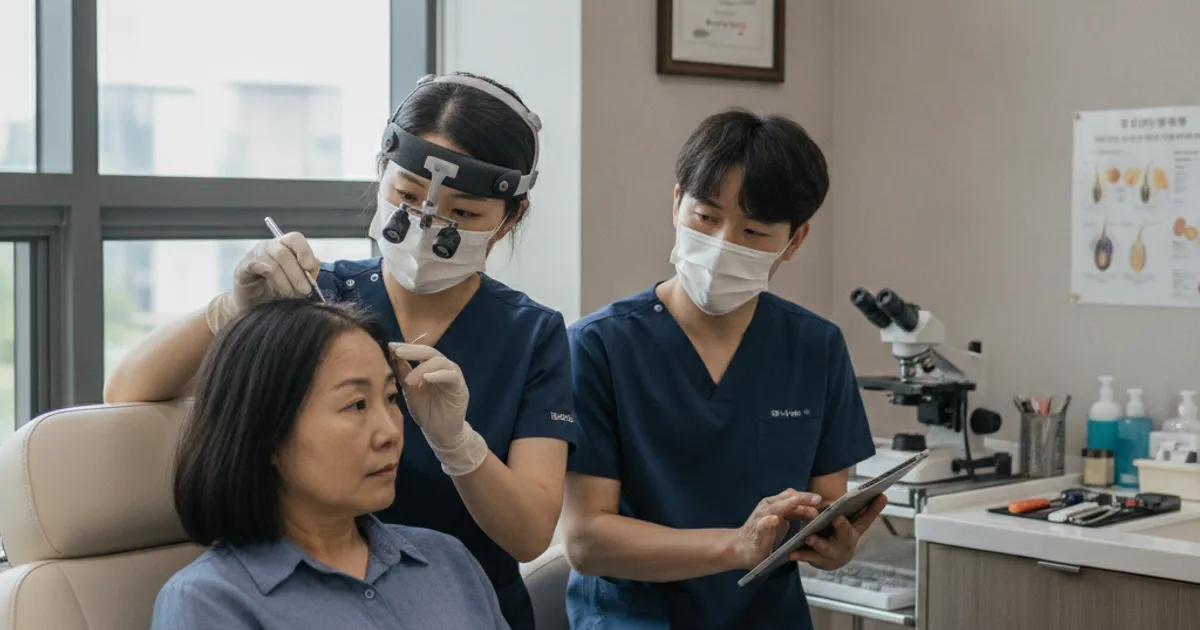
What Is Postmenopausal Hair Loss?
Postmenopausal hair loss is a gradual thinning of the hair that many women notice after their menstrual cycles stop. It's not a single condition but rather a pattern of shedding and reduced hair density that's driven largely by hormonal changes, especially the drop in estrogen and progesterone. While it's often most visible at the part line and crown, it can affect the whole scalp. Unlike the sudden shedding of telogen effluvium, postmenopausal thinning tends to creep in slowly over months or years, which is why many women only realise how much volume they've lost when they compare old photos.
Why Hormonal Shifts After Menopause Cause Thinning
Hormones don't just affect mood and bone density — they also influence the hair growth cycle. Before menopause, estrogen helps keep hair in its growing phase (anagen) for longer. After menopause, estrogen levels fall, and the balance shifts toward androgens (male hormones like testosterone and DHT). Even though women have much lower androgen levels than men, hair follicles on the scalp can become more sensitive to them over time. This sensitivity shortens the growth phase and causes follicles to produce thinner, shorter hairs before eventually slowing down altogether. Genetics play a big role here: if female pattern hair loss runs in your family, you're more likely to notice significant thinning after menopause.
- Estrogen drop reduces the time hair stays in the growth phase.
- Androgens like DHT can miniaturise hair follicles in genetically susceptible women.
- Progesterone decline may contribute to increased shedding.
- Age-related changes in scalp blood flow and nutrient absorption can worsen thinning.
- Stress, thyroid issues, and iron deficiency often compound hormonal hair loss.
Timing and Progression: When Hair Loss Typically Starts
Most women notice the first signs of postmenopausal hair loss within the first few years after their last period, though it can start earlier during perimenopause when hormone levels are fluctuating. The progression is usually slow. Some women see a widening part line in their 50s, while others notice more significant thinning in their 60s. The rate varies widely based on genetics, overall health, and how early menopause began. Below is a general timeline of how hair loss tends to progress after menopause. Keep in mind that these are approximate ranges based on general clinical observation, not hard rules — your own timeline may be faster or slower.
| Stage | Typical Timing (approximate) | What You Might Notice |
|---|---|---|
| Early | About 1–3 years after menopause | Slight widening of the part, a few more hairs in the brush |
| Moderate | About 3–7 years after menopause | Visible thinning at the crown and part line, reduced ponytail thickness |
| Advanced | About 7+ years after menopause | Significant scalp visibility, diffuse thinning across the top of the head |
Symptoms and Patterns to Watch For
Postmenopausal hair loss doesn't look the same for everyone. Some women develop a diffuse thinning all over, while others follow a more typical female pattern with thinning concentrated at the part line and crown. It's important to distinguish this from other types of hair loss, like alopecia areata (patchy bald spots) or telogen effluvium (sudden shedding after stress or illness). If you're unsure, a dermatologist can help. Here are the most common signs to watch for.
- Gradual widening of the hair part.
- Increased shedding during washing or brushing.
- Thinner hair texture — individual strands feel finer.
- Reduced volume at the crown or top of the head.
- Scalp becoming more visible under bright light.
- Hair feels dry or brittle due to reduced oil production.
How Postmenopausal Hair Loss Is Diagnosed
Diagnosis usually starts with a conversation about your medical history, family history of hair loss, and when you first noticed changes. A dermatologist or trichologist will examine your scalp and hair under magnification to look for miniaturised follicles and assess density. They may also run blood tests to rule out thyroid problems, iron deficiency, or other hormonal imbalances. In some cases, a scalp biopsy is done to confirm the type of hair loss. Here's the typical diagnostic process.
- Medical and family history review: your doctor asks about menopause timing, family patterns of hair loss, and any recent illnesses or stress.
- Scalp examination: a dermatologist uses a dermatoscope to look for miniaturised hairs, density changes, and signs of inflammation.
- Blood tests: checks for thyroid function, iron stores (ferritin), vitamin D, and hormone levels to rule out reversible causes.
- Hair pull or wash test: a gentle pull test can show whether you're shedding more than normal.
- Scalp biopsy (rare): a small sample of scalp tissue may be taken if the diagnosis is unclear.
Treatment Options: From Minoxidil to PRP
There's no single cure for postmenopausal hair loss, but several treatments can slow progression and sometimes regrow hair. The best approach depends on how advanced your thinning is, your overall health, and your preferences. Minoxidil is the most common starting point — it's a topical solution or foam that increases blood flow to follicles and prolongs the growth phase. Finasteride, an oral medication that blocks DHT, is sometimes prescribed off-label for women, but it's not safe during pregnancy and requires careful discussion with a doctor. PRP (platelet-rich plasma) therapy involves injecting concentrated platelets from your own blood into the scalp to stimulate follicles. Low-level laser therapy and nutritional supplements may also help. Below is a comparison of the main options. Note that session counts and frequencies are typical ranges from clinical practice and may vary by provider.
- Minoxidil (topical or oral): FDA-approved for female pattern hair loss, available over the counter.
- Finasteride: off-label for women, blocks DHT, not for those who may become pregnant.
- PRP therapy: in-office injections, usually a series of about 3–4 sessions, with maintenance every 6–12 months.
- Low-level laser therapy: at-home devices or in-clinic treatments, modest evidence.
- Supplements: iron, vitamin D, biotin — only helpful if you're deficient.
| Treatment | How It Works | Typical Frequency (approximate) | Best For |
|---|---|---|---|
| Minoxidil | Increases blood flow, prolongs growth phase | Daily (topical) or daily pill | Early to moderate thinning |
| Finasteride | Blocks DHT production | Daily oral tablet | Moderate thinning with high DHT sensitivity |
| PRP | Growth factors from your own blood stimulate follicles | About 3–4 initial sessions, then maintenance | Early to moderate thinning, alone or with other treatments |
| Low-level laser | Light energy stimulates follicle activity | About 3–7 times per week | Early thinning, as an add-on |
Is a Hair Transplant Suitable After Menopause?
A hair transplant can be a good option for postmenopausal women, but it's not right for everyone. The key factor is whether you have enough healthy donor hair at the back and sides of the scalp. Women with diffuse thinning over the entire scalp may not be ideal candidates because the donor area is also affected. The best candidates are those with stable, pattern-specific thinning and good donor density. It's also important to have realistic expectations: a transplant moves hair, but it doesn't stop future thinning, so you may still need medical therapy like minoxidil to maintain results. A consultation with a hair restoration surgeon will determine if you're suitable.
- Good candidates: stable hair loss pattern, sufficient donor hair, realistic expectations.
- Less suitable: diffuse thinning across the whole scalp, active shedding, uncontrolled medical conditions.
- Transplant doesn't halt progression — ongoing medical treatment is often recommended.
- Recovery typically takes about 7–10 days for initial healing, with final results often visible around 12–18 months.
What to Expect During Recovery and Beyond
Recovery from a hair transplant is usually straightforward, but it requires patience. Most women take a few days off work and avoid strenuous activity for about a week. The transplanted hairs often shed in the first month — this is normal and not a sign of failure. New growth typically starts around 3–4 months, with noticeable results at 6–9 months and final density at 12–18 months. Here's a typical timeline.
| Time After Transplant | What to Expect |
|---|---|
| First 7–10 days | Initial healing; scabs form and fall off; avoid strenuous activity. |
| 2–4 weeks | Transplanted hairs may shed — this is normal and temporary. |
| 3–4 months | New growth begins; hair may look thin and uneven. |
| 6–9 months | Noticeable improvement in density and coverage. |
| 12–18 months | Final results; hair continues to thicken and mature. |
Frequently Asked Questions
Can hair loss after menopause be reversed?
It depends on the cause and stage. Early thinning can often be slowed or partially reversed with treatments like minoxidil or PRP. Advanced thinning may not fully reverse, but a transplant can restore density in specific areas. It's best to start treatment early.
Is finasteride safe for women after menopause?
Finasteride is sometimes prescribed off-label for postmenopausal women, but it's not FDA-approved for female pattern hair loss. It's not safe during pregnancy or for women who may become pregnant. Discuss risks and benefits with your doctor.
How do I know if I'm a good candidate for a hair transplant?
You're likely a good candidate if you have stable hair loss, good donor hair density at the back and sides of the scalp, and realistic expectations. A surgeon will assess your donor area and pattern of loss during a consultation.
Does hair transplant work for diffuse thinning?
It can, but diffuse thinning often means the donor area is also affected, which limits how much hair can be moved. In those cases, medical therapy may be more appropriate. A surgeon can advise.
How long does it take to see results from minoxidil?
Most people see some improvement in about 3–6 months, with fuller results around 12 months. Consistency is key — you need to use it daily.
More Guides
- Hair Loss From Vitamin A Toxicity: Signs and Reversal
Learn how vitamin A toxicity causes hair loss, the signs to watch for, how it's diagnosed, and whether hair transplant is suitable. Reversal tips inside.
- Finasteride and Erectile Dysfunction: What Research Shows
Does finasteride cause erectile dysfunction? We break down the clinical research, risk factors, diagnosis, and treatment options for finasteride-related ED.
- Hair Transplant and Lupus: What You Need to Know
Can you get a hair transplant with lupus? Learn how autoimmune conditions affect hair loss, diagnosis, treatments, and whether surgery is safe.
- CCCA Alopecia: Causes, Diagnosis & Treatment Options
Learn what CCCA alopecia is, how it's diagnosed, and the best treatment options including hair transplant suitability. A clear guide for patients.