
Hair Loss from Menopause: Causes and Treatment Options
Hair loss from menopause is common. Learn the causes, symptoms, diagnosis, and treatment options, including whether a hair transplant is suitable.
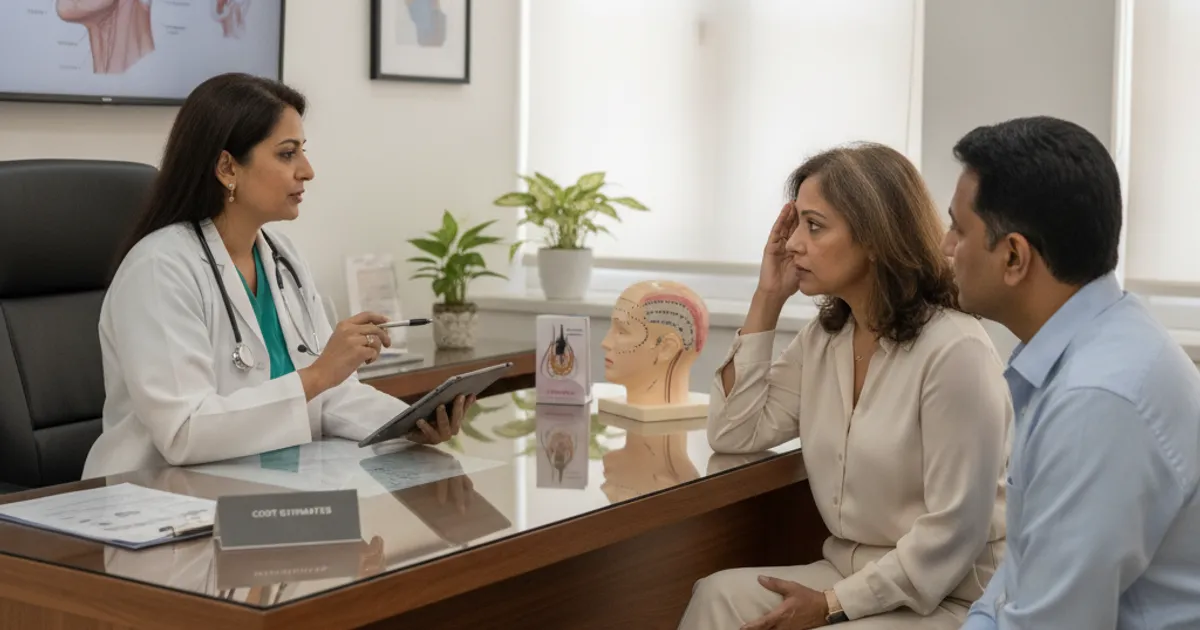
What Is Menopausal Hair Loss?
Menopausal hair loss is a form of diffuse thinning that many women experience during perimenopause and menopause. It is not simply a cosmetic nuisance; it is a medical condition driven by hormonal changes that affect the hair growth cycle. Unlike male pattern baldness, which typically causes a receding hairline or crown bald spot, menopausal hair loss often presents as a general thinning across the entire scalp, sometimes with a widening part. The condition can be gradual and may go unnoticed for months until a woman realizes her ponytail is thinner or her scalp is more visible. While it is most common in women over 50, it can begin in the late 40s as hormone levels start to fluctuate.
Causes of Hair Loss During Menopause
The primary driver of menopausal hair loss is the decline in estrogen and progesterone. These hormones help keep hair in the growing phase (anagen) for longer. When they drop, more hair enters the resting phase (telogen) and sheds. At the same time, androgens like testosterone remain relatively stable, and their effect on hair follicles becomes more pronounced. This can lead to miniaturization of hair follicles, especially in genetically predisposed women. Other factors can compound the problem, including thyroid imbalances, iron deficiency, stress, and certain medications. It is important to note that menopause itself does not cause hair loss in every woman; genetics play a significant role in how sensitive follicles are to hormonal shifts.
- Hormonal changes: falling estrogen and progesterone levels.
- Androgen sensitivity: even normal levels of testosterone can shrink hair follicles in susceptible women.
- Genetics: a family history of female pattern hair loss increases risk.
- Thyroid disorders: both hypothyroidism and hyperthyroidism can cause shedding.
- Nutritional deficiencies: low iron, vitamin D, or B12 can worsen thinning.
- Stress and illness: physical or emotional stress can trigger telogen effluvium.
- Medications: some blood pressure drugs, antidepressants, and hormone therapies can affect hair.
Symptoms and Patterns of Menopausal Hair Loss
The symptoms of menopausal hair loss can vary from woman to woman. The most common complaint is a gradual thinning over the top of the head, often with a widening part. Some women notice more hair in their brush or shower drain. Others see a receding hairline, though this is less common than in men. The pattern is usually diffuse, meaning hair thins evenly rather than in distinct patches. It is also common to experience thinning on the sides and back, but the occipital area (back of the scalp) is often spared, which is important for hair transplant candidacy. Unlike temporary shedding from stress or illness, menopausal hair loss tends to persist and worsen without treatment.
- Diffuse thinning across the crown and top of the scalp.
- Widening of the hair part.
- Increased shedding during washing or brushing.
- Hair feels finer and less dense.
- Scalp becomes more visible, especially under bright light.
- Slow but progressive over months to years.
| Pattern | Description | Common in Menopause? |
|---|---|---|
| Diffuse thinning | Even reduction in hair density across the scalp | Yes, most common |
| Widening part | Hair part becomes broader over time | Yes |
| Receding hairline | Hairline moves back, often with a widow's peak | Less common |
| Patchy loss | Distinct bald patches | Rare, may indicate other conditions |
How Is Menopausal Hair Loss Diagnosed?
Diagnosis typically starts with a detailed medical history and physical examination. A doctor will ask about your menstrual cycle, menopause status, family history of hair loss, and any medications or supplements you take. They will examine your scalp to assess the pattern and degree of thinning. Blood tests are often ordered to rule out other causes such as thyroid dysfunction, iron deficiency, or elevated androgen levels. In some cases, a scalp biopsy may be performed to confirm the type of hair loss. A dermatologist or trichologist can use a dermoscope to look at hair follicles up close. It is important to distinguish menopausal hair loss from other conditions like alopecia areata, telogen effluvium, or traction alopecia, as treatments differ.
- Medical history: menopause status, family patterns, medication use.
- Physical exam: scalp inspection and hair pull test.
- Blood tests: thyroid panel, ferritin, vitamin D, hormone levels.
- Dermoscopy: magnified view of hair follicles and scalp.
- Scalp biopsy: rarely needed, but can confirm diagnosis.
- Rule out other causes: anemia, thyroid disease, autoimmune conditions.
Treatment Options for Menopausal Hair Loss
Treatment for menopausal hair loss aims to slow down thinning, promote regrowth, and improve hair density. The best approach is often a combination of therapies. First-line treatments include topical minoxidil, which is FDA-approved for female pattern hair loss. It works by prolonging the growth phase and increasing blood flow to the scalp. Oral medications like finasteride are not typically recommended for women of childbearing age due to risks, but for postmenopausal women, some doctors may prescribe it off-label. Spironolactone, an anti-androgen, can also be effective. Platelet-rich plasma (PRP) therapy is a newer option that involves injecting concentrated platelets from your own blood into the scalp to stimulate hair growth. Low-level laser therapy (LLLT) devices are also available for home use. Hormone replacement therapy (HRT) may help if hair loss is directly linked to estrogen decline, but it is not a guaranteed fix and carries its own risks. A healthy diet rich in protein, iron, and vitamins supports hair health.
- Topical minoxidil: applied directly to the scalp, available over-the-counter.
- Oral finasteride: off-label for postmenopausal women, blocks DHT.
- Spironolactone: anti-androgen that can reduce hair shedding.
- PRP therapy: injections of platelet-rich plasma to stimulate follicles.
- Low-level laser therapy: devices that emit red light to boost circulation.
- Hormone replacement therapy: may help if estrogen deficiency is the main cause.
- Nutritional supplements: iron, vitamin D, biotin, and protein if deficient.
| Treatment | How It Works | Typical Results | Considerations |
|---|---|---|---|
| Minoxidil | Vasodilator, prolongs anagen phase | Visible in 3-6 months | Daily use, can cause scalp irritation |
| Finasteride | 5-alpha reductase inhibitor, lowers DHT | Slow improvement over 6-12 months | Off-label for women, not for childbearing age |
| Spironolactone | Anti-androgen, reduces androgen effect | Reduced shedding in 3-6 months | Requires prescription, monitoring |
| PRP | Growth factors from platelets | Improvement in 2-3 sessions | Costly, not always covered |
| LLLT | Stimulates follicles with light energy | Modest improvement over months | Requires consistent use |
Is a Hair Transplant Suitable for Menopausal Hair Loss?
A hair transplant can be a viable option for some women with menopausal hair loss, but candidacy depends on several factors. The ideal candidate has stable hair loss, good donor hair density (usually at the back of the scalp), and realistic expectations. Because menopausal hair loss is often diffuse, a transplant may not be suitable if the donor area is also thinning. A surgeon will assess the degree of miniaturization and the stability of hair loss. If the loss is still progressing, it is usually better to stabilize it with medication first. A hair transplant involves moving healthy hair follicles from the donor area to thinning areas. It does not create new hair; it redistributes existing hair. For women with female pattern hair loss, a transplant can improve density and restore a more youthful hairline, but it is not a cure. It works best in combination with medical therapy to maintain results.
What to Expect from a Hair Transplant Consultation
During a consultation, a hair transplant surgeon will evaluate your hair loss pattern, donor hair quality, and overall health. They will discuss your goals and explain what a transplant can and cannot achieve. You should expect a thorough examination, possibly with a dermoscope, and a review of your medical history. The surgeon will also discuss the risks, costs, and recovery process. It is important to ask about the clinic's experience with female patients and to see before-and-after photos of similar cases. A good consultation should be educational, not pushy. You should leave with a clear understanding of whether you are a candidate and what the procedure entails.
- Medical history review and scalp examination.
- Assessment of donor hair density and quality.
- Discussion of realistic outcomes and limitations.
- Explanation of the procedure (FUE or FUT).
- Cost estimate and financing options.
- Recovery timeline and aftercare instructions.
- Opportunity to ask questions and see past results.
Frequently Asked Questions
Can menopause cause hair loss?
Yes, menopause can cause hair loss due to declining estrogen and progesterone levels, which affect the hair growth cycle. It often presents as diffuse thinning.
Is menopausal hair loss permanent?
It can be permanent if left untreated, but many treatments can slow or reverse thinning. Early intervention improves outcomes.
What is the best treatment for menopausal hair loss?
The best treatment depends on the individual. Minoxidil is often first-line. Other options include spironolactone, finasteride (off-label), PRP, and laser therapy. A combination approach is often most effective.
Can I get a hair transplant during menopause?
Yes, if you are a suitable candidate with stable hair loss and good donor hair. A consultation with a surgeon is necessary to determine candidacy.
Does hormone replacement therapy help with hair loss?
HRT may help if hair loss is primarily due to estrogen deficiency, but it is not a guaranteed treatment and carries risks. Discuss with your doctor.
Are there any side effects of minoxidil?
Minoxidil can cause scalp irritation, dryness, or unwanted facial hair growth. Oral minoxidil may have systemic side effects. Consult a doctor.
More Guides
- Hair Loss After Weight Loss Surgery: Timeline & Fixes
Hair loss after weight loss surgery is common. Learn the timeline, causes, treatments like minoxidil and PRP, and whether a hair transplant is right for you.
- Stress-Related Hair Loss: Recovery Time and Treatment
How long does stress-induced hair loss take to recover? Learn about telogen effluvium, diagnosis, treatments, and when a transplant may help.
- Female Hair Loss at the Back of the Head: Causes & Fixes
Learn why women lose hair at the back of the head, how it's diagnosed, and the best treatment options including minoxidil, PRP, and hair transplant suitability.
- Wellbutrin and Hair Loss: What You Need to Know
Learn how Wellbutrin may cause hair loss, how it's diagnosed, and what treatments—including hair transplant—can help you regrow hair.