
Hair Loss from Anabolic Steroids: Prevention & Treatment
Steroid-induced hair loss explained: causes, symptoms, diagnosis, prevention, and treatment options including finasteride, minoxidil, PRP, and hair transplants.
What Is Anabolic Steroid-Induced Hair Loss?
Anabolic steroid-induced hair loss is a form of accelerated androgenetic alopecia triggered by the use of anabolic-androgenic steroids (AAS). It happens when synthetic hormones — testosterone, nandrolone, trenbolone, stanozolol, and others — push androgen levels far above what your body produces naturally. If you carry the genetic predisposition for male or female pattern hair loss, that surge can speed up the miniaturisation of hair follicles on the scalp. The result is thinning at the temples, crown, or across the top of the head that can move much faster than typical age-related balding. It is not a separate disease. It is your existing genetic sensitivity to androgens being amplified by exogenous hormones.
How Anabolic Steroids Cause Hair Loss
The mechanism comes down to androgens and how your hair follicles respond to them. Testosterone itself is not the main culprit. The enzyme 5-alpha-reductase converts testosterone into dihydrotestosterone (DHT), which binds to androgen receptors in susceptible scalp follicles. Over time, DHT causes those follicles to shrink, produce thinner hairs, and eventually stop producing visible hair altogether. Anabolic steroids raise the amount of testosterone and other androgens available for conversion, which increases DHT activity in the scalp. Some steroids are worse than others because of how they are structured and metabolised.
- Highly androgenic compounds such as testosterone, trenbolone, and drostanolone are strongly associated with accelerated scalp hair loss.
- Nandrolone (Deca) is less androgenic on the scalp in theory, but it still converts to a DHT-like metabolite and can cause shedding in predisposed users.
- Oral steroids like stanozolol (Winstrol) and oxandrolone (Anavar) are often considered milder on the hairline, but individual responses vary widely.
- Stacking multiple compounds multiplies the total androgen load, which increases the risk and speed of follicle miniaturisation.
- Elevated DHT also affects sebum production, which can worsen scalp inflammation and contribute to a poor environment for hair growth.
Symptoms and Diagnosis
The symptoms of steroid-induced hair loss look like classic pattern baldness, but the timeline is compressed. Instead of losing ground over ten or twenty years, you might see noticeable thinning in a single cycle. The pattern usually follows your genetic blueprint — receding temples and crown thinning in men, diffuse thinning along the part in women. Diagnosis is mostly clinical. A dermatologist or hair restoration surgeon will take a history, examine your scalp, and may use a trichoscope to look at follicle miniaturisation. Blood tests can rule out thyroid issues, iron deficiency, and other causes. If you are using steroids, be honest with your doctor. It changes the treatment plan.
- Increased shedding during washing or brushing, often within weeks of starting a cycle.
- Visible thinning at the temples, crown, or along the part line.
- A widening part or a smaller ponytail circumference in women.
- Scalp itching or irritation linked to sebum changes.
- Family history of pattern baldness, which is the strongest predictor of whether steroids will accelerate loss.
| Diagnostic Step | What It Looks For |
|---|---|
| Medical and medication history | Steroid use, family history, timeline of shedding |
| Scalp examination | Pattern of loss, inflammation, scarring |
| Trichoscopy | Follicle miniaturisation, hair shaft variability |
| Blood tests | Thyroid function, iron, ferritin, hormone levels |
| Pull test | Active shedding rate |
Prevention Strategies for Steroid Users
Prevention is far easier than regrowth. If you are genetically predisposed to pattern baldness and you choose to use anabolic steroids, the most effective strategy is to reduce androgen exposure at the scalp. That means avoiding the most androgenic compounds, keeping cycles shorter, and using a 5-alpha-reductase inhibitor like finasteride or dutasteride if it is appropriate for you. Finasteride blocks the conversion of testosterone to DHT, which lowers scalp DHT significantly. It does not block the steroid itself, but it reduces one of the main pathways that damages hair follicles. Topical minoxidil can also be used preventively to keep follicles in a growth phase. Neither is a guarantee, and both require consistent use.
- Avoid or limit highly androgenic compounds such as trenbolone and drostanolone if hair loss is a concern.
- Keep cycles shorter and avoid stacking multiple androgens at high doses.
- Talk to a doctor about finasteride or dutasteride before starting a cycle, not after shedding begins.
- Use topical minoxidil daily to support follicle growth and prolong the anagen phase.
- Manage scalp health with gentle cleansing and anti-inflammatory shampoos if you have seborrheic dermatitis.
- Consider ketoconazole shampoo, which has mild anti-androgenic effects on the scalp.
- Get baseline photos and a trichoscopy exam so you can track changes objectively.
Treatment Options for Steroid-Induced Hair Loss
Treatment depends on how much hair you have lost and whether you are still using steroids. If you are still cycling, the first step is to stop or reduce the offending compounds. Without that, most treatments will struggle to keep up. Once androgen levels are stable, the standard options are finasteride, minoxidil, and platelet-rich plasma (PRP). Finasteride is oral and works systemically to lower DHT. Minoxidil is topical or oral and extends the growth phase. PRP involves injecting concentrated platelets from your own blood into the scalp to stimulate follicle activity. For advanced loss, a hair transplant may be the only way to restore density in bald areas. Each option has different costs, timelines, and evidence levels.
- Finasteride: oral prescription, lowers DHT, best for early to moderate loss, takes 3–6 months to show results.
- Dutasteride: stronger 5-alpha-reductase inhibitor, sometimes used off-label when finasteride is not enough.
- Minoxidil: topical solution or foam, or low-dose oral, supports follicle growth, works best with consistent daily use.
- PRP: in-clinic injections, usually a series of 3–4 sessions, then maintenance every 6–12 months.
- Low-level laser therapy: home or in-clinic devices, modest evidence, often used as an add-on.
- Hair transplant: surgical redistribution of permanent follicles, best for stable, advanced loss.
| Treatment | How It Works | Best For | Typical Timeline |
|---|---|---|---|
| Finasteride | Blocks conversion of testosterone to DHT | Early to moderate loss, prevention | 3–6 months for visible change |
| Minoxidil | Prolongs growth phase, increases blood flow | Early to moderate loss, diffuse thinning | 2–4 months for shedding to settle, 6+ months for growth |
| PRP | Growth factors from your own blood stimulate follicles | Mild to moderate loss, add-on therapy | 1–3 months after a series |
| Hair transplant | Moves permanent follicles to thinning areas | Stable, advanced loss with good donor supply | 6–12 months for full result |
Is a Hair Transplant Suitable for Steroid-Induced Hair Loss?
A hair transplant can work well for steroid-induced hair loss, but only if your loss has stabilised. If you are still using anabolic steroids or your shedding is active, a transplant is a bad idea. The surgeon will be placing follicles into an area that is still under attack from androgens, and you risk losing the transplanted hair along with the native hair around it. The ideal candidate has stopped or reduced steroid use, has been stable for at least 6–12 months, has a good donor supply at the back and sides of the scalp, and has realistic expectations. A transplant does not create new hair. It redistributes hair you already have. If your donor area is thinning too, you may not be a candidate.
- You should be off or on a stable, reduced steroid protocol before surgery.
- Shedding should be stable for at least 6–12 months.
- Donor hair density at the back and sides must be adequate.
- You should be willing to use finasteride or minoxidil after surgery to protect native hair.
- If you plan to cycle again, discuss the risks with your surgeon honestly.
- A transplant is not a fix for active, ongoing hair loss — it is a redistribution of stable hair.
What to Expect During a Hair Transplant Consultation
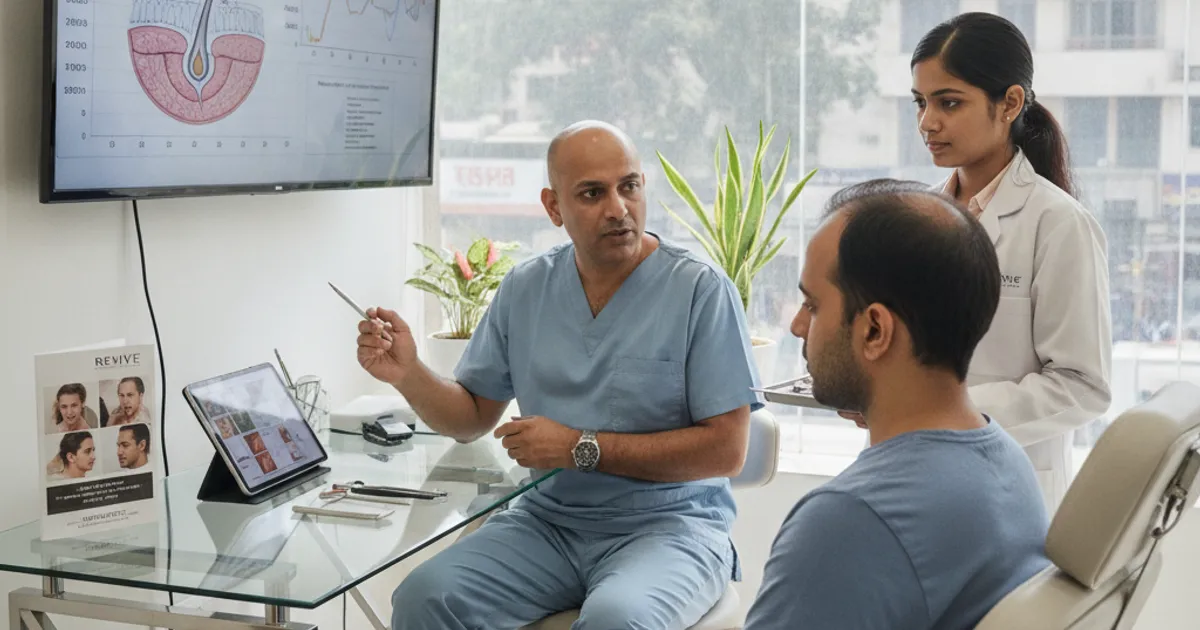
A consultation for steroid-related hair loss should cover more than just how many grafts you need. The surgeon needs to understand your steroid history, your family history, and your goals. They will examine your scalp, measure donor density, and map out a plan. You should leave with a clear idea of what is realistic, what the risks are, and what you need to do before and after surgery. Expect to discuss medication, timeline, cost, and whether you need to stabilise your loss first.
- Full medical history, including steroid use, duration, compounds, and current status.
- Scalp examination and trichoscopy to assess miniaturisation and donor quality.
- Discussion of whether you need to stop steroids or adjust your protocol.
- A graft estimate and a plan for the hairline, crown, or diffuse thinning.
- Review of pre- and post-operative medications, including finasteride or minoxidil.
- Realistic timeline: 6–12 months for transplanted hair to mature.
- Cost breakdown and what is included in the quoted price.
Frequently Asked Questions
Will my hair grow back if I stop taking steroids?
It depends on how long you used them and how sensitive your follicles are. If follicles are only miniaturised and not scarred, some regrowth is possible after stopping. But if the follicles have been dormant for a long time, regrowth may be limited. Finasteride and minoxidil can help support recovery.
Which steroids are worst for hair loss?
Highly androgenic compounds like trenbolone, drostanolone, and high-dose testosterone are most commonly linked to accelerated hair loss. Nandrolone and oral steroids like Anavar are often considered milder, but individual responses vary.
Can I get a hair transplant while still using steroids?
Most surgeons will advise against it. Active steroid use means ongoing androgen exposure, which can damage transplanted and native hair. You should be stable for at least 6–12 months before surgery.
Does finasteride work for steroid-induced hair loss?
Finasteride lowers DHT by blocking 5-alpha-reductase. It can help slow or stop hair loss in steroid users, but it does not block the steroid itself. It is most effective when combined with reducing or stopping the offending compounds.
How long does it take to see results from treatment?
Finasteride and minoxidil typically take 3–6 months to show visible changes. PRP results can appear within 1–3 months after a series. Hair transplants take 6–12 months for full maturation.
Is PRP effective for steroid-related hair loss?
PRP can stimulate follicle activity and improve hair density in some people, but evidence is mixed. It is often used as an add-on to finasteride or minoxidil rather than a standalone treatment.
More Guides
- Hair Loss After Weight Loss Surgery: Timeline & Fixes
Hair loss after weight loss surgery is common. Learn the timeline, causes, treatments like minoxidil and PRP, and whether a hair transplant is right for you.
- Stress-Related Hair Loss: Recovery Time and Treatment
How long does stress-induced hair loss take to recover? Learn about telogen effluvium, diagnosis, treatments, and when a transplant may help.
- Female Hair Loss at the Back of the Head: Causes & Fixes
Learn why women lose hair at the back of the head, how it's diagnosed, and the best treatment options including minoxidil, PRP, and hair transplant suitability.
- Wellbutrin and Hair Loss: What You Need to Know
Learn how Wellbutrin may cause hair loss, how it's diagnosed, and what treatments—including hair transplant—can help you regrow hair.