
Ozempic Hair Loss: GLP-1 Drugs and Shedding Explained
Learn how Ozempic and GLP-1 drugs may cause hair shedding, what symptoms to expect, diagnosis, treatment options, and whether a hair transplant is suitable.
What Is Ozempic-Related Hair Loss?
Ozempic and other GLP-1 receptor agonists like Wegovy, Mounjaro, and Saxenda have become household names for weight loss and diabetes management. But as more people use these drugs, a common side effect has started getting attention: increased hair shedding. Ozempic-related hair loss isn't a direct toxic effect of the drug on your hair follicles. Instead, it's usually a type of temporary shedding called telogen effluvium, triggered by the rapid changes in your body that come with significant weight loss and reduced calorie intake. In simple terms, the stress of losing weight quickly — and sometimes not eating enough nutrients — pushes more hairs than usual into the resting phase, and they fall out a few months later.
Why GLP-1 Drugs Like Ozempic May Cause Hair Shedding
The link between Ozempic and hair loss is indirect. The drug itself doesn't attack hair follicles. Instead, it creates conditions that stress the body and disrupt the normal hair growth cycle. Here are the main reasons GLP-1 users report shedding:
- Rapid weight loss: Losing a significant amount of weight in a short time is a known trigger for telogen effluvium. The body perceives it as a stressor and shifts hair into the shedding phase.
- Calorie and protein deficit: Many people on GLP-1 drugs eat much less, and if protein intake drops too low, hair growth can suffer because hair is made of protein.
- Nutrient deficiencies: Reduced food intake can lead to lower levels of iron, zinc, vitamin D, and B vitamins — all important for healthy hair cycling.
- Hormonal shifts: Weight loss and changes in body fat can alter hormone levels, including androgens and thyroid hormones, which may affect hair.
- Individual sensitivity: Some people are more prone to stress-related shedding than others, regardless of the cause.
Common Symptoms and How Hair Loss Is Diagnosed
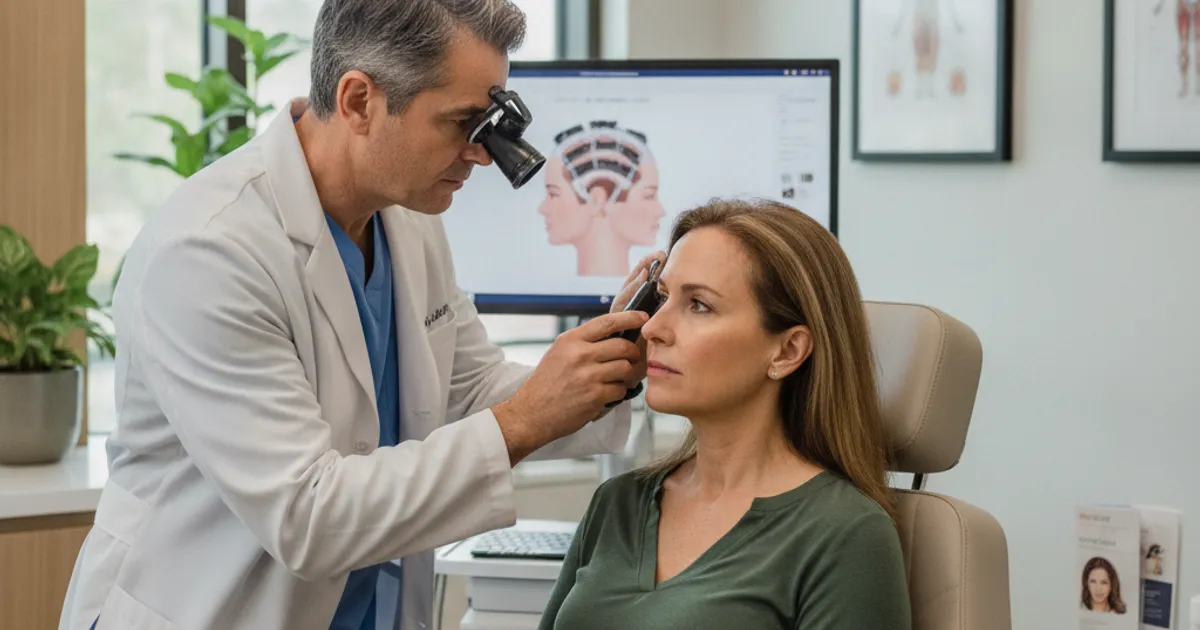
If you're on a GLP-1 drug and noticing more hair in your brush or shower drain, you're not alone. The shedding is usually diffuse — meaning it comes from all over the scalp rather than a receding hairline or bald spot. Many people describe handfuls of hair coming out during washing or styling. It can be alarming, but it's important to know that this type of shedding is often self-limiting. Diagnosis starts with a conversation about your medication history, weight loss timeline, and diet. A dermatologist or trichologist may use a few tools to confirm the cause:
- Medical history: When did shedding start? How much weight have you lost and how fast? What's your diet like?
- Hair pull test: A doctor gently pulls a small bundle of hair to see how many hairs come out — a simple way to assess active shedding.
- Trichoscopy: A magnified view of the scalp and hair follicles to check for miniaturization (genetic hair loss) versus uniform shedding.
- Blood tests: To rule out iron deficiency, thyroid issues, vitamin D deficiency, and other contributors.
| Feature | Telogen Effluvium (Ozempic-related) | Androgenetic Alopecia (Genetic) |
|---|---|---|
| Pattern | Diffuse, all over scalp | Receding hairline, thinning crown |
| Timing | A few months after trigger | Gradual over years |
| Hair pull test | Positive (many hairs shed) | Usually negative |
| Reversibility | Often reversible | Progressive without treatment |
| Scalp appearance | Normal | May show miniaturized hairs |
Treatment Options for Ozempic-Related Hair Loss
The good news is that most Ozempic-related shedding resolves on its own once your body adjusts and weight stabilizes. But if you want to speed things up or you're concerned about the volume of hair loss, there are several approaches. Treatment usually focuses on correcting the underlying trigger and supporting healthy hair regrowth.
- Optimize nutrition: Ensure adequate protein, iron, zinc, vitamin D, and B vitamins. A registered dietitian can help you set targets that fit your situation.
- Minoxidil (topical or oral): FDA-approved for hair loss, minoxidil can help stimulate follicles and may shorten the shedding phase. It's available over the counter or by prescription.
- Finasteride: If you also have genetic hair loss (androgenetic alopecia), finasteride can block DHT and slow further thinning. It's prescription-only and not for women of childbearing age.
- PRP (platelet-rich plasma): Injections of your own blood plasma can stimulate hair follicles and improve density. It's a clinic-based treatment, usually done in a series.
- Low-level laser therapy: At-home or in-clinic devices may help improve hair count and thickness, though results vary.
- Gentle hair care: Avoid tight hairstyles, harsh chemicals, and heat styling to reduce additional breakage.
Is a Hair Transplant Suitable for GLP-1-Related Hair Loss?
A hair transplant is generally not the first line of treatment for Ozempic-related shedding. That's because telogen effluvium is diffuse and temporary — a transplant works best for localized, permanent hair loss like pattern baldness. If you have a transplant while you're still actively shedding, the results may be unpredictable, and you could lose transplanted hairs along with the rest. However, if you have underlying genetic hair loss that has been unmasked or accelerated by weight loss, a transplant might be appropriate once your hair loss has stabilized. Here's how suitability breaks down:
- Wait for stabilization: Most surgeons recommend waiting until shedding has stopped and hair loss has been stable for several months before considering surgery.
- Address the cause: If nutritional deficiencies or thyroid issues are contributing, correct them first.
- Assess donor area: A transplant requires a healthy donor area at the back of the scalp. Diffuse shedding can temporarily affect donor hair too.
- Combine with medication: Many surgeons recommend continuing minoxidil or finasteride after transplant to protect results.
| Scenario | Transplant Suitability | Notes |
|---|---|---|
| Active diffuse shedding from GLP-1 | Not suitable | Wait until shedding stabilizes |
| Stable hair loss with genetic pattern | Suitable | Best for localized thinning |
| Nutritional deficiencies unresolved | Not suitable | Correct deficiencies first |
| Post-shedding with stable donor area | Suitable | Good candidate if pattern is permanent |
What to Expect: Timeline and Recovery
If you're experiencing Ozempic-related hair loss, here's a realistic timeline. Shedding often begins a few months after starting the drug or after a period of rapid weight loss. It may continue for several months, but it usually peaks and then gradually slows. Once your weight stabilizes and your nutrition is on track, regrowth should start within a few months. Full recovery can take up to a year. If you do opt for a hair transplant after shedding has stabilized, expect the transplanted hairs to shed in the first few weeks (shock loss), with new growth starting around 3–4 months and final results at 12–18 months.
- Months 0–4: Shedding phase — more hair in brush, shower, pillow.
- Months 4–6: Shedding slows as body adapts and nutrition improves.
- Months 6–12: Regrowth becomes noticeable; hair may feel thinner before it thickens.
- Months 12+: Most people see significant recovery if triggers are addressed.
Frequently Asked Questions
Does Ozempic directly cause hair loss?
No, Ozempic doesn't directly damage hair follicles. Hair loss is usually an indirect effect of rapid weight loss, reduced calorie intake, and nutritional deficiencies, which trigger temporary shedding called telogen effluvium.
Is hair loss from GLP-1 drugs permanent?
For most people, it's temporary. Once weight stabilizes and nutrition improves, hair typically regrows within several months to a year. However, if you have underlying genetic hair loss, it may not fully reverse without treatment.
Should I stop taking Ozempic if I'm losing hair?
Don't stop without consulting your doctor. The shedding is usually temporary, and stopping the medication abruptly can affect your weight and health. Your doctor can help you manage side effects or adjust your dose.
Can I have a hair transplant while on Ozempic?
It's not recommended during active shedding. Most surgeons advise waiting until hair loss has stabilized for several months. If you have stable genetic hair loss, a transplant may be an option after evaluation.
What treatments help with Ozempic-related hair loss?
Nutritional support (protein, iron, zinc, vitamin D), minoxidil, finasteride (if genetic hair loss is present), PRP, and low-level laser therapy can help. Always consult a healthcare provider before starting any treatment.
How long does shedding last after starting Ozempic?
Shedding typically starts a few months after starting the drug or after rapid weight loss, and may last for several months. It usually resolves once weight stabilizes and nutritional status improves.
More Guides
- Hair Loss From Vitamin A Toxicity: Signs and Reversal
Learn how vitamin A toxicity causes hair loss, the signs to watch for, how it's diagnosed, and whether hair transplant is suitable. Reversal tips inside.
- Hair Loss After Menopause: Hormones, Timing, Treatment
Hair loss after menopause is common. Learn how hormones, timing, and treatments like minoxidil, PRP, and hair transplant can help you regrow hair.
- Finasteride and Erectile Dysfunction: What Research Shows
Does finasteride cause erectile dysfunction? We break down the clinical research, risk factors, diagnosis, and treatment options for finasteride-related ED.
- Hair Transplant and Lupus: What You Need to Know
Can you get a hair transplant with lupus? Learn how autoimmune conditions affect hair loss, diagnosis, treatments, and whether surgery is safe.