
Hair Loss in Children: When It's Normal and When to Worry
Hair loss in children: learn what's normal shedding, warning signs, causes, diagnosis, treatment options, and whether hair transplant is suitable.
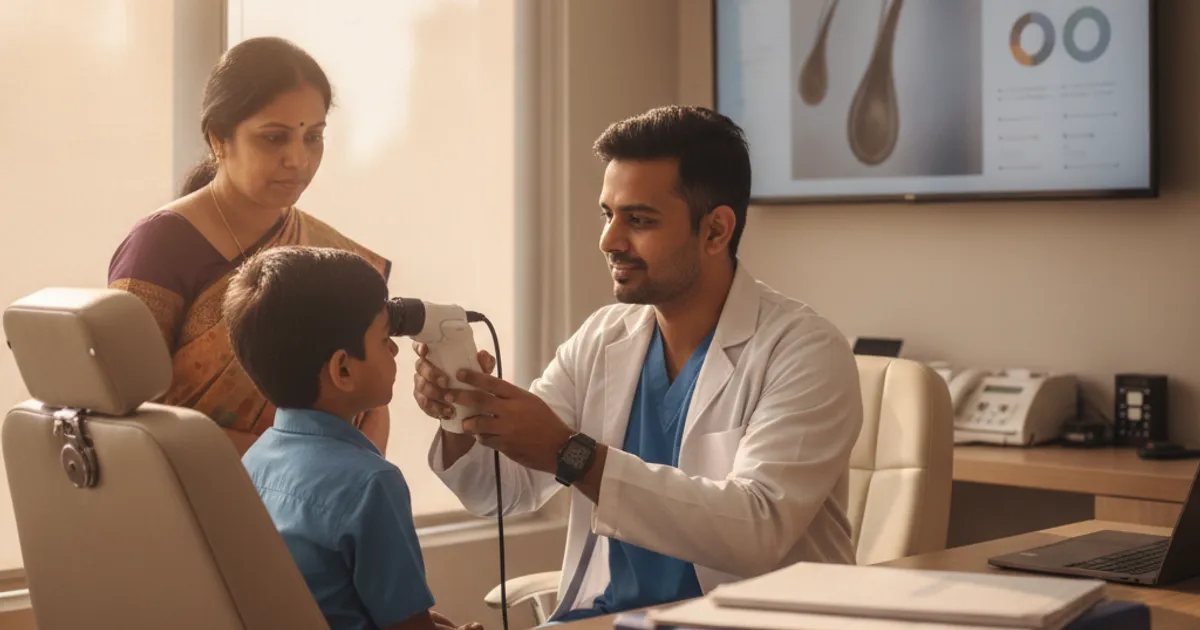
Hair loss in children is one of those things that can send any parent into a quiet panic. You notice a few extra strands on the pillow, a bald patch behind the ear, or a thinning spot on the crown, and suddenly you're imagining the worst. The truth is that hair loss in children is actually pretty common, and in most cases it's either completely normal or very treatable. But there are times when it signals something that needs a doctor's attention. This guide walks through what pediatric hair loss looks like, what causes it, how it's diagnosed, what treatments exist, and whether a hair transplant is ever the right move for a child.
What Is Pediatric Hair Loss?
Pediatric hair loss, also called pediatric alopecia, refers to any significant hair thinning or shedding in a child under 18. It can affect the scalp alone or the entire body. Hair loss in children isn't a single condition — it's a symptom that can come from many different underlying causes. Some are harmless and resolve on their own. Others need medical treatment. A small number are linked to autoimmune or genetic conditions. The important thing is to figure out which category you're dealing with before jumping to conclusions.
- Diffuse shedding: hair comes out evenly across the scalp, often after illness, stress, or medication.
- Patchy loss: distinct bald spots, sometimes with broken hairs or smooth skin.
- Scaling or inflammation: flaky, red, or crusty patches on the scalp.
- Hair that breaks easily: short, brittle strands that don't grow past a certain length.
- Complete scalp hair loss: rare, but can happen with certain autoimmune conditions.
Common Causes of Hair Loss in Children
The list of possible causes is longer than most parents expect. Some are mechanical, some are medical, and some are simply part of normal development. Here are the ones doctors see most often.
- Telogen effluvium: a temporary shedding phase triggered by fever, surgery, emotional stress, or a viral illness. It usually starts two to three months after the trigger and resolves within six months.
- Tinea capitis: a fungal infection of the scalp that causes round bald patches, scaling, and sometimes broken hairs. It's contagious and needs antifungal treatment.
- Alopecia areata: an autoimmune condition that causes sudden, smooth, round bald patches. It can come and go, and in some children it progresses to more extensive loss.
- Trichotillomania: a hair-pulling habit, often stress-related, that creates irregular patches with broken hairs of different lengths.
- Traction alopecia: hair loss from tight hairstyles, braids, or ponytails that pull on the roots over time.
- Nutritional deficiencies: low iron, zinc, or vitamin D can contribute to thinning hair.
- Endocrine issues: thyroid problems or other hormonal imbalances can affect hair growth.
- Genetic conditions: rare syndromes can cause hair loss or poor hair growth from birth.
| Cause | Typical Pattern | Contagious? | Usually Temporary? |
|---|---|---|---|
| Telogen effluvium | Diffuse shedding all over | No | Yes |
| Tinea capitis | Round patches with scaling | Yes | Yes with treatment |
| Alopecia areata | Smooth round patches | No | Sometimes, can recur |
| Trichotillomania | Irregular patches, broken hairs | No | Yes with behavioral support |
| Traction alopecia | Thinning along hairline or part | No | Yes if caught early |
| Nutritional deficiency | Diffuse thinning | No | Yes with correction |
Symptoms: Normal Shedding vs. Warning Signs
Every child sheds hair. The question is whether what you're seeing falls within the range of normal or points to something that needs a closer look. Normal shedding is gradual, diffuse, and doesn't leave bald patches. Warning signs tend to be more obvious and persistent.
- Normal: a few strands on the pillow, in the brush, or in the bath — no visible thinning.
- Normal: seasonal shedding that comes and goes with no other symptoms.
- Warning: distinct bald patches or spots where the scalp is smooth and shiny.
- Warning: redness, scaling, crusting, or pus on the scalp.
- Warning: hair loss accompanied by fatigue, weight changes, or other systemic symptoms.
- Warning: broken hairs, short stubs, or hairs that pull out easily in clumps.
- Warning: loss that continues for more than a few months without improvement.
How Is Hair Loss in Children Diagnosed?
Diagnosis starts with a thorough history and physical exam. A pediatrician or dermatologist will ask about when the loss started, whether it's patchy or diffuse, recent illnesses, medications, hairstyling habits, and family history of hair or autoimmune conditions. From there, they may run a few tests.
- Scalp examination: looking for patterns, scaling, inflammation, or broken hairs.
- Hair pull test: gently pulling a small group of hairs to see how many come out.
- Wood's lamp: a special light that can help identify fungal infections.
- Scalp scraping or culture: to confirm tinea capitis.
- Blood tests: checking for iron, zinc, vitamin D, thyroid function, and sometimes autoimmune markers.
- Biopsy: rarely needed, but can help confirm alopecia areata or other conditions.
Treatment Options for Pediatric Hair Loss
Treatment depends entirely on the cause. For temporary shedding like telogen effluvium, the best approach is often watchful waiting while addressing the trigger. For fungal infections, prescription antifungals are essential. For alopecia areata, treatment may include topical corticosteroids, minoxidil, or other immune-modulating therapies. Nutritional deficiencies are corrected with supplements. Traction alopecia improves once hairstyling habits change. Trichotillomania may need behavioral therapy. In some cases, minoxidil is used off-label in children, but it should only be under a doctor's supervision. Finasteride is not approved for children and is generally not used in pediatric patients. PRP (platelet-rich plasma) is sometimes used in older adolescents for certain types of hair loss, but evidence in young children is limited.
- Telogen effluvium: reassurance, trigger management, and time.
- Tinea capitis: oral antifungal medication, often for several weeks.
- Alopecia areata: topical steroids, minoxidil, or other treatments prescribed by a dermatologist.
- Trichotillomania: cognitive behavioral therapy and stress management.
- Traction alopecia: looser hairstyles and gentle handling.
- Nutritional deficiencies: targeted supplements after blood work confirms the deficiency.
- PRP: sometimes considered for older teens, but not a first-line treatment for young children.
| Treatment | Best For | Age Considerations | Notes |
|---|---|---|---|
| Topical minoxidil | Alopecia areata, some thinning | Usually older children, under doctor guidance | Off-label in kids; requires monitoring |
| Oral antifungals | Tinea capitis | Safe with proper dosing | Prescription only |
| Topical corticosteroids | Alopecia areata | Common in children | Prescription only |
| PRP | Certain types of hair loss in teens | Limited data in young children | Not first-line |
| Finasteride | Not typically used in children | Not approved | Avoid in pediatric patients |
Is Hair Transplant Suitable for Children?
In almost all cases, no. Hair transplant surgery is not recommended for children. There are several reasons. First, children are still growing, and their hair loss pattern may change significantly over time. A transplant done too early could look unnatural later. Second, many causes of pediatric hair loss are temporary or treatable with medication, so surgery is unnecessary. Third, the psychological and physical demands of surgery are better suited to adults. The rare exception might be an older adolescent with a stable, well-defined scarring condition, but even then, most surgeons prefer to wait until growth is complete and the condition has been stable for at least a year.
When to See a Doctor
You don't need to rush to the doctor for every stray hair. But there are clear situations where a medical evaluation is warranted. If you're unsure, trust your instincts — it's always better to get a professional opinion than to worry at home.
- You see distinct bald patches or smooth, shiny areas on the scalp.
- There's scaling, redness, swelling, or crusting.
- Hair loss is accompanied by itching, pain, or pus.
- Your child has other symptoms like fatigue, weight loss, or joint pain.
- The loss has been ongoing for more than three months.
- Your child is pulling their hair out or has broken hairs.
- There's a family history of autoimmune conditions or early hair loss.
Frequently Asked Questions
Is it normal for my child to lose hair?
Yes, some shedding is normal. Children can lose 50 to 100 hairs a day as part of the natural hair growth cycle. The key is whether the loss is diffuse and temporary or patchy and persistent.
What causes hair loss in children?
Common causes include telogen effluvium (stress or illness-related shedding), tinea capitis (fungal infection), alopecia areata (autoimmune), trichotillomania (hair pulling), traction alopecia (tight hairstyles), and nutritional deficiencies.
Can hair loss in children be treated?
Most cases are treatable. Treatment depends on the cause and may include antifungal medication, topical steroids, minoxidil, nutritional supplements, or behavioral therapy. Some cases resolve on their own.
Is minoxidil safe for children?
Minoxidil is sometimes used off-label in children under a doctor's supervision. It is not routinely recommended without a proper diagnosis and medical guidance.
Can children get hair transplants?
Hair transplants are almost never recommended for children. Their hair loss pattern may change as they grow, and most causes are treatable without surgery. Surgery is generally reserved for adults with stable, permanent hair loss.
When should I see a doctor for my child's hair loss?
See a doctor if you notice bald patches, scaling, redness, broken hairs, or if the loss lasts more than a few months. Also seek help if your child has other symptoms like fatigue or weight changes.
Does PRP work for children with hair loss?
PRP is sometimes used in older adolescents for certain types of hair loss, but evidence in young children is limited. It is not a first-line treatment for pediatric hair loss.
More Guides
- Hair Loss After Weight Loss Surgery: Timeline & Fixes
Hair loss after weight loss surgery is common. Learn the timeline, causes, treatments like minoxidil and PRP, and whether a hair transplant is right for you.
- Stress-Related Hair Loss: Recovery Time and Treatment
How long does stress-induced hair loss take to recover? Learn about telogen effluvium, diagnosis, treatments, and when a transplant may help.
- Female Hair Loss at the Back of the Head: Causes & Fixes
Learn why women lose hair at the back of the head, how it's diagnosed, and the best treatment options including minoxidil, PRP, and hair transplant suitability.
- Wellbutrin and Hair Loss: What You Need to Know
Learn how Wellbutrin may cause hair loss, how it's diagnosed, and what treatments—including hair transplant—can help you regrow hair.