
Hair Transplant Complication Rates: What's Normal?
What's a normal hair transplant complication rate? Learn typical rates for common and rare complications, how FUT and FUE compare, and how to reduce your risk.
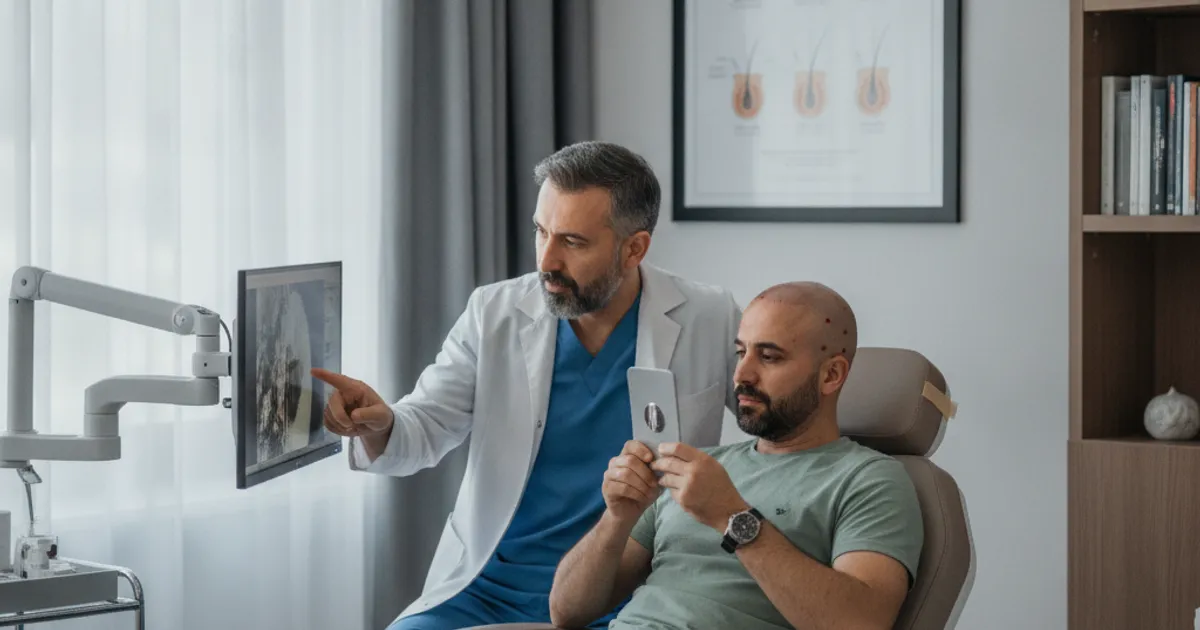
A normal complication rate for hair transplant surgery is generally low—most clinics report overall complication rates under 5%, with serious complications occurring in less than 1% of cases. Minor issues like swelling, folliculitis, and temporary shock loss are more common but typically resolve on their own within weeks.
What are the most common hair transplant complications and their rates?
Most complications are mild and temporary. The table below shows approximate incidence rates based on published clinical literature and surgeon surveys. These are general ranges—your actual risk depends on your surgeon's skill, your health, and how well you follow aftercare instructions.
| Complication | Approximate Rate | Typical Onset | Resolution |
|---|---|---|---|
| Swelling (edema) | Very common (up to 80%) | 1–3 days post-op | Resolves in 3–7 days |
| Folliculitis (inflamed follicles) | 5–20% | 2–4 weeks post-op | Usually clears with antibiotics or topical treatment |
| Shock loss (telogen effluvium) | 10–30% | 2–8 weeks post-op | Hair regrows within 3–6 months |
| Numbness or tingling | Common (up to 50%) | Immediately after surgery | Improves over weeks to months |
| Scarring (visible) | 2–5% (FUT); 1–3% (FUE) | 3–6 months post-op | May require revision |
| Infection | 0.5–2% | 3–10 days post-op | Treatable with antibiotics |
| Graft failure (poor growth) | 1–5% | 6–12 months post-op | May need a second procedure |
What serious complications are rare but possible?
Serious complications are uncommon but can occur. They include:
- Necrosis (tissue death) – extremely rare (less than 0.1%), usually linked to poor blood supply or smoking.
- Hypertrophic scarring or keloids – more common in patients with a history of keloids; rate around 1–2% in susceptible individuals.
- Persistent numbness or nerve damage – rare (less than 1%), typically temporary but can last months.
- Severe infection requiring hospitalization – very rare (less than 0.5%).
- Allergic reaction to anesthesia or medication – rare, estimated at 0.1–0.5%.
How do complication rates compare between FUT and FUE?
Both FUT (strip) and FUE (follicular unit extraction) have low complication rates, but the profiles differ slightly. FUT involves a linear scar, while FUE leaves tiny puncture scars. Studies suggest FUE may have a slightly lower risk of noticeable scarring but a marginally higher risk of folliculitis and graft handling issues. Overall, serious complication rates are similar.
FUT (Strip)
N/A
- ✓ Visible linear scar: 2–5%
- ✓ Infection: 0.5–2%
- ✓ Numbness: common, usually temporary
- ✓ Graft failure: 1–5%
FUE
N/A
- ✓ Visible scarring: 1–3% (tiny dots)
- ✓ Folliculitis: 5–20%
- ✓ Infection: 0.5–2%
- ✓ Graft failure: 1–5%
What factors increase the risk of complications?
Certain patient and procedural factors can raise your risk:
- Smoking – impairs blood flow and healing, increasing necrosis and infection risk.
- Uncontrolled diabetes or autoimmune conditions – slower healing and higher infection risk.
- History of keloids – higher chance of hypertrophic scarring.
- Poor surgeon technique or inexperienced staff – can lead to graft damage, poor growth, and scarring.
- Large session size (over 4,000 grafts) – may increase trauma and recovery time.
- Not following aftercare instructions – e.g., scratching, not using prescribed medications, premature washing.
How can you reduce your risk of complications?
Follow these steps to minimize complications:
- 1. Choose a board-certified, experienced surgeon with a proven track record.
- 2. Disclose your full medical history and medications—especially blood thinners.
- 3. Stop smoking at least two weeks before and after surgery.
- 4. Follow all pre-op and post-op instructions exactly, including washing and medication schedules.
- 5. Avoid strenuous activity and sun exposure for the recommended period.
- 6. Attend follow-up appointments so any issues are caught early.
What should you do if you suspect a complication?
Contact your surgeon immediately if you notice signs of infection (increasing redness, warmth, pus, fever), severe pain, or unusual swelling. Early intervention is key. For minor issues like folliculitis or shock loss, your surgeon can prescribe treatment or reassure you. Never try to self-treat with over-the-counter remedies without consulting your clinic first.
FAQ: Hair transplant complication rates
What is the most common complication after a hair transplant?
Swelling and temporary numbness are the most common, affecting up to 80% and 50% of patients respectively. Both resolve on their own within days to weeks.
Can a hair transplant cause permanent damage?
Permanent damage is rare. Serious complications like necrosis or permanent nerve damage occur in less than 1% of cases. Choosing a skilled surgeon greatly reduces this risk.
Is infection common after a hair transplant?
Infection rates are low—typically 0.5–2%. Following aftercare instructions and taking prescribed antibiotics if given can further reduce risk.
How does smoking affect complication rates?
Smoking significantly increases the risk of poor wound healing, necrosis, and infection. Surgeons recommend stopping smoking at least two weeks before and after surgery.
More Guides
- Does Hair Fall More in Autumn? Seasonal Shedding Explained
Does hair fall more in autumn? Learn why seasonal shedding peaks in fall, how much is normal, what science says, and when to see a specialist.
- Finasteride Half-Life: How Long Does It Stay in Your System?
Finasteride half-life is about 6-8 hours, but it can take days to weeks to fully clear. Learn how long finasteride stays in your system and what affects it.
- Finasteride 5 mg: What It Treats Besides Hair Loss
Finasteride 5 mg is mainly used for benign prostatic hyperplasia (BPH). Learn its uses, how it compares to 1 mg, side effects, and off-label options.
- Hair Transplant and Headaches or Migraines: Is It Safe?
Is a hair transplant safe if you get headaches or migraines? Learn causes, duration, prevention, and when to see a doctor. Get clear answers here.