
Hair Transplant Cost in Pakistan 2026: What to Expect
Hair transplant cost in Pakistan 2026: understand pricing by hair loss stage, what's included, FUE vs FUT, hidden costs, and aftercare planning.
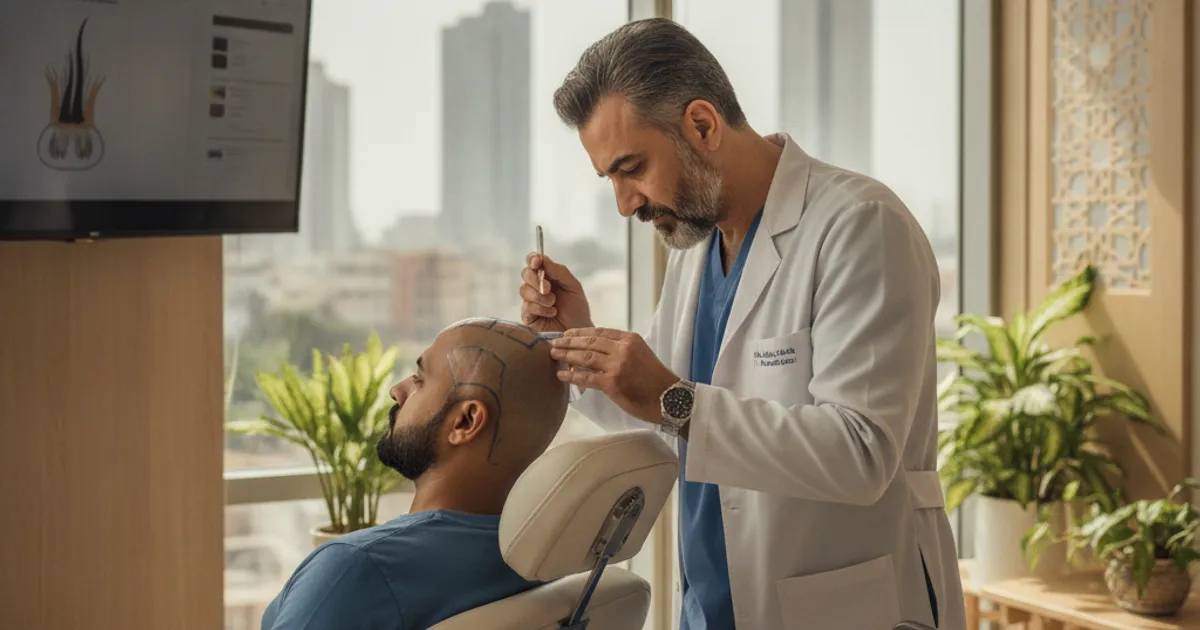
If you're researching a hair transplant in Pakistan, the first question is usually about money. The hair transplant cost in Pakistan 2026 depends on several factors: your stage of hair loss, the technique used, the clinic's reputation, and what's bundled into the quoted price. This guide breaks down how pricing works, what you can expect to pay at different stages, and how to plan your recovery so the investment holds up. We won't give you fake precision—prices vary by city and surgeon—but you'll get a clear framework to compare quotes and avoid surprises.
How Hair Transplant Pricing Works in Pakistan
Most clinics in Pakistan price by the number of grafts (hair follicles) they transplant, not by a flat fee. A graft is a tiny cluster of one to four hairs. The more grafts you need, the higher the cost. Clinics often quote a per-graft rate that drops slightly for larger sessions, or they offer package prices for an estimated graft count. Your stage of hair loss determines the graft count, so that's the biggest driver. Other factors include the surgeon's experience, the clinic's location (Karachi, Lahore, and Islamabad tend to be pricier than smaller cities), and whether the quote includes post-op care, medications, and follow-ups.
- Graft count: the number of grafts required varies widely depending on the extent of hair loss and individual donor characteristics.
- Technique: FUE (follicular unit extraction) is generally more labor-intensive and often costs more per graft than FUT (strip method).
- Surgeon reputation: highly experienced surgeons or clinic founders charge more.
- Location: metro cities have higher overheads, which reflect in pricing.
- Inclusions: some quotes bundle PRP, medications, and follow-up visits; others charge extra.
Cost by Hair Loss Stage: What You Might Pay
To give you a realistic ballpark, we've broken down average case pricing by stage of hair loss. These are median figures based on aggregated clinic data—not quotes for your specific case. Your actual cost will depend on your donor hair quality, the clinic you choose, and the final graft count. Use these ranges to set expectations, then get a personalized assessment.
| Stage of Hair Loss | Typical Graft Range | Median Cost (PKR) |
|---|---|---|
| Early (Norwood 2–3) | 1,000–1,500 | 150,000 |
| Moderate (Norwood 4–5) | 1,500–2,500 | 250,000 |
| Advanced (Norwood 6–7) | 2,500–4,000+ | 400,000 |
What’s Typically Included in the Price?
Not all quotes are created equal. A low headline price might exclude essentials like post-op medications, follow-up visits, or PRP therapy. Before you compare, ask each clinic for a written breakdown of inclusions. Here's what a comprehensive package usually covers—and what you should confirm.
- Pre-operative consultation and blood tests
- Surgery fees (surgeon, technicians, operating room)
- Local anesthesia and sedation
- Post-op medications (antibiotics, painkillers, anti-inflammatory drugs)
- Follow-up visits (typically 1 week, 1 month, 6 months, 1 year)
- Take-home care kit (saline spray, ointment, neck pillow)
- PRP therapy (sometimes included, often an add-on)
- Airport pickup and accommodation (rarely included; ask)
0% of Karachi clinics on Clinic Reccy offer post-op medication
FUE vs. FUT: Does Technique Affect Cost?
Yes, the technique can shift the price. FUE is more time-consuming and requires more meticulous extraction, so it's often priced higher per graft than FUT. However, FUE leaves less visible scarring and has a faster recovery for many patients. FUT (strip harvesting) can be more cost-effective for larger sessions because it allows harvesting more grafts in one go. Some clinics offer both and will recommend based on your donor area and goals. Here's a side-by-side comparison of typical cost and trade-offs.
FUE (Follicular Unit Extraction)
PKR 200,000–400,000+
- ✓ No linear scar
- ✓ Faster recovery for many
- ✓ Higher per-graft cost
- ✓ Suitable for shorter hairstyles
FUT (Follicular Unit Transplantation)
PKR 150,000–300,000+
- ✓ Linear scar at donor site
- ✓ Longer recovery
- ✓ Lower per-graft cost
- ✓ Can yield more grafts in one session
Hidden Costs to Watch For
The quoted price is rarely the final amount you'll pay. Some clinics add charges for items that others include. To avoid budget blowouts, ask upfront about these potential extras.
- PRP (platelet-rich plasma) therapy — often recommended to boost graft survival, but frequently an add-on
- Additional graft sessions if the first procedure doesn't meet density goals
- Medications and aftercare products after the initial supply runs out
- Follow-up visits beyond the standard schedule
- Travel and accommodation if you're going to another city
- Time off work — factor in unpaid leave if applicable
How to Choose a Clinic Without Getting Burned
Price matters, but it shouldn't be the only factor. A cheap transplant that fails will cost more to fix. Here's a practical checklist to evaluate clinics.
2 clinics listed on Clinic Reccy in Lahore.
Planning Your Recovery: Aftercare That Protects Your Investment
The surgery is only half the story. Proper aftercare protects your grafts and helps ensure the final result matches the plan. Most clinics provide a detailed post-op protocol, but here are the key points to plan for.
- First 48 hours: sleep with your head elevated, avoid touching the grafts, and use saline spray as directed.
- First week: no strenuous exercise, no alcohol, and avoid direct sun exposure on the scalp.
- Washing: follow the clinic's washing schedule—usually a gentle wash after 48–72 hours.
- Medications: take all prescribed antibiotics and anti-inflammatories exactly as directed.
- Follow-up visits: attend all scheduled check-ups so the surgeon can monitor healing.
- Long-term: use sun protection and consider recommended treatments (like minoxidil or finasteride) to maintain native hair.
Frequently Asked Questions
Is hair transplant cost in Pakistan negotiable?
Some clinics offer flexible packages or discounts for larger sessions, but be cautious—deep discounts may compromise quality. It's better to compare inclusions than to haggle on price alone.
Does the cost include PRP therapy?
Often not. PRP is frequently an add-on, though some clinics bundle it. Ask specifically whether PRP is included in your quote.
How many grafts will I need?
That depends on your stage of hair loss and donor density. Early cases might need 1,000–1,500 grafts; advanced cases can require 3,000–4,000 or more. Only a consultation can give you an accurate estimate.
Can I pay in installments?
Some clinics offer installment plans or financing. Ask about payment options during your consultation.
How to Budget for a Hair Transplant Beyond the Quote
Most patients focus on the surgery fee and forget the surrounding costs. A realistic budget covers the procedure plus travel, time off work, aftercare products, and maintenance treatments. Build a contingency of roughly ten to twenty percent on top of your quoted price so an add-on PRP session or extra medication refill doesn't derail your plan.
- Travel and accommodation if you are going to another city, including a companion's costs
- Unpaid leave for the procedure and the first week of recovery
- Ongoing maintenance such as minoxidil or finasteride, which is a recurring monthly expense
- Replacement aftercare supplies once the clinic's take-home kit runs out
- A reserve for a possible touch-up session, which many patients consider after the twelve-month mark
What the First Year Actually Looks Like
Understanding the timeline helps you judge results fairly and avoid panic in the early months. Grafts typically shed in the first few weeks after surgery, which is normal and not a sign of failure. New growth usually becomes visible over the following months, with density continuing to improve well into the first year. Final results are generally assessed around twelve months, so resist comparing your progress to others at the three- or six-month stage.
- Weeks one to three: healing and the expected shedding of transplanted hairs
- Months two to four: early regrowth begins, often fine and uneven
- Months five to eight: noticeable thickening and improved coverage
- Months nine to twelve: maturation of results and assessment of density
- Beyond twelve months: discussion of whether a touch-up is worthwhile
Red Flags and Questions to Ask Before You Pay
A low price is only a bargain if the work is safe and the results hold up. Protect yourself by asking direct questions and insisting on written answers. A reputable clinic will welcome scrutiny rather than deflect it.
- Who performs the extraction and implantation, the surgeon or technicians, and how are they supervised?
- Can you see before-and-after photos of patients with a similar stage of hair loss, not just showcase cases?
- What is the clinic's policy if the result falls short of the agreed plan?
- Is the final graft count confirmed on the day, and how does that affect the price?
- Are all fees, including medications and follow-ups, listed in a written estimate?
- What is the clinic's registration and hygiene standard, and can you tour the facility?
Is it cheaper to have a hair transplant in a smaller city?
Overheads tend to be lower outside Karachi, Lahore, and Islamabad, so quotes are often lower. But weigh that against surgeon experience and aftercare quality. Traveling for a cheaper procedure can cost more overall if follow-up care is inconvenient or the result needs correction.
Can I negotiate the price?
Some clinics are flexible on package pricing, especially for larger sessions or off-peak dates. Ask politely and get any agreed discount confirmed in writing alongside the inclusions, so nothing is quietly removed to offset the reduction.
Does the price change if I need fewer grafts than estimated?
It can. Many clinics quote per graft or per package based on an estimate, then adjust after the final count is confirmed on the day. Clarify in advance how over- or under-estimates are handled so there are no surprises.
Is a more expensive clinic always better?
Not necessarily. Price reflects reputation, location, and inclusions as much as skill. Judge a clinic on surgeon experience, transparent pricing, realistic expectations, and aftercare, rather than cost alone.
How much time off work should I budget for?
Plan for at least three to five days away from work, and longer if your job is physical or involves heavy lifting. The first week is the most important for protecting grafts, so avoid scheduling the procedure around a busy period.
Compare Clinics
Browse and compare verified clinics with real pricing.
Destinations
More Guides
- Hair Transplant and Hair Dye: When Can You Color Again?
When can you dye your hair after a transplant? Get a clear recovery timeline, risks of coloring too soon, and tips for choosing safe dye. Plan your aftercare.
- Hair Transplant for Swimmers: Chlorine and Healing
Planning a hair transplant as a swimmer? Learn when you can swim after surgery, how chlorine affects healing, and aftercare rules to protect grafts.
- Hair Transplant for Daily Helmet Wearers: Recovery Guide
Wear a helmet daily? Learn how to protect grafts, time recovery, and safely reintroduce your helmet after a hair transplant. Practical aftercare tips.
- Hair Transplant and Sauna Use: When Is It Safe?
When can you use a sauna after a hair transplant? This guide covers the risks, a safe recovery timeline, and practical aftercare tips for heat exposure.