
Hair Transplant for a Receding Hairline at 25: Too Early?
Is 25 too early for a hair transplant? A practical guide to receding hairline surgery at 25, covering risks, candidacy, planning, recovery, and aftercare.
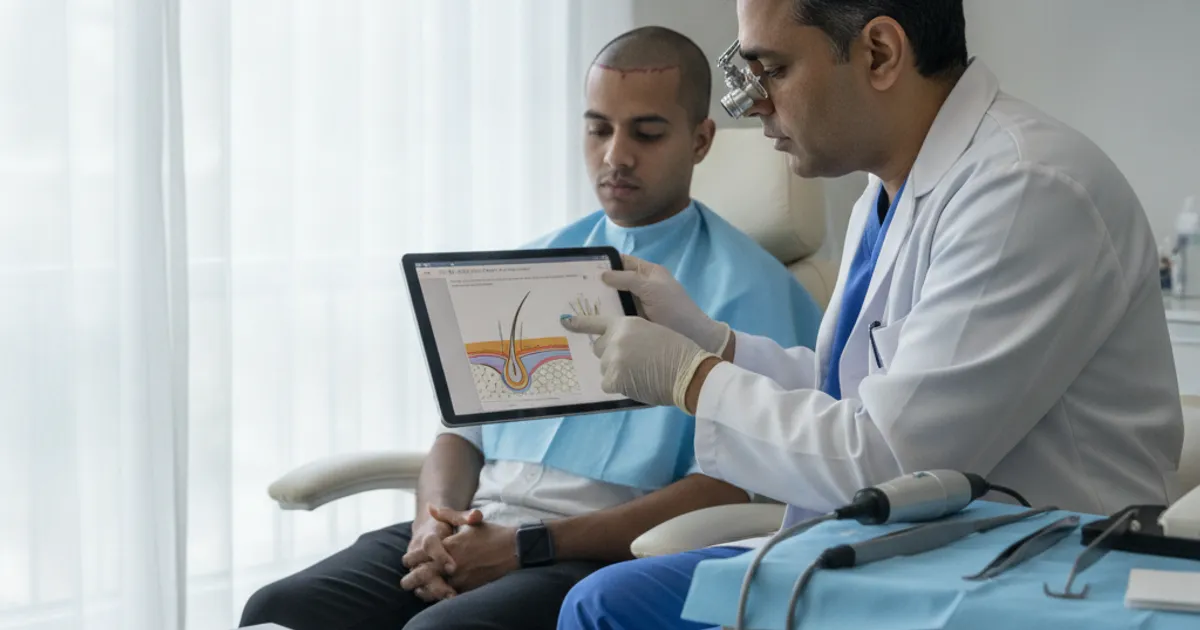
Is 25 Too Young for a Hair Transplant?
Short answer: sometimes yes, sometimes no. Age alone doesn't disqualify you, but 25 sits in a tricky zone. Your hair loss pattern may still be evolving, and a transplant locks in a hairline design you'll live with for decades. Most surgeons won't flat-out refuse a 25-year-old, but good ones will slow you down and ask hard questions about stability, family history, and expectations. The real question isn't "Am I old enough?" It's "Is my hair loss stable enough to operate on?"
Why Age 25 Is a Gray Area for Hairline Surgery
At 25, your donor hair supply is fixed, but your balding pattern isn't. Male pattern baldness can progress slowly for years and then accelerate. Surgeons have to guess where your hairline will end up and design something that still looks natural at 45. That's a lot of guesswork. Many clinics handle it by tracking your loss over time, often with photos every 6–12 months, before committing to surgery.
- Your hair loss may not have stabilized yet, making long-term planning difficult.
- A youthful hairline design can look unnatural as you age if it's too low or too straight.
- You may need future procedures, so preserving donor hair now matters more than a quick fix.
- Family history of advanced baldness is a major factor surgeons weigh heavily.
- Medication response varies, and some men see significant regrowth or stabilization on treatment alone.
The Risks of Operating on a Young, Unstable Hairline
The biggest risk isn't surgical complication. It's a bad long-term aesthetic outcome. If a surgeon grafts a dense, low hairline at 25 and you continue balding behind it, you end up with a plug of hair in front and bare scalp behind, often called a "hair island." Fixing that requires more grafts, more money, and sometimes can't be fully corrected. Other risks include wasting donor hair on a hairline that should have been more conservative, and psychological disappointment if expectations weren't realistic.
- Unnatural hairline placement that doesn't suit an older face.
- Depleted donor area if too many grafts are used too early.
- Need for revision surgery within a few years.
- Emotional strain if results don't match expectations or loss continues.
- Scarring in the donor area that limits future options.
When a 25-Year-Old Is a Good Candidate
Some 25-year-olds are solid candidates. If your hair loss has been stable for a couple of years, your donor density is strong, and your family history suggests you won't progress to advanced baldness, surgery can be reasonable. You also need realistic expectations and a willingness to use medication if recommended. A good surgeon will assess all of this before agreeing to operate.
- Hair loss has been stable for at least 12–24 months.
- You have good donor hair density and quality.
- Family history doesn't point to severe baldness.
- You understand you may need future procedures.
- You're willing to use proven treatments like minoxidil or finasteride if advised.
- Your expectations are realistic and you're not seeking perfection.
What to Try Before Surgery: Planning Your Timeline
Before booking surgery, give non-surgical options a fair run. Many men stabilize or even regrow hair with medication, and that can delay or reduce the need for a transplant. A sensible timeline is 12–24 months of monitoring and treatment before deciding. This isn't wasted time. It's data your surgeon can use to plan a hairline that lasts.
- Start with a dermatologist or hair restoration specialist for a proper diagnosis.
- Try FDA-approved treatments like minoxidil and finasteride if appropriate.
- Take standardized photos every 6 months to track progress.
- Consider platelet-rich plasma (PRP) as an adjunct, though evidence varies.
- Address lifestyle factors: stress, diet, and scalp health.
- Reassess with your surgeon after a year of stability.
What a Hair Transplant at 25 Actually Involves
The procedure itself is the same at 25 as at 45. The difference is in the planning. Surgeons typically use fewer grafts and a more conservative hairline design for younger patients to preserve donor hair for the future. Most procedures are done under local anesthesia and take a full day. You'll be awake but comfortable.
- Consultation and hairline design with long-term planning.
- Donor hair extraction (FUE or FUT, depending on your case).
- Graft placement in the recipient area.
- Post-op instructions and follow-up schedule.
- Realistic timeline: initial growth at 3–4 months, fuller results at 12 months.
Recovery and Aftercare: The First Year
Recovery is straightforward for most people, but the first year requires patience. Scabbing heals within 10 days, and transplanted hair sheds around weeks 2–6 before regrowing. Don't panic when that happens. By month 4 you'll see new growth, and by month 12 you'll have a good idea of the final result. Aftercare is mostly about protecting the grafts early and avoiding trauma to the scalp.
- Sleep elevated for the first few nights to reduce swelling.
- Avoid strenuous exercise for at least a week, longer if advised.
- Don't scratch or pick at scabs.
- Wash gently as instructed, usually starting a few days post-op.
- Stay out of direct sun on the recipient area for weeks.
- Attend follow-up appointments to track healing and growth.
Choosing a Clinic That Won't Rush You
The right clinic for a 25-year-old is one that prioritizes long-term planning over a quick sale. Look for surgeons who discuss stabilization, show you before-and-after photos of similar-aged patients, and are honest about the possibility of future surgery. Avoid clinics that promise a dense, low hairline or push you to book immediately. A consultation should feel like a strategy session, not a sales pitch.
- Ask how they handle young patients and what their criteria are.
- Request to see results on patients with similar hair loss patterns.
- Discuss a multi-year plan, including medication and future procedures.
- Check credentials and whether the surgeon performs the procedure themselves.
- Read reviews and look for red flags like pressure tactics or unrealistic promises.
FAQ: Receding Hairline Transplants at 25
Can I get a hair transplant at 25?
Yes, it's possible, but candidacy depends on hair loss stability, donor supply, family history, and realistic expectations. Many surgeons prefer to wait until loss has stabilized, often monitoring for 12–24 months.
Will I need another transplant later?
Possibly. If your natural hair loss continues, you may need a second procedure to maintain coverage. A conservative hairline design and medication can help delay or reduce that need.
Is it better to wait until I'm older?
Waiting can be wise if your hair loss is still progressing quickly. But if your loss has been stable and you're a good candidate, surgery at 25 can be reasonable. The key is a thorough assessment, not age alone.
What should I do before considering surgery?
See a specialist, try proven treatments like minoxidil or finasteride if appropriate, track your hair loss with photos, and give it at least a year to see if things stabilize. Then reassess with a surgeon.
How Surgeons Assess Stability Beyond Photos
Photos are helpful, but they only tell part of the story. Surgeons also look for signs of miniaturization—hairs that are thinner and shorter than normal—in areas that appear full. Using a dermatoscope, they can measure the proportion of miniaturized hairs in your hairline and crown. A high proportion suggests active loss, even if you haven't noticed visible thinning. This is why a single visit isn't enough: stability is a trend, not a snapshot.
Another tool is the pull test, where the surgeon gently tugs a small group of hairs to see how many come out. A positive pull test indicates active shedding. Some surgeons also use hair counts from a small marked area over time. These methods help predict whether your hairline is likely to recede further. If miniaturization is widespread, surgery may be premature.
- Dermatoscopy: examines individual hairs for miniaturization.
- Pull test: checks for active shedding.
- Hair count in a marked area: tracks density changes over months.
- Family history: patterns of baldness in relatives inform risk.
- Response to medication: stabilization on treatment is a positive sign.
Comparing Hair Transplant Techniques for Young Patients
FUE (follicular unit extraction) and FUT (follicular unit transplantation) are the two main techniques. For younger patients, FUE is often preferred because it leaves less noticeable scarring and allows for shorter hairstyles. However, FUT may yield more grafts in a single session and can be useful if a large area needs coverage. The choice depends on your donor density, hair characteristics, and how many grafts you might need over your lifetime.
Some surgeons offer a hybrid approach, using FUT for a strip harvest and FUE for additional grafts. This can maximize graft numbers while preserving donor area for future procedures. Discuss the trade-offs with your surgeon: FUE is more time-consuming and may have a lower graft survival rate in some cases, but it avoids a linear scar. For a 25-year-old planning for potential future sessions, preserving donor hair is key, so a conservative approach with either technique is wise.
Frequently Asked Questions
Can I have a hair transplant at 25 without trying medication first?
Some surgeons will operate without prior medication, but many recommend a trial of FDA-approved treatments like minoxidil and finasteride to see if your loss stabilizes. Medication can slow or stop further loss, which improves long-term planning. If you can't or won't use medication, be upfront with your surgeon so they can adjust the hairline design accordingly.
Will I need another transplant later?
It's possible. Because hair loss can progress, you may need a second procedure to address areas that continue to thin. A good surgeon plans for this by using fewer grafts and a conservative hairline now, preserving donor hair for the future. Some men never need another session, but it's wise to assume you might.
How do I know if my hair loss is stable?
Stability is typically confirmed by comparing photos taken every 6–12 months, ideally with the same lighting and angles. Your surgeon may also use dermatoscopy to check for miniaturization. If your hairline hasn't changed noticeably in 12–24 months and miniaturization is minimal, you may be considered stable. However, stability isn't guaranteed forever, so ongoing monitoring is smart.
What happens if I have a transplant too early?
The main risk is a unnatural or unsustainable result. If you continue to lose native hair behind the transplanted hairline, you could end up with a isolated patch of hair in front and baldness behind—often called a hair island. Correcting this may require additional surgery and donor hair, and sometimes full correction isn't possible. Waiting until your loss is stable helps avoid this.
More Guides
- How Long After Finasteride Before a Hair Transplant?
Planning a hair transplant while on finasteride? Learn the typical waiting period, why timing matters, and how to coordinate with your surgeon for best results.
- Early Symptoms of Hair Loss: What to Watch For First
Learn the early symptoms of hair loss, how to track them, and when to see a specialist. Plan ahead with treatment options and costs.
- Alopecia Treatment: A Comprehensive Guide
A practical guide to alopecia treatment: types, diagnosis, medications, surgery, recovery timeline, and aftercare. Plan your hair restoration with confidence.
- Hair Loss Causes: What You Can and Can't Control
Understand hair loss causes, what's controllable, and how to plan a transplant. Practical guide to factors, aftercare, and when to see a specialist.