
Hair Transplant for Men With a Beard: Shaving and Recovery
Planning a hair transplant with a beard? Learn when you need to shave, how FUE and FUT differ, beard recovery week by week, and aftercare tips.
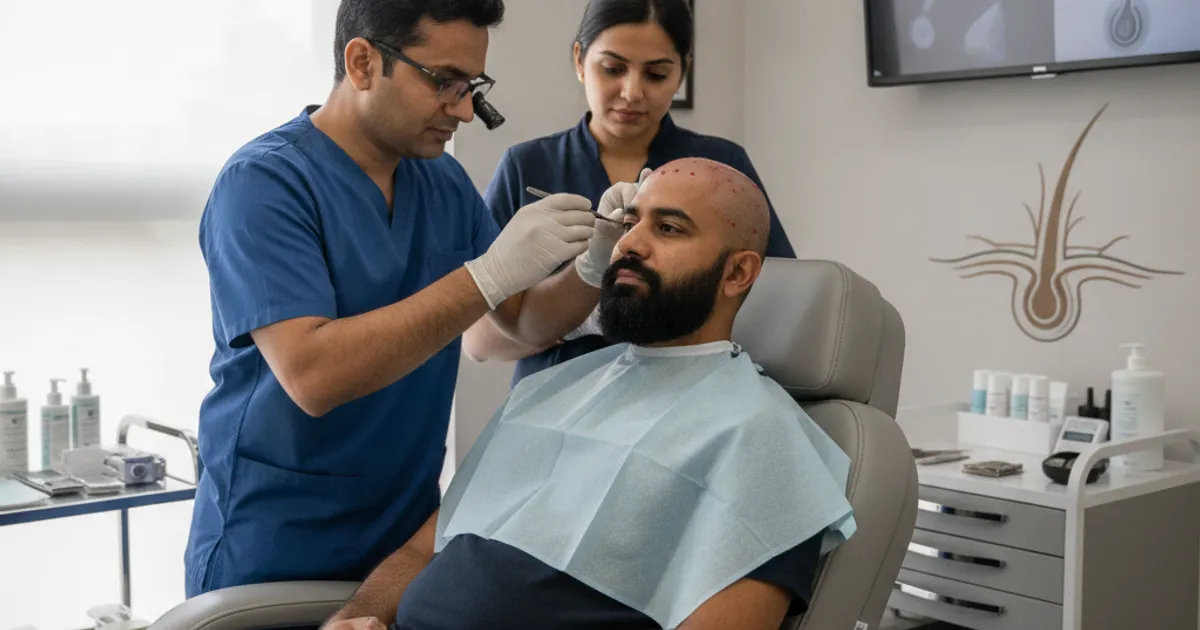
If you have a beard and you're booked in for a hair transplant, you probably have two questions: will they shave it off, and how long until it looks normal again? The short answer is that it depends on the clinic, the technique, and how much donor hair they need. Most men don't lose the whole beard, but some trimming or shaving is common. Recovery is usually straightforward, though the early days need care.
Do You Have to Shave Your Beard for a Hair Transplant?
Not always. It depends on where the surgeon needs to harvest donor hair and which technique they use. For many men, the donor area is the back and sides of the scalp, so the beard stays untouched. But if you're having a beard-to-scalp transplant (using beard hair as donor), or if the clinic wants a clean field around the donor site, they may ask you to shave or trim. Here's what usually triggers a shaving request:
- The surgeon plans to harvest beard hair for the scalp (beard-to-scalp FUE).
- You're having FUT (strip surgery) and the clinic wants a uniform donor strip area.
- The clinic's protocol requires a shaved donor area for hygiene or visibility.
- You have a very short beard and the clinic wants to avoid hair catching in sutures or punches.
FUE vs. FUT: How Beard Shaving Requirements Differ
FUE (follicular unit extraction) usually involves shaving the donor area on the scalp, not the beard. FUT (follicular unit transplantation) removes a strip of scalp, so the beard is rarely involved unless you're using beard hair as an additional donor source. The table below sums up the typical differences.
| Aspect | FUE | FUT |
|---|---|---|
| Donor area shaving | Usually shaved (scalp) | Strip area trimmed or shaved |
| Beard shaving | Only if beard hair is harvested | Rarely, unless beard donor used |
| Scarring | Small dot scars | Linear scar |
| Recovery visibility | Short haircut hides it | Longer hair can cover strip |
| Beard regrowth | Unaffected unless harvested | Unaffected unless harvested |
What Happens to Your Beard During Surgery
If your beard is part of the donor plan, here's the typical sequence. Note that clinics vary, so treat this as a general outline.
- Pre-op consultation: the surgeon marks the beard donor area and confirms how many grafts they need.
- Trim or shave: the area is clipped short so follicles are visible.
- Local anaesthetic: injections numb the beard area before extraction.
- Extraction: individual follicles are removed with a punch tool; tiny scabs form.
- Post-op care: the beard area is treated like any donor site — keep it clean and avoid touching.
Beard Recovery Timeline: What to Expect Week by Week
Recovery in the beard area is similar to scalp donor recovery. The timeline below is a general guide; your clinic will give you specific milestones.
Beard Aftercare: Cleaning, Itching, and Ingrown Hairs
The beard area heals well, but it needs gentle handling. Here's what works based on common clinic advice.
- Cleaning: Use a mild, fragrance-free cleanser. Pat dry — don't rub.
- Itching: Normal in the first few weeks. Don't scratch; use a cold compress or clinic-approved lotion.
- Ingrown hairs: Small bumps may appear. Exfoliate gently once your clinic says it's safe.
- Shaving: Wait until your clinic clears you. Use a clean razor and go with the grain.
- Sun protection: Keep the area covered or use SPF once healed.
When Can You Shave Your Beard Again?
Most clinics advise waiting a few weeks before shaving the beard, but it depends on how much was harvested and how you heal. Here's a safe approach:
- First few days: No shaving. Let scabs fall off naturally.
- Once scabs are gone: If skin looks calm, you may trim with an electric razor on a longer setting.
- After a few weeks: Many men can shave with a manual razor, but check with your clinic first.
- Later on: Resume normal shaving, but avoid aggressive against-the-grain passes for a while.
Planning Tips: Scheduling Surgery Around Your Beard
A little planning makes recovery easier, especially if you want to keep your beard looking decent during the healing phase.
- Book surgery when you can take a few days off work — swelling and scabs are most visible early on.
- Ask the clinic exactly which areas will be shaved so you can plan your look.
- If you have a big event, schedule surgery well in advance to allow healing.
- Stock up on gentle cleanser, a soft towel, and a cold pack before surgery day.
- Arrange a ride home if you're having sedation; don't drive yourself.
Questions to Ask Your Clinic About Beard Shaving and Recovery
Bring these to your consultation. The answers will tell you a lot about the clinic's experience with bearded patients.
- Will you need to shave my beard, and if so, which parts?
- How many grafts will come from my beard versus my scalp?
- What's your typical healing timeline for beard donor sites?
- When can I shave again, and what razor do you recommend?
- What should I do if I get ingrown hairs or folliculitis?
- Can I see before-and-after photos of patients with beards?
FAQ: Beard Hair Transplants, Shaving, and Recovery
Will my beard grow back after being used as donor hair?
Yes, in most cases. Beard follicles are extracted individually, and the surrounding hair continues to grow. Some tiny patchiness can occur, but it usually fills in over time.
Can I have a hair transplant without shaving my beard at all?
Often yes, especially with FUE on the scalp. If your surgeon doesn't need beard hair and your clinic doesn't require a shaved donor area, your beard can stay as it is. Just confirm before booking.
How long after surgery can I trim my beard with clippers?
Most clinics allow clippers on a longer guard once scabs have healed. Always get the green light from your surgeon first.
Is beard hair good for transplanting to the scalp?
Beard hair is thicker and coarser than scalp hair, so it's often used to add density. It's a common donor source for FUE, but it's not right for every case — your surgeon will advise.
How Beard Hair Is Used as a Donor Source
Beard hair is increasingly used as a donor source in hair transplantation, particularly for patients who have limited scalp donor hair or who need additional grafts to achieve desired density. Beard hair has different characteristics from scalp hair: it tends to be coarser, with a different growth cycle and texture. When transplanted to the scalp, beard hair can provide good coverage, but it may require more grafts to achieve the same visual density as scalp hair. Surgeons often use beard hair to augment the hairline or crown area, or to fill in scars. The extraction process is similar to FUE, using a punch tool to remove individual follicles. The beard area typically heals well, but because beard hair is often thicker, the extraction sites may be slightly more visible during the healing phase. It's important to discuss with your surgeon how much beard hair will be used and what the expected outcome is, as beard hair may grow at a different rate and angle than scalp hair.
Managing Expectations: Beard Hair Growth After Transplant
After beard hair is transplanted to the scalp, it goes through a similar cycle as scalp grafts: a shedding phase, a dormant phase, and then new growth. However, beard hair may have a longer dormant period, and the initial growth may appear later than with scalp hair. Patients should be prepared for the transplanted beard hair to grow at a different rate and texture initially. Over time, it tends to blend with the surrounding scalp hair, but the coarser texture may remain. It's also worth noting that beard hair, when transplanted, may continue to grow with its original characteristics, meaning it might require more frequent trimming to match scalp hair length. Your surgeon can advise on what to expect based on your individual hair characteristics.
Potential Complications and When to Seek Help
While beard donor sites generally heal well, there are potential complications to be aware of. Common issues include folliculitis (inflammation of the hair follicles), ingrown hairs, and minor infections. Signs of infection may include increased redness, swelling, warmth, or discharge from the donor area. If you notice any of these, contact your clinic promptly. Another potential complication is hypertrophic scarring or keloid formation, though this is less common in the beard area. Some patients may experience numbness or altered sensation in the beard area after extraction, which usually resolves over time. It's important to follow your clinic's aftercare instructions carefully to minimize risks. If you have a history of keloids or poor scarring, inform your surgeon before the procedure.
Frequently Asked Questions
Will my beard grow back after being used as a donor?
When beard hair is extracted for transplantation, the follicles are permanently removed from the beard area. The beard will not regrow in those specific spots. However, the extraction is typically spread out to minimize visible gaps, and the surrounding beard hair can help camouflage the area. Your surgeon will discuss how many grafts can be safely taken from your beard without causing noticeable thinning.
Can I dye my beard after a transplant?
Most clinics advise waiting until the donor area is fully healed before applying any dyes or chemicals. This typically means waiting several weeks. Check with your clinic for their specific recommendation, as dyes can irritate healing skin.
How long should I avoid exercise after a beard transplant?
Strenuous exercise can increase blood flow and potentially affect healing. Most clinics recommend avoiding heavy exercise for at least a week, but this can vary. Follow your clinic's guidance, as they will consider the extent of your procedure.
Is it normal for the beard area to feel tight after surgery?
Yes, some tightness or discomfort is common as the skin heals. It usually subsides within a few days to a week. Gentle stretching and following aftercare instructions can help. If tightness persists or is severe, contact your clinic.
Can I wear a beard trimmer after a beard transplant?
Once your clinic clears you, usually after a few weeks, you can use a beard trimmer on a longer setting. Avoid close shaves or trimmers directly on the donor sites until fully healed. Always follow your clinic's timeline.
More Guides
- How Long After Finasteride Before a Hair Transplant?
Planning a hair transplant while on finasteride? Learn the typical waiting period, why timing matters, and how to coordinate with your surgeon for best results.
- Early Symptoms of Hair Loss: What to Watch For First
Learn the early symptoms of hair loss, how to track them, and when to see a specialist. Plan ahead with treatment options and costs.
- Alopecia Treatment: A Comprehensive Guide
A practical guide to alopecia treatment: types, diagnosis, medications, surgery, recovery timeline, and aftercare. Plan your hair restoration with confidence.
- Hair Loss Causes: What You Can and Can't Control
Understand hair loss causes, what's controllable, and how to plan a transplant. Practical guide to factors, aftercare, and when to see a specialist.