
Hair Transplant Revision: When a Second Procedure Makes Sense
Considering a hair transplant revision? Learn how a second procedure works, who it suits, recovery, results, and costs. Expert explainer from Clinic Reccy.
What Is a Hair Transplant Revision?
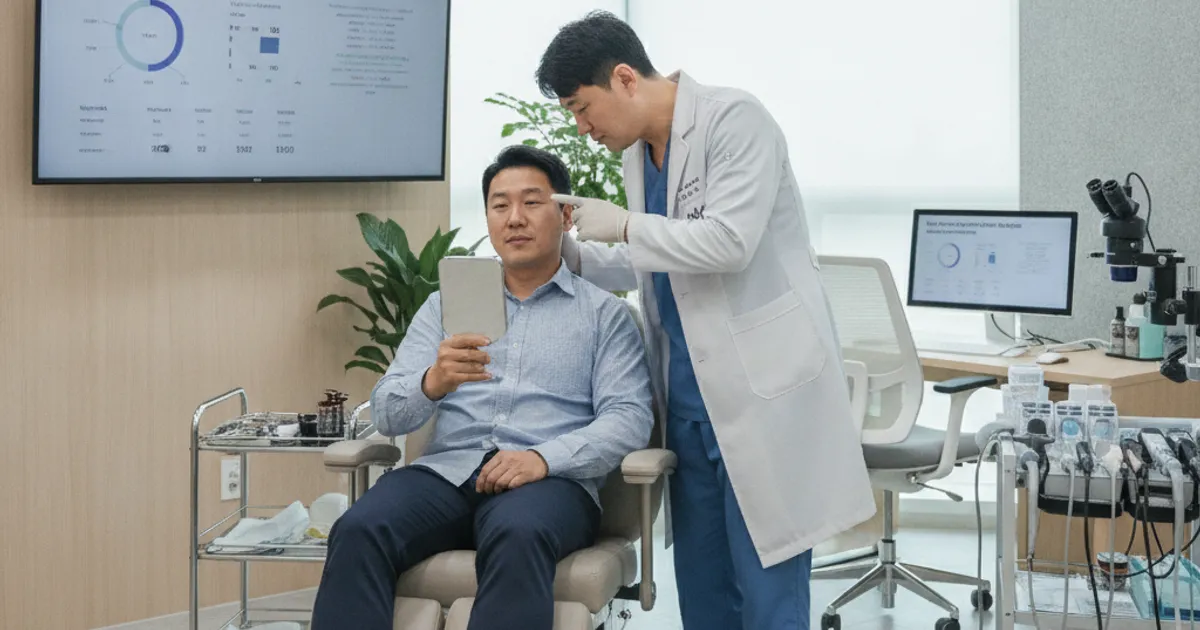
A hair transplant revision is a second procedure done to correct, improve, or refine the results of a previous hair transplant. It's not simply "another transplant" — it's a targeted intervention. Maybe the first surgery left a pluggy hairline, unnatural density, visible scarring, or a graft yield that fell short of expectations. Or perhaps the original procedure was fine, but progressive hair loss has left the transplanted area looking isolated. A revision aims to fix those specific issues, whether by adding grafts, redistributing hair, or repairing scar tissue. It requires a different level of planning than a first-time transplant because the surgeon has to work around existing scars, compromised blood supply, and previous graft patterns.
How a Revision Procedure Is Performed
The surgical steps of a revision are similar to a primary transplant — donor harvesting, recipient site creation, and graft placement — but the planning and execution are more complex. The surgeon must assess the quality and direction of existing grafts, the condition of the donor area (which may already be depleted), and the elasticity and vascularity of the scalp. In many cases, the procedure is performed via FUE (follicular unit extraction) to avoid a second linear scar, though FUT (strip) may still be appropriate if the first procedure was FUT and the donor scar needs revision. Some revisions involve a combination of techniques, such as scar revision with FUE grafting into the scar tissue.
- Pre-operative assessment: mapping existing grafts, measuring donor density, and evaluating scalp laxity and scar tissue.
- Donor harvesting: typically FUE to preserve a clean donor area; sometimes a small strip if scar revision is needed.
- Recipient site creation: careful angulation and distribution to blend with existing hair and avoid trauma to previous grafts.
- Graft placement: using forceps or implanter pens, with attention to natural hair direction and density gradients.
- Scar repair (if applicable): excising widened scars or grafting directly into scar tissue to improve camouflage.
Recovery After a Revision: What to Expect
Recovery from a revision is broadly similar to a primary transplant, but there are a few differences. If the procedure involved scar revision, the healing time may be slightly longer, and there may be more discomfort in the donor area. Swelling, scabbing, and redness are normal in the first week. Most patients can return to desk work within 3–5 days, though strenuous exercise should be avoided for at least two weeks. The shock loss period — where transplanted hairs shed before regrowth — typically occurs 2–4 weeks post-op. Because revision cases often involve working around existing grafts, the initial appearance can look uneven for a few months, but this is temporary.
- Days 1–3: mild swelling, tightness, and scabbing; sleep elevated to reduce swelling.
- Days 4–7: scabs begin to flake off; gentle washing is usually permitted after 48–72 hours.
- Weeks 2–4: shock loss may occur; transplanted hairs shed but follicles remain dormant.
- Months 2–4: early regrowth begins; hair may look thin and uneven.
- Months 6–9: significant improvement in density and coverage.
- Months 12–18: final results mature; scar tissue continues to soften and fade.
| Recovery Phase | Typical Timeline | What to Expect |
|---|---|---|
| Initial healing | First 7–10 days | Swelling, scabbing, redness; avoid washing for 48 hours |
| Shock loss | 2–4 weeks | Temporary shedding of transplanted hairs |
| Early regrowth | 2–4 months | Fine, thin hairs begin to emerge |
| Visible improvement | 6–9 months | Density and coverage become noticeable |
| Final result | 12–18 months | Hair matures; scars soften and fade |
Results: Timeline and Realistic Outcomes
Results from a revision are not instantaneous, and they depend heavily on the reason for the revision. If the goal was to add density to a thin area, patients can expect a noticeable improvement by 6–9 months, with final results at 12–18 months. If the goal was to repair a pluggy hairline or camouflage scarring, the improvement may be more subtle but still meaningful — the key is naturalness rather than dramatic density. It's important to have realistic expectations: a revision cannot create unlimited density, especially if the donor area is limited. In some cases, a second revision may be needed for optimal results, though this is less common.
- Density improvement: a noticeable increase in the treated area, depending on graft count and donor availability.
- Hairline refinement: softer, more irregular hairline that blends better with natural hair.
- Scar camouflage: visible scars become less noticeable as grafts grow through them.
- Naturalness: improved angulation and distribution for a less "pluggy" look.
Who Is a Good Candidate for a Second Procedure?
Not everyone who is unhappy with a first transplant is a candidate for revision. The ideal candidate has a stable donor supply, realistic expectations, and a clear understanding of what can and cannot be achieved. Patients with diffuse unpatterned alopecia (DUPA) or advanced donor depletion may not be suitable. It's also important to wait at least 12 months after the first procedure to allow full maturation of the initial result — many "failed" transplants are simply not fully grown in yet. Age and hair loss stability matter too: younger patients with progressive loss may need a long-term plan rather than a one-off revision.
- You have visible gaps, pluggy areas, or an unnatural hairline from a previous transplant.
- Your donor area still has sufficient density for another harvest (typically assessed via densitometry).
- You have waited at least 12 months since your last procedure.
- Your hair loss has stabilized or is well-controlled with medication.
- You have realistic expectations about density and coverage.
- You are in good general health and have no contraindications to surgery.
| Candidate Profile | Suitability for Revision | Notes |
|---|---|---|
| Good donor density, stable loss | Excellent | Ideal for adding density or refining hairline |
| Previous FUT with widened scar | Good | May combine scar revision with FUE grafting |
| Diffuse thinning, limited donor | Poor | Risk of over-harvesting; consider medical therapy first |
| Young patient with progressive loss | Case-by-case | Needs long-term plan; may defer revision |
| Unrealistic expectations | Not suitable | Counseling required before any surgery |
Cost of a Hair Transplant Revision
Revision surgery typically costs more than a primary transplant on a per-graft basis, because it is more labour-intensive and requires more surgical skill. However, the total cost depends on the number of grafts needed and the complexity of the case. A small touch-up of a few hundred grafts may cost less than a full second transplant. In general, revision prices are higher per graft than first-time procedures, though this varies by clinic and country. Many clinics offer package pricing for revisions, and some provide financing options. It's worth noting that revision surgery is rarely covered by insurance, as it is considered cosmetic.
- Small touch-up: lower end of the range, suitable for minor gaps or scar camouflage.
- Moderate revision: mid-range, common for density improvement or hairline refinement.
- Large revision: higher end, for significant corrective work or combining with a primary procedure.
- Additional costs: consultation fees, PRP therapy (often recommended to support graft survival), and post-op medications.
Revision vs. Alternatives: FUE, FUT, SMP, and Medical Therapy
A revision is just one option for addressing a suboptimal transplant result. Depending on your situation, other approaches may be more appropriate — or complementary. FUE and FUT are the two main harvesting techniques; a revision can use either, but FUE is more common for corrective work because it avoids a new linear scar. Scalp micropigmentation (SMP) can camouflage scars or add the illusion of density without surgery. Medical therapy (finasteride, minoxidil) can help stabilize hair loss and improve graft survival, but it won't fix a poorly placed hairline. In some cases, a combination of approaches works best.
| Option | Best For | Pros | Cons |
|---|---|---|---|
| Revision FUE | Correcting pluggy areas, adding density, scar camouflage | No linear scar, precise grafting, quick recovery | Higher cost per graft, limited by donor supply |
| Revision FUT | Scar revision, large graft numbers | Maximizes graft yield in a single session | Linear scar, longer recovery |
| SMP | Camouflaging scars, creating illusion of density | Non-surgical, immediate results, affordable | Temporary (requires touch-ups), doesn't grow hair |
| Medical therapy | Stabilizing hair loss, supporting graft survival | Non-invasive, can slow progression | Not a fix for existing cosmetic issues, requires ongoing use |
- If your main issue is a visible scar: SMP or scar revision with FUE may be better than a full second transplant.
- If you have ongoing hair loss: medical therapy should be part of the plan to protect your result.
- If you need more density in a specific area: a small FUE revision is often the most direct solution.
- If you have unrealistic expectations: no procedure will satisfy you — seek counseling first.
Choosing a Clinic for a Second Procedure
Revision surgery is a niche skill. Not all clinics that offer hair transplants are experienced in corrective work, and the consequences of a botched revision can be worse than the original problem. Look for a surgeon who specializes in revision cases, has a portfolio of before-and-after photos specifically for revisions, and can explain their approach to scar management and donor preservation. It's also worth checking whether the clinic offers consultations specifically for revision patients — some do, and it's a good sign. Don't be afraid to ask tough questions: how many revisions do they perform per month? What is their protocol for working around existing grafts? Do they offer a guarantee or touch-up policy?
- Surgeon's experience: ask for the number of revision cases performed and see relevant photos.
- Clinic transparency: clear pricing, realistic expectations, and a written treatment plan.
- Technology: use of magnification, implanter pens, and advanced FUE tools for precision.
- Aftercare: structured follow-up, access to PRP or medication, and a clear revision policy.
- Reviews: look for patient stories specifically about revision, not just first-time transplants.
Frequently Asked Questions
How soon after my first transplant can I have a revision?
Most surgeons recommend waiting at least 12 months to allow the initial result to fully mature. Some may advise 18 months for scar tissue to soften. Having a revision too early can compromise graft survival and make it harder to assess what needs correcting.
Will a revision fix a botched hair transplant completely?
It can significantly improve the appearance, but "complete" correction depends on the original damage and your donor supply. A revision can add density, refine the hairline, and camouflage scars, but it cannot reverse donor depletion or create unlimited density. Realistic expectations are key.
Is revision surgery more painful than a first transplant?
Not necessarily. The procedure is performed under local anesthesia, so you shouldn't feel pain during surgery. Post-operative discomfort is similar, though scar revision may cause slightly more soreness in the donor area. Most patients manage with over-the-counter pain relief.
Can I combine a revision with a primary transplant in one session?
Yes, in some cases. If you have areas that were never transplanted and areas that need correction, a surgeon may combine both in one session. However, this increases surgery time and cost, and not all clinics offer combined procedures. It's best discussed during consultation.
More Guides
- Hair Transplant for Curly Hair: Graft and Technique Tips
A plain-English guide to hair transplants for curly hair: how surgeons adapt graft harvesting and placement, recovery, results, costs, and who it suits.
- How Long Does a Hair Transplant Last? Long-Term Durability
How long does a hair transplant last? We explain the procedure, recovery, durability, costs by stage of hair loss, and how it compares to alternatives.
- Hair Transplant for Norwood 6 and 7: What's Possible
A clear look at hair transplant options for Norwood 6 and 7 hair loss: graft limits, staging, recovery, costs, and realistic results.
- Hair Transplant Scar Revision: Options and Outcomes
Hair transplant scar revision can improve the look of donor scars. Learn how it's done, recovery, results, who suits it, and costs in this clear guide.