
Hair Transplant Scabbing and Crusting: Normal vs Concerning
Hair transplant scabbing and crusting is normal after surgery. Learn the healing timeline, red flags, aftercare do's and don'ts, and when to seek help.
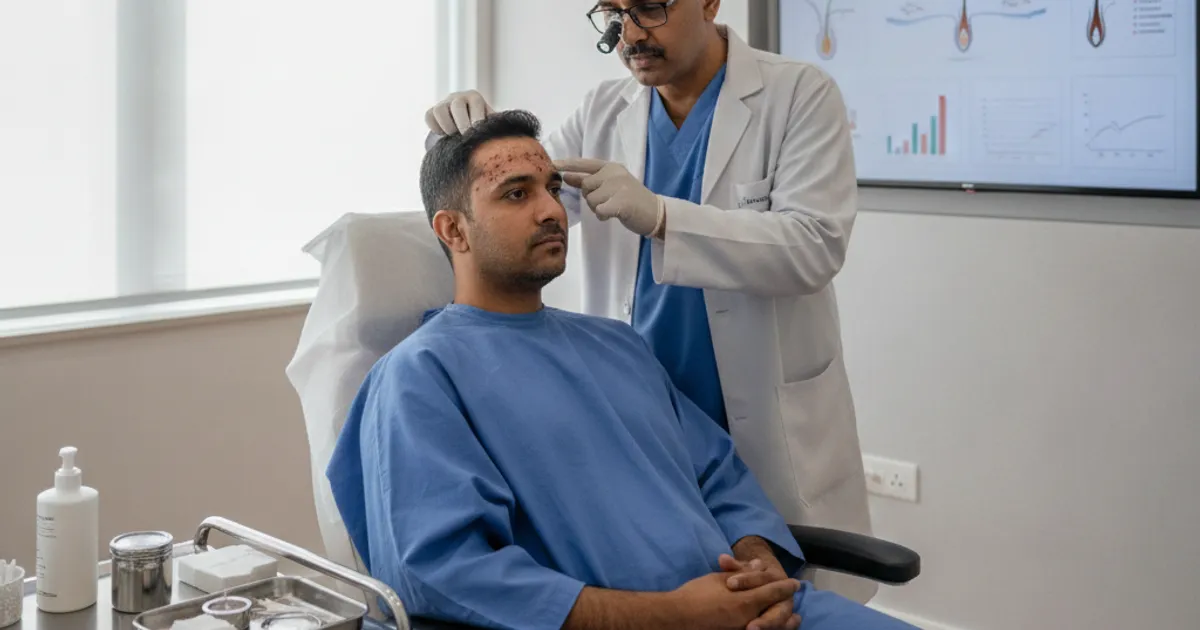
Hair Transplant Scabbing and Crusting: What's Normal?
If you've just had a hair transplant, seeing scabs and crusts form on your scalp can be alarming. But here's the short answer: scabbing is a completely normal part of the healing process. In fact, it's a sign that your body is doing exactly what it should be doing—closing tiny wounds and protecting new grafts. The key is knowing what normal scabbing looks like versus what might signal a problem. This guide walks you through the typical timeline, what to expect week by week, and when it's time to pick up the phone and call your surgeon.
The Healing Timeline: When Scabs Form and When They Fall Off
Scabs typically start forming within the first 24 to 48 hours after surgery. These small crusts develop around each graft site—both in the donor area and the recipient area. Over the next week or so, they harden and begin to loosen. Most scabs will naturally fall off between days 7 and 14 post-op. By the end of the second week, the scalp usually looks much cleaner, though some flaking may continue for a few more days. Keep in mind that these timelines are general guides based on typical healing patterns; your own recovery may vary slightly depending on your skin type, the size of the procedure, and how closely you follow aftercare instructions.
- Days 1–3: Scabs begin to form; scalp may feel tight and tender.
- Days 4–7: Crusts harden; some itching is common as healing progresses.
- Days 7–10: Scabs start to loosen and flake away; many patients notice them on pillows or in the shower.
- Days 10–14: Most scabs have fallen off; skin may still look slightly pink or dry.
- Weeks 3–4: Any remaining flaking resolves; new hair growth may begin (though shedding of transplanted hair is normal around this time).
What Normal Scabbing Looks Like (and Feels Like)
Normal scabs are small, crusty, and range in color from white to yellowish-brown. They're usually confined to the tiny incision sites and don't spread across large areas of the scalp. You might feel some itching or tightness, especially in the first week—that's a sign of healing, not infection. The scalp may also look a bit red or pink underneath the scabs, which is expected as blood flow increases to the area.
- Small, discrete crusts around each graft—not large, continuous patches.
- White, yellow, or light brown color—not bright red or dark purple.
- Mild itching and tightness that gradually subsides.
- No significant swelling beyond the first few days (some forehead swelling is normal).
- Scabs that loosen and fall off on their own without aggressive picking.
Red Flags: When Scabbing Becomes Concerning
While most scabbing is benign, certain signs warrant a call to your surgeon. Watch for scabs that are accompanied by spreading redness, warmth, or pus—these can indicate infection. Excessive bleeding or scabs that remain firmly attached well beyond two weeks may also be a concern. If you experience fever, severe pain, or notice a foul odor, don't wait—contact your surgeon. These warning signs are not meant to alarm you, but they are important to recognize so you can act quickly if something seems off.
- Spreading redness or swelling that worsens after day 3.
- Pus or cloudy discharge from scab sites.
- Fever above 38°C (100.4°F) or chills.
- Severe, throbbing pain not relieved by over-the-counter painkillers.
- Scabs that are still firmly attached after 14 days.
- Foul smell or excessive bleeding.
How to Care for Scabs and Crusts: Do's and Don'ts
Proper aftercare is crucial for smooth healing and optimal graft survival. Your surgeon will provide specific instructions, but here are general guidelines that apply to most patients. The golden rule: be gentle. Your scalp is healing, and aggressive handling can dislodge grafts or cause scarring.
- DO follow your surgeon's washing protocol—usually gentle rinsing with a mild shampoo after the first few days.
- DO keep the scalp moisturized if recommended (some surgeons suggest saline sprays).
- DO sleep with your head elevated for the first few nights to reduce swelling.
- DO avoid direct sun exposure on the scalp for at least two weeks.
- DON'T pick, scratch, or rub scabs—let them fall off naturally.
- DON'T use harsh chemicals, dyes, or styling products until cleared by your doctor.
- DON'T engage in strenuous exercise or activities that cause sweating for the first week.
- DON'T wear tight hats or helmets that rub against the grafts.
Planning Your Recovery: What to Expect Week by Week
Knowing what's coming can ease anxiety and help you plan time off work and social activities. Here's a realistic week-by-week overview of the scabbing and crusting phase. Remember, everyone heals at a slightly different pace, so use this as a general guide rather than a strict schedule.
- Week 1: Scabs form and harden; scalp is tender and itchy. Rest and follow washing instructions carefully.
- Week 2: Scabs begin to flake and fall off; most crusts are gone by the end of this week. You can usually return to light work.
- Week 3: Any remaining flaking resolves; transplanted hair may start to shed (normal).
- Week 4: Scalp looks mostly clear; new growth may begin. You can typically resume normal hair care routines.
- Months 2–3: Shedding continues; don't panic—this is the resting phase before new growth.
- Months 4–6: New hair starts to grow; scabbing is a distant memory.
When to Seek Professional Help (and When to Wait)
It's always better to err on the side of caution, but not every itch or flake warrants a call. Use this simple rule: if something feels off or is getting worse rather than better, reach out. Your surgeon would rather answer a quick question than treat a preventable complication. Here's a quick reference for when to call versus when to wait.
- CALL: If you have fever, spreading redness, pus, or severe pain.
- CALL: If scabs are still firmly attached after two weeks.
- CALL: If you accidentally knock a graft and it bleeds persistently.
- WAIT: If you have mild itching or flaking that improves over time.
- WAIT: If scabs are loosening and falling off as expected.
- WAIT: If you see pinkness under the scabs that fades gradually.
FAQ: Scabbing and Crusting After Hair Transplant
How long do scabs stay on after a hair transplant?
Most scabs fall off within 7 to 14 days after surgery. Some may linger a few days longer, but by the end of the second week, the scalp usually looks much cleaner. If scabs remain firmly attached after two weeks, contact your surgeon.
Should I pick scabs off my scalp?
No—never pick or scratch scabs. Picking can dislodge grafts, cause bleeding, and increase the risk of infection or scarring. Let them fall off naturally, and follow your surgeon's washing instructions to help loosen them safely.
What does an infected scab look like?
Infected scabs may be accompanied by spreading redness, warmth, pus or cloudy discharge, foul odor, and fever. If you notice any of these signs, contact your surgeon immediately for evaluation.
Can I wash my hair normally while scabs are present?
Not at first. Your surgeon will give you a specific washing protocol, usually starting with gentle rinsing after a few days. Avoid vigorous scrubbing or harsh shampoos until your doctor clears you, typically around week two.
Scabbing in the Donor Area vs. the Recipient Area
Most of the focus after a hair transplant is on the recipient area—the part of the scalp where grafts are placed—but scabbing also occurs in the donor area, typically at the back or sides of the head where hair was harvested. The two areas heal differently, and knowing what to expect in each can help you avoid unnecessary worry.
In the donor area, scabs form along the tiny extraction sites. These scabs tend to be smaller and more uniform than those in the recipient area, and they often heal a bit faster because the wounds are shallower. You may feel tightness or soreness when you move your head or sleep on the back of your scalp. Itching is common as the scabs dry and loosen. Because the donor area is less visible, many patients forget it's there until they feel discomfort—so follow the same gentle washing and no-picking rules.
In the recipient area, scabs form around each graft. These can be slightly larger and more irregular because the incisions are deeper and the grafts are delicate. The recipient area may also be more sensitive to touch and more prone to swelling. It's normal for recipient scabs to look a bit more noticeable in the first week, but they should still be small and discrete, not large continuous patches.
- Donor area scabs: often smaller, heal slightly faster, may cause tightness when lying down.
- Recipient area scabs: can be more irregular, may be more sensitive, and are more visible.
- Both areas: follow the same gentle washing protocol and never pick or scratch.
How to Wash Your Hair Without Disturbing Scabs
Washing your hair in the first two weeks is a balance between keeping the scalp clean and being gentle enough not to dislodge grafts or irritate scabs. Your surgeon will provide a specific protocol, but the general approach is similar for most patients.
In the first few days, you'll likely be advised to avoid direct water pressure on the grafts. Instead, use a cup or a gentle stream of water to rinse. Some clinics recommend using a mild, fragrance-free shampoo and lathering it in your hands before gently patting it onto the scalp—never rubbing. Let the water flow over the area rather than aiming the showerhead directly at it. After rinsing, pat the scalp dry with a clean towel; don't rub.
As the days pass and scabs begin to loosen, you can gradually increase the pressure slightly, but still avoid scrubbing. If you see scabs coming off in the shower, that's normal—they're ready to fall. But if a scab is still attached, leave it alone. Resistance means it's not ready. Over-washing can dry out the scalp and worsen itching; under-washing can lead to buildup and infection risk. Follow your surgeon's frequency recommendations, which are usually every day or every other day.
- Use a mild, fragrance-free shampoo recommended by your clinic.
- Lather in your hands first, then gently pat onto the scalp—don't rub.
- Rinse with a cup or gentle stream, avoiding direct high-pressure water.
- Pat dry with a clean towel; don't rub.
- If a scab doesn't come off easily, leave it for another day.
Common Questions About Scabbing After a Hair Transplant
Can I exercise while I still have scabs?
Most surgeons advise avoiding strenuous exercise for at least the first week, and sometimes longer, because sweating and increased blood pressure can cause swelling and may increase the risk of infection. Light walking is usually fine. Always check with your own surgeon, as recommendations vary based on the procedure and your healing progress.
What happens if a scab gets knocked off early?
If a scab falls off prematurely, don't panic. A small amount of bleeding may occur, but it usually stops on its own. Avoid touching the area and keep it clean. In most cases, a single scab coming off early doesn't affect the graft, but if you notice bleeding that doesn't stop or if multiple scabs come off, contact your surgeon for advice.
Is it normal for scabs to itch intensely?
Mild to moderate itching is a normal part of healing as the skin repairs and scabs dry. However, intense itching accompanied by redness, swelling, or a rash could indicate irritation or an allergic reaction. If itching is severe or keeps you awake, call your surgeon—they may recommend a safe antihistamine or a topical treatment.
Can I use aloe vera or other home remedies on the scabs?
Don't apply anything to the scalp without your surgeon's approval. Some natural remedies can irritate the skin or introduce bacteria. Your surgeon may recommend saline sprays or specific moisturizers, but stick to their instructions. When in doubt, ask before applying.
How can I tell if a scab is infected?
Signs of infection include spreading redness, warmth, pus or cloudy discharge, increasing pain, fever, or a foul odor. If you notice any of these, contact your surgeon promptly. Early treatment is important to prevent complications.
More Guides
- How Long After Finasteride Before a Hair Transplant?
Planning a hair transplant while on finasteride? Learn the typical waiting period, why timing matters, and how to coordinate with your surgeon for best results.
- Early Symptoms of Hair Loss: What to Watch For First
Learn the early symptoms of hair loss, how to track them, and when to see a specialist. Plan ahead with treatment options and costs.
- Alopecia Treatment: A Comprehensive Guide
A practical guide to alopecia treatment: types, diagnosis, medications, surgery, recovery timeline, and aftercare. Plan your hair restoration with confidence.
- Hair Loss Causes: What You Can and Can't Control
Understand hair loss causes, what's controllable, and how to plan a transplant. Practical guide to factors, aftercare, and when to see a specialist.