
Hair Transplant Scar After 1 Year: What to Expect
What does a hair transplant scar look like after 1 year? Learn about FUE vs FUT scarring, healing timelines, and options to minimise visibility.
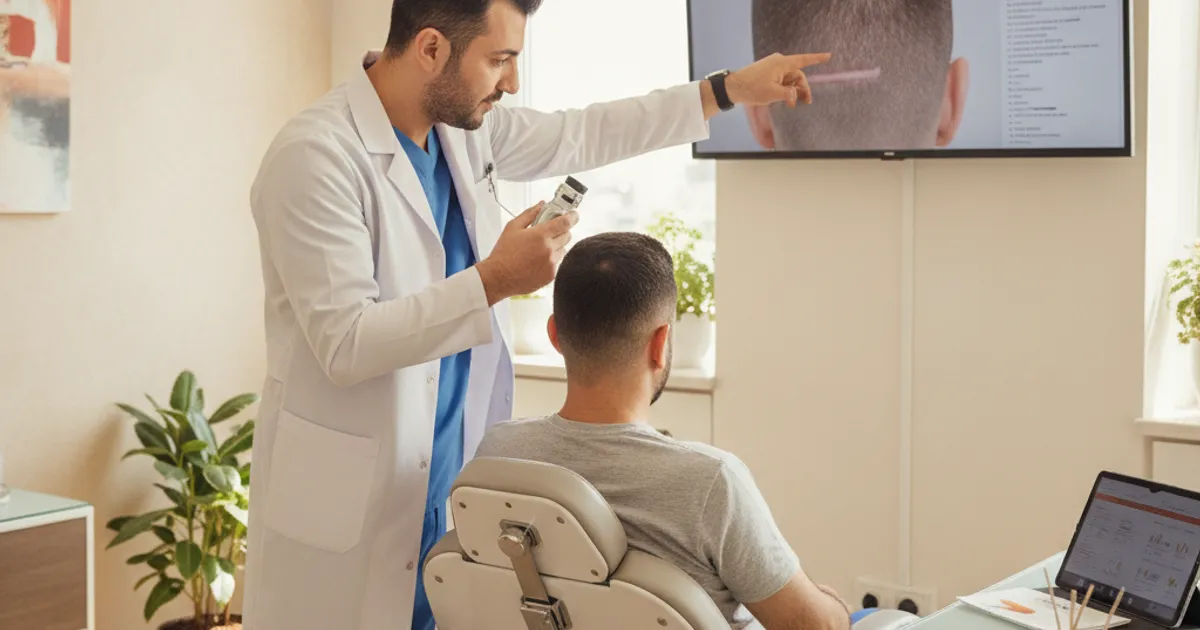
After 1 year, a hair transplant scar is typically fully healed and at its final appearance. FUE scars usually appear as tiny, faint white dots scattered across the donor area, while FUT scars form a single linear line that may be pale and flat or slightly raised. Most scars are only visible on close inspection or with very short hair.
What does a hair transplant scar look like after 1 year?
By the 12-month mark, the healing process is complete. The scar has matured from red and raised to a colour closer to your natural skin tone. What you see now is essentially what you'll have long-term, though some scars continue to fade slightly over the following months.
- FUE: Small circular hypopigmented dots, often around 1–2 mm in size, scattered across the donor zone. They may be slightly lighter or darker than surrounding skin.
- FUT: A single horizontal line, typically about 1–2 mm wide, running across the back of the scalp. It can be pencil-thin or wider depending on tension and healing.
- Colour: Most scars are white, pale pink, or slightly darker than your natural skin. Redness typically fades by month 6–12.
- Texture: Flat and soft in most cases. Some FUT scars feel slightly raised or indented if there was poor healing or tension.
- Visibility: With hair grown out to 1–2 cm, both types are usually hidden. With a buzz cut, FUE dots are less noticeable than a linear FUT line.
How long does it take for a hair transplant scar to fully heal?
Full healing takes about 12 months, but the scar goes through distinct phases. Here's the typical timeline:
- First 2 weeks: The donor area is raw and scabbing. FUE sites look like small red dots; FUT incision is a red line.
- 1–3 months: Scabs fall off, redness fades. The scar may look pink or slightly raised.
- 3–6 months: The scar begins to flatten and lighten. Some patients notice improvement in texture.
- 6–12 months: The scar matures to its final colour and texture. Redness continues to fade.
- After 12 months: The scar is considered mature. Further changes are minimal without treatment.
What factors affect how visible a hair transplant scar is after 1 year?
Not all scars heal the same. Several variables influence how noticeable your scar will be after a year:
- Technique: FUE generally leaves less visible scarring than FUT, especially with short hair.
- Surgeon skill: Poor technique, excessive tension, or large punch sizes can widen scars.
- Skin type: Darker skin tones may experience hyperpigmentation; lighter skin may show hypopigmentation.
- Healing ability: Genetics, age, and overall health affect collagen production and scar formation.
- Aftercare: Following post-op instructions (no sun, no scratching, using prescribed ointments) reduces risk.
- Hair length: Longer hair hides scars better. If you plan to buzz cut, FUE is usually the better choice.
FUE vs FUT: how do scars compare after 1 year?
Both methods leave permanent scars, but they look and behave differently. Here's a side-by-side comparison:
| Feature | FUE Scar | FUT Scar |
|---|---|---|
| Appearance | Tiny circular dots | Single linear line |
| Size | Typically 1–2 mm per dot | Often 1–2 mm wide, several cm long |
| Visibility with short hair | Less noticeable | More noticeable |
| Visibility with long hair | Hidden | Hidden |
| Healing time | Usually 6–12 months | Often 12+ months |
| Risk of widening | Low | Moderate (if tension high) |
| Revision options | Micropigmentation, excision | Scar revision, micropigmentation |
Can a hair transplant scar be removed or made less visible after 1 year?
A scar cannot be completely removed, but it can often be improved. After 1 year, the scar is mature, so treatments focus on blending it with surrounding skin or reducing width.
- Scalp micropigmentation (SMP): Tattooing tiny dots to mimic hair follicles. Works well for both FUE and FUT scars.
- Scar revision surgery: A surgeon excises the old scar and re-closes it with finer technique. Best for wide FUT scars.
- Laser therapy: Fractional lasers can reduce redness and improve texture. Multiple sessions needed.
- Silicone gels or sheets: May soften raised scars, but evidence is mixed for mature scars.
- Hair transplant into scar: Transplanting follicles directly into the scar tissue can camouflage it. Success rates vary.
When should you see a doctor about your hair transplant scar?
Most scars after 1 year are harmless. But see a doctor if you notice any of these signs:
- The scar is painful, itchy, or bleeding.
- It suddenly changes colour, size, or shape.
- You develop new lumps or bumps around the scar.
- The scar is wider than about 5 mm and bothers you cosmetically.
- You experience hair loss around the scar (could indicate traction or infection).
How to choose a clinic to minimise scarring
The best way to avoid a bad scar is to choose an experienced surgeon. Look for clinics with a proven track record in the technique you want, and ask to see close-up photos of donor areas after 1 year. You can browse verified clinics and read reviews on Clinic Reccy to compare options.
Frequently asked questions about hair transplant scars after 1 year
Will my hair transplant scar fade after 1 year?
Most fading happens in the first 12 months. After that, the scar is mature and unlikely to change much on its own. Treatments like SMP or laser can still improve appearance.
Can I shave my head after a hair transplant?
Yes, but the scar will be visible. FUE scars look like tiny dots; FUT scars look like a line. If you plan to shave, FUE is usually the better option.
Is it normal for the scar to be raised after 1 year?
A slightly raised scar can be normal, especially with FUT. If it's painful, growing, or very raised, see a doctor. Treatments can flatten it.
How much does it cost to fix a hair transplant scar?
Costs vary widely depending on the treatment, the size of the area, and your location. Scalp micropigmentation, scar revision surgery, and laser therapy all have different price structures. Consult a specialist for an exact quote tailored to your situation.
More Guides
- Hair Transplant and Blood Thinners: Safety and Timing
Can you have a hair transplant on blood thinners? Learn why they matter, which ones raise bleeding risk, how long to stop before surgery, and when to restart.
- Finasteride and PSA Testing: What You Need to Know
Finasteride lowers PSA levels, so your test results need careful interpretation. Learn how finasteride affects PSA, the adjustment factor, and what to tell your
- Can You Cure a Receding Hairline? What's Realistic
Can you cure a receding hairline? Learn what's realistic with medications, transplants, and lifestyle changes, plus expected results and costs.
- Minoxidil Hair Thinning Before Growth: Is It Normal?
Is minoxidil hair thinning before growth normal? Yes, it's a common sign the treatment is working. Learn why it happens, how long it lasts, and when to worry.