
Hair Transplant Cost: Full Price Breakdown Guide
Hair transplant cost explained: what drives prices, typical ranges by hair-loss stage, FUE vs FUT, hidden fees, and recovery planning tips.
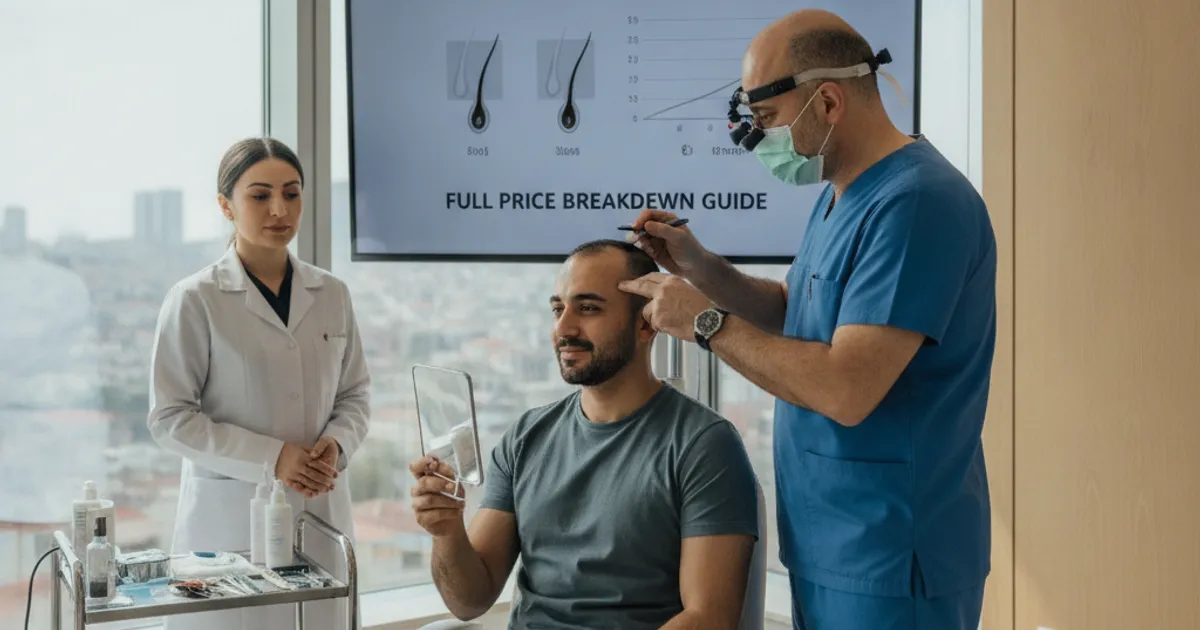
Hair Transplant Cost: A Full Breakdown
If you're researching hair transplant cost, you've probably noticed the numbers swing wildly. One clinic quotes a few thousand, another quotes five figures. That gap isn't random. It comes down to how many grafts you need, which technique is used, where the clinic is, and what's bundled into the quote. This guide walks through the real drivers, typical ranges by hair-loss stage, and the aftercare costs most people forget to budget for.
What Actually Drives the Price of a Hair Transplant
Most quotes are built from a handful of variables. Understanding them helps you spot when a price is unusually low or high for your situation.
- Graft count: The single biggest factor. More grafts means more time, more staff, and higher cost.
- Technique: FUE and FUT have different labor and equipment requirements.
- Surgeon vs. technician involvement: Who actually performs the extraction and implantation affects the fee.
- Clinic location: Overhead costs in major metro areas push prices up.
- Number of sessions: Some cases need two procedures spaced months apart.
- Add-ons: PRP, medications, and follow-up visits may or may not be included.
Typical Cost Ranges by Hair-Loss Stage
Pricing is usually presented by stage of hair loss because that's what determines graft count. Early-stage cases need fewer grafts; advanced cases need more. Below are averaged case prices to give you a realistic starting point. These figures are illustrative and vary by clinic, surgeon, and location.
| Hair-Loss Stage | Typical Graft Range | What It Usually Covers |
|---|---|---|
| Early | Lower graft count | Hairline reinforcement, small density gaps |
| Moderate | Mid-range graft count | Frontal and mid-scalp restoration |
| Advanced | High graft count | Crown and broad coverage, sometimes multi-session |
FUE vs. FUT: How the Technique Affects Your Quote
FUE (follicular unit extraction) and FUT (follicular unit transplantation) are the two main surgical approaches. They differ in how grafts are removed, recovery time, and cost structure. FUE is generally more labor-intensive per graft, which often makes it pricier. FUT can be more cost-effective for very large sessions but leaves a linear scar.
FUE
Typically higher per graft
- ✓ No linear scar
- ✓ Faster visual recovery
- ✓ More labor-intensive
- ✓ Good for smaller to mid-size sessions
FUT
Often lower per graft
- ✓ Linear scar at donor site
- ✓ Longer initial healing
- ✓ Efficient for large graft counts
- ✓ Can be more affordable for advanced cases
What's Usually Included in the Price (and What Isn't)
Two quotes that look identical on paper can differ by thousands once you factor in inclusions. Ask every clinic for a written breakdown of what's covered.
92% of Istanbul clinics on Clinic Reccy offer clinics including airport transfer
Hidden Costs to Plan For Before You Book
The procedure fee is only part of the total. These extras add up fast, especially if you're traveling.
- Flights and travel insurance
- Hotel stays for you and a companion
- Meals and local transport during recovery
- Time off work (unpaid leave if you have no PTO)
- Additional PRP or medication refills
- A second procedure if density isn't where you want it
How to Compare Clinic Quotes Without Getting Misled
Comparing quotes is easier when you normalize the details. Here's a simple process:
- Ask for a written quote that lists graft count, technique, and who performs each step.
- Request a breakdown of inclusions: medications, PRP, follow-ups, and travel support.
- Check whether the price is per graft or per session, and if there's a minimum charge.
- Inquire about additional fees for touch-ups or revisions.
- Compare the total cost after adding travel, accommodation, and time off work.
- Read patient reviews and look for before-and-after photos with similar hair loss to yours.
Planning Your Recovery: Time, Aftercare, and Budget
Recovery affects both your schedule and your wallet. Most people need a few days off work, and the donor area takes a couple of weeks to look normal. Budget for aftercare products, follow-up visits, and possibly a second session down the line.
Frequently Asked Questions
Is a hair transplant covered by insurance?
In most cases, no. Hair transplants are typically considered cosmetic. Some policies may cover procedures related to medical conditions, but you'll need to check with your insurer directly.
Can I finance a hair transplant?
Many clinics offer payment plans or partner with financing companies. Ask during your consultation whether financing is available and what the terms look like.
How much should I budget beyond the procedure fee?
Plan for travel, accommodation, meals, time off work, aftercare products, and follow-up visits. A buffer of 15–25% on top of the procedure fee is a reasonable starting point, but this varies by location and clinic.
Will I need a second procedure?
Some people do, especially those with advanced hair loss or who want more density. Ask your surgeon about the likelihood of a second session and factor that into your long-term budget.
How to Budget for a Hair Transplant: Financing and Payment Plans
A hair transplant is a significant investment, and many patients explore financing options to manage the cost. Clinics often partner with third-party medical lenders that offer installment plans, sometimes with promotional low- or no-interest periods. It's important to read the terms carefully: deferred-interest plans can retroactively charge high interest if the balance isn't paid in full during the promotional window. Some clinics also offer in-house payment plans, but these may carry their own fees. Before committing, compare the total cost of financing across lenders, check for prepayment penalties, and consider whether the monthly payment fits comfortably within your budget. Keep in mind that insurance rarely covers cosmetic hair transplantation, though it may cover treatment for underlying medical conditions that cause hair loss. If you have a health savings account (HSA) or flexible spending account (FSA), check with a tax advisor whether the procedure qualifies as a medical expense—eligibility varies by jurisdiction and diagnosis.
What to Expect on Consultation Day: Questions That Reveal the Real Cost
The consultation is your best opportunity to uncover costs that aren't obvious from a headline price. A thorough consultation should include a scalp examination, a discussion of your goals, and a written treatment plan with graft estimates. Come prepared with specific questions that force clarity. For example, ask whether the quoted price covers the surgeon's time for the entire procedure or only part of it, and whether additional grafts harvested beyond the estimate will be billed separately. Ask who performs each step—extraction, site creation, and implantation—and whether technicians or the surgeon handle the majority. Inquire about the cost of follow-up visits, suture removal (for FUT), and any take-home medications or aftercare kits. Also ask about the clinic's policy on touch-ups: if growth is less than expected, is there a fee for a second session? Finally, request the quote in writing and confirm that it includes all taxes and fees. Comparing written quotes side by side makes it much harder for hidden costs to slip through.
The Long-Term Cost of Hair Loss: Maintenance and Non-Surgical Alternatives
A transplant is not a one-time expense if you want to maintain results. Most patients need ongoing medical therapy—such as minoxidil or finasteride—to slow further hair loss and protect the transplanted grafts. These medications carry recurring monthly costs that should be factored into your long-term budget. Without maintenance, native hair may continue to thin, potentially creating a contrast between transplanted and non-transplanted areas. It's also worth comparing the cost of a transplant to non-surgical options. Medications, low-level laser therapy, and platelet-rich plasma (PRP) injections are less invasive but require indefinite use and may not restore lost hair. While these alternatives often have lower upfront costs, their cumulative expense over years can add up. A transplant may be more cost-effective in the long run for appropriate candidates, but only if you're committed to maintenance. Discuss with your doctor which approach aligns with your hair-loss pattern and budget.
Does insurance ever cover hair transplant costs?
Insurance typically does not cover cosmetic hair transplantation. However, if hair loss is caused by a diagnosed medical condition, some policies may cover related treatments. Check with your insurer and review your policy details.
Can I negotiate the price of a hair transplant?
Some clinics may offer discounts for upfront payment or off-peak scheduling, but discounting is not universal. Focus on understanding what is included rather than pushing for a lower headline price, as deep discounts may signal corners cut on care.
How much should I budget for maintenance medications after a transplant?
Costs vary widely by medication and location. Rather than relying on a single figure, ask your clinic for a typical monthly range and factor that into your long-term budget. Generic options may be more affordable than brand-name drugs.
More Guides
- How Long After Finasteride Before a Hair Transplant?
Planning a hair transplant while on finasteride? Learn the typical waiting period, why timing matters, and how to coordinate with your surgeon for best results.
- Early Symptoms of Hair Loss: What to Watch For First
Learn the early symptoms of hair loss, how to track them, and when to see a specialist. Plan ahead with treatment options and costs.
- Alopecia Treatment: A Comprehensive Guide
A practical guide to alopecia treatment: types, diagnosis, medications, surgery, recovery timeline, and aftercare. Plan your hair restoration with confidence.
- Hair Loss Causes: What You Can and Can't Control
Understand hair loss causes, what's controllable, and how to plan a transplant. Practical guide to factors, aftercare, and when to see a specialist.