
Hair Loss Gene: Testing, Causes, and Treatment Options
Learn how the hair loss gene works, what genetic testing can reveal, and treatment options for androgenetic alopecia, including hair transplants.
Introduction: The Role of Genetics in Hair Loss
If you're noticing more hair in your brush or a receding hairline, you've probably wondered whether it's just part of getting older or something written into your DNA. The truth is, genetics play a major role in the most common form of hair loss, known as androgenetic alopecia. But it's not as simple as inheriting a single 'baldness gene' from your mother's father. Hair loss is a complex trait influenced by multiple genes, hormones, and even lifestyle factors. Understanding the hair loss gene can help you make sense of what's happening and what you can do about it.
What Is the Hair Loss Gene? Understanding Androgenetic Alopecia
Androgenetic alopecia is the medical term for what most people call male pattern baldness or female pattern hair loss. It's driven by a sensitivity to dihydrotestosterone (DHT), a hormone derived from testosterone. The sensitivity is largely genetic, and it causes hair follicles to shrink over time, producing thinner, shorter hairs until they stop growing altogether. The primary gene associated with this process is the androgen receptor (AR) gene, located on the X chromosome. That's why many people believe hair loss comes from the mother's side. However, research shows that genes from both parents contribute, and there are likely many other genes involved that we're still learning about.
- Androgenetic alopecia affects both men and women, though patterns differ.
- The AR gene is a key player, but it's not the only one.
- Other genes related to hair follicle health, inflammation, and hormone metabolism also matter.
- Environmental factors like stress, diet, and smoking can influence how genes express themselves.
Causes and Risk Factors: How Genetics Interact with Hormones and Age
Genetics load the gun, but hormones pull the trigger. For androgenetic alopecia to develop, you need both a genetic predisposition and the presence of androgens like testosterone and DHT. This is why hair loss typically starts after puberty and progresses with age. In men, DHT binds to receptors in susceptible hair follicles, miniaturizing them over time. In women, the mechanism is similar but often involves a broader thinning pattern rather than a receding hairline. Age is another major factor: the older you get, the more likely you are to experience some degree of genetic hair loss. Other risk factors include certain medical conditions (like polycystic ovary syndrome in women), medications, and lifestyle habits that affect hormone balance.
- Family history: Having close relatives with hair loss increases your risk.
- Hormonal changes: Puberty, pregnancy, and menopause can trigger or accelerate hair loss.
- Age: Risk rises steadily after age 30 for men and after menopause for women.
- Medical conditions: Thyroid disorders, PCOS, and autoimmune diseases can contribute.
- Lifestyle: Chronic stress, poor nutrition, and smoking may worsen genetic hair loss.
| Factor | Impact on Genetic Hair Loss |
|---|---|
| Family history | Strong predictor; multiple genes involved |
| DHT sensitivity | Directly causes follicle miniaturization |
| Age | Risk increases with age |
| Hormonal imbalances | Can accelerate hair loss in both sexes |
| Stress and diet | May trigger or worsen shedding |
Symptoms and Patterns: Recognizing Genetic Hair Loss
Genetic hair loss doesn't happen overnight. It usually starts gradually and follows a predictable pattern. In men, the first sign is often a receding hairline at the temples, followed by thinning at the crown. Over time, these areas can merge, leaving a horseshoe-shaped fringe. Women typically experience diffuse thinning across the top of the scalp, with the frontal hairline remaining intact. You might notice more hair shedding, a widening part, or a smaller ponytail circumference. Unlike temporary shedding from stress or illness, genetic hair loss is progressive and doesn't reverse on its own.
- Men: Receding hairline, thinning crown, eventual bald spot.
- Women: Diffuse thinning on top, widening part, no receding hairline.
- Gradual onset: Hair loss progresses slowly over years.
- Increased shedding: More hairs than usual in the shower or brush.
- Miniaturized hairs: Fine, short hairs along the hairline or crown.
How Is Genetic Hair Loss Diagnosed?
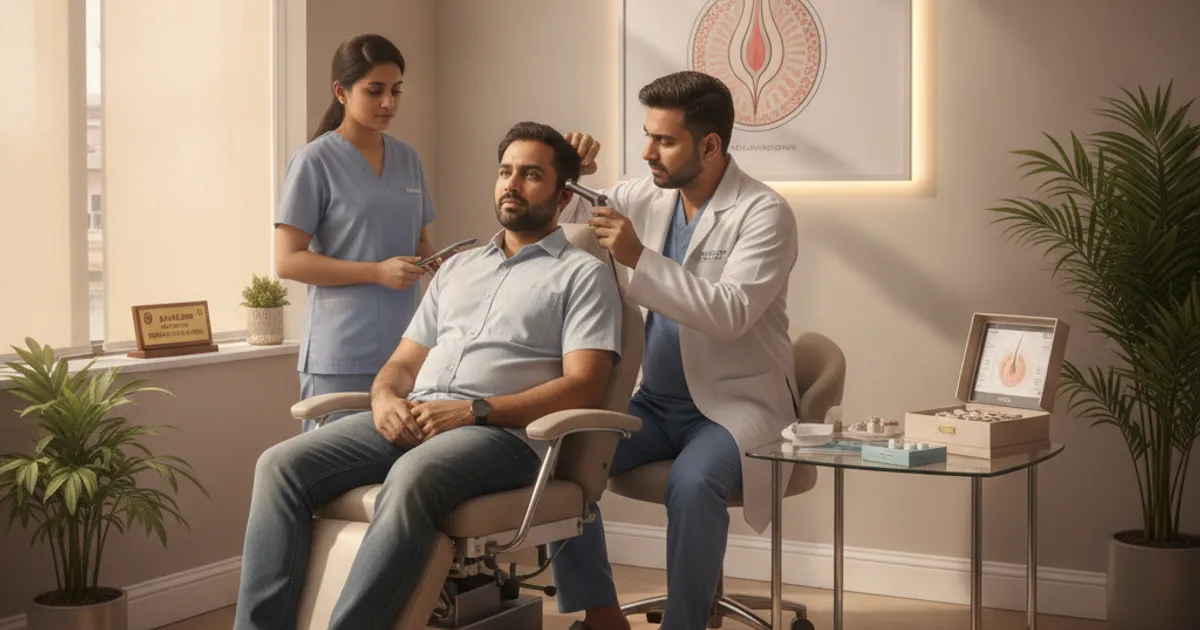
Diagnosing genetic hair loss usually starts with a visit to a dermatologist or hair restoration specialist. They'll ask about your family history, medical history, and when you first noticed hair loss. A physical exam involves looking at your scalp and hair under magnification to check for miniaturized follicles. They may also perform a pull test to see how many hairs come out easily. In some cases, blood tests are ordered to rule out other causes like thyroid issues or iron deficiency. A scalp biopsy is rarely needed but can confirm the diagnosis if there's uncertainty.
- Medical and family history review.
- Scalp examination with a dermatoscope.
- Hair pull test to assess shedding.
- Blood tests to exclude other conditions.
- Biopsy in rare cases.
Genetic Testing for Hair Loss: What It Can and Cannot Tell You
At-home genetic testing kits for hair loss have become popular, but it's important to understand their limitations. These tests typically analyze a few genetic markers associated with androgenetic alopecia, such as variants in the AR gene. They can give you a sense of your genetic predisposition, but they can't predict with certainty whether you'll go bald or how severe it will be. Genetics is just one piece of the puzzle. A negative test doesn't mean you won't lose hair, and a positive test doesn't mean you're destined for a bald spot. The results should be interpreted alongside your family history and clinical signs.
- Tests usually check for a handful of genetic variants.
- They provide a risk estimate, not a diagnosis.
- Results can be influenced by other genes and environmental factors.
- Not all genetic markers for hair loss are known or included.
- Consult a doctor to interpret results in context.
| What Genetic Testing Can Do | What It Cannot Do |
|---|---|
| Identify certain risk variants | Predict exact age of onset or severity |
| Suggest predisposition | Diagnose hair loss definitively |
| Inform lifestyle and treatment choices | Replace clinical evaluation |
| Provide peace of mind for some | Guarantee you will or won't lose hair |
Treatment Options for Genetic Hair Loss
While there's no cure for genetic hair loss, several treatments can slow it down, regrow hair, or restore it through surgery. The earlier you start, the better the results. Medications like finasteride (for men) and minoxidil (for men and women) are FDA-approved and can help maintain and regrow hair. Platelet-rich plasma (PRP) therapy is another option that uses your own blood platelets to stimulate hair follicles. Low-level laser therapy and certain shampoos may also support hair health. For advanced hair loss, a hair transplant can move healthy follicles from the back of the scalp to thinning areas. The best approach often combines multiple treatments.
- Finasteride: Oral medication that blocks DHT production (men only).
- Minoxidil: Topical solution or foam that improves blood flow to follicles.
- PRP therapy: Injections of concentrated platelets to stimulate growth.
- Low-level laser therapy: Devices that emit light to energize follicles.
- Hair transplant: Surgical relocation of DHT-resistant follicles.
| Treatment | How It Works | Best For |
|---|---|---|
| Finasteride | Blocks DHT conversion | Men with early to moderate loss |
| Minoxidil | Vasodilator, prolongs growth phase | Men and women, all stages |
| PRP | Growth factor stimulation | Mild to moderate thinning |
| Laser therapy | Increases cellular energy | Early stage, adjunct therapy |
| Hair transplant | Relocates healthy follicles | Moderate to advanced loss |
Is a Hair Transplant Suitable for Genetic Hair Loss?
A hair transplant can be an excellent option for genetic hair loss, but it's not right for everyone. The ideal candidate has stable hair loss, good donor hair density at the back of the scalp, and realistic expectations. Because genetic hair loss is progressive, you'll likely need to continue medical therapy after the transplant to preserve the remaining native hair. If you're still losing hair rapidly, it's often better to stabilize the loss first. A consultation with a qualified surgeon will determine if you're a suitable candidate. They'll assess your donor area, discuss your goals, and create a personalized plan.
- Good donor hair quality and density.
- Stable hair loss pattern (not actively shedding).
- Realistic expectations about density and coverage.
- Willingness to use maintenance medication.
- Overall good health and no contraindications.
Frequently Asked Questions
Is hair loss inherited from your mother's father?
That's a common myth. While the AR gene on the X chromosome is a key contributor, you inherit genes from both parents. Many other genes also play a role, so baldness can come from either side of the family.
Can genetic testing tell me if I'll go bald?
Genetic tests can identify certain risk variants, but they can't predict with certainty whether or when you'll lose hair. They provide a risk estimate, not a diagnosis. Clinical evaluation is still the gold standard.
At what age does genetic hair loss usually start?
It can begin as early as your late teens or early twenties, though most people notice it in their 30s or 40s. The earlier it starts, the more aggressive it tends to be.
Can hair loss from genetics be reversed?
It can't be cured, but it can be managed. Treatments like finasteride, minoxidil, and PRP can slow progression and regrow some hair. Hair transplants can restore hair in bald areas.
Is a hair transplant worth it for genetic hair loss?
For many people, yes. It can provide permanent hair in thinning areas. However, it works best when combined with medication to prevent further loss. A consultation with a specialist will help you decide.
More Guides
- Hair Loss After Weight Loss Surgery: Timeline & Fixes
Hair loss after weight loss surgery is common. Learn the timeline, causes, treatments like minoxidil and PRP, and whether a hair transplant is right for you.
- Stress-Related Hair Loss: Recovery Time and Treatment
How long does stress-induced hair loss take to recover? Learn about telogen effluvium, diagnosis, treatments, and when a transplant may help.
- Female Hair Loss at the Back of the Head: Causes & Fixes
Learn why women lose hair at the back of the head, how it's diagnosed, and the best treatment options including minoxidil, PRP, and hair transplant suitability.
- Wellbutrin and Hair Loss: What You Need to Know
Learn how Wellbutrin may cause hair loss, how it's diagnosed, and what treatments—including hair transplant—can help you regrow hair.